
You've probably been handed this job with a simple request: “We need some shirts.”
Then the core questions start. What kind of shirt? What print method? What fabric? How many colors? How many pieces? And if this order is for staff uniforms, a fundraiser, a retail launch, or a company event, the pressure gets real fast. Pick wrong, and you end up with boxes of shirts nobody likes wearing, prints that feel stiff, or a reorder that doesn't match the first batch.
That's why the best screen printed T shirts aren't just “good shirts.” They're the right match between your goal, your artwork, your audience, and your budget. A staff uniform has a different job than a boutique merch tee. A giveaway shirt has a different purpose than a premium retail piece. If you treat all of them the same, you usually overspend in one area and underdeliver in another.
I've seen first-time buyers focus on the wrong thing. They chase the softest blank, the cheapest quote, or the fastest turnaround, then wonder why the finished product doesn't feel right for their brand. Good apparel buying is less about finding one magic shirt and more about understanding why one option fits your use case better than another.
Table of Contents
- Introduction: Beyond Just a T-Shirt
- The Anatomy of a Great Screen Printed Shirt
- Choosing Your Canvas: The Right T-Shirt Fabric and Fit
- The Art of the Ink: Understanding Print Durability and Feel
- From Logo to Print: Preparing Artwork and Choosing Techniques
- The Economics of Your Order: Quantity, Cost, and Turnaround
- How to Choose the Right Screen Printing Partner
- Conclusion: Create Apparel That Tells Your Story
Introduction: Beyond Just a T-Shirt
You approve 200 shirts for a staff event because the quote looks good. Two weeks later, the boxes arrive. The print is bright, but the shirts feel stiff, the sizing is inconsistent, and half your team never wears them again. On paper, the order was cheap. In practice, it cost more than expected because it did not do the job your brand needed it to do.
That is the first shift smart buyers make. A screen printed T-shirt is not just a piece of apparel. It is a uniform, a marketing tool, a retail product, or a giveaway, and each job asks something different from the shirt. A front-desk team needs a shirt that holds its shape and looks clean after repeated washing. A brewery merch shirt needs softness and fit because customers compare it to other shirts in their closet. A one-day event giveaway needs enough comfort and print quality to avoid being tossed aside by the end of the week.
Good buying starts with purpose.
If people wear the shirt often, quality affects visibility. If employees wear it on the job, quality affects trust. If you sell it, quality affects whether a customer feels your brand delivered something worth paying for. That is why the cheapest blank is often the most expensive choice over time. A poor fit, rough fabric, or cracked print lowers wear rate, and lower wear rate means fewer impressions, weaker brand perception, and less return from the order.
A shirt works like packaging you can wear. Customers may not know fabric weights or ink chemistry, but they notice comfort, drape, and whether the print still looks good after washing. Those signals shape how people judge the business behind the shirt.
Practical rule: Don't ask, “What's the best shirt?” Ask, “What shirt, fabric, and print style make sense for how this item will be used?”
The smartest buyers think about wear frequency, washing, fit expectations, and reorder consistency before they think about trendy shirt names. That is how you get apparel that looks right, feels right, and keeps working for your brand after the first wear.
The Anatomy of a Great Screen Printed Shirt
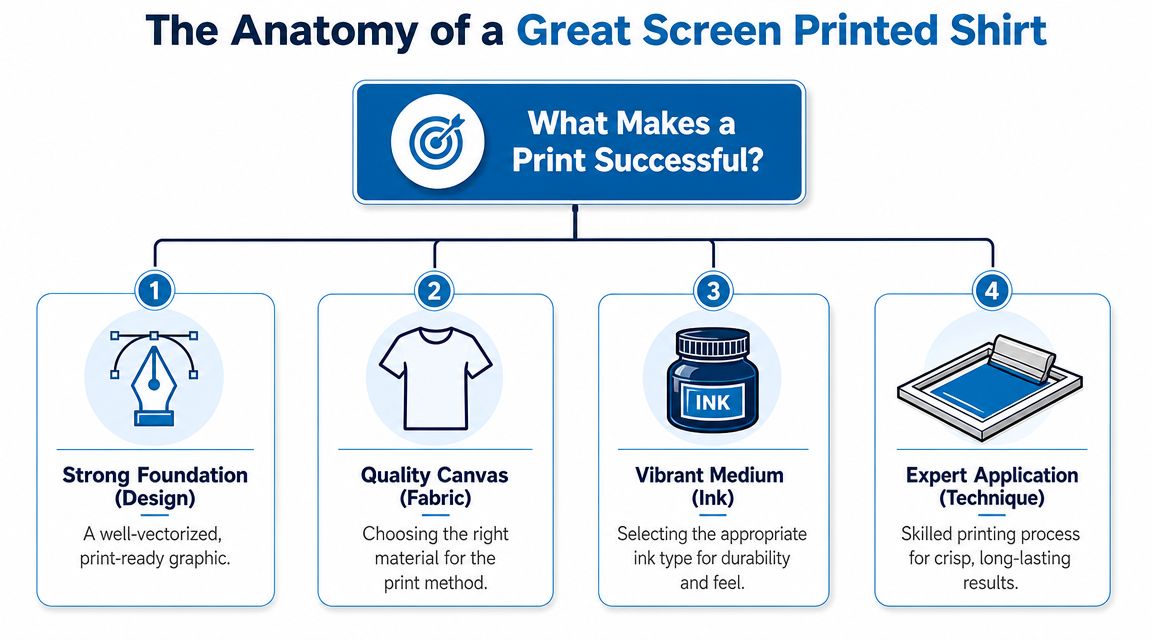
A good screen printed shirt works like a well-built storefront. The sign has to look right, the materials have to hold up, and the work has to be done cleanly. If one part fails, the whole impression drops.
Quality comes from the system
Most buyers judge a shirt by one thing they can notice fast. Usually softness, color, or price. Printers don't have that luxury. We have to look at the full combination.
A strong result usually comes from four parts working together:
- Artwork quality: Clean, print-ready art gives you sharp edges and accurate color separation.
- Garment choice: The shirt fabric affects how the ink sits, feels, and ages.
- Ink selection: Different inks change softness, opacity, and overall look.
- Print execution: Registration, curing, and consistency decide whether the print lasts.
Industry research reported in 2026 says screen printing accounted for 40% of the custom t-shirt printing market in 2025, and points to its role in large runs, color durability, and opacity on dark fabrics in categories like uniforms, event merch, and campaign apparel, as noted in Printful's t-shirt industry statistics roundup. That staying power comes from repeatability. Buyers still choose screen printing when they need the same design to look good across a lot of shirts.
What buyers should judge first
If you're trying to spot quality, don't start by rubbing the fabric and guessing. Start with these questions:
| What to check | Why it matters |
|---|---|
| Does the design fit the shirt style? | A premium retail graphic can feel wrong on a basic promo tee. |
| Does the print suit the fabric? | Some shirts handle soft inks beautifully. Others perform better with bolder coverage. |
| Will this shirt be washed often? | Uniforms and repeat-wear items need a different standard than one-day event tees. |
One shirt can feel amazing in the hand and still be the wrong choice for your project. Another can feel simpler but outperform it for months of staff use. That's where the actual buying decision lives.
Choosing Your Canvas: The Right T-Shirt Fabric and Fit
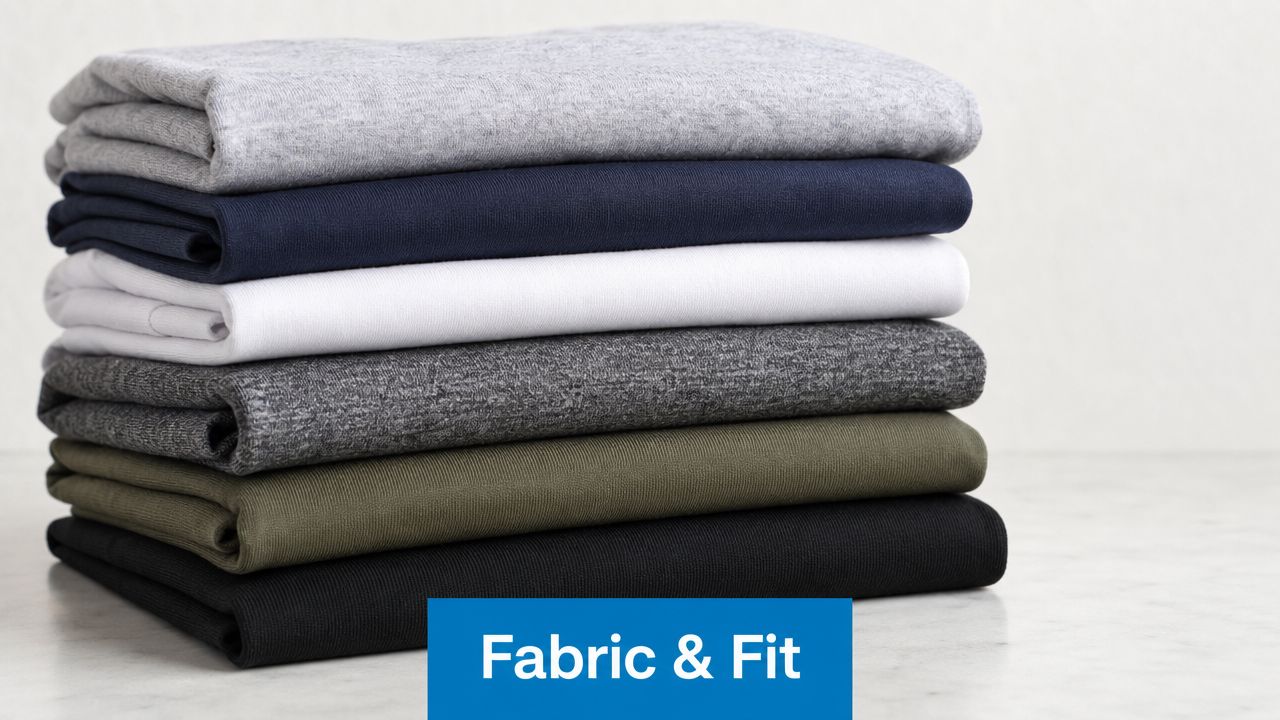
The shirt blank is your canvas. If the canvas is wrong, even a great print won't solve the problem.
Cotton, blends, and what they actually mean
Buyers often hear fabric terms and treat them like quality labels. They're not. They're performance clues.
100% cotton is usually the easiest place to start if you want a classic screen printed look. It tends to take ink well, gives you a familiar feel, and works for a wide range of brand uses. If you want a dependable shirt for company graphics, event merch, or a straightforward logo tee, cotton is a safe foundation.
Cotton and polyester blends are often a smart middle ground for uniforms and repeat-wear programs. They can balance comfort with practical durability. For businesses, that matters more than people think. A shirt that holds shape, launders well, and feels acceptable to a wide group of employees usually creates fewer complaints than a super-soft fashion tee that behaves inconsistently on press or over time.
Tri-blends and softer fashion fabrics are where many new buyers get distracted. They feel great out of the box, and for retail-style merch they can absolutely make sense. But softness on day one is only one part of quality. The more useful question is how that shirt performs after repeated washing and whether the print style you want still looks right as the garment ages.
A common knowledge gap is wash performance. As noted in Real Thread's guidance on choosing shirts by material, fit, price, and print method, soft tri-blends can behave differently under screen prints than sturdier cottons, and the best choice depends on the use case. For uniforms and reorders, durability often matters more than the first-touch softness people notice in fashion-fit tees.
Match the shirt to the job
Here's the way I'd simplify it for a first order.
- For staff uniforms: Choose stability over novelty. You want a shirt people will wear often, wash often, and reorder later without drama.
- For retail merch: Feel matters more. Customers buying a branded tee expect comfort and a print that feels intentional, not bulky.
- For promotions or giveaways: Value matters, but don't go so cheap that the shirt hurts your brand more than it helps it.
A shirt isn't “good” because it's soft. It's good when the person wearing it wants to keep wearing it.
Fit matters too. A fitted retail cut can look sharp in a product photo but frustrate a mixed-size staff order. A more universal cut may not feel trendy, yet it often works better for teams, volunteer groups, and event runs where you need broad size acceptance.
If you're stuck between two blanks, ask which one supports your actual goal. Not the sample-table goal. The true one. Daily wear, resale, promotion, or fast distribution.
The Art of the Ink: Understanding Print Durability and Feel
Ink changes the personality of the shirt more than most buyers expect. Two shirts can use the same blank and the same logo, yet feel completely different once printed.
Plastisol for bold coverage
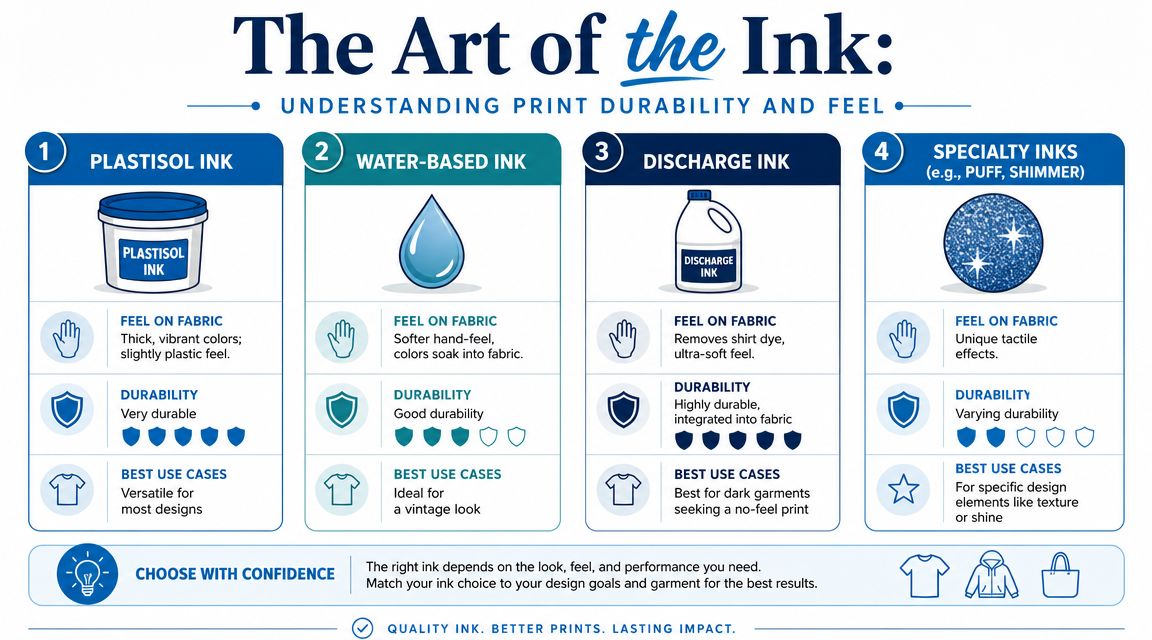
Plastisol is the ink many people already know, even if they don't know the name. It tends to sit on top of the fabric, which helps create strong, opaque color. If you need a bright logo on a dark shirt, or a bold athletic look, this is often the direction buyers choose.
That “on top” quality can be a benefit. It gives designs presence. It can make small logos pop and help solid shapes look clean from a distance. For uniforms, event shirts, and dark garments, that visibility can matter more than having the softest possible hand.
Still, there's a tradeoff. Heavy ink coverage can feel thicker, especially on large front prints. If someone wants a big chest graphic with several solid areas, the shirt may feel warmer and less flexible than a softer print style.
Water-based and discharge for softer hand
Water-based and discharge approaches appeal to buyers chasing a more premium, retail-style finish. These prints tend to feel softer because the ink soaks into the fabric more instead of sitting heavily on top. On the right shirt, the result can feel closer to the garment itself.
That's why retail brands and lifestyle merch programs often ask for a soft-hand feel. If the shirt is meant to be worn casually, sold on a shelf, or become someone's favorite weekend tee, that softer finish usually fits the goal better than a thick, high-build print.
If you want a deeper look at that softer style, this short guide to water-based ink printing explains the feel and use-case differences in plain language.
Here's a simple visual comparison for the major ink families:
Use the ink choice to match your brand impression:
- Bold and high-contrast: Better fit for strong opacity and visibility.
- Soft and premium: Better fit for wearability and retail comfort.
- Textured or effect-driven: Specialty inks can add character, but they need a clear design reason.
The best screen printed T shirts usually don't happen because the buyer picked the fanciest ink. They happen because the ink supports the shirt, the design, and the intended use.
From Logo to Print: Preparing Artwork and Choosing Techniques
A lot of frustrating print jobs start with one sentence: “I sent the logo we had.”
That file might be perfectly fine for social media, email signatures, or a website header. It might be terrible for printing. Screen printing depends on clean separations and controlled shapes, so the file you send often decides whether the order moves smoothly or gets stuck in revisions.
Why vector art saves headaches
If you've heard a printer ask for an AI, EPS, or other vector file, they're not being picky. They're trying to protect the job.
A vector file is built from paths and shapes instead of fixed pixels. That means it can scale up without turning fuzzy. For a left-chest logo, a back print, or a sleeve hit, that flexibility matters. A blurry raster image may look acceptable on your laptop but fall apart when someone tries to separate colors or enlarge it for press.
Send the original logo file whenever possible, not a screenshot from a website or a cropped image from a PDF.
If your art started as an AI-generated concept, clean-up matters even more. Small edge defects, fake texture, and odd shadows can become obvious in print. This overview of AI image post-processing secrets is useful because it shows how to refine generated visuals before anyone tries to convert them into production-ready artwork.
For buyers comparing decoration methods, this plain-English guide to screen printing vs vinyl can also help when you're deciding whether your art is better suited to a press setup or a cut-and-apply method.
Color count changes the whole quote
Screen printing is directly tied to color count. Each ink color needs its own screen. A 4-color design needs 4 screens, and industry guidance generally treats 1 to 6 colors as the most cost-efficient range for larger runs because setup gets spread across more shirts, according to Custom Ink's screen printing overview.
That doesn't mean more colors are bad. It means more colors create more setup work.
Here's how that usually plays out:
- Simple spot-color logos: Great fit for screen printing. Clean, reliable, and easy to repeat.
- Detailed illustrations: Sometimes still workable, but they need stronger file prep and clearer expectations.
- Photo-style artwork: Possible with advanced techniques, but not every image belongs on every shirt.
If cost control matters, simplify before press. Combining similar shades, reducing small detail, or shrinking the color palette can protect the look of the design while making production easier. That's a business decision, not just a design decision.
The Economics of Your Order: Quantity, Cost, and Turnaround
A new client will often ask me one version of the same question: “What's my price per shirt?” That sounds simple, but a print order works more like a catering order than a grocery receipt. You are not only buying the shirt. You are paying for prep, press time, materials, and the margin for error built into your schedule.
That is why two orders with the same artwork can land at very different price points.
Why volume still matters
Screen printing has upfront labor. Screens must be made. Ink colors must be set up. The press has to be loaded and tested before the full run begins. Those costs hit whether you print 24 shirts or 2,400, which is why larger orders usually produce a better per-shirt rate.
For a business buyer, that matters because unit cost affects more than the invoice. It affects what you can charge, how confidently you can reorder, and whether the program makes financial sense over time.
Here's a practical way to look at the main cost drivers:
| Cost driver | What it changes |
|---|---|
| Garment selection | A budget tee may work for a one-day event, while a softer retail blank can improve perceived brand quality and repeat wear |
| Ink colors | Each added color increases setup time and production complexity |
| Print locations | A left chest print costs differently than a full front plus back plus sleeve |
| Order size | More pieces spread setup cost across the run, which usually lowers the cost per shirt |
The goal is not to order the most shirts possible. The goal is to order the right number for the job.
If you buy too light, a fast reorder can wipe out your savings because the setup starts over and rush timing may add cost. If you buy too heavy, cash sits on shelves in boxes of unsold inventory. For uniforms, that may be acceptable because replenishment is predictable. For merch, that is a bigger risk because sizes and demand can shift quickly.
Margin planning belongs in this conversation too. If you sell the shirts, your print cost needs to support a healthy markup after packaging, shipping, and platform fees. This Shopify profit guide is a useful reference for connecting product cost decisions to selling margins instead of focusing only on unit price.
Cost per shirt is only part of the business case
A low quote can look strong on paper and still be the wrong buy.
Say you are ordering staff shirts for a restaurant opening. Saving a little per piece will not help much if the shirts arrive a day late, the reorder misses the original ink match, or the cheap blank shrinks after two washes and your team stops wearing it. In that case, the “deal” hurts presentation, replacement cost, and staff consistency.
That is the why behind pricing decisions. Quality choices influence brand perception and usable lifespan, which changes the return you get from the order.
Why turnaround changes the math
Rush jobs cost more because they compress decisions and production. Proofs need faster approval. Shirts may need to be sourced from whatever inventory is available rather than the ideal blank. The shop may have to reshuffle scheduled work to fit your deadline.
Speed also changes risk.
If your event date is fixed, a printer is not just selling ink on cotton. They are selling reliability against a clock. That has real value, especially for launches, trade shows, school programs, and onboarding kits where late delivery creates a bigger business problem than a higher invoice.
As noted earlier, the custom t-shirt market continues to grow, and buyers now expect more flexibility in run size, customization, and delivery timing. That makes it even more important to ask better pricing questions:
- How quickly can proofs be approved without mistakes?
- Is this a one-time order or the first run of a repeat program?
- Would a slightly larger order reduce reorder risk enough to justify the spend?
- Is a premium blank worth it because people will keep wearing it after the event?
If you want a clearer picture before you request quotes, this guide on how much it costs to screen print a shirt breaks down the variables in a practical way.
The best-value order balances quantity, garment quality, and timing so the shirts do their job well after they leave the box.
How to Choose the Right Screen Printing Partner
You approve a shirt order, the boxes arrive, and something feels off. The logo is technically correct, but the print feels stiff, the shirt runs smaller than your team expected, or the color that looked fine on a screen feels flat in person. Problems like that usually start before the first shirt is printed.
A good print partner helps you catch those issues while they are still cheap to fix.
Look past the quote
A quote tells you the price of the order. It does not tell you how well the shop will guide the job.
That guidance affects business results. If you are ordering staff uniforms, you need shirts that hold shape, print cleanly, and stay presentable after repeated washing. If you are printing retail merch, the priority may shift toward softer fabric, better fit, and a print that feels comfortable enough for someone to choose it over the other shirts in their drawer. The printer should explain those tradeoffs clearly, because the right choice for one use case can be the wrong one for another.
Good printers do more than take quantities and print locations. They review your artwork for trouble spots, explain how the ink will feel on the garment, point out sizing or sourcing concerns, and tell you where a cheaper option may cost more later in reorders, replacements, or poor wear rates.
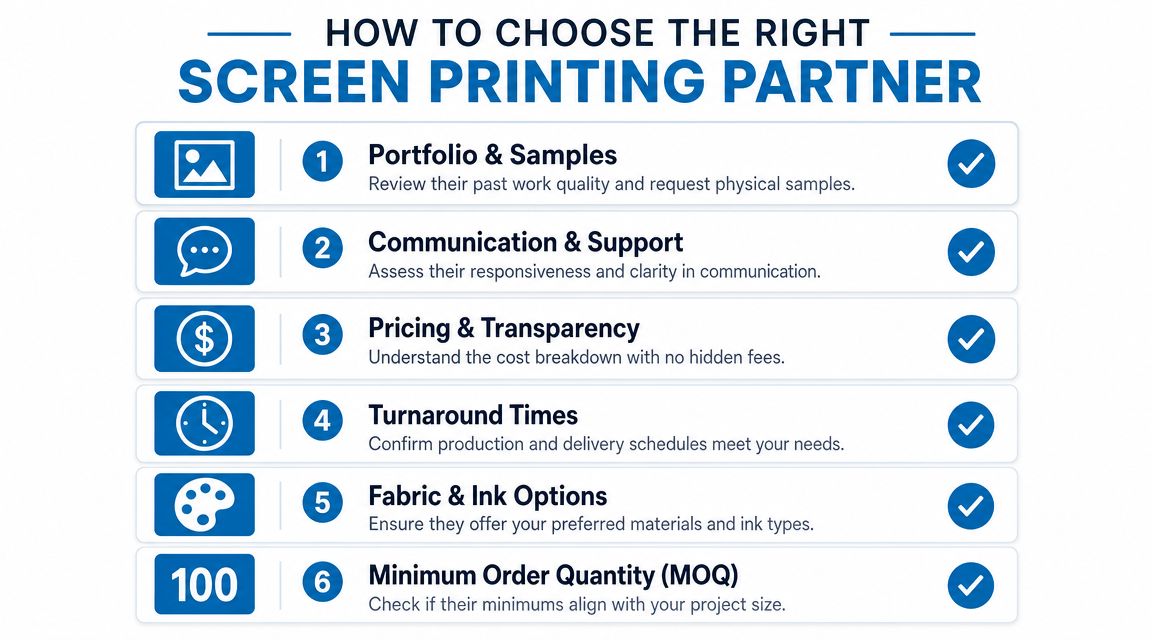
Look for signs of a shop that teaches, not just sells:
- A clear proofing process: You should know exactly what you are approving before production begins.
- Pricing that is easy to follow: The quote should show why garment choice, ink colors, and print locations change the total.
- More than one garment path: A shop that recommends the same shirt for every order is usually solving for simplicity, not fit for purpose.
- Fast, specific communication: Quick replies matter, but useful replies matter more. You want answers that reduce risk.
Good printers don't just say yes. They explain what your choices will look and feel like.
Questions worth asking before you approve
The best questions help you understand outcomes.
Ask what the shop would recommend for weekly employee wear and why. Ask whether your print size will feel heavy on that specific fabric. Ask if your file is ready for screen printing or if fine details should be adjusted before production. Ask how the shop handles repeat orders, because consistency matters if this first run turns into an ongoing program.
Those answers tell you a lot. An experienced printer should be able to connect production details to practical results. For example, they should be able to explain why a thicker cotton shirt may work better for crews who wash uniforms hard every week, or why a softer blend may make more sense for shirts you plan to sell. That is the kind of advice that protects your brand and helps your order earn its keep.
One factual example of a provider setup is Dirt Cheap Product, Inc., which offers screen printing and other decoration methods, provides proofs, and supports branded apparel orders across categories like uniforms, merch, and event gear. That kind of workflow can help if you want one place to review garments, artwork, and production options together.
A strong partner reduces surprises, protects quality, and helps you spend where it counts. That usually creates better value than chasing the lowest quote.
Conclusion: Create Apparel That Tells Your Story
The best screen printed T shirts don't come from luck. They come from good matching.
You match the fabric to the job. You match the ink to the feel you want. You match the artwork to the realities of screen printing. Then you work with a printer who can guide the order before small issues become expensive ones.
That's the difference between ordering “some shirts” and building apparel that supports your brand. A staff shirt can reinforce trust. A retail tee can feel worth buying. An event shirt can stay in someone's rotation instead of ending up at the bottom of a drawer.
If you remember one thing, let it be this: the best choice isn't universal. It depends on what the shirt needs to do after it leaves the box. Daily wear, resale, promotion, or team use all call for different priorities.
When you buy with that mindset, you stop chasing the lowest price and start getting better value. That's usually where the smartest apparel decisions begin.
If you're ready to turn your logo into apparel people will want to wear, Dirt Cheap Product, Inc. can help you sort through garment options, print methods, artwork needs, and order planning so your next shirt run fits your brand and your budget.