You've got a logo that looks perfect on screen. The blue is exact, the red is approved, and everyone on your team is happy with the brand file. Then the order shifts from a digital file to polos, hats, jackets, or patches, and the question changes fast: what thread color should you use?
That's where many embroidery orders either get smoother or get expensive. A logo color that feels obvious on a monitor can look different once it's stitched with sheen, texture, and depth onto fabric. The garment color changes the way the thread reads. Lighting changes it again. Even a strong logo can lose impact if the thread is technically close to the brand color but weak in contrast.
In production, embroidery thread colors aren't just a finishing detail. They shape whether a logo looks sharp, readable, and consistent across repeat orders. When clients understand how color translation works, approvals get faster and the final product usually looks more professional.
Table of Contents
- Why Your Digital Logo Color Is Just the Starting Point
- Translating Digital Colors to Physical Thread
- Choosing the Right Thread Material for Your Project
- How Contrast and Detail Impact Readability
- A Practical Workflow for Brand Color Consistency
- Using Proofs and Making Smart Substitutions
- Frequently Asked Questions About Embroidery Colors
- Can you match my logo exactly from a hex code?
- Why does the same thread look different on two garments?
- Should I choose the closest brand color or the most visible one?
- Are more thread colors always better?
- Is a digital proof enough to approve thread color?
- What if my preferred thread color is out of stock?
Why Your Digital Logo Color Is Just the Starting Point
A common order starts the same way. A client sends over a brand guide with hex codes, maybe a PNG pulled from the website, and a note that says, “Please match the logo exactly.” That request makes sense in digital design. In embroidery, it's only the beginning.
Thread isn't light on a screen. It's a physical material with twist, sheen, and thickness. A stitched blue on a smooth jacket won't read the same way it does on a textured cap. The same thread can look cleaner on a white polo and heavier on charcoal fleece.
What usually surprises buyers
The first surprise is that thread libraries are finite. You're not choosing from unlimited digital color values. You're choosing from a manufacturer's actual spool range.
The second surprise is that fabric changes perception. A white logo on a black cap usually reads crisp. A dark navy logo on the same cap can disappear, even if that navy is technically closer to the official brand file.
Practical rule: If the logo has to be seen from a few feet away, visual clarity matters more than chasing a perfect on-screen match.
Why this matters on repeat orders
Process matters more than preference. Businesses rarely order one item once. They order polos now, hats later, outerwear after that, and event apparel after that. If nobody defines how the logo color is being translated into thread, every reorder becomes a fresh interpretation.
That's also why teams handling portfolio-wide branding often need a cleaner system for asset changes before production starts. If you're coordinating variations across many SKUs, this resource on for large catalog logo updates is useful for organizing color changes before they hit apparel production.
A stitched logo is part brand execution, part manufacturing decision. When those two sides stay connected, the result feels intentional. When they don't, you get the kind of embroidery that's hard to complain about in writing but still looks slightly off in person.
Translating Digital Colors to Physical Thread
A common failure point shows up before the machine ever runs. A brand team approves a logo color on screen, then the stitched sample arrives looking darker, brighter, or flatter than expected. The file was correct. The assumption was not. Screen color and thread color do not behave the same way.
RGB and hex codes are design references, not embroidery production specs. Thread is a dyed, light-reflective material sewn over a fabric surface. That adds variables a monitor does not have, including sheen, stitch angle, fabric color, and ambient lighting. A navy thread can read almost black on a structured cap, then look noticeably bluer on a smooth polo under daylight.
PMS is still the best starting point because it gives everyone a fixed target before thread selection begins. In production, I use PMS to narrow the field, then I compare that target against the actual thread library for the brand being run. That second step matters because thread manufacturers use their own numbered palettes, and no mill offers every possible PMS match.
That gap between brand color and available spool is normal. The job is to choose the closest thread that reads correctly on the finished item, not to force a theoretical match that falls apart once it is stitched.
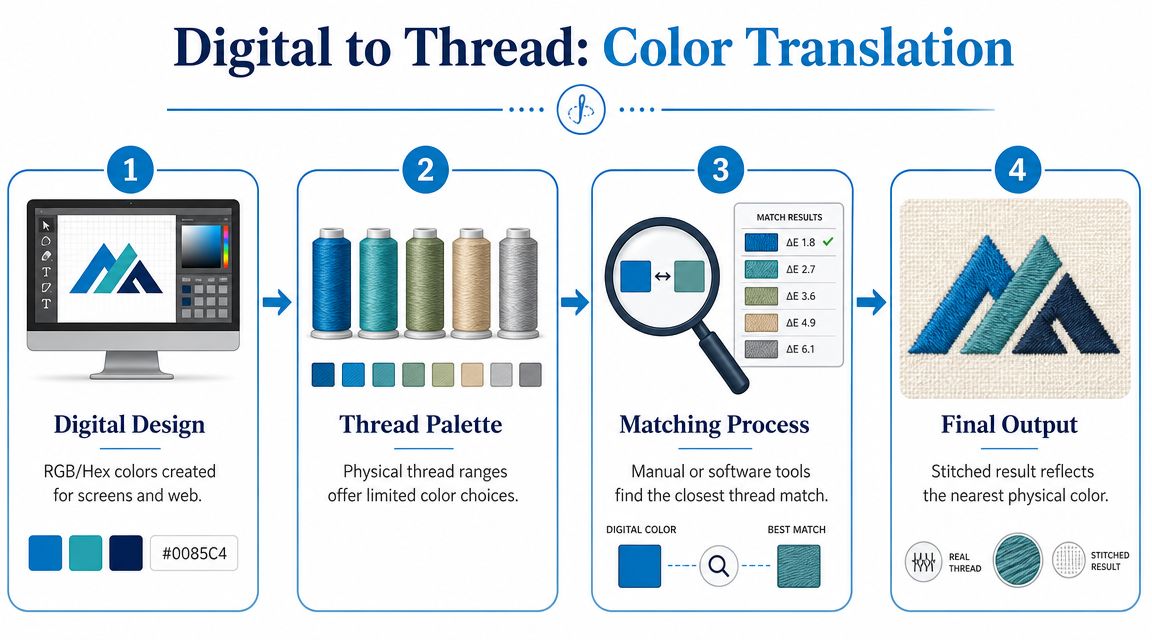
How the match is handled in production
A reliable color match usually follows four checks:
Start with the official brand reference
PMS gives the cleanest handoff. If the art file only includes hex values, the match becomes more subjective.Pull the thread library for the actual manufacturer
Madeira, Isacord, Gunold, and other brands each have their own color ranges. A close match in one line may not exist in another.Compare the thread against the garment color and texture
Thread never sits in isolation. The same red can look clean on white pique and slightly muddy on heather gray fleece.Judge the sewn result, not the chart alone
Thread charts help, but the final read comes from how the stitches catch light on the product.
That last point saves a lot of rework. A satin stitch reflects more light than a filled area, so one thread color can appear to shift within the same logo depending on stitch type and size.
If you're choosing apparel and logo treatment at the same time, review them together. Garment color, knit texture, and placement all affect how the thread reads. These polo shirts with logo options are a good example of where the base fabric can change the apparent brightness of the same thread color from one style to another.
Why digital-to-thread matching goes off track
The problems are usually predictable:
- Screen approvals under uncontrolled lighting. A bright office monitor and a phone screen will not show the same blue.
- Conversions done without a physical thread card. Digital charts are useful for narrowing options, but they are not enough for final approval.
- Approvals based on “closest code” instead of visual performance. The nearest formula match may still read poorly once stitched.
- Ignoring the fabric underneath. Dark garments absorb contrast. Textured fabrics break up clean edges.
For specialty fabrics, thread behavior can shift even more because surface pile changes how color is seen. The On Pins & Needles minky thread guide is focused on sewing, but it is a useful reminder that fabric texture can change how thread performs and how the finished color is perceived.
A good embroidery match is a controlled approximation with production constraints accounted for. That is how brands get color results that look intentional in person, across different garments, instead of only looking right on a screen.
Choosing the Right Thread Material for Your Project
Once color is narrowed down, material becomes the next decision. Two threads can look similar on a chart and perform very differently once the garment is washed, worn, stretched, or exposed to sunlight.
For most business apparel, the practical choice comes down to polyester or rayon. Both can produce a strong result. The right one depends on what the garment has to do after it leaves production.
Polyester versus rayon in real use
Polyester is usually the safer choice for uniforms, workwear, hats, bags, and outerwear. It's the workhorse option when the apparel will be handled hard and cleaned often. If a client cares more about consistency and resilience than decorative shine, polyester is usually where I'd start.
Rayon has a softer, more luminous look. It can make logos feel a little richer, especially on retail-style apparel or promotional pieces where the visual finish matters more than rough use. The trade-off is practical. If the item is going to live in demanding conditions, rayon usually isn't the first pick.
Polyester vs. Rayon Thread at a Glance
| Feature | Polyester Thread | Rayon Thread |
|---|---|---|
| Typical use | Uniforms, hats, workwear, outerwear | Retail apparel, promotional garments, decorative branding |
| Look | Clean, durable finish | Brighter, silk-like sheen |
| Wear tolerance | Better for high-use items | Better when appearance is the main priority |
| Color decision impact | Good choice when repeatability matters | Good choice when visual pop matters most |
| Common production role | Day-to-day business branding | Presentation-focused embroidery |
When specialty thread makes sense
Specialty threads are useful, but only when they fit the job. Neon, metallic, and other effect threads can make a logo stand out, but they shouldn't be treated like standard brand colors.
Color innovation expanded modern embroidery well beyond traditional cotton and silk tones. Madeira introduced the first polyester Neon embroidery thread for signal colors aimed at safety uses such as jackets, and that shift helped extend embroidery into high-visibility uniforms and promotional applications, as summarized in this overview of embroidery thread color organization and charting.
That history still shows up in current buying decisions. If the goal is visibility on safety apparel, a specialty thread might be exactly right. If the goal is a conservative corporate logo on office polos, it might look out of place.
A practical way to choose
Use the garment's job as the filter:
- For staff uniforms: Choose durability first. The cleanest result is usually the one that survives repeat wear without becoming a maintenance issue.
- For retail merch: Give more weight to finish and sheen if that supports the brand look.
- For plush or textured goods: Thread behavior changes with the surface. This practical On Pins & Needles minky thread guide is a helpful example of how fabric texture can influence thread choice in real sewing conditions.
- For safety or promo visibility: Consider whether a high-visibility color improves function, not just style.
Material choice is where many logos either stay sharp over time or start looking tired too early. The thread color matters. The thread type decides how that color lives on the garment.
How Contrast and Detail Impact Readability
A logo can be the right brand color and still fail on the garment. I see this most often on left chest polos and caps, where the art looked balanced on screen but loses definition once it is sewn at production size.
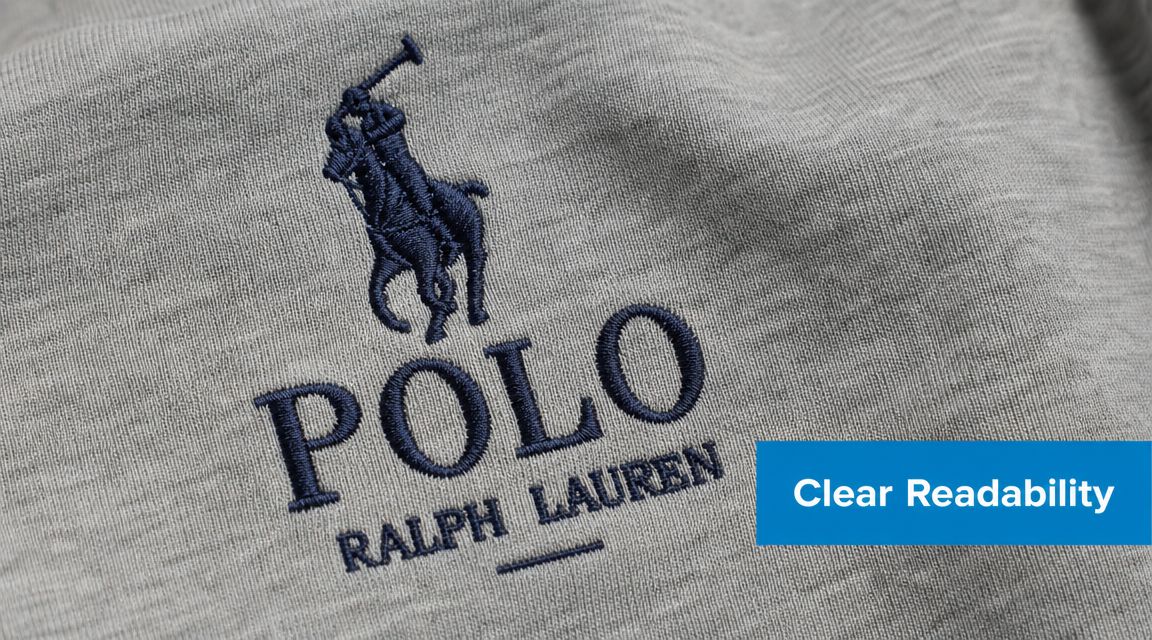
Contrast carries more weight in embroidery than it does in print or on a monitor. Thread has height, sheen, and shadow. Fabric adds texture underneath it. A dark navy logo on a black cap may be true to the brand palette, but from six feet away it can read like a blur instead of a mark.
That problem gets worse as the logo gets smaller.
Good embroidery has to read quickly
Small embroidered text needs room, contrast, and restraint. Once lettering gets too short, the stitch count required to hold multiple colors or fine separations starts fighting the shape of the letter itself. At that point, the cleanest choice is usually one thread color with stronger contrast, even if it is a slight step away from the exact digital artwork, as noted earlier in the article.
In production, I treat taglines, thin outlines, and tiny registration details as optional until they prove they can survive stitching. If they do not hold on the actual item, they should be simplified or removed. Clients usually prefer a logo that reads clearly over one that matches the original file but looks muddy on the finished piece.
Where readability usually breaks down
These are the combinations that cause repeat problems:
- Navy on black: acceptable on a color chart, weak on a finished cap or fleece.
- Mid-gray on heather gray: low separation, especially under soft indoor lighting.
- Fine gold outline around white text: looks sharp in vector art, fills in during stitching.
- Multiple thread colors inside small lettering: the letters lose shape before the color difference helps.
Placement matters too. A back yoke logo can carry more detail than a left chest logo. A flat jacket panel is more forgiving than a structured hat front. If you are reviewing cap layouts, these embroidery hat ideas show how much readability depends on the item, not just the artwork.
If the logo only works when someone is standing close, it is too detailed for that embroidered size.
Detail has to justify the stitch count
Digitizing helps, but it does not override physics. Thread spreads. Satin columns widen. Small enclosed spaces inside letters can close up, especially on textured garments or soft caps that do not hold crisp edges well.
Clients often encounter trouble with logos built for print. Hairline rules, subtle borders, and tiny knockouts often look intentional on screen and accidental in thread. The better result usually comes from editing the art for embroidery instead of forcing every original detail to stay.
This short video gives a good visual reference for how embroidered detail behaves on finished garments:
Professional embroidery reads fast, holds its shape, and stays recognizable under real lighting. Strong contrast and fewer, clearer details usually produce the best result.
A Practical Workflow for Brand Color Consistency
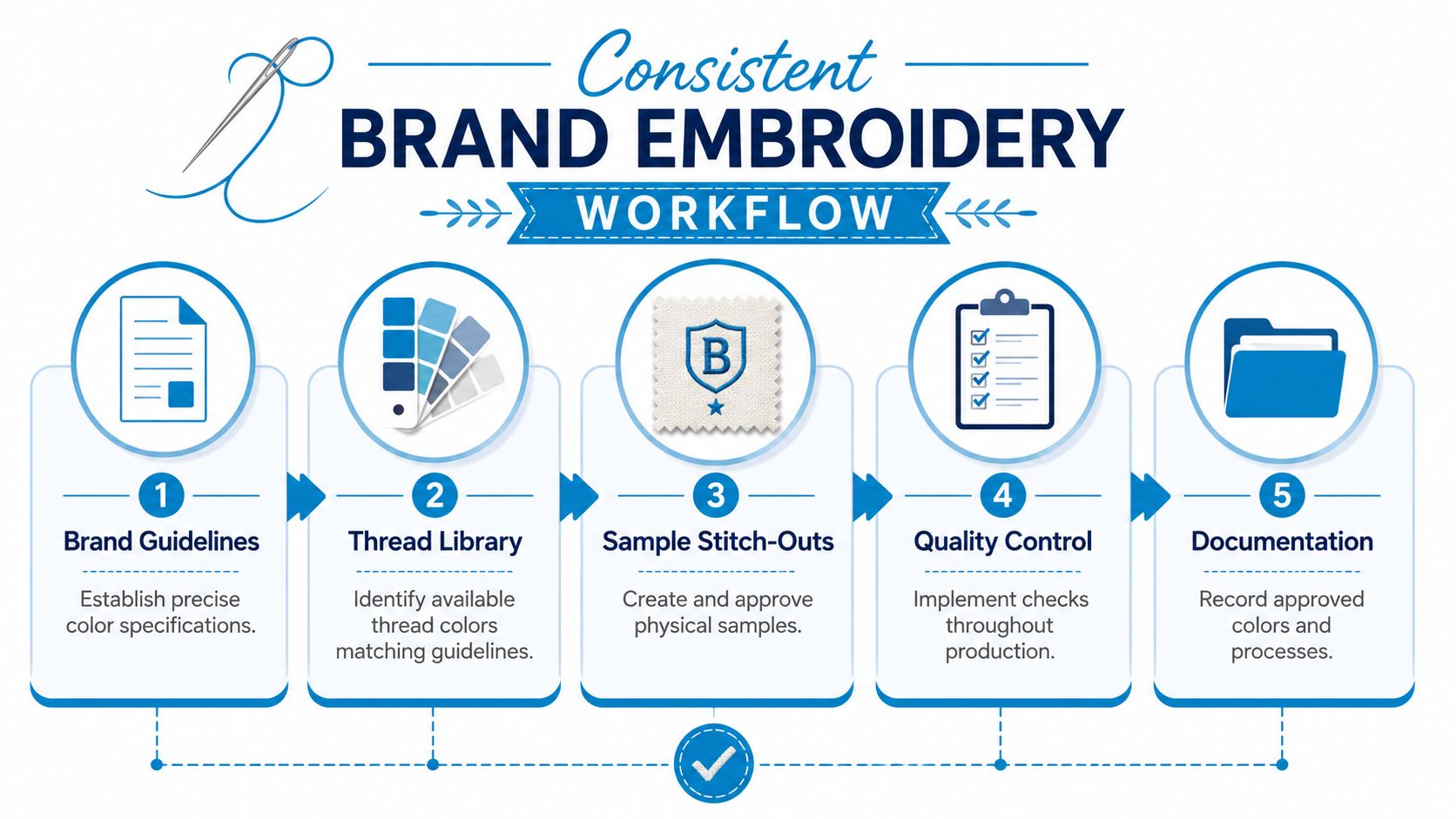
Consistency doesn't come from picking a good thread once. It comes from documenting a repeatable process that works across polos, hats, jackets, bags, and future reorders.
Many online guides stop at the chart. In production, that isn't enough. Thread has to be judged on the actual fabric, under actual light, with the actual stitch structure that will be used.
The workflow that prevents drift
Use a process like this when brand accuracy matters:
Start with official brand specs
Use PMS values if your brand guide includes them. If not, define the closest physical target before approving production.Review the available thread library
The embroidery partner should identify the nearest thread options within the manufacturer's palette.Check the logo against the specific garment color
A strong match on white may weaken on navy, red, or heather fabric.Approve a sample before scaling up
A stitch-out on the intended material catches problems that digital proofs miss.Document the approved choice
Save the thread code, garment color, placement, and any adjustments made for readability.
Why lighting changes approvals
A key issue that gets missed is perception. Independent guidance recommends comparing thread swatches against the garment fabric in natural daylight, because indoor lighting can distort color and even viewing angle affects how embroidery appears, as explained in this article on embroidery thread colors, charts, matching, and trends.
That explains why a logo can look right in the office and slightly off outdoors. It isn't always the thread. It's often the combination of sheen, fabric texture, and lighting environment.
Where businesses usually lose consistency
The weak points are predictable:
- Different people approve different runs without a saved thread reference.
- Garment colors change but the logo thread stays untouched, even when contrast should be adjusted.
- Only digital proofs are reviewed and no stitched sample is checked on the actual fabric.
For teams managing repeat orders, a placement reference is part of this consistency work too. A guide like this placement guide for embroidery helps keep the logo color, size, and position aligned instead of treating each order as a separate project.
Production note: Thread color consistency is strongest when the approval includes both the spool choice and the garment it sits on.
That's the difference between getting “close enough” and getting a reorder that looks like it belongs with the last one.
Using Proofs and Making Smart Substitutions
A proof is the last cheap place to catch an expensive color mistake. I have seen approvals sail through because the logo shape looked right on screen, then fall apart once the stitched sample hit the actual garment and one brand color turned dull, heavy, or hard to read.

The review needs to answer practical production questions. Does the thread still look on-brand once it is stitched, with sheen, on that fabric color? Do the small elements stay legible at the final size? Does the fill stitch make the color read darker than the artwork suggested?
What to check before approval
A digital proof is useful for placement, proportions, and basic thread callouts. A stitched proof is the one that shows what the customer will wear.
Check these points closely:
- Color shift on the garment: thread rarely reads the same in the cone, on a screen, and on fabric.
- Detail retention: fine outlines, small text, and narrow gaps should stay clean after stitching.
- Density effect: heavier fills can make a color look deeper and reduce separation between adjacent shapes.
- Overall balance: the design should still read as the same logo, not just the same file.
Brand-sensitive orders deserve a tighter approval standard. Uniform programs, franchise groups, school apparel, and repeat corporate orders are where a small color compromise gets noticed fast.
When the exact thread color doesn't exist
Exact matches are limited by the thread line, the garment color, and the way embroidery reflects light. An unavailable shade does not stop production. It changes how the decision should be made.
When an exact thread color isn't available, the best practice is to substitute by matching the color's value, meaning its lightness or darkness, so the new shade preserves the original design's contrast and visual effect on the garment, as demonstrated in this video about identifying thread and choosing substitutes by value.
That is the part buyers often miss. A substitute that is slightly warmer or cooler can still succeed if the logo reads correctly on the garment. A closer hue with the wrong value can disappear, especially on caps, fleece, and darker polos.
A simple substitution framework
Use this order when a perfect match is off the table:
Keep the logo readable
If the mark loses visibility at normal viewing distance, the substitute is wrong.Hold the visual role of each color
A highlight should still behave like a highlight. An outline should still separate shapes cleanly.Stay close to the brand family
Choose the nearest acceptable color family after readability and value are protected.Approve the substitute on the actual item
For high-visibility programs, review the stitched sample on the same garment style and color planned for production.
As noted earlier, production teams often pair thread approval with artwork review and proof signoff so substitutions are documented before the run starts. That record matters on reorders, because the approved substitute becomes the standard instead of a one-time guess.
Frequently Asked Questions About Embroidery Colors
Can you match my logo exactly from a hex code?
Not reliably. Hex is for screens. For embroidery, PMS is the better starting point because it gives production a physical color target rather than a digital display value.
Why does the same thread look different on two garments?
Fabric changes the result. Texture, base color, and even how the stitches sit on the surface affect the way embroidery thread colors read in person.
Should I choose the closest brand color or the most visible one?
If the logo needs to be easy to read, choose the most visible option that still feels on-brand. A technically closer match can still be the wrong production choice if contrast is weak.
Are more thread colors always better?
No. More colors can add interest in large designs, but they often hurt clarity in small logos. Simple color plans usually embroider more cleanly.
Is a digital proof enough to approve thread color?
It helps, but it doesn't show the full effect of sheen, density, and fabric interaction. A stitched sample is much more useful when the color decision is sensitive.
What if my preferred thread color is out of stock?
Use a substitute based on value, contrast, and the visual role of the color in the design. The goal is to preserve the look of the logo on the garment, not just the name of the shade.
If you're planning branded polos, hats, jackets, or patches and want help choosing embroidery thread colors that will work in production, Dirt Cheap Product, Inc. can help you review artwork, compare thread options, and approve a logo setup that stays clear, consistent, and professional on the finished garment.