You're probably here because the order suddenly became real.
A manager needs polos for a sales team. A restaurant needs front-of-house uniforms. An event organizer wants staff to look coordinated without putting everyone in stiff button-downs. The request sounds simple: get polo shirts with logo. Then the questions start. Which shirt? Which fabric? Embroidery or print? Will the logo stay sharp on a moisture-wicking polo? Will the left chest look balanced on every size?
First orders frequently go sideways. Most mistakes don't happen because the logo is bad. They happen because the shirt, logo, and decoration method were chosen separately, when they should've been chosen together. A polished result comes from treating the polo as a system, not just a blank garment with a mark added to it.
Table of Contents
- Why a Custom Logo Polo Is More Than Just a Shirt
- Choosing the Right Polo Shirt Foundation
- Selecting the Best Decoration for Your Logo
- Preparing Artwork and Defining Placement
- Navigating Pricing Timelines and Proofs
- Frequently Asked Questions about Custom Polos
Why a Custom Logo Polo Is More Than Just a Shirt
The polo works because it solves two problems at once. It looks organized enough for customer-facing work, but it still feels wearable for long shifts, travel days, trade shows, and outdoor events. That's why businesses keep coming back to it when they need branded apparel that doesn't feel overdone.
There's a reason the logo polo has staying power. The modern logo polo shirt became a major branded-apparel milestone in 1933, when the Lacoste L.12.12 was commercialized with the crocodile emblem on the left breast, one of the earliest high-visibility exterior garment logos in fashion, as noted in this history of the polo shirt. That matters because the logo wasn't added to a gimmick. It was added to a shirt built for use, with breathable piqué cotton, short sleeves, a collar that could be turned up against the sun, and a longer back tail to stay in place during play.
That same logic still applies. A good polo with logo works when the branding sits on a shirt people want to wear.
What buyers usually want from one order
Most clients aren't buying polos because they love apparel production. They need the order to do a few clear jobs:
- Look consistent: Staff should look like one team, even across mixed sizes.
- Represent the brand well: The logo should read cleanly from a conversational distance.
- Hold up to real use: Repeated washing, movement, and regular wear shouldn't ruin the mark.
- Be easy to reorder: New hires and replacement pieces shouldn't turn into a new project every time.
Practical rule: If the shirt is comfortable but the logo looks weak, the order failed. If the logo looks sharp but the shirt feels wrong for the job, the order also failed.
The strongest polo programs come from a simple sequence. Pick the garment for the work environment. Match the logo method to the artwork. Lock placement before production. Review the proof like it's the final product, because it almost is.
That's the difference between “we got shirts made” and “we built a uniform that people wear.”
Choosing the Right Polo Shirt Foundation
The shirt comes first. Not the logo.
If you choose the wrong polo blank, every decision after that gets harder. The decoration may pucker, the logo may feel too heavy, the shirt may run too warm, or the whole order may look more casual or more athletic than you intended.
Start with the job the shirt has to do
A front-desk team, a golf event crew, and a warehouse sales rep probably shouldn't wear the same polo. The right base depends on how the shirt will be used.
Here's the practical breakdown:
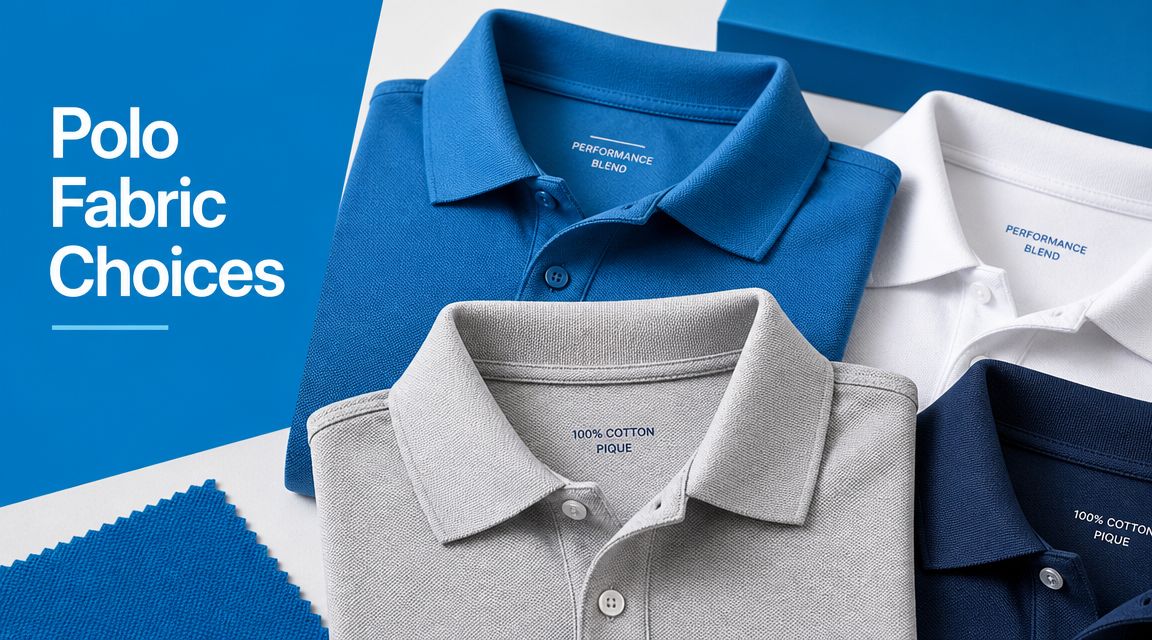
- Cotton or cotton-forward piqué: Better when you want a traditional, more established look. Piqué is the textured knit many people picture when they think of a classic polo.
- Polyester performance polos: Better for heat, movement, and repeated washing. These are common when comfort during active wear matters.
- Blended polos: Often the safest middle ground for teams that need durability without a fully athletic look.
A lot of buyers focus only on color and price. That usually leads to trouble. A soft lightweight performance polo may feel great out of the bag, but if the logo treatment is too heavy for the fabric, the chest can ripple. A textured piqué polo may look ideal for embroidery, but a highly detailed logo can still lose clarity.
Fabric affects decoration more than most buyers expect
Performance polo specifications matter because decoration quality is tied directly to fabric construction. Suppliers commonly offer moisture-wicking, breathable, quick-dry, and UV-protection fabrics, and reliable production should test the logo on the exact fabric to avoid problems like shrinking or puckering, as described by a golf polo manufacturing guide.
That's why I tell new buyers to decide in this order:
- Who's wearing it
- Where they're wearing it
- How often it's being washed
- What decoration the logo needs
A logo doesn't decorate fabric in the abstract. It decorates one specific knit, weight, stretch level, and surface texture.
If you're ordering polo shirts with logo for office staff, a stable knit usually makes life easier. If you're outfitting teams working outdoors or moving all day, performance fabric may be the better wear choice, but it needs more careful decoration planning.
A few shirt-selection mistakes show up over and over:
- Choosing lightweight performance fabric for a dense embroidered logo
- Using a very textured polo for artwork with tiny lettering
- Mixing multiple polo styles in one program without matching color and fit expectations
- Picking a shirt based only on a website photo instead of fabric feel and decoration compatibility
When in doubt, standardize. One approved polo style is easier to decorate consistently, easier to reorder, and easier for staff to wear as an actual uniform.
Selecting the Best Decoration for Your Logo
Most first-time orders are won or lost here. Buyers often ask which method is best, but that's the wrong question. The better question is which method fits this logo on this polo.
Start with this visual comparison.
Decoration Method Comparison
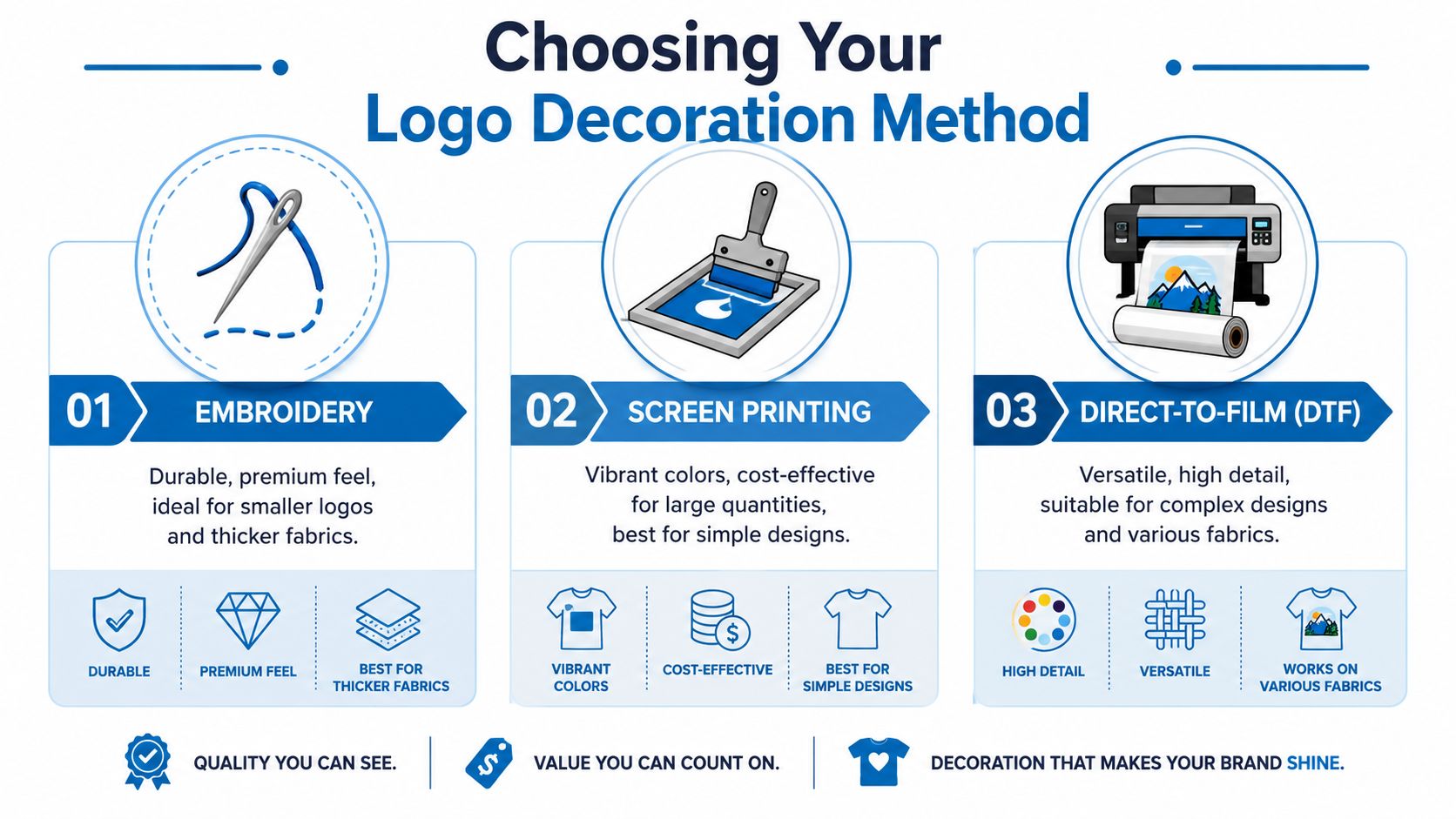
| Method | Best For | Feel | Durability |
|---|---|---|---|
| Embroidery | Left-chest logos, sleeve marks, simple artwork on stable polos | Raised, textured, premium | Very durable on suitable fabrics |
| Screen Printing | Simple logos with clean shapes, larger runs, flatter print areas | Flat hand-feel varies by ink and coverage | Durable when matched well to fabric and use |
| DTF | Detailed logos, fine lines, multicolor artwork, performance fabrics | Smooth, flexible transfer feel | Strong option when flexibility and detail matter |
For logo polos, the decoration method should be chosen by logo geometry and garment fabric, not just price. Embroidery is usually the most durable choice for left-chest and sleeve marks, but it performs best on stable knits and simpler artwork. Fine text, gradients, and very small lettering can lose legibility. A standard workflow is to vectorize the logo, digitize it to a stitch file, approve a sew-out on the exact polo style, and verify placement against the placket, collar, and chest width, as outlined in this custom polo decoration guide.
A lot of buyers also benefit from seeing how photographic and highly detailed designs behave on garments. If your logo treatment is moving beyond a standard corporate mark, this apparel photo printing guide helps explain where detailed image-based decoration works and where it doesn't.
After that overview, it helps to see the methods in motion.
How to choose without guessing
Embroidery is still the default choice for many polo programs because it looks established. It gives the left chest a finished, permanent feel. It also hides minor wear well over time. But it isn't magic. If the logo has thin strokes, stacked tiny text, or subtle gradients, thread won't reproduce that faithfully without simplifying the art.
Screen printing works well when the logo is cleaner and flatter. It can be a good answer when you want a softer profile than embroidery and don't need thread texture. On some polos, especially smoother knits, it gives a crisp corporate look. On heavily textured surfaces, it can be less forgiving.
DTF is often the practical choice when the artwork is too detailed for embroidery and the garment has stretch or a smooth performance face. It handles color complexity better, and it can preserve detail that thread would swallow.
If your logo has fine text that must stay readable, don't force it into embroidery just because embroidery feels more “professional.”
If you're weighing the trade-off between thread texture and print clarity, this side-by-side guide on screen printing vs embroidery is useful for narrowing the decision before you ask for proofs.
What to ask before you approve production
A short conversation with your decorator can prevent expensive rework. Ask these questions:
- Can my logo stay as-is, or does it need simplification?
- Will this polo fabric support embroidery without puckering?
- Will the smallest text remain readable at left-chest size?
- Should the same logo use different methods in different placement zones?
One practical note from the shop floor. Buyers often assume one method should be used everywhere on the shirt. That's not always true. A left chest may work best in embroidery, while a larger secondary mark may read better in print.
Dirt Cheap Product, Inc. handles several decoration methods for branded apparel, including embroidery, screen printing, DTF, sublimation, and patches, which is useful when a single logo system needs different applications across different garments and placements.
Preparing Artwork and Defining Placement
A good logo file doesn't just speed things up. It protects the final result.
Most production delays around polo shirts with logo come from artwork problems, not machine problems. A file may be low resolution, the colors may be unclear, or the logo may have details that don't survive reduction to chest size.
A usable file saves time and rework
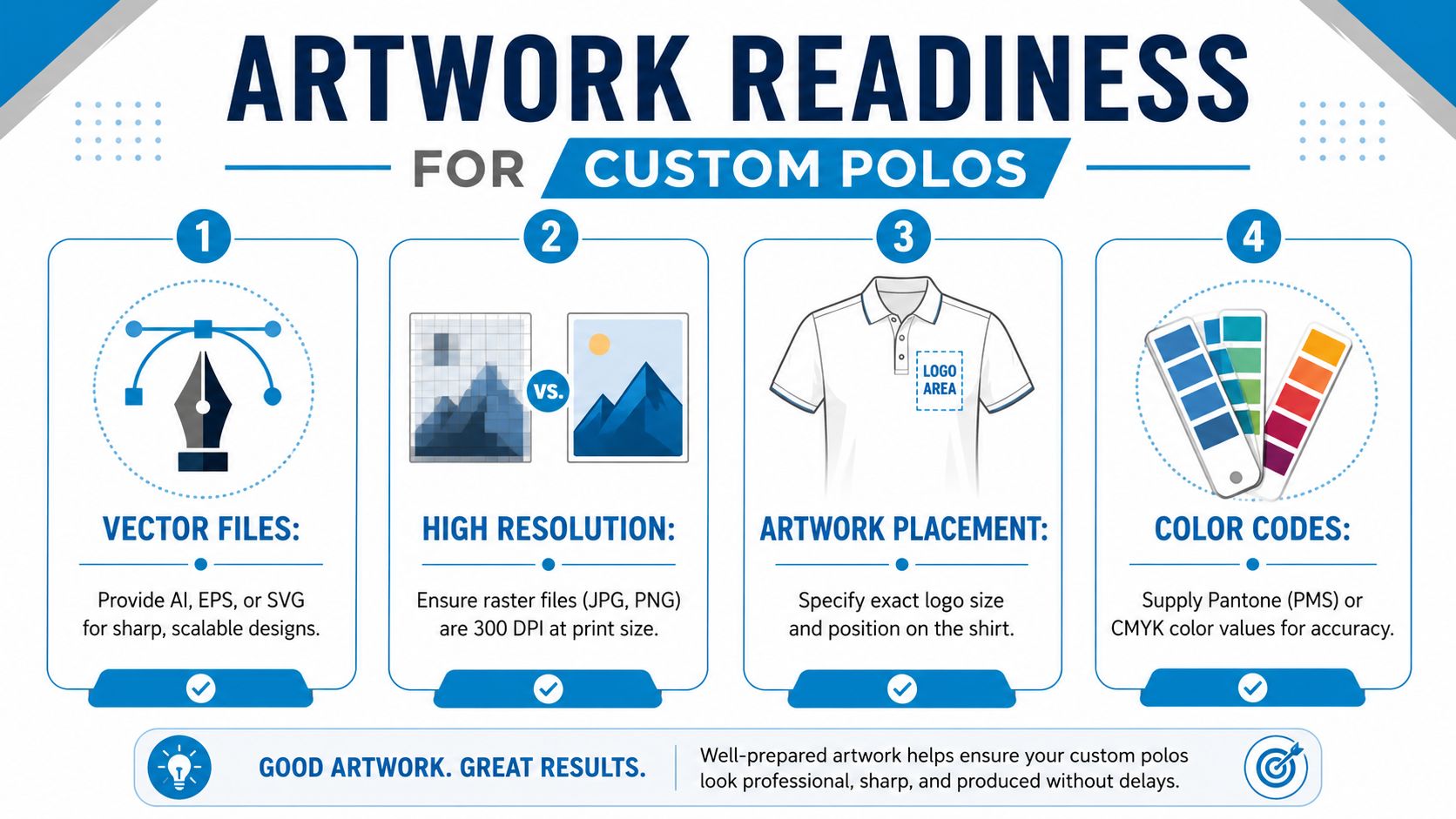
The cleanest starting point is a vector file, usually AI, EPS, SVG, or a vector PDF. Vector art scales cleanly, which matters when the same logo may appear on a left chest, sleeve, and proof sheet.
Raster files like JPG or PNG can still be workable, but only if they're high quality. If the art looks fuzzy on your screen when enlarged, it won't improve in production.
Here's a simple artwork checklist:
- Send the original logo file: Avoid screenshots pulled from a website or social media profile.
- Separate important text from decorative detail: Small lettering is usually the first thing to fail.
- Flag brand colors clearly: If exact matching matters, say so before proofing.
- Provide alternate logo versions: A full logo and a simplified mark often solve more problems than one file forced into every use.
For product photos and mockups after production, there's also a growing amount of useful advice around presentation and cleanup. These Instant Commerce AI photography insights are worth reviewing if you plan to use your finished polos in ecommerce or internal brand materials.
Placement should match the garment structure
Left chest is the standard for a reason. It's visible, balanced, and works across most industries. But good placement is more exact than “somewhere on the left side.”
The logo has to relate to the placket, collar, chest width, and shirt size range. A mark that looks centered on a medium can drift too close to the placket on a small or too far outward on a larger size if placement isn't standardized carefully.
Shop-floor note: Always review placement on the exact polo style. The same logo can sit differently on two shirts that are both labeled “polo.”
Common placement zones include:
- Left chest: Best for standard corporate branding
- Right chest: Often used for secondary branding or role identification
- Sleeve: Good for a small icon, department tag, or event sponsor mark
- Back yoke or upper back: Useful when visibility matters from behind
If you need a visual reference for common embroidery zones and how they sit on a garment, this placement guide for embroidery helps buyers communicate more precisely with production.
The other frequent mistake is oversizing. A logo that's technically readable can still look awkward if it dominates the chest panel. On polos, restraint usually looks more polished than scale.
Navigating Pricing Timelines and Proofs
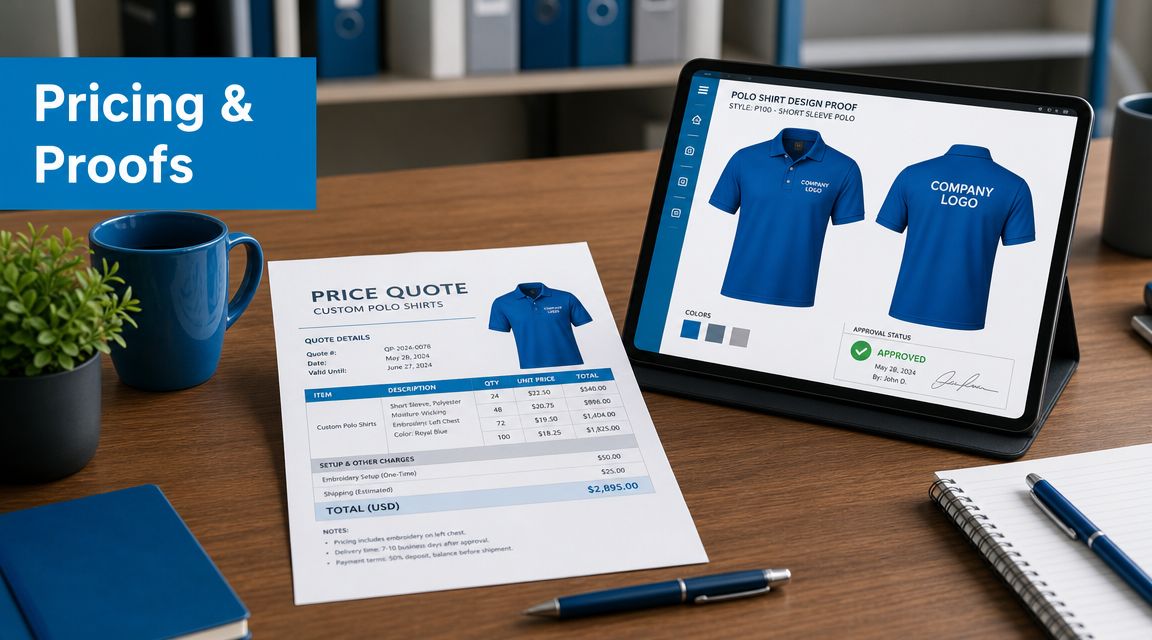
A first-time buyer often focuses on the per-shirt price, then gets surprised when the actual cost shows up in setup, approvals, and reorders. With polos, those costs depend on how the shirt, logo, and decoration method work together.
What a quote is really covering
A useful quote breaks out four things clearly: the polo itself, the decoration method, any art setup, and the production work needed to run the order correctly. If those items are bundled into one number, it becomes harder to compare suppliers and much harder to reorder the same program later.
The setup charge changes with the decoration method. Embroidery usually needs digitizing. Printed logos may need art cleanup, color matching, or method-specific setup. The cheaper option on day one is not always the cheaper option after two or three reorders, especially if the logo has to be rebuilt each time or the garment gets substituted.
Order size matters too. As noted earlier, some manufacturers set minimums that make sense for team, event, or uniform programs but are less friendly for small test runs. That is why I tell clients to price the first order and the second order at the same time. If the first batch works but the reorder becomes expensive, slow, or visually inconsistent, the original quote was never as good as it looked.
Some suppliers promote low or no minimums, but small runs can create other problems. Setup fees hit harder, color consistency can drift between batches, and replacement garments may not match six months later. This uniform polo ordering overview shows the kind of long-term program questions buyers should raise before approving an order.
Ask these questions before signing off on pricing:
- Will this exact polo still be available for reorders?
- Is the logo approved in one fixed size and location?
- Will thread, print color, or transfer film match future batches?
- Are names or department titles priced separately?
- Is this quote built for a one-time event or an ongoing uniform program?
Proof approval is the last place to catch expensive mistakes
By the time production starts, the room for correction gets small and the cost of changes goes up fast.
A proof should confirm more than the logo image. It should show the exact polo color, decoration method, placement, scale, and any personalization. The same artwork can behave differently on different polo fabrics, for a logo that looks balanced in a flat digital mockup can stitch too heavy on pique or look undersized on a slick performance knit.
For embroidery, ask for a sew-out or a method-specific proof if the logo includes thin lines, small text, or tight shapes. For print methods, check the color treatment and edge detail closely. Screen previews are helpful, but they do not fully show thread density, fabric show-through, or how a transfer sits on textured material.
Approve proofs like production will follow them exactly, because it usually will.
A reliable approval routine looks like this:
- Match the proof to the exact polo style and color
- Confirm the correct logo file and logo version
- Check placement against the actual shirt structure
- Review small text, outlines, and line thickness
- Verify every name, title, and department mark
- Save the approved proof and order details for reorders
Timelines deserve the same level of attention. Standard production time usually starts after art approval, not when the order is placed. If your in-hand date is fixed, say that at the beginning. That gives the shop time to flag risks early, suggest a simpler decoration method if needed, or recommend a stock polo instead of a special-order style. If your schedule is compressed, this fast turnaround custom apparel guide gives a practical view of what rush production changes, and what it does not.
Frequently Asked Questions about Custom Polos
Which decoration lasts longest on performance polos
This depends on the specific fabric and the logo itself. A common buyer question is durability on lightweight performance polos. While embroidery is often promoted for its premium look, its durability on high-stretch performance fabrics can be lower than modern DTF transfers, which are designed to flex with the material, as explained in this performance apparel decoration resource.
Can I use the same logo file for every decoration method
Sometimes, but not always. A logo that works in print may need simplification for embroidery. Thin lines, tiny text, and gradients usually need special handling. It's common to keep one master logo and prepare separate production versions for thread and print.
What's the safest placement for a first order
Left chest is still the safest default. It works for most industries, looks balanced, and usually reorders well. If you want a second logo location, add it only if it serves a clear purpose.
Should I ask for a digital proof or a physical sample
For many orders, a digital proof is enough if the artwork is simple and the placement is standard. If the polo fabric is unusual, the logo is detailed, or the order is important enough that mistakes would be costly, a physical sample or sew-out is worth considering.
How should staff wash logo polos
Use the care instructions for the garment and decoration type. In general, gentle washing, lower heat, and avoiding unnecessary abrasion will help logos last longer. Printed polos should be treated a little more carefully than many people expect, and embroidered polos shouldn't be judged only by thread strength. The shirt fabric matters too.
Can I mix sizes in one order
Usually yes, and you should plan the size range before proof approval. What matters most is that the placement spec stays consistent across the size run so the logo doesn't look too high, too low, or too close to the placket on different garments.
If you're ready to order polo shirts with logo and want help matching the shirt, artwork, and decoration method before production starts, Dirt Cheap Product, Inc. can review your logo, provide proofs, and help you build a cleaner first order that's easier to reorder later.