You're probably here because a T-shirt order didn't go the way you expected, or you're trying to avoid that problem before it happens. The shirt looked fine in the catalog, the price worked, and the color matched your brand. Then the finished order arrived and something felt off. The print looked too heavy on the shirt. The embroidery puckered. The fabric felt thinner than your team wanted. Or the whole thing looked more like a giveaway than a piece people would keep wearing.
That usually comes back to one choice buyers underestimate: the weight of T shirt fabric.
In custom apparel, weight isn't just a comfort detail. It affects how the shirt hangs, how solid it feels in hand, how it handles ink or thread, how it wears after washing, and how much confidence people have when they put it on. If you're ordering uniforms, event shirts, merch, or retail-ready branded apparel, fabric weight changes the final result more than most first-time buyers expect.
Table of Contents
- Why T-Shirt Weight Matters More Than You Think
- Decoding T-Shirt Weight Oz vs GSM Explained
- How Fabric Weight Affects Feel Durability and Style
- Matching Weight to Decoration Method for Best Results
- How to Choose the Right T-Shirt Weight for Your Project
- Estimating Bulk Shipping Weight and Final Considerations
Why T-Shirt Weight Matters More Than You Think
A common mistake is choosing shirts by color, price, and brand recognition, then treating weight like a minor spec buried in the product page. That's backwards. In production, the shirt body is the foundation. If the foundation is wrong, even clean artwork and careful decoration won't save the final piece.
A lightweight tee can work well for a summer promo or a road race where breathability matters most. The same shirt can become a problem if you add a large front print, a sleeve hit, and a back graphic. The fabric may feel too soft for the amount of decoration, and the finished shirt can end up looking overloaded. On the other side, a heavyweight blank can make a one-color chest logo look premium and durable, but it may feel too warm or too stiff for an outdoor event in heat.
That's why experienced decorators ask better questions than “What's your budget?” They ask what the shirt is for, who will wear it, how often it will be washed, and what decoration method will be used.
Practical rule: Don't choose a shirt weight first by price. Choose it by use, then see which blanks in that category fit the budget.
T-shirt weight also shapes perception. Staff uniforms often need to feel dependable and hold their shape. Retail merch usually needs a balance of comfort and shelf appeal. Event shirts often need to be affordable, breathable, and easy to distribute in bulk. Those are different jobs, and they shouldn't all use the same blank.
When clients focus only on “soft” or “cheap,” they usually miss the question that matters most: Will this fabric support the final decorated product you want? That's the point of understanding the weight of T shirt options before you place the order.
Decoding T-Shirt Weight Oz vs GSM Explained
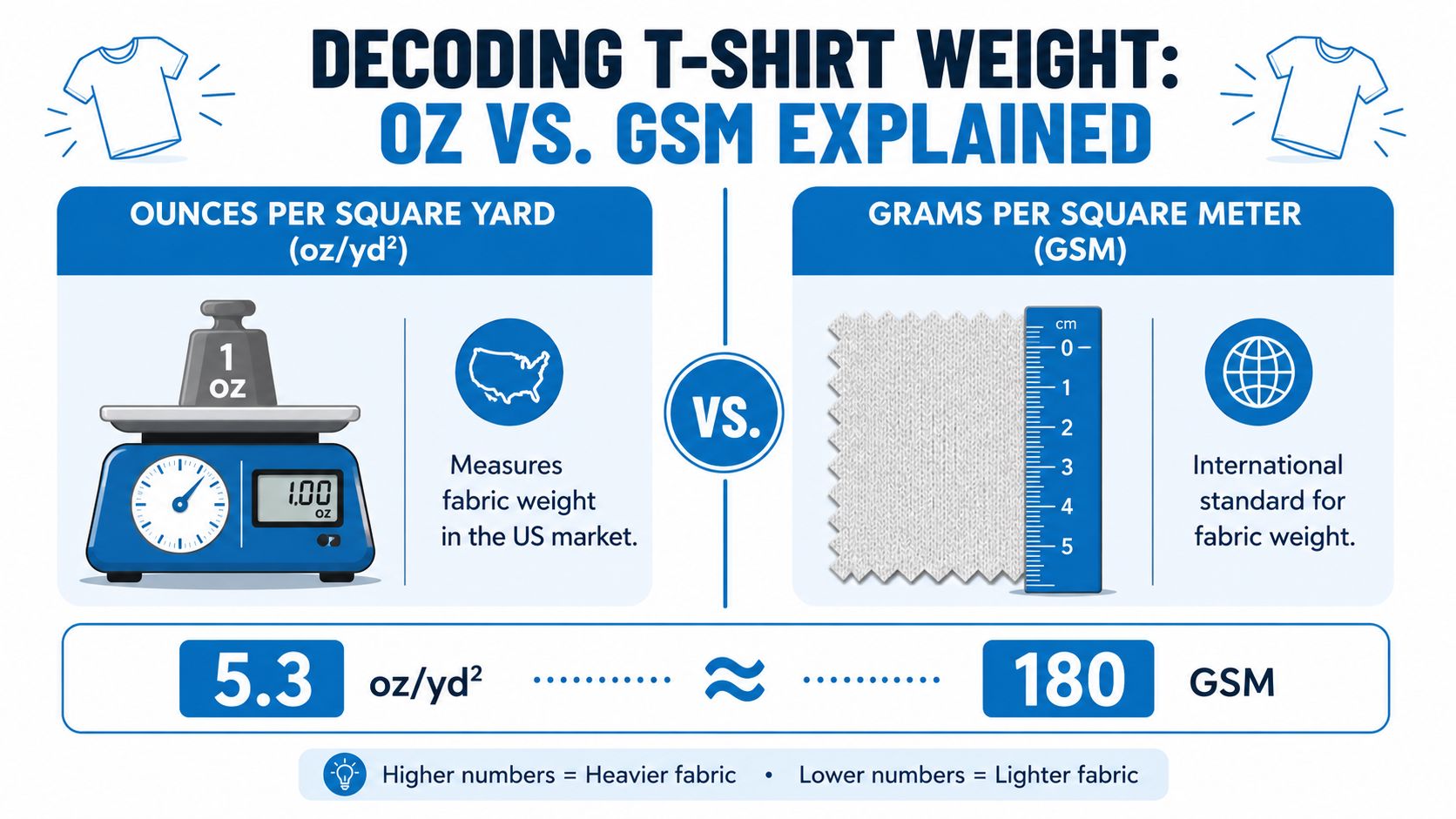
Shirt weight gets confusing fast when one supplier lists 5.3 oz and another lists 180 GSM for what looks like the same kind of blank. They are using different units for the same fabric property: how much the knit weighs over a set area.
What the Measurements Mean
Ounces per square yard (oz/yd²) is the format many U.S. mills, wholesalers, and decorators use. Grams per square meter (GSM) is the metric version and shows up often in import catalogs and international sourcing sheets. Both describe fabric density, not overall garment quality.
Paper is a useful comparison. Standard copy paper and cardstock can both be good materials, but they handle very differently once you print on them. T-shirt fabric works the same way. A heavier knit usually has more body and support, while a lighter knit bends and drapes more easily. If that comparison helps, this quick look at heavy cardstock paper makes the difference easy to visualize.
For buyers, the main point is simple. A higher number usually means a denser fabric. That affects how the shirt handles ink, stitching, heat, and repeated washing once decoration is added.
Common ranges buyers run into
You do not need to convert every spec sheet by hand. You need to recognize the range and what that range usually means for a decorated order.
| Category | Ounces (oz/yd²) | Grams (GSM) |
|---|---|---|
| Lightweight | about 4.5 oz and below | about 120 to 150 GSM |
| Midweight | about 4.5 to 5.3 oz | about 150 to 180 GSM |
| Heavyweight | about 5.5 oz and up | 180+ GSM |
These ranges are useful shorthand, but they are not a full performance test. A 5 oz ring-spun cotton tee and a 5 oz cotton-poly blend can print differently, feel different in hand, and react differently under embroidery tension or a heat press. Knit structure and fiber content still matter.
That distinction matters in decoration shops every day. A client may compare two blanks that both sit in the midweight range, then wonder why one holds a large screen print flatter while the other shows more movement after washing. The weight number helps narrow the field, but it does not replace checking the fabric type and the decoration plan.
The weight spec tells you what kind of surface you are starting with, which is why it matters before you choose screen print, embroidery, DTF, or sublimation.
When you compare blanks across catalogs, ask for the fabric weight in both oz and GSM if possible. It prevents bad comparisons, especially when one vendor markets softness and another markets durability, but the decoration method needs a fabric that can support the finished product.
How Fabric Weight Affects Feel Durability and Style
Fabric weight changes the shirt before any logo goes on it. It changes the hand feel, how much structure the body has, how the sleeves sit, and whether the shirt reads as casual promo wear or something closer to premium merch.
What lightweight feels like in real use
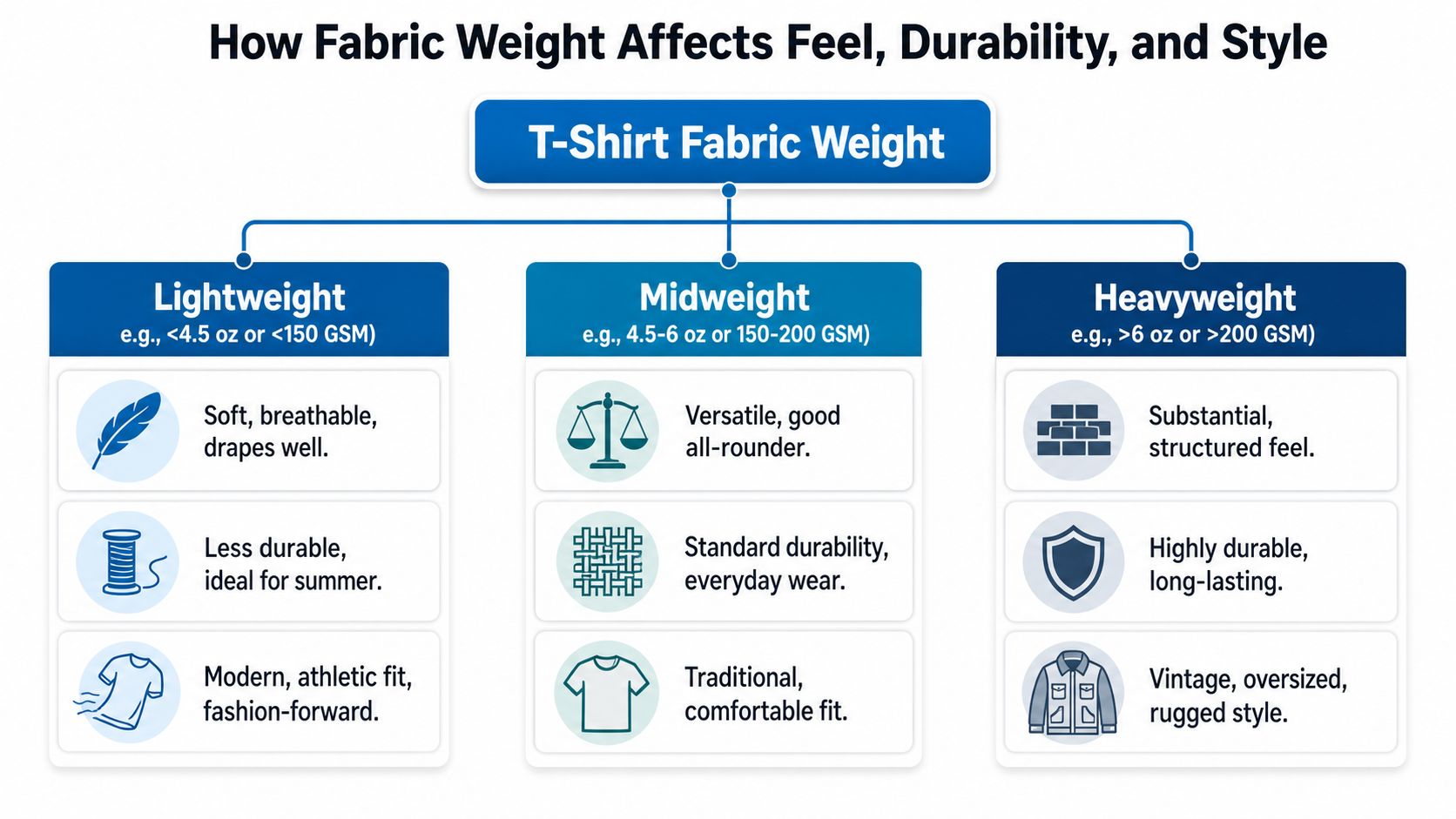
Lightweight shirts usually feel softer, airier, and easier to wear in heat. They tend to drape more and feel less substantial in hand. That can be exactly right for seasonal promotions, active settings, or large giveaway orders where comfort and lower material use matter.
The trade-off is structure. Lighter shirts can feel less opaque and less durable when they're used hard or washed heavily. If the fit is slim and the fabric is light, the garment can also show more of the body underneath, which some teams don't want for uniforms or public-facing staff apparel.
For blends, the hand can get even softer. A light tri-blend won't feel the same as a light basic cotton tee. Weight still matters, but fiber content changes the final texture and drape enough that you should judge both together, not separately.
Where midweight and heavyweight change the look
A useful sourcing rule is that heavyweight T-shirts begin around 5.5 oz/yd², with the category often split into 5.5–6.0 oz entry heavyweight, 6.1–7.0 oz true heavyweight, and 7.1+ oz super heavyweight, according to Heavy T Shirt's weight classification guide. The same source notes that standard retail tees are commonly listed at 4.5–5.3 oz/yd², while fast-fashion tees often use 3.5–4.5 oz/yd².
That gap matters in real life. A standard retail tee usually gives you the easiest balance of comfort and everyday durability. It doesn't feel flimsy, and it doesn't feel overly dense. For many company shirts, this is the safe middle.
Heavyweight shirts create a different look. They feel more substantial, hold shape better, and often give logos a cleaner platform because the shirt body doesn't collapse as easily. That's why they're popular for streetwear, workwear-inspired merch, and branded apparel where the blank itself is part of the perceived value.
- Lightweight fabric works well when the wearer needs airflow and a softer drape.
- Midweight fabric is usually the least risky choice for mixed audiences.
- Heavyweight fabric fits projects where structure, opacity, and longevity matter more than a barely-there feel.
A shirt can be comfortable and still feel cheap. Weight is one of the things that separates those outcomes.
Style also shifts with weight. Heavier blanks often suit boxier cuts and a more substantial silhouette. Lighter blanks usually feel more relaxed, more athletic, or more fashion-basic depending on the fabric blend. If you're ordering for a brand, not just an event, that difference matters.
Matching Weight to Decoration Method for Best Results
A common failure point in custom apparel orders looks like this. The shirt sample feels great in hand, everyone approves it, and the decoration choice comes later. Then the print looks too heavy for the fabric, the embroidery puckers, or the finished shirt loses shape after a few washes. The better process is to choose the blank around the decoration method, not the other way around.
Screen print and DTF need fabric stability
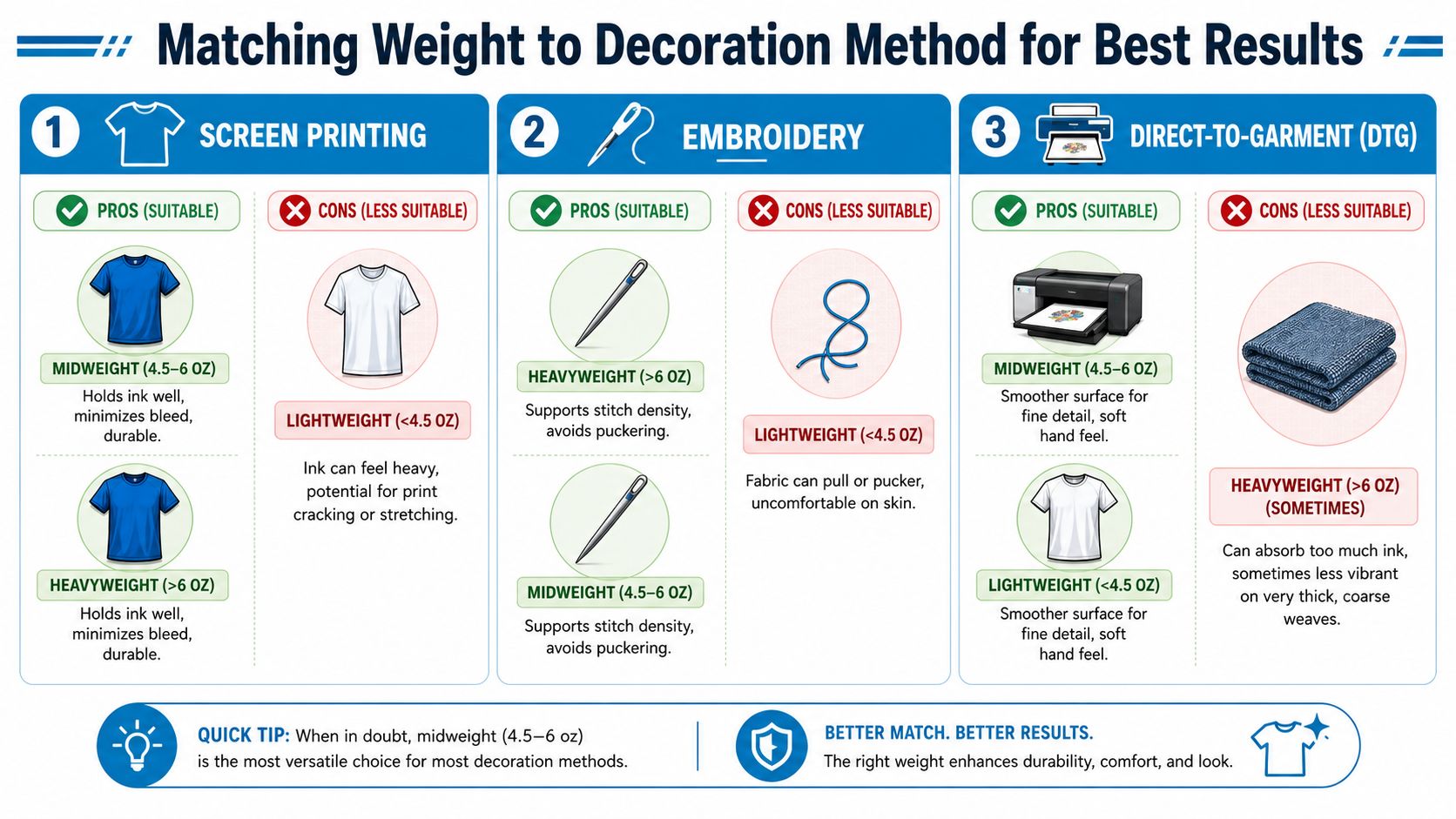
Screen printing rewards a shirt that can stay flat, hold registration, and carry the ink without looking stressed. On very light tees, especially with large front prints or heavy white underbases, the fabric can shift during production and the print can end up feeling more substantial than the shirt itself. Midweight blanks are usually the safe zone. Heavyweight blanks often look even better for bold graphics because the fabric has enough body to support the print visually and physically.
DTF has a similar issue, but for a different reason. The transfer can apply well to light fabric, yet the finished piece may feel unbalanced if the graphic is large and the garment is soft and thin. That does not mean DTF requires a heavy shirt. It means the larger and denser the transfer, the more careful you need to be with blank selection. If you are weighing decoration methods for a logo program or merch run, this comparison of screen printing vs heat transfer helps clarify where each method fits.
Small prints give you more freedom. Big graphics reduce it.
Embroidery needs body. Sublimation needs the right fabric base.
Embroidery puts tension into the garment. Needles penetrate the fabric, backing adds stiffness, and dense stitch counts pull against the knit. That is why lightweight tees can wrinkle or pucker around the logo, especially on left-chest placements with tight lettering or filled areas. A shirt with more structure usually holds embroidery cleaner and wears better over time.
This matters even more on uniforms and branded apparel that get repeated use. A thin shirt with a stitched logo may look acceptable on day one and distorted after wash cycles. A heavier blank costs more up front, but it often protects the decoration and lowers the chance of a reorder caused by poor wear performance.
Sublimation follows different rules. Weight still affects drape, opacity, and overall feel, but fiber content drives the method first. Once you are on a compatible polyester garment, weight becomes a product decision. Lighter shirts suit athletic promotions, race tees, and hot-weather use. Heavier options make sense when the buyer wants the print to live on a shirt that feels less sheer and more substantial in hand.
A practical shop-floor summary looks like this:
- Screen print: Best on midweight and heavyweight tees when the design has solid coverage, underbase, or multiple colors.
- Embroidery: Safer on shirts with enough body to resist puckering and support backing.
- DTF: Flexible across many blanks, but large transfers can overpower very light fabric.
- Sublimation: Choose the weight based on wear conditions, opacity, and the finished feel you want after confirming fabric compatibility.
Dense decoration needs a shirt with enough body to carry it well.
Dirt Cheap Product, Inc. handles screen printing, embroidery, DTF, and sublimation across a broad apparel range. That kind of mixed-method production setup is useful because it lets buyers compare decoration limits against the actual blank, instead of judging from a catalog photo alone.
How to Choose the Right T-Shirt Weight for Your Project
Most buying decisions get easier when you stop asking, “What's the best shirt?” and start asking, “What does this shirt need to do?” The right weight depends on wear conditions, decoration method, budget pressure, and how polished the final piece needs to feel.
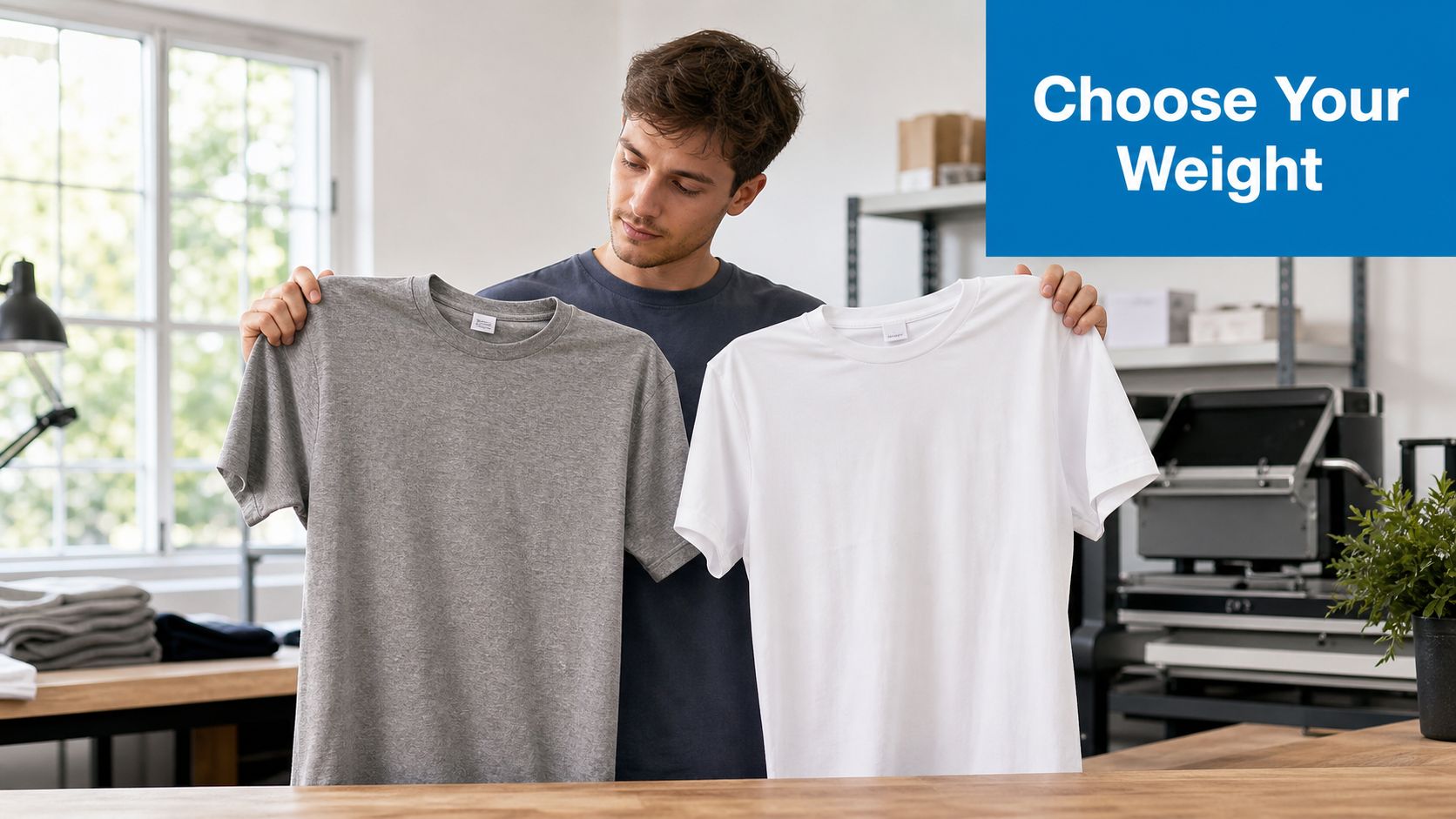
Heavier fabrics are better for structure and dense decoration, while lighter tees excel in breathability and are ideal for lower-cost event wear, as explained in Clothes2order's T-shirt weight guide. That's the practical filter to use when comparing options.
Start with the job the shirt has to do
Ask these questions before you approve a blank:
- How hard will the shirt be used? Staff uniforms and repeat-wear merch usually need more body than one-day event shirts.
- How heavy is the decoration? A small one-color logo gives you more flexibility than a large front-and-back graphic set.
- What climate is it for? Hot outdoor use pushes many orders lighter. Indoor workwear or retail merch can move heavier.
- What impression should it create? Promotional, practical, or premium are not the same target.
If you're narrowing down brands and blanks, this guide to popular shirt brands for custom printing is a useful next step because brand cut and fabric character can change how a given weight feels in real use.
Use case based picks
For event giveaways: Lean lighter if the goal is affordability, easy distribution, and warm-weather comfort. Keep decoration simple and don't overload the shirt with oversized graphics unless the blank can support it.
For company uniforms: Midweight is often the least risky path. It balances comfort, everyday durability, and a cleaner presentation. If staff are customer-facing, a shirt that holds shape better usually reads more professional.
Here's a quick visual before you finalize your shortlist.
For premium merch: Move toward heavier retail blanks, especially if the shirt itself is part of the value proposition. A more substantial hand feel can support a higher-end presentation, especially with minimal branding or strong print placement.
For athletic or hot-weather wear: Breathability comes first. Lightweight options make sense, but be honest about decoration size and method. The lighter the shirt, the more careful you need to be about keeping the artwork proportionate.
- Low-cost distribution order: Choose lighter fabric and simpler decoration.
- Repeat-use team apparel: Stay in the middle unless there's a strong reason not to.
- Retail-style launch: Use heavier blanks when you want structure and a more premium hand feel.
- Embroidered logo program: Avoid very thin shirts unless the stitch count is modest and placement is forgiving.
The right weight of T shirt fabric is the one that supports the wearer, the logo, and the job the garment has to do.
Estimating Bulk Shipping Weight and Final Considerations
Heavier shirts don't just feel different. They change your shipping costs significantly.
I see this catch buyers most often on larger custom orders. A lightweight promo tee and a heavier retail blank can look close enough on a product page, but once you multiply that difference across dozens or hundreds of units, freight, mailer size, and fulfillment pricing start to shift. Packaging adds more weight, and decoration can add a little bulk too, especially on orders that need folding, bagging, or retail presentation.
That matters more if you are shipping individual orders than sending one carton to a single location. For print on demand, every ounce affects margin, which is why this guide to print on demand profitability is useful context when you are choosing blanks.
The practical move is to price shipping after you narrow your garment options, not at the start. Compare the actual blank specs, then ask how the decoration method affects packing and presentation. A midweight shirt with a simple screen print is usually easier to forecast than a heavier premium blank with neck labels, embroidery, and individual poly bags.
Final decisions should balance four things together: garment feel, decoration performance, expected wear, and shipping cost. If one of those gets ignored, the order often looks good in the mockup and gets expensive in production.
If you're comparing blanks and aren't sure which fabric weight fits your logo, use case, or decoration method, Dirt Cheap Product, Inc. can help you narrow the options and review artwork, placement, and garment choices before production.