You're probably here because a hat order didn't go the way you hoped. Maybe the cap looked great online, but it pinched your forehead the minute you put it on. Maybe you ordered branded hats for a team, only to realize “one size” didn't work for everyone. That happens all the time, and it usually comes down to one simple issue. The size wasn't matched to the actual measurement.
A good hat sizing guide takes the mystery out of the process. Once you know where to measure, how to read the size chart, and how different hat styles fit, buying a hat gets much easier. The same is true when you're ordering custom hats for staff, events, or resale. Personal fit still matters, even in a bulk order.
Table of Contents
- Why a Perfect Hat Fit Matters
- How to Measure Your Head Accurately
- The Ultimate Hat Size Conversion Chart
- Finding the Right Fit for Different Hat Styles
- Troubleshooting Common Hat Fit Issues
- Tips for Ordering Custom Branded Hats
- Frequently Asked Questions About Hat Sizing
Why a Perfect Hat Fit Matters
A hat that fits right doesn't just feel better. It sits better, looks better, and gets worn more often.
Think about two common situations. In the first, someone orders a cap for everyday wear. The crown is the right style, the color is great, but the fit is off. It leaves a pressure line on the forehead, rides too high, or slips down over the ears. That hat usually ends up on a shelf.
In the second, a business orders custom branded hats for a company event. The logo embroidery is sharp, the colors match the brand, and the hats arrive on time. But if the fit is awkward for half the group, people won't wear them long enough for the hats to do their job.
A well-fitted hat earns repeat wear. A poor fit turns even a good-looking hat into a giveaway nobody keeps.
That's why size matters whether you're buying one hat for yourself or placing a larger order for a team, fundraiser, pop-up shop, or outdoor event. Comfort is the first test. Appearance is the second. If the band sits where it should and the shape works with the wearer's head, the hat looks intentional instead of borrowed.
Fit affects more than comfort
A hat that's too tight can feel distracting within minutes. A hat that's too loose can shift every time you move, especially outdoors. Neither feels polished.
For branded hats, fit also changes how your logo is presented. If the hat sits too high, the front panel can look awkward. If it droops or twists, the branding won't look as clean when people wear it in real life.
Confidence comes from getting the basics right
Most sizing problems start before the order is placed. People guess. They rely on “medium” without checking a chart. Or they assume all cap styles fit the same.
They don't.
Once you measure correctly and understand what the numbers mean, the process gets much less frustrating. That little bit of prep saves returns, second-guessing, and boxes of hats nobody wants to wear.
How to Measure Your Head Accurately
Getting the right number starts with one habit. Measure where the hat sits, not where you think your head is widest.
What you need before you start
You only need a few simple things:
- A soft measuring tape if you have one.
- String and a ruler if you don't.
- A mirror so you can keep the tape level.
- A notepad or phone to save the result right away.
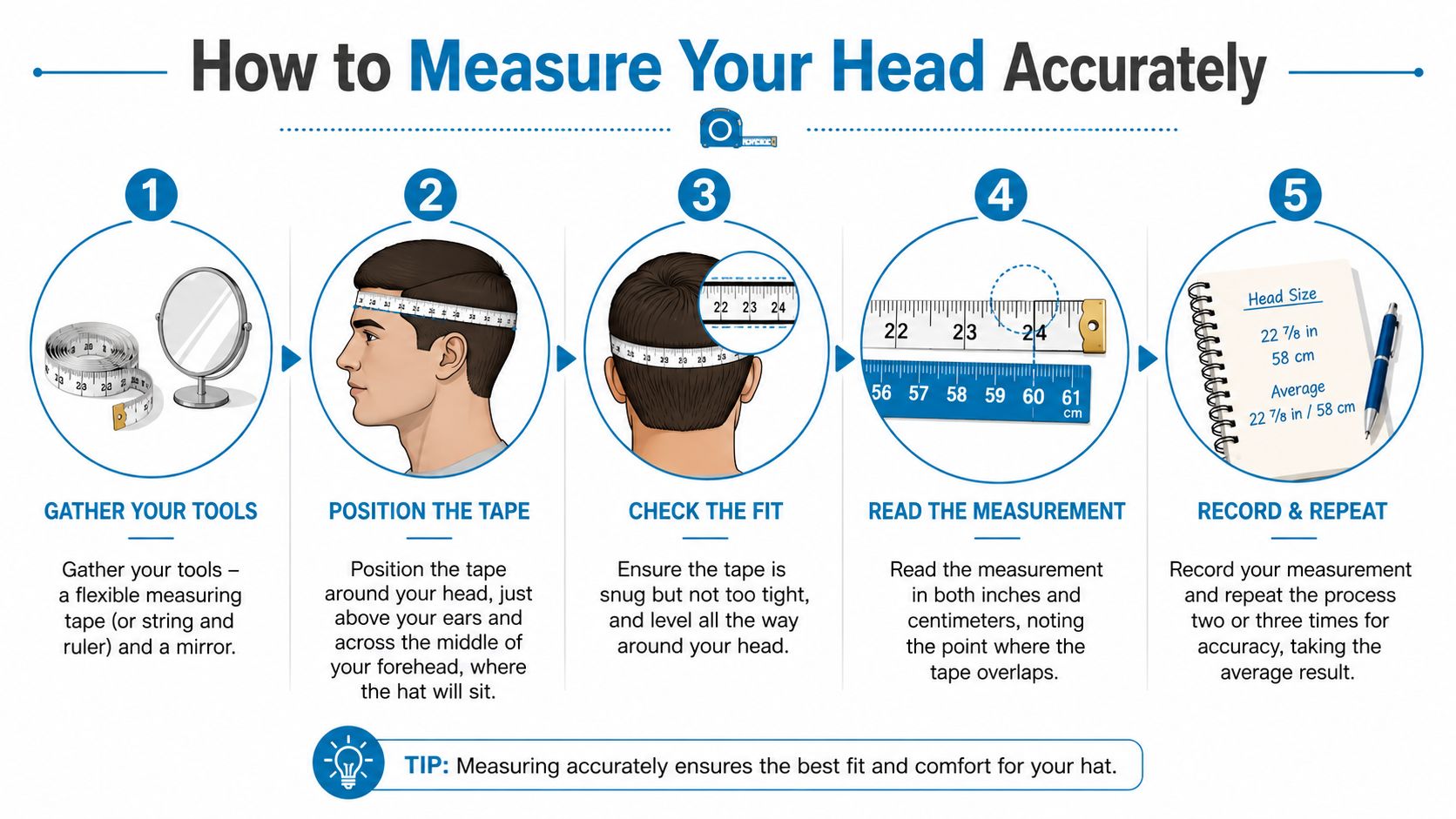
This visual walks through the process clearly:
If you're shopping for a casual cap style, it also helps to look at the shape you plan to wear. A mid-profile cap may sit and feel a little different from a deeper or flatter crown, even when the size is correct.
How to measure step by step
The industry standard is specific. The standard placement for measuring hat size is approximately one inch above the eyebrows and just above the tops of the ears, which corresponds to where about 90% of hats naturally sit for both men, women, and unisex styles according to The Hat Chick's sizing guide.
Follow these steps:
- Start at the forehead. Place the tape about one inch above your eyebrows.
- Wrap it around your head. Keep it just above the tops of your ears.
- Check the line in the mirror. The tape should stay level all the way around.
- Pull it snug, not tight. You want the fit of a hat's sweatband, not a squeeze.
- Read the overlap point. Record the number in inches and centimeters if possible.
- Measure again. Repeat it a couple of times. If the numbers differ slightly, use the measurement that reflects the most natural fit.
Practical rule: If the tape leaves a deep mark, you pulled too hard. If it slides around, it's too loose.
A short video can help if you want to see the motion instead of just reading about it.
Mistakes that throw off the number
The biggest measurement errors are simple.
- Measuring too high: If the tape rides up the back of the head, the number won't reflect where the hat rests.
- Tilting the tape: A slanted loop can add or subtract enough to push you into the wrong size.
- Compressing thick hair too much: Measure the way you expect to wear the hat most often.
- Using one rushed reading: A second check catches a lot of mistakes.
If you're ordering for a group, don't ask people to “just send their usual size.” Ask for an actual head measurement. That one step prevents a lot of fit complaints later.
The Ultimate Hat Size Conversion Chart
Once you have your measurement, the next challenge is translating it. Many shoppers encounter difficulty at this stage. One brand shows inches, another uses centimeters, and another lists only fitted sizes or letters like M and L.
How fitted hat numbers work
The fitted system follows a standard pattern. Fitted hat sizes range from 6 7⁄8 to 8+, with each size increment representing approximately 1⁄8 inch in growth. To calculate cap size, divide the head circumference in inches by 3.14 and round to the nearest eighth-inch, as shown in American Hat Makers' hat size chart.
That sounds technical, but the practical takeaway is simple. Small differences matter. Even one step up in fitted sizing can change how a hat feels on your forehead and around the sides.
If you buy other carry items for travel or event kits, size charts can feel familiar. A good example is this complete weekender bag size guide, which helps shoppers match dimensions to real use instead of guessing from labels alone. Hat sizing works the same way. The chart matters more than the word on the tag.
Hat size conversion chart
| Centimeters (cm) | Inches (") | US Fitted Size | UK Fitted Size | General Size |
|---|---|---|---|---|
| 52 to 53 | 20 to 20 7⁄8 | varies within range | varies within range | XS |
| 55 | 21 5⁄8 | 6 7⁄8 | 6 7⁄8 | Small |
| 55.9 | 22 | 7 | 7 | Medium |
| 56 to 57 | 22 to 22 3⁄4 | varies within range | varies within range | MD |
| 57.8 | 22 3⁄4 | 7 1⁄4 | 7 1⁄4 | Medium |
| 58.4 | 23 | 7 3⁄8 | 7 3⁄8 | Large |
| 58 to 59 | 22 7⁄8 to 23 1⁄2 | varies within range | varies within range | LG |
| 59.7 | 23 1⁄2 | varies within range | varies within range | XL |
| 60 to 61 | 23 5⁄8 to 24 1⁄4 | varies within range | varies within range | XL |
| 61 | 24 | 7 3⁄4 | 7 3⁄4 | XL |
| 62 to 63 | 24 3⁄8 to 24 7⁄8 | varies within range | varies within range | XXL |
| 63.5+ | 25+ | 8+ | 8+ | XXL and up |
How to use the chart without overthinking it
Start with the unit you measured in. If you used centimeters, find that number first. If you used inches, go to the inch column.
Then read across.
- If you want the closest fitted cap size, use the US or UK fitted column.
- If you're buying an alpha-sized hat, use the general size column.
- If a listing shows more than one system, choose based on your actual measurement, not your usual shirt size or guess.
A label like “Large” is only useful when you know the measurement range behind it.
If your number lands between chart entries, don't force it down to the smaller option. A slightly roomier hat is usually easier to fine-tune than one that's already too tight.
Finding the Right Fit for Different Hat Styles
The right size depends on the style as much as the measurement. Two hats can match the same head circumference and still feel different because of closure type, crown shape, fabric, and structure.
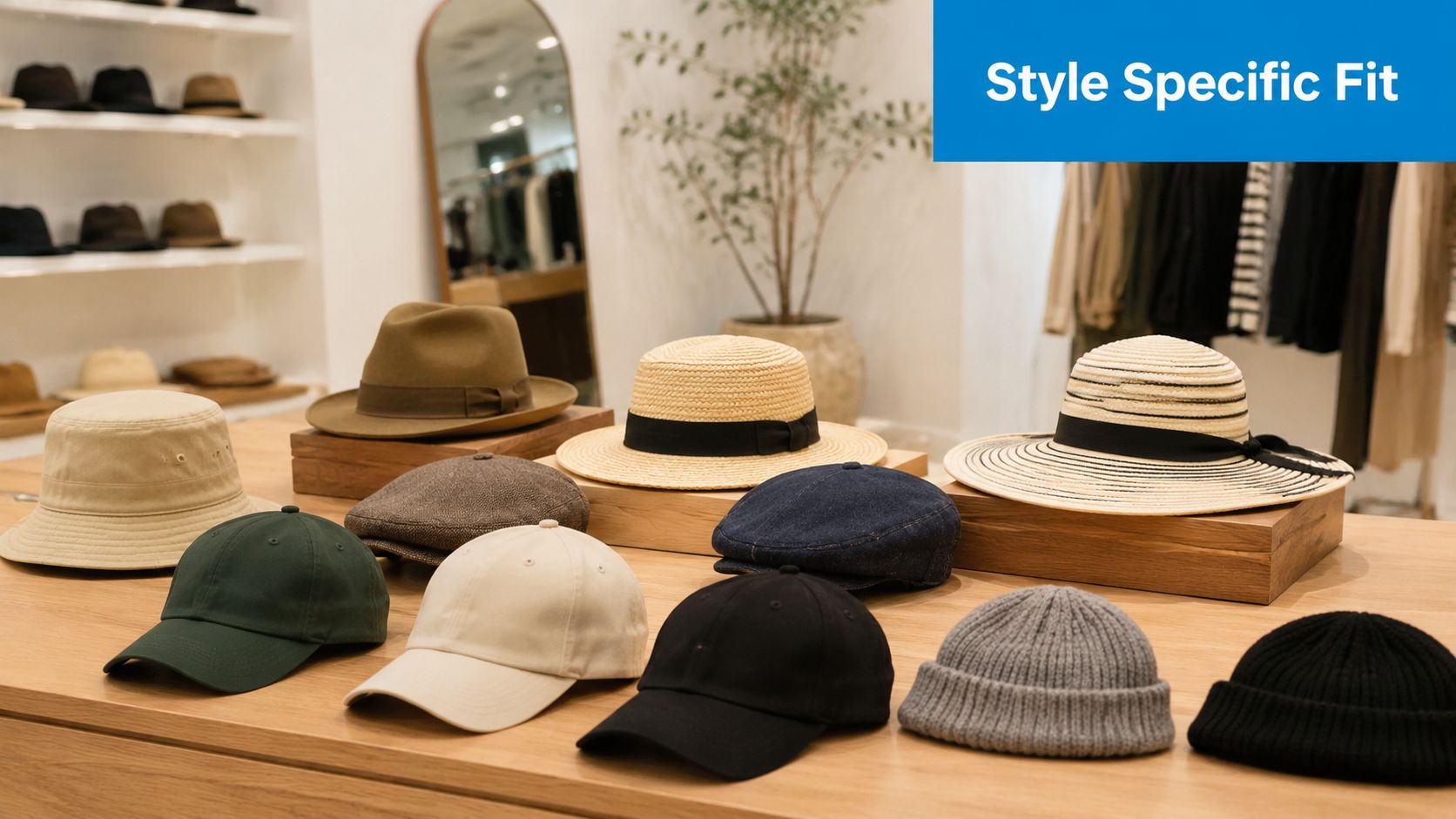
Fitted hats
Fitted hats need the most precision. There's no snap closure, buckle, or hook-and-loop strap to rescue a near miss. The sweatband either matches your head or it doesn't.
This is why exact measuring matters most with fitted baseball caps, structured fashion hats, and premium styles sold by numerical size. If you're near the edge between sizes, comfort usually improves when you go up rather than down.
Adjustable hats
Adjustable hats are more forgiving, which is one reason they're so common for group orders and events.
The “one size fits most” category usually accommodates heads from 55.9 cm to 57.8 cm (fitted sizes 7 to 7 1⁄4), based on Sungrubbies' hat sizing article. The same source notes that the average men's hat size in the US is approximately Size 7⅝ (23 inches), while the average women's size is around 7¼ (22.5 inches).
That tells you something important. “One size fits most” doesn't mean “fits everyone.” It covers a useful middle range, but people with smaller or larger head measurements may still need another option.
Here's a quick way to think about common adjustable styles:
- Snapbacks: Good when you want easy size changes and a more structured look.
- Strapbacks: A little more flexible in feel and often a bit cleaner in appearance.
- Hook-and-loop closures: Fast to adjust, practical for staff hats or giveaway use.
If you're comparing panel construction before you choose a style, this overview of 6-panel vs 5-panel hat shapes is useful because profile and seam layout can change how a cap sits on different head shapes.
Stretch-fit hats and beanies
Stretch-fit caps sit between fitted and adjustable styles. They don't offer the exact precision of a numbered fitted hat, but they adapt more naturally than a fixed size. They work well for people who want a clean look without a visible rear closure.
Beanies are their own category. The material has more give, but the feel depends heavily on knit tension, cuff style, and how high or low you wear it. A snug beanie can feel secure and warm. The same beanie in a stiffer knit can feel restrictive after a short time.
Some hats are chosen for precision. Others are chosen for flexibility. The best option depends on who's wearing them and how many different head sizes you need to cover.
If you're shopping for themed celebrations or specialty occasions, fit still matters. Even novelty styles benefit from basic measurement, and creative roundups like these first birthday party hat ideas show how style choice and comfort often need to work together.
Troubleshooting Common Hat Fit Issues
Even when the measurement is right, a hat can still feel off. Material, sweatband thickness, crown depth, and break-in all play a role. Most fit problems fall into three buckets.
When the hat feels too tight
A tight hat usually tells on itself fast. You'll feel pressure at the forehead, around the temples, or above the ears.
Try these fixes first:
- Wear it briefly indoors: Some hats settle slightly with normal wear.
- Use a hat stretcher: This can help with a minor tight spot.
- Check the sweatband: A thick inner band can make a hat feel smaller than expected.
If the hat feels sharply tight right away, exchange it instead of hoping it will become comfortable. A hat that starts out too small usually doesn't become a favorite.
When the hat feels too loose
A loose hat may sink low, move when you turn your head, or lift too easily outdoors.
A few simple solutions often help:
- Add sizing tape inside the band: This can take up a little extra room neatly.
- Adjust the closure carefully: On snapbacks or strapbacks, don't just tighten to the smallest setting. Make sure the whole hat still sits level.
- Recheck how low you're wearing it: Sometimes the issue is position, not just size.
If the crown is too deep as well as too wide, the problem may be style rather than measurement. In that case, switching to another profile often works better than trying to force the fit.
When you fall between sizes
This is one of the most common questions in any hat sizing guide. The safest rule is to size up.
According to Hats Unlimited's measurement guide, for heads between sizes, the recommended practice is to round up to the nearest 1/8-inch rather than down. That helps avoid tightness and leaves room for a more comfortable fit.
If you're between sizes, choose the larger one first. It's easier to fine-tune a slightly roomy hat than rescue one that presses all day.
Tips for Ordering Custom Branded Hats
Ordering custom hats for a business or event adds another layer to sizing. You're not just choosing a hat that fits one person. You're choosing a style and size strategy that needs to work for a whole group, and the branding has to look good on every head.
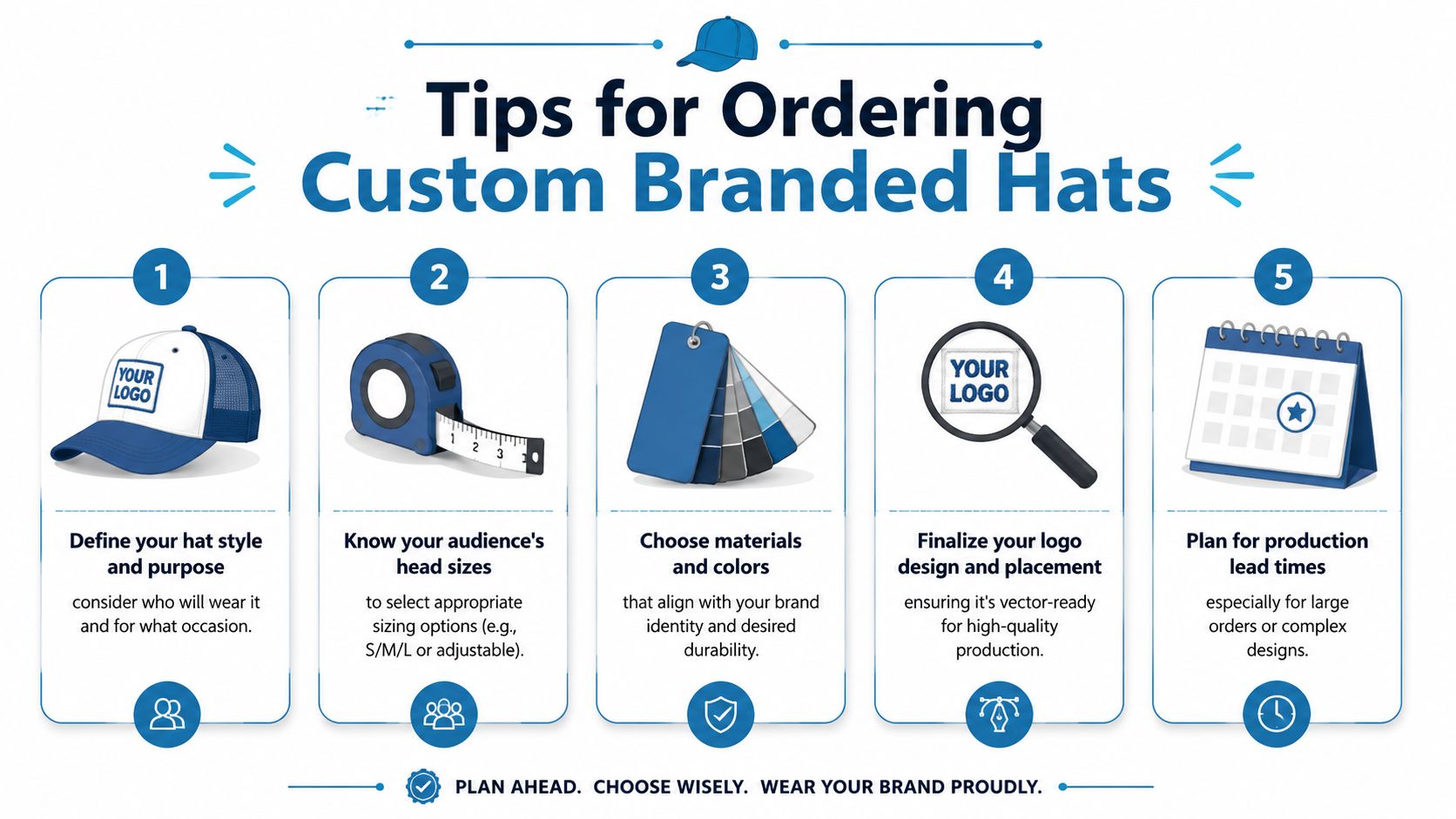
Build your size plan before you pick decoration
A lot of bulk hat orders go sideways because people choose the style first and ask about fit later.
A better approach is simpler:
- Ask who will wear the hats. Staff uniforms, event giveaways, retail merch, and VIP gifts often need different fits.
- Collect actual measurements when possible. For a smaller team, this is worth doing.
- Choose whether you need fitted, adjustable, or mixed sizing. The answer depends on how exact the fit needs to be.
For broad audience giveaways, adjustable caps are often the easiest path because they reduce size risk. For employee uniforms or retail products, a more customized size run may make sense.
If you're planning a wider branded merchandise package, it can help to look at how other practical promo items are evaluated for portability and daily use. This article on explore HYDAWAY branded water bottles is a useful example of matching product choice to how people carry and use it. Hats deserve the same kind of thought.
Match the hat shape to the logo
Not every logo looks best on every cap.
A tall, structured front panel can support bold embroidery well. A softer unstructured cap gives a more relaxed look, but the artwork may appear less rigid once worn. Curved brims, flatter brims, higher crowns, and lower profiles all change how the decorated front panel presents your mark.
That matters because your logo isn't viewed on a blank product page. It's viewed on a person.
- Structured hats usually hold logo shape more firmly.
- Unstructured hats often feel more broken-in and casual.
- Mid-profile options can balance wearability and visibility.
- Panel layout affects where seams land in relation to the artwork.
If the order includes embroidery, the stitch area, crown height, and front panel support all deserve attention before production starts.
Choose the easiest fit for the group
For mixed audiences, simplicity usually wins. If you're outfitting volunteers, event staff, or conference attendees, adjustable closures often reduce the chances of wasted inventory. If you're creating premium merch for resale, offering more than one size can improve how the final product feels and how often customers wear it.
For business orders with logos, approvals, and decoration choices, a custom hat partner should help you sort through style, fit, and artwork together instead of treating them as separate decisions. If you're comparing options, take a look at custom hats for business to see how branded hat programs are typically organized around style, decoration, and order goals.
The smartest bulk hat order isn't the one with the most options. It's the one where the style, sizing approach, and branding all fit the audience.
One final note. We do not create business cards or fliers. For hats, the best results come from focusing on wearable products that people will keep and use.
Frequently Asked Questions About Hat Sizing
Does hair affect hat size
Yes, sometimes. Thick hair, certain hairstyles, and how high you wear the hat can change the feel. Measure your head the way you expect to wear the hat most often.
Do hats stretch over time
Some do a little, especially with regular wear. Others keep their shape more firmly. Don't count on major stretching to fix a tight hat.
Do men's and women's hats use different sizing systems
The measuring method is the same. The biggest difference is usually average fit range, style shape, and how the brand labels the product.
Is one size fits most safe for group orders
It can be, if your audience falls near the middle sizing range and the hat has a practical closure. For broader groups, it's safer to offer more than one fit option.
What matters more, the chart or the label
The chart. “Medium,” “Large,” and “one size” only help when you compare them to a real head measurement.
If you're ready to turn measurements into hats people will wear, Dirt Cheap Product, Inc. can help you create branded headwear for teams, events, retail, and promotions with responsive support, decoration options, and a wide range of customizable styles.