You're probably looking at two blank cap mockups right now, one 5 panel and one 6 panel, and thinking the difference can't be that important. Then the key questions start. Will the logo sit cleanly? Will the hat get worn after the event? Will embroidery cost more on one style? Will the cheaper option end up looking cheap?
That's the point where panel count stops being a style detail and becomes a buying decision.
For a first hat order, individuals often focus on color, closure, and price. Those matter, but the shape of the crown and the front panel layout often have a bigger effect on branding results. A hat that fits your artwork and your use case usually performs better than a hat that looks good in a catalog.
The 6 panel vs 5 panel hat decision is really about total cost of ownership. It affects production flow, logo presentation, wearer appeal, and whether the finished piece works as a uniform item, giveaway, retail product, or campaign asset.
Table of Contents
- Choosing the Right Hat for Your Brand
- The Anatomy of 5 Panel and 6 Panel Hats
- Branding and Design Impact on Your Logo
- Comparing Fit Comfort and Style Profile
- Manufacturing and Cost Implications for Bulk Orders
- Which Hat Should You Choose Use Cases and Recommendations
- Frequently Asked Questions about Hat Panels
Choosing the Right Hat for Your Brand
A common first order goes like this. A marketing manager needs hats for a trade show booth, the ops team wants staff to wear the same style later, and the owner wants leftovers to still feel premium enough to hand to clients. On paper, both a 5 panel and a 6 panel can do the job. In practice, they solve different problems.
Here's the fast comparison most buyers need early:
| Factor | 5 Panel Hat | 6 Panel Hat |
|---|---|---|
| Front decoration area | Large, uninterrupted front | Split by center seam |
| Overall look | Modern, flatter, fashion-forward | Classic baseball cap shape |
| Best for | Big graphics, streetwear, bold branding | Uniforms, embroidery, broad appeal |
| Production strength | Strong for print-focused artwork | Strong for embroidery-focused runs |
| Fit profile | Often feels more relaxed | Usually feels more rounded and secure |
| Brand signal | Contemporary, niche, design-led | Familiar, professional, versatile |
The mistake is treating these as interchangeable blanks. They aren't.
A 5 panel often works better when the front graphic is the main event. A 6 panel usually wins when you need a safe, proven cap that fits a wide audience and handles standard logo decoration well.
Buying rule: Pick the hat based on the job it needs to do after delivery, not just how it looks in the proof.
If the hats are part of a uniform program, resale collection, event giveaway, or agency campaign, the right choice comes down to logo behavior, production method, and who's going to wear them. That's where the return shows up.
The Anatomy of 5 Panel and 6 Panel Hats
The simplest way to tell them apart is to look at the front of the crown.
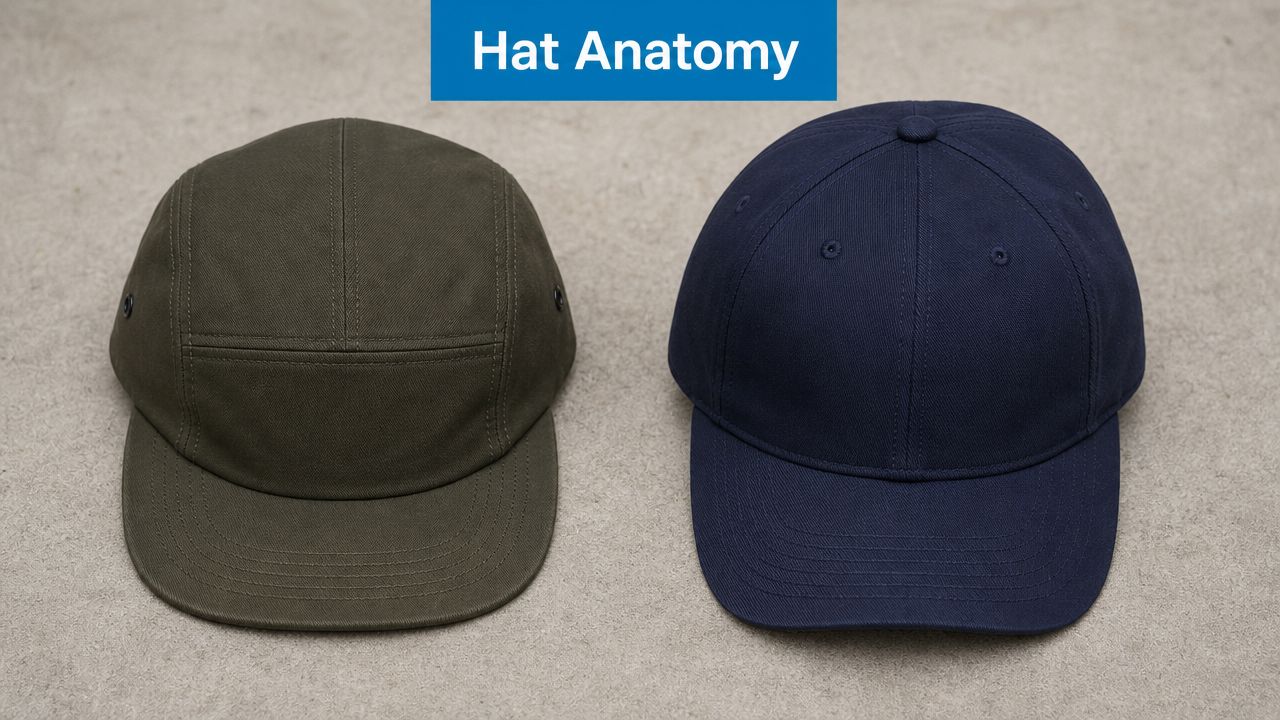
A 5 panel hat uses one larger front panel, then side and back panels to complete the crown. A 6 panel hat uses two front panels joined by a center seam, plus side and rear panels. That seam changes both the shape and the decoration behavior.
How the crown is built
Think about the crown in terms of geometry, not just style names.
- 5 panel construction: One broad front panel creates a cleaner face for artwork and usually gives the cap a flatter visual plane.
- 6 panel construction: Two front pieces meet in the middle, creating a more rounded shape that follows the head more naturally.
- Structure matters: Either style can be more structured or less structured depending on material and backing, but the panel layout still drives the overall silhouette.
If you want a visual reference for the classic silhouette, a 6 panel hat style overview helps show the standard crown shape buyers usually recognize.
Why the seam matters
The seam on a 6 panel cap isn't just a line down the front. It affects how artwork sits, how the crown bends, and how the hat reads from a distance.
6-panel caps, with their divided front panels and center front seam, align stylistically with traditional baseball caps and are widely used in sports and outdoor-wear segments because the rounded crown and snug fit help maintain stability during movement, a feature noted in this apparel-industry comparison of panel construction.
That rounded build is one reason the 6 panel remains a default choice for active use. It feels familiar on the head, and buyers rarely have to explain it to their audience.
What buyers usually notice first
Most first-time clients spot the difference in these two ways:
Front face
The 5 panel looks smoother and broader across the front.Side profile
The 6 panel usually reads as more curved and more traditional.Wearing impression
The 5 panel often feels more design-led. The 6 panel tends to feel more standard and universally wearable.
That basic construction difference drives nearly every downstream decision, especially your logo treatment.
Branding and Design Impact on Your Logo
Panel count starts affecting results on the finished product, not just the sample photo.
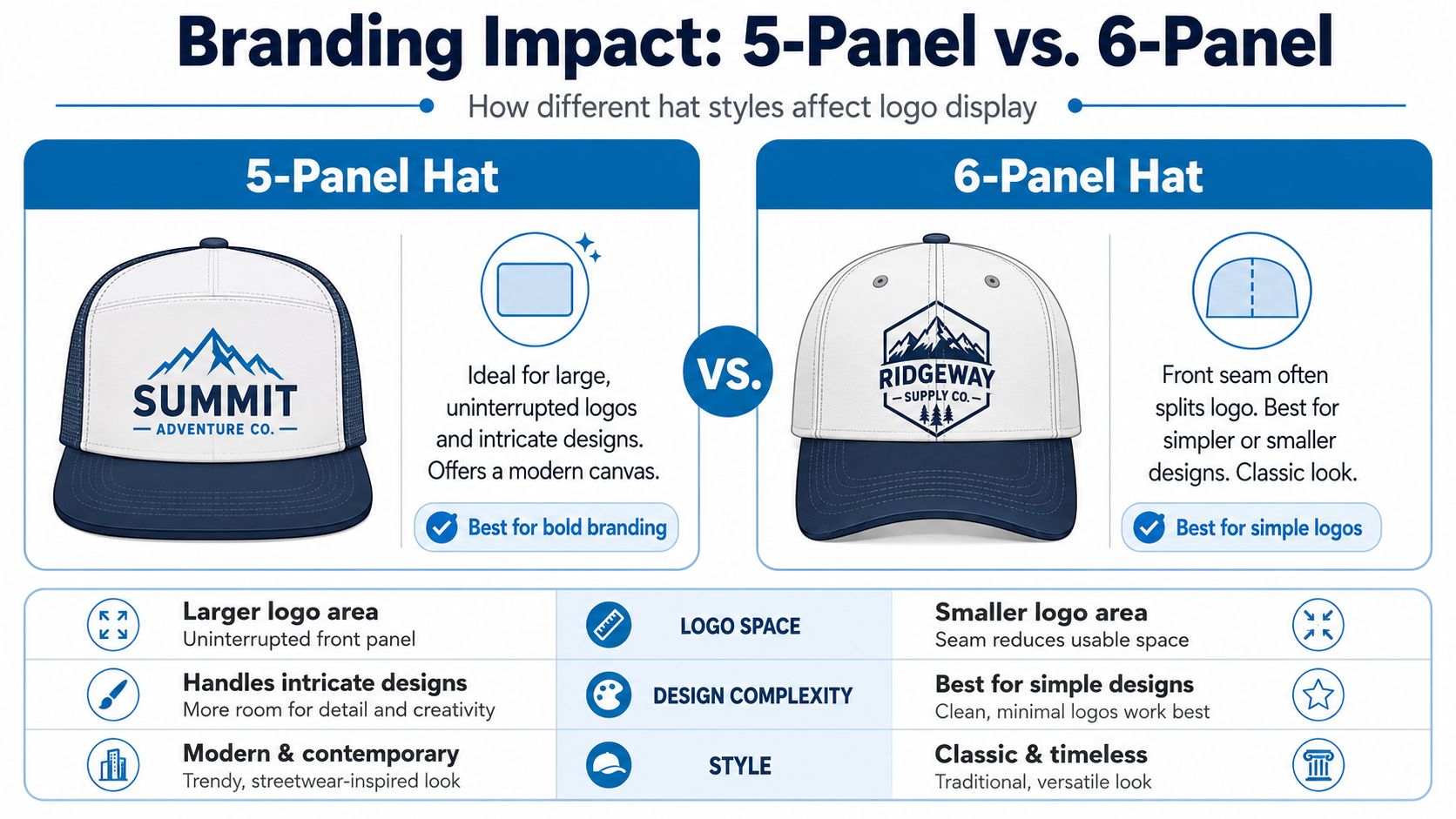
If the logo is wide, graphic-heavy, or needs a clean rectangular read, a 5 panel gives you a more forgiving surface. If the artwork is compact, centered, or embroidery-led, a 6 panel is often easier to standardize across a larger run.
Screen print and DTF
For print decoration, the front panel surface matters a lot.
The seam-free front of a 5-panel cap, formed by a single large front panel, makes it particularly well suited for large, uninterrupted screen-printed graphics or bold logos, which is why fashion and streetwear brands often specify 5-panel construction when prioritizing flat-front graphic impact over classic sports styling, as noted in this headwear decoration comparison.
That doesn't mean a 6 panel can't be printed. It can. But the center seam creates a natural interruption, so large front prints need more care and often look best when the artwork is designed to tolerate that break.
For oversized front graphics, a 5 panel usually gives the artwork more room to breathe.
Embroidery behavior
Embroidery is less about flatness and more about how the machine and the logo interact with the cap shape. Small chest-style logos, badge marks, initials, and centered brand icons usually translate well on 6 panel hats. The seam can feel normal on a classic cap, especially when the art is compact.
With a 5 panel, embroiderers get a cleaner uninterrupted field. That's useful for wide wordmarks or designs that would look awkward if split down the middle. But not every logo needs that advantage.
For artwork planning, a solid embroidery placement guide for hats and apparel helps avoid the most common issue on first orders, which is choosing a logo size that fights the crown shape.
Decoration rule: Don't ask whether one panel count is “better for embroidery” in general. Ask whether your specific logo is centered, wide, tall, dense, or detail-heavy.
Patches and label-style branding
Patches can work well on both styles, but they create different brand signals.
A 5 panel often suits:
- Large woven patches: Good when you want the patch to read like a front billboard.
- Rubber or PVC looks: Better when the brand is modern, outdoor, or street-driven.
- Rectangular layouts: Easier to center on a broad front face.
A 6 panel often suits:
- Mid-size badge patches: Good for workwear and classic merch.
- Simple embroidered emblems: Better when the cap should feel traditional.
- Uniform applications: Useful when the patch should reinforce a standard issued look.
If your logo has to do most of the selling, the hat isn't just headwear. It's packaging. That's why front-panel behavior matters so much.
Comparing Fit Comfort and Style Profile
People don't keep hats because of construction diagrams. They keep them because the hat feels right on the head and looks right in the mirror.
That makes fit and style profile part of branding ROI. If recipients don't wear the hat, the decoration quality doesn't matter.
How each style tends to wear
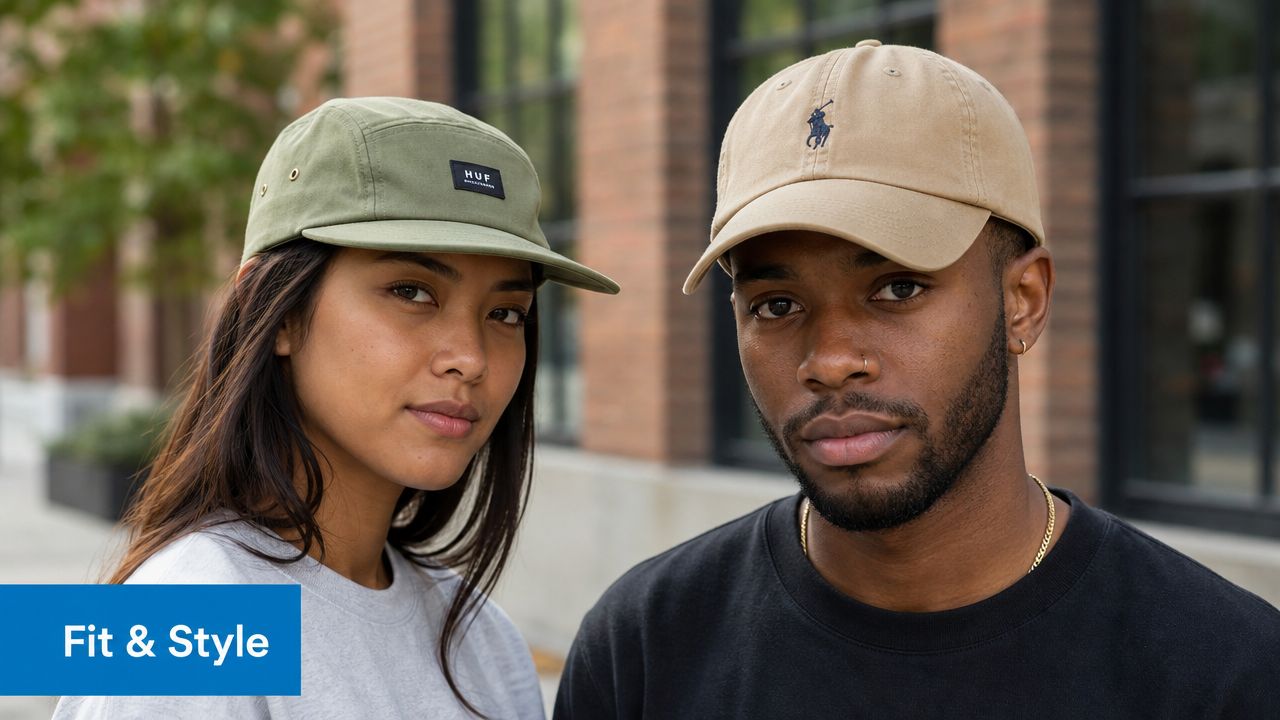
A 6 panel usually feels more familiar because it matches what many buyers think of as a standard baseball cap. The crown shape is rounded, the profile is conventional, and the fit often feels more secure for active use.
A 5 panel tends to read flatter and more directional. Depending on the blank, it can feel more casual, more fashion-aware, or more niche. That can be a major plus when the hat is part of a retail drop or branded merch line.
Matching the hat to the audience
A lot of wrong hat orders happen because the buyer chooses for themselves, not for the audience. The better question is who's expected to wear it repeatedly.
Consider these audience matches:
- Corporate staff teams: A 6 panel usually blends more naturally into polos, quarter-zips, uniforms, and event kits.
- Sports and outdoor groups: A 6 panel often makes more sense when movement, routine wear, and broad fit acceptance matter.
- Streetwear and creative brands: A 5 panel can support a more current visual identity, especially when the front artwork is part of the style.
- Younger promo audiences: A 5 panel may feel less generic when the goal is for the giveaway to look like merch, not leftover inventory.
The best-looking cap on a flat mockup can still underperform if the end user thinks it doesn't suit them.
Style is part of cost control
This sounds less technical, but it matters. A hat that gets worn creates more brand exposure than one that stays in a box or gets tossed in a car trunk.
That's why style profile belongs in the buying conversation. A 6 panel often wins on familiarity and broad acceptance. A 5 panel can win on distinctiveness and perceived design value. Neither is automatically better. They signal different things.
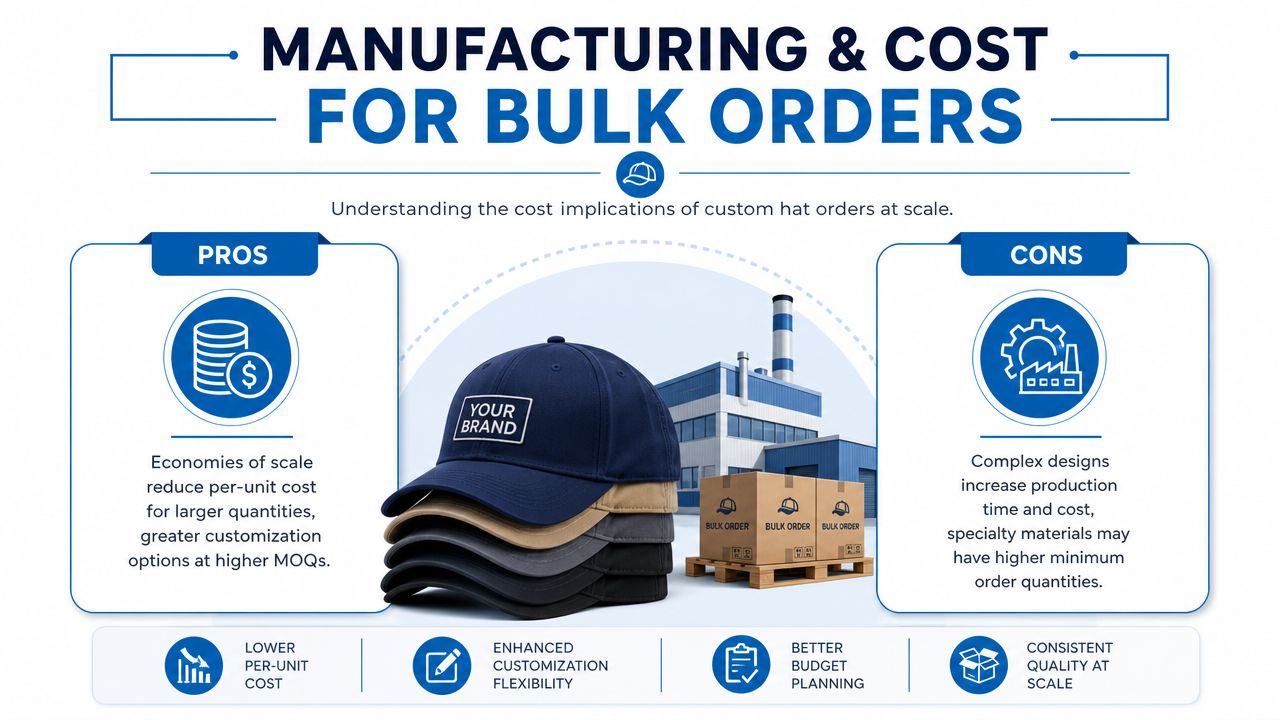
Manufacturing and Cost Implications for Bulk Orders
Per-unit price is only one part of the spend. The bigger issue is whether the hat and the decoration method work efficiently together.
That's where buyers can save money without downgrading the result. The wrong blank for the artwork can create extra handling, slower decoration, and more compromise in the final look.
Where 5 panels can reduce waste
If your project is built around large vinyl or sublimation-style front graphics, panel layout can affect usable front area.
Industry data on trim and fabric waste in small-batch custom apparel shows that 5-panel patterns can reduce front-panel cutting waste by roughly 10–15% compared with two-panel layouts when using large vinyl or sublimation prints, given fewer seams and less over-print bleed-in, according to this bulk hat production analysis.
That advantage is specific. It helps most when the front decoration is large enough that seams and alignment issues create material inefficiency.
Where 6 panels can move faster
For embroidery-heavy orders, the workflow often favors the more standard shape.
The same bulk hat production analysis is useful context when evaluating larger programs because production efficiency usually matters more than a small difference in blank cost. In mixed-logo runs, 6-panel caps tend to be more compatible with standard digital embroidery frames and multi-needle setups, which can increase throughput by 8–12% as reported in the earlier linked industry analysis.
That matters when your order includes multiple departments, multiple logos, or repeat reorders. Faster throughput can mean cleaner scheduling, fewer setup headaches, and more predictable fulfillment.
Cost lens: A hat with a slightly higher blank cost can still be the cheaper project if it decorates faster and with fewer adjustments.
A better way to think about total cost
When buyers compare a 6 panel vs 5 panel hat, I'd look at these four cost layers:
| Cost layer | Question to ask |
|---|---|
| Blank selection | Does the silhouette fit the brand and audience? |
| Decoration method | Is this logo better in embroidery, print, or patch form? |
| Production handling | Will the hat run smoothly through the chosen decoration process? |
| Wear value | Will people actually keep and use it? |
That last line gets missed. If a 5 panel produces a more desirable retail-style piece, it may justify the choice even if it's not the easiest cap for every embroidery setup. If a 6 panel gives you a safer, repeatable uniform result, that may be the smarter operational buy.
Which Hat Should You Choose Use Cases and Recommendations
If you want the shortest answer, most first-time buyers who need a dependable, broad-appeal branded cap should start with a 6 panel. Buyers who care most about bold front graphics or a more modern merch look should start with a 5 panel.
The reason the 6 panel is such a common default is simple. The six-panel crown structure is the historically dominant design in the global baseball cap industry, and structured six-panel caps accounted for roughly 70–75% of global woven structured-cap sales in key markets such as the United States, Germany, and Japan, compared with about 15–20% for five-panel styles and 10–15% for other configurations, according to this industry-focused cap market overview. That same overview notes that the six-panel silhouette underpins the majority of corporate uniforms, team uniforms, and branded promotional caps because the segmented front supports consistent embroidery and logo placement in large-volume production.
Best choice by use case
Here's the practical version.
For staff uniforms
Choose a 6 panel when you need consistency, familiar fit, and a look that won't feel out of place across different ages and roles.For sports teams or outdoor crews
Go with a 6 panel when the cap needs to stay stable during movement and read like classic athletic headwear.For a retail merch drop
Choose a 5 panel when the front graphic is a major part of the product and the audience expects a more fashion-driven silhouette.For event giveaways
Pick based on brand goal. If you want broad acceptance, 6 panel is safer. If you want the item to feel more curated and less generic, 5 panel can stand out.For agencies building campaign merch
Match the cap to the artwork first. Graphic campaign identity often points to 5 panel. Corporate co-branding usually points to 6 panel.
What works and what doesn't
What works:
- Pairing a clean centered embroidered logo with a 6 panel for uniforms.
- Pairing a large bold print or wide patch with a 5 panel for branded merch.
- Choosing the hat based on repeat wear, not just mockup appearance.
What doesn't:
- Forcing a wide front design onto a cap where the seam interrupts the art.
- Choosing a trendy silhouette for a conservative audience that won't wear it.
- Comparing blanks only by unit price while ignoring decoration efficiency.
If you need one cap to satisfy the widest range of business uses, 6 panel usually wins. If you need the cap itself to feel more like the brand, 5 panel often earns its place.
Frequently Asked Questions about Hat Panels
Can both styles be trucker hats
Yes. “Trucker” usually refers to the foam-front or structured front plus mesh-back format, not just panel count. You can find both 5 panel and 6 panel trucker variations. The panel decision still affects the front decoration area and overall shape.
Which is better for custom patches
Neither wins every time. A 5 panel is often stronger for larger rectangular or wide patches because the front surface is uninterrupted. A 6 panel is a solid fit for badge-style patches and traditional logo treatments. Patch shape usually decides this faster than panel count.
Is one style more sustainable
Not automatically. Material choice and component construction matter more than panel count alone. A 2023 global apparel sustainability report notes that caps made from recycled or organic cotton are disproportionately marketed as 5-panel styles, yet many guides still don't explain how panel count affects end-of-life recyclability. The same report notes that 34–42% of U.S. buyers consider sustainability a factor when choosing branded merchandise, which makes this more relevant for procurement teams reviewing merch programs through a brand lens, as covered in this sustainability-focused hat comparison.
Which style is safer for a first order
If you don't have a strong creative reason to go 5 panel, the safer first business order is often a 6 panel. It's easier for many audiences to accept, and it fits more naturally into uniforms, events, and classic promo use.
If you're ready to sort out the right cap, decoration method, and artwork setup for your next order, Dirt Cheap Product, Inc. can help you compare options, review your logo, and build a hat program that fits your budget and your brand instead of guessing from a product thumbnail.