
The surprising part of band merchandise is that the biggest opportunity isn't always another logo T-shirt. Live-show merch spending reached $10.24 per fan in 2025, while 21% of fans bought merchandise at concerts, according to atVenu's concert merchandise reporting. Fans still want wearable basics, but the strongest merch lines give them more reasons to buy: useful accessories, subtle designs, collectible releases, and bundles that make sense for a specific show or album moment.
This guide organizes 10 band merch ideas by product role and production method. You'll see where screen printing, embroidery, direct-to-film, sublimation, patches, and premium packaging fit best, along with the trade-offs behind materials, decoration, price positioning, fulfillment, and sales timing. A T-shirt can capture the broadest audience, while a pin, tote, vinyl release, or mystery bundle can create a different kind of purchase.
For a unified platform for musicians, merch works best when product design and fan communication support each other. Production partners such as Dirt Cheap Product, Inc. can help with screen printing, embroidery, DTF, sublimation, and patches across apparel and accessories. The goal isn't to make the largest possible catalog. It's to build a focused line fans will keep, use, wear, and associate with a specific part of your music.
Table of Contents
- 1. Custom Band T-Shirts with Screen Printing
- 2. Embroidered Beanies and Winter Hats
- 3. Hoodies and Crewneck Sweatshirts with DTF or Screen Printing
- 4. Custom Patches and Pin Collections
- 5. Sublimated Band Apparel with All-Over Prints
- 6. Canvas Tote Bags and Reusable Shopping Bags
- 7. Branded Water Bottles and Drinkware
- 8. Vinyl Records and Limited Edition Album Packaging
- 9. Custom Face Masks and Bandanas with DTF Printing
- 10. Branded Swag Bags and Mystery Merchandise Bundles
- 10-Item Band Merch Comparison
- Turn Strong Ideas Into a Merch Drop
1. Custom Band T-Shirts with Screen Printing
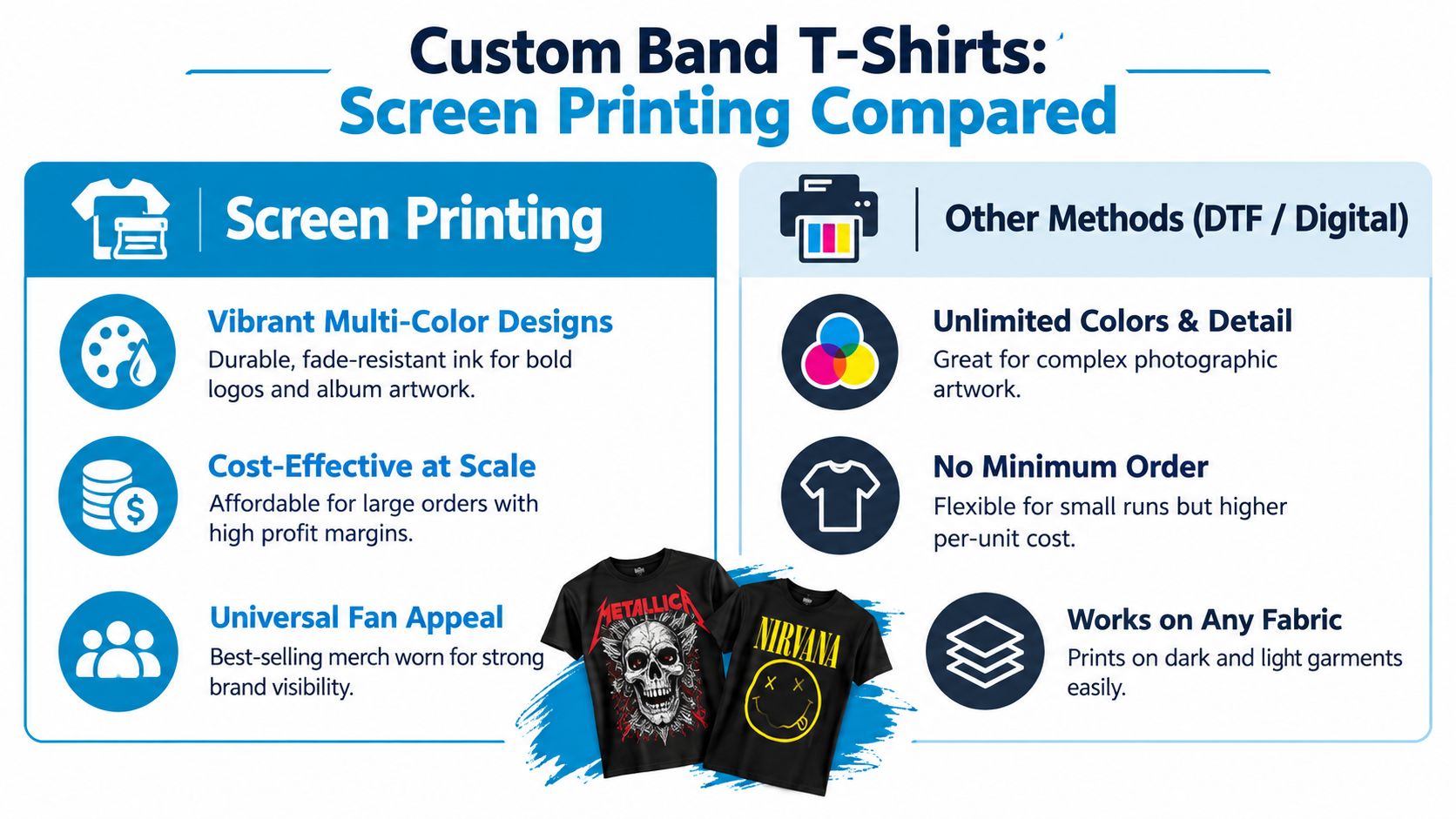
A screen-printed band T-shirt earns its place as the core merch item by combining broad appeal, visible identity, and straightforward fulfillment. Black T-shirts have been identified as the biggest seller at roughly twice the volume of any other merchandise item in venue sales reports. Use that evidence to prioritize a strong black tee, while still testing colors that suit the band's visual identity.
Screen printing works well for bold logos, album artwork, tour dates, and illustrations with defined color areas. Keep the main image readable from a distance, especially at a crowded merch table. Designs using two to four colors can limit production complexity without looking unfinished. Adding tour dates to the back can also give a standard front graphic more memory value after the show.
Match the shirt to the sales moment
A local venue show needs a dependable design fans can purchase quickly. A tour-specific shirt can include the year, city list, or album era, creating a stronger connection to that event. For an online drop, use a front-and-back layout that looks complete on a product page and photographs clearly for social promotion.
Choose a quality cotton or cotton-blend blank that holds color and keeps its shape. Thin, poorly fitting fabric can weaken the design's value when fans expect to wear the shirt repeatedly. Sample the exact blank, ink colors, and print placement before approving the full run.
Screen printing generally suits repeatable artwork and larger production runs. Compare decoration options in this guide to best screen-printed T-shirts. For fulfillment, fold shirts consistently and place the size label where staff can read it quickly at the table. Keep the core design available beside limited variants, so impulse buyers have an easy choice while collectors can pursue a rarer version. The classic tee should be simple to find, pack, and sell.
2. Embroidered Beanies and Winter Hats
Headwear gives fans a way to signal their connection to a band without wearing a large graphic. Embroidered beanies, snapbacks, and trucker hats also support a more premium product position because the decoration becomes part of the construction rather than sitting as a flat printed image.
Choose artwork that can survive reduction. A short wordmark, compact symbol, or simple album icon generally works better than a detailed illustration with tiny lines. Embroidery has physical limits, and dense stitching can make a small design look crowded or uncomfortable on a soft beanie.
Build around the hat type
A winter beanie suits an intimate club tour, a cold-weather release, or a festival capsule. A structured snapback can carry a wider front logo, while a trucker hat gives a band a more casual outdoor identity. Seasonal color choices can change the feel without requiring an entirely new design system.
Test the placement on the actual hat blank. Curved surfaces, seams, folded cuffs, and different fabric weights all affect how the artwork reads. A logo that looks balanced on a flat proof may sit too high or become cramped once stitched.
- Keep the mark simple: Bold shapes and clear lettering are easier to read and embroider.
- Offer useful colors: Black, cream, navy, and muted seasonal shades can fit more wardrobes than a single loud option.
- Separate the release moment: A summer cap and winter beanie can support different tour or album campaigns.
- Protect the shape: Use packaging that prevents crushing, especially for structured caps.
Headwear works well as a premium table item and as an online add-on after a fan has already bought a shirt. It also ships more easily than bulky garments, though hats need careful packing to preserve their form. A small embroidered logo can feel more wearable than a large print, which makes this one of the strongest band merch ideas for fans who prefer subtle identity signals.
3. Hoodies and Crewneck Sweatshirts with DTF or Screen Printing
Hoodies and crewnecks justify a higher price tier than basic tees because fans can wear them repeatedly in colder weather. Oversized fits and restrained graphics can make them feel like everyday clothing rather than obvious tour souvenirs. They also work well as a main premium item at a merch table or as a planned online release.
DTF printing suits detailed artwork, gradients, and multi-color designs on dark or light garments. Screen printing remains practical for bold graphics, especially when the same design is produced in a larger run. Choose between them based on the artwork, garment color, order size, and desired hand feel.
Make the garment earn its premium position
Start with a substantial blank, such as an 80/20 cotton blend or a 100% cotton style, then verify the fit before production. A thin hoodie or inconsistent sizing can lead to returns and complaints. Choose one primary silhouette, such as a pullover hoodie or crewneck, instead of spreading demand across several cuts.
A sweatshirt needs artwork sized for its surface. A T-shirt graphic may look undersized, while an oversized print can feel uncomfortable under a jacket. A small chest mark paired with a larger back illustration gives fans a design that works indoors and in public.
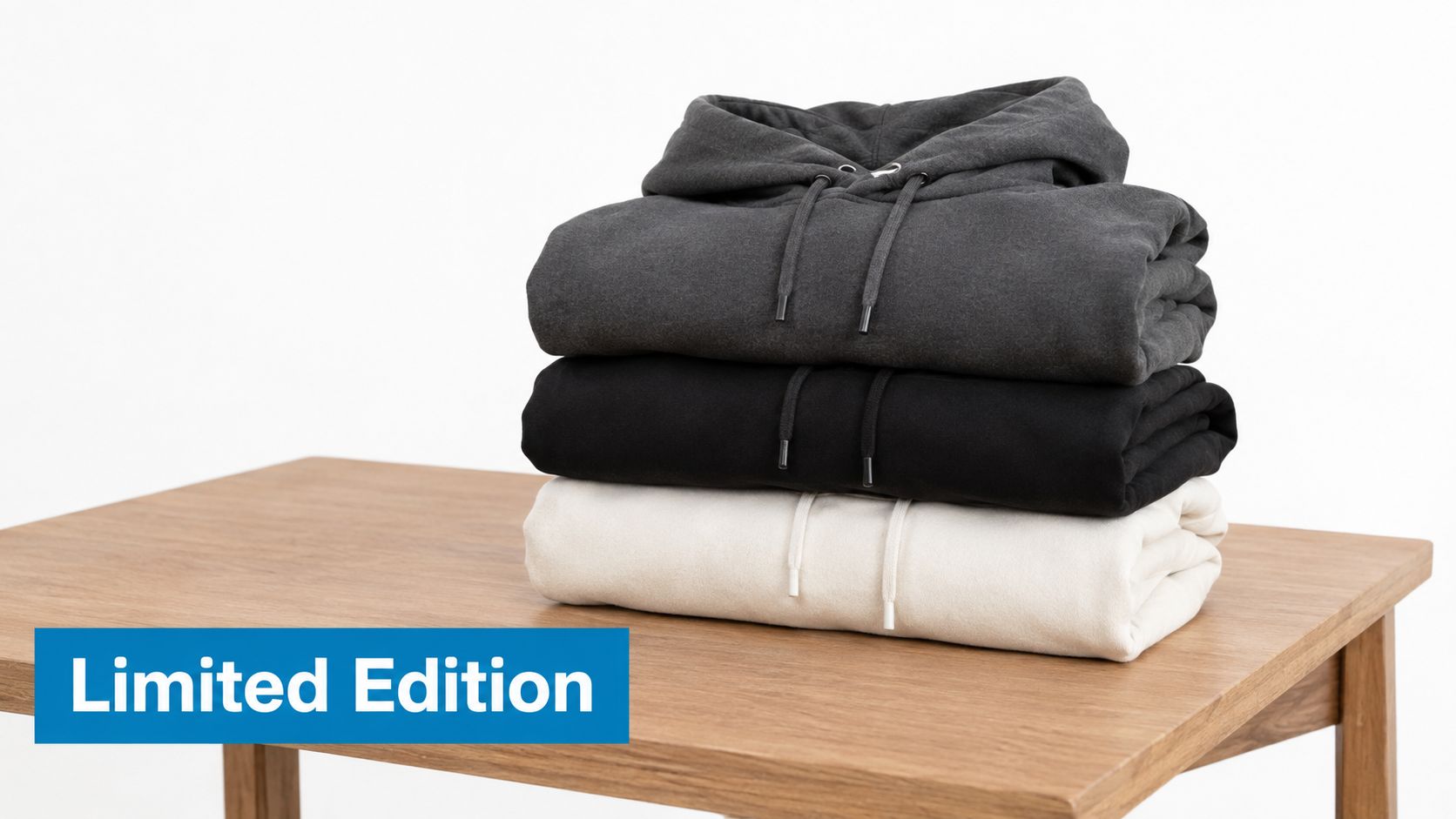
Use a limited release for special album artwork, a tour colorway, or a city-specific design. Scarcity should have a clear reason rather than being applied to every garment. That approach supports a collector tier while leaving a dependable core hoodie available for regular sales.
Fold each piece cleanly, protect it from moisture, and package it so printed surfaces do not rub during fulfillment. A folded hoodie can ship as a premium online order, while a carefully displayed stack can draw attention at the venue table. One strong design, a dependable blank, and a clear release moment usually outperform a crowded sweatshirt range.
4. Custom Patches and Pin Collections
Patches and pins give a band a low-cost product tier with strong display value. They ship cheaply, occupy little table space, and let fans customize jackets, backpacks, guitar cases, and denim. Their appeal depends on more than the artwork. Collectibility, trading, and presentation can turn a small item into a repeat purchase.
Choose the production method around the design. Woven patches suit lettering and compact line art with a clean, even surface. Embroidered patches add texture and a traditional touring feel. Enamel pins work for symbols, album references, and character designs. Metallic or glow finishes can separate a special release, provided they support the concept and survive sampling.
Build the range around product roles:
- Impulse add-on: Sell one readable pin near the checkout or venue register. Keep the design simple enough to recognize at its final size.
- Accessible set: Pair a patch with a pin tied to the same album era, recurring symbol, or song reference. A backing card can keep the pair together and make the price tier clear.
- Collector release: Create a small themed series, then reserve one tour-date design or special finish for a specific show or online drop. Each piece should stand alone, so fans do not need the full set to understand it.
- Gift-ready packaging: Use backing cards, small envelopes, or a compact collector sleeve. These options protect the product during fulfillment and give inexpensive items a more deliberate presentation.
At a show, a fan buying a shirt may add one pin as an impulse purchase. Online, a collector may choose the full series without buying apparel. That makes patches and pins useful across sales moments, from venue-table add-ons to premium collector releases. The PledgeBox guide to collectible enamel pins provides further context for planning pin campaigns. Before ordering, confirm legibility at the finished physical size and approve samples of the backing, metal, thread, and surface finish.
5. Sublimated Band Apparel with All-Over Prints
Sublimation opens a different visual lane from the standard printed tee. The process works especially well for polyester apparel with photographic, psychedelic, or full-coverage artwork that needs to continue across a large portion of the garment.
All-over prints can suit festival culture, electronic music, modern indie aesthetics, and bands with a strong visual world. Leggings, performance shirts, joggers, and matching accessories can create a coordinated capsule rather than another isolated logo product. The result is striking when the artwork is built for the garment, but it can look chaotic when a square image is stretched across every surface.
Design for seams and movement
Place faces, symbols, and important text away from seams and high-stretch areas. A photo or illustration should remain recognizable when the garment is worn, not only when it lies flat in a product photograph. Use high-resolution artwork and request a physical sample before approving the run. Sublimation colors and fabric texture can change the appearance of the original file.
This method also has a narrower material fit than screen printing or DTF. Polyester can deliver the right performance and color effect, but it won't provide the same cotton hand feel that many fans expect from a traditional band shirt.
A full-coverage garment should look intentional from every angle, not just impressive in a flat product mockup.
Use a cohesive packaging approach, such as a simple sleeve or folded presentation with the collection artwork. Sell these pieces at a festival, during a visual album campaign, or through a planned online release where fans can see the full design. For a closer look at how the method works, review this explanation of the dye sublimation process. The technique is best reserved for artwork that needs all-over coverage.
6. Canvas Tote Bags and Reusable Shopping Bags
A canvas tote functions as merchandise, packaging, and public visibility at the same time. Fans can use one for records, books, groceries, school, or a day at a festival, so the product remains useful after the show ends. That everyday role makes it a strong alternative for fans who don't want another garment.
Natural or cream canvas creates a familiar independent-music look, while black canvas can support a more understated, premium feel. Keep the main design bold and avoid placing delicate details where the fabric folds. A large central symbol, short phrase, or simple tour graphic usually survives repeated use better than a crowded illustration.
Choose structure according to the use
A lightweight tote is easy to fold and ship, but a gusseted bag gives fans more room and stands up better when carrying vinyl or heavier items. Handle length also affects whether the bag works as a shoulder tote or a hand-carry accessory. Sample the actual construction before deciding how large the artwork should be.
Front printing is enough for a clean, accessible product. A back print can turn the tote into a tour document with dates or city names, but the extra decoration should support the purchase rather than inflate production complexity.
Bundle the tote with an album, vinyl release, or premium apparel tier. It can also replace disposable event packaging when the fan receives a larger order. Use a folded presentation for online fulfillment and avoid overpacking, since the bag's value comes partly from being practical and easy to carry.
A tote is less likely to create the immediate emotional pull of a limited hoodie, but it can reach fans across age groups and style preferences. It also gives a band a visible product that doesn't depend on a particular clothing size.
7. Branded Water Bottles and Drinkware
Drinkware earns its place when fans can use it after the show. A stainless steel bottle, tumbler, or mug can travel to work, rehearsal, school, the gym, or another concert, keeping the band visible without making the product feel like an advertisement. That makes it a practical mid-tier item for an online drop, tour table, or bundle.
Choose the blank before finalizing the artwork. Stainless steel supports a durable, premium position, while a mug may fit a smaller release or album-themed collection. Insulated and non-insulated formats serve different routines, so describe the intended use clearly. Lid style, capacity, finish, and cleaning requirements also affect buyer expectations and fulfillment.
Match the design to the production method
A wrap-around print can make the object feel purpose-built, but it requires accurate setup around seams, handles, lids, and bases. A single front mark is easier to produce and can suit an impulse add-on at the merch table. Test the exact blank and decoration method before ordering. Washing, scratches, and repeated handling will expose weak coatings or poorly placed artwork quickly.
Keep the visual system connected to the band's core apparel. A simple symbol or short wordmark often stays readable as the bottle moves through a crowd, while dense illustrations need more controlled placement. Pairing the bottle with a tour shirt, tote, or hoodie can create a coherent themed release without requiring a new design language.
Packaging needs attention too. Protect lids, finishes, and printed surfaces from scratches, and account for the item's size and weight when setting shipping rates. Drinkware takes more space than pins, so it suits a planned purchase or bundle better than a pure table impulse item.
Use a bottle for a functional price tier, then reserve specialty finishes or coordinated packaging for a higher-priced collector bundle. The product works when its construction, artwork, and fulfillment plan all support repeated use.
8. Vinyl Records and Limited Edition Album Packaging
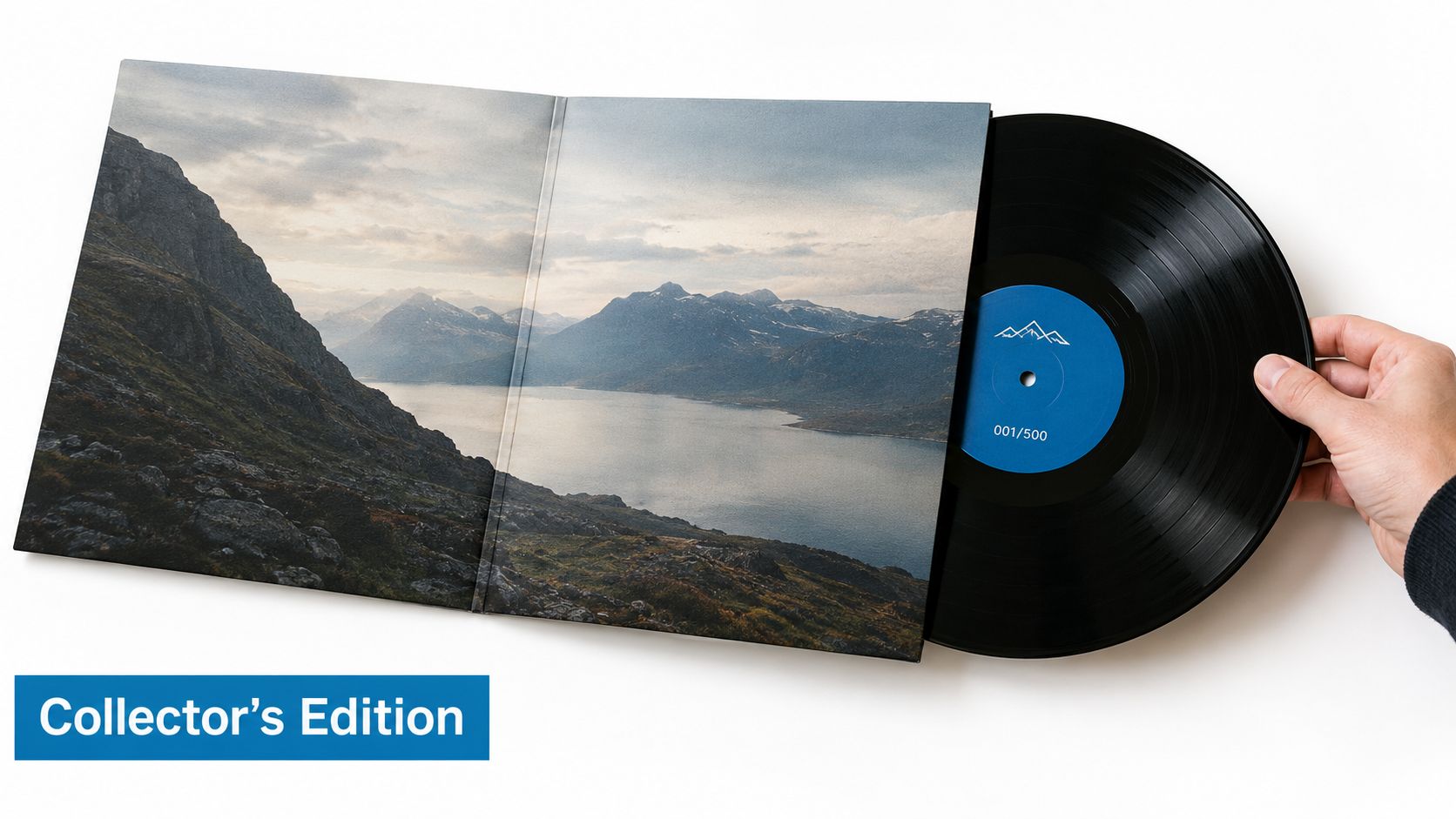
Vinyl is the collector release in this list. The product combines music, artwork, physical packaging, and ownership in a way a standalone accessory can't. A gatefold jacket, special insert, picture disc, or colored pressing can turn an album into a substantial object for fans who care about the record as part of the band's visual history.
This category demands more planning than apparel. Pressing partners, proofing, packaging, storage, breakage risk, and fulfillment all matter. A beautiful release can still create problems if the outer mailer doesn't protect the record or if the packaging design doesn't account for the actual pressing format.
Give the collector a reason to choose this edition
Exclusive artwork, an alternate cover, a numbered run, or an insert can distinguish the release from a standard copy. Keep the edition logic clear. If every version is called rare, collectors may stop treating scarcity as meaningful. Retailer-specific variants can work, but they should be easy to explain and fulfill without confusing buyers.
Place the product page and physical packaging in the same visual world. The cover, inner sleeve, insert, and shipping presentation should feel like one release rather than separate design decisions.
A release video can help fans understand the physical details before they buy.
Sell vinyl around an album launch, a tour, or a clearly defined collector window. Store inventory in a dry, stable environment and use record-specific mailers with protective inserts. This isn't the right first product for a band testing demand, but it can anchor a premium tier when the music and artwork justify a more involved physical experience.
9. Custom Face Masks and Bandanas with DTF Printing
Face masks and bandanas are lightweight accessories that carry a band's visual identity without apparel sizing. At a merch table, they suit an entry price tier and an impulse purchase. Online, they add little bulk to a bundle and can ship flat in simple branded packaging. Use them as festival pieces, tour souvenirs, neckwear, hair accessories, or small add-ons, depending on the fabric and construction.
DTF printing handles colorful, detailed artwork on a compact surface, but the design must remain legible when the item is worn or folded. Dense imagery can disappear in creases. Bold symbols, clear lettering, and repeating patterns hold up better. Offer a few color options when they support the artwork, then limit variations so stock remains easy to track.
A bandana can carry more fashion value than a basic logo item. Match it with a shirt, hat, or tote from the same release, or create a tour-specific design tied to one event. High-contrast graphics and practical fabric choices usually serve festival use better than fine details that fans cannot see from a distance.
Before approving production:
- Sample the fabric: Smooth and textured poly-blends can produce different print results.
- Check the fold: Review the artwork rolled, tied, and worn, not only laid flat.
- Use bundles selectively: Add the bandana to an apparel order or VIP package when it strengthens the offer.
- Avoid overclaiming function: Describe the item accurately. Do not imply protective performance unless it has been tested and certified for that purpose.
Keep fulfillment simple. These accessories need little storage space, work as low-commitment purchases, and fit easily into online orders. A glow element can suit a festival release, but it should support the band's visual concept rather than act as decoration without a clear purpose.
10. Branded Swag Bags and Mystery Merchandise Bundles
Bundles turn separate products into a merch experience. A starter package might combine a shirt with a pin, while a deluxe release could add a hoodie, patch set, tote, or exclusive accessory. Premium bundles can include collector items, signed material, or special packaging when the band can fulfill those components consistently.
The strongest bundle has a clear reason to exist. Tie it to a tour VIP package, an album drop, a seasonal release, or a fan-club moment. Don't use bundles only to hide unwanted inventory. Buyers notice when a mystery product feels like leftovers rather than a curated selection.
Set expectations before the purchase
Mystery creates excitement, but complete secrecy can create distrust. Reveal the guaranteed product categories, size options, or minimum contents while keeping one element undisclosed. A fan should understand the risk before checkout, especially when the bundle includes apparel with limited size availability.
Use professional packaging to separate the experience from a regular order. A branded mailer, tissue, sticker seal, or printed insert can make the opening feel deliberate without requiring elaborate construction. The event swag bag resource can help with practical planning for event-oriented packages.
Structure tiers around real product differences, not arbitrary labels. A starter tier should be easy to understand, a deluxe tier should add meaningful value, and a premium tier should include exclusive material. The guide to unique music gifts can also spark ideas for a broader fan-gifting angle.
For fulfillment, separate bundle components in advance and create a packing order that staff can follow. Keep size-specific items clearly labeled, photograph the contents for customer support, and plan how you'll handle missing or substituted products. A well-built bundle can create a stronger sales moment than any individual item, but poor transparency will overshadow the novelty.
10-Item Band Merch Comparison
| Item | Implementation Complexity 🔄 | Resource Requirements ⚡ | Expected Outcomes 📊 | Ideal Use Cases | Key Advantages ⭐ | Tips 💡 |
|---|---|---|---|---|---|---|
| Custom Band T-Shirts with Screen Printing | 🔄 Moderate, simple to set up; multi-color increases complexity | ⚡ Low–Medium, screens, inks, quality blanks; cost-effective at scale | 📊 High sales & visibility; strong margins and universal appeal | Tours, online stores, mass runs | ⭐ High profit margin; durable, vibrant prints; scalable | 💡 Use 2–4 colors, bold readable designs; include tour/date for limited editions |
| Embroidered Beanies and Winter Hats | 🔄 Moderate, digitizing and placement constraints | ⚡ Medium, embroidery machines, branded hat blanks; higher unit cost | 📊 Premium positioning; higher price points; long-lasting branding | Cold-season touring, premium merch drops, streetwear crossover | ⭐ Perceived premium value; very durable; visible branding | 💡 Choose simple logos, test placement, offer seasonal colorways |
| Hoodies & Crewnecks (DTF or Screen) | 🔄 High, larger prints, size management, DTF workflow | ⚡ High, heavy blanks, DTF or screen setup, more inventory | 📊 Strong per-unit revenue; repeat wear; high promotional visibility | Flagship merch, cold-weather tours, premium collections | ⭐ Premium feel; complex artwork reproduction (DTF); strong fan attachment | 💡 Use quality 80/20+ blanks, test DTF samples, offer limited editions |
| Custom Patches & Pin Collections | 🔄 Low, straightforward production but design detail matters | ⚡ Low, lightweight, low material cost; may require MOQ | 📊 Good for impulse buys & collectibility; drives repeat purchases | Bundles, festival stalls, collector-focused sales | ⭐ High perceived value for low cost; excellent bundling item | 💡 Create series/limited editions, bundle sets, include themed releases |
| Sublimated Band Apparel (All-Over Print) | 🔄 High, artwork prep, color management; polyester-only process | ⚡ Medium–High, sublimation printers, polyester blanks, higher setup cost | 📊 Eye-catching, festival-ready pieces; niche/high-visual impact | EDM/festival merch, photo-heavy or psychedelic designs | ⭐ Photographic, edge-to-edge prints; unique aesthetic hard to replicate | 💡 Use 300 DPI art, test samples, target festival audiences |
| Canvas Tote Bags & Reusable Bags | 🔄 Low, simple screen print or embroidery on canvas | ⚡ Low–Medium, canvas blanks, printing; heavier shipping weight | 📊 Practical daily brand exposure; strong bundle performer | Album bundles, eco-conscious fans, festival merch | ⭐ Practical and affordable with eco appeal; long-term visibility | 💡 Keep designs bold, consider gusseted bags, bundle with vinyl/album |
| Branded Water Bottles & Drinkware | 🔄 Medium, requires specialized printing (sublimation/wraps) | ⚡ Medium, stainless/ceramic blanks, insulated options, higher unit cost | 📊 Daily-use visibility; premium perception; longer-term loyalty | Premium bundles, corporate partnerships, tour merchandise | ⭐ Daily utility; premium feel; year-round relevance | 💡 Choose quality stainless steel, test wrap/sublimation samples |
| Vinyl Records & Limited Edition Packaging | 🔄 High, pressing plant coordination, long lead times | ⚡ High, pressing costs, custom packaging, large upfront investment | 📊 High revenue per unit; collectible appeal; strong fan engagement | Collector releases, crowdfunding, deluxe album editions | ⭐ Tangible collector value; premium pricing; resale demand | 💡 Partner with reputable plants, create numbered/variant editions |
| Custom Face Masks & Bandanas (DTF) | 🔄 Low, simple print/embroidery on small items | ⚡ Low, lightweight blanks, DTF or screen; very affordable per unit | 📊 High-volume impulse sales; low margin per item; trendy add-on | Festival add-ons, youth-targeted bundles, low-cost promos | ⭐ Affordable, easy to ship, popular with younger fans | 💡 Use bold designs, offer multiple colors, bundle with apparel |
| Branded Swag Bags & Mystery Bundles | 🔄 Medium, curation, packaging logistics, fulfillment planning | ⚡ Medium, multiple SKUs, packaging materials, inventory control | 📊 Increases AOV; moves excess stock; creates excitement | VIP packages, tour promos, holiday or release campaigns | ⭐ Boosts AOV and perceived value; flexible inventory tool | 💡 Create tiered bundles, include exclusives, time with releases |
Turn Strong Ideas Into a Merch Drop
A useful merch line doesn't need all 10 products at once. Start with a balanced set that gives fans different ways to participate: one accessible apparel item, one premium garment, one lightweight add-on, and one collector or bundle option. In practical terms, that could mean a screen-printed T-shirt, an embroidered hoodie or hat, a pin or patch, and either a vinyl release or a curated swag bag.
This mix creates distinct price and commitment levels without forcing the band to manage an oversized catalog. The shirt handles the broadest demand. The premium garment gives the release a stronger centerpiece. The pin, patch, bandana, or similar accessory captures impulse purchases. Vinyl and bundles give dedicated fans a reason to spend more on a complete physical experience.
Choose decoration according to the artwork and material. Screen printing fits bold graphics with defined color areas. DTF suits detailed, multicolor artwork on garments where a direct print is more practical. Embroidery works for simple marks on hats and beanies, while sublimation is better suited to polyester products and full-coverage designs. Patches can carry detailed identity elements without adding another garment style.
Sample before committing
A production proof doesn't replace a physical sample. Check the blank garment, print scale, embroidery density, fabric color, stitching placement, packaging fit, and the way the product looks when worn or handled. Teams catch problems such as a hoodie graphic that feels too small, a hat logo that loses detail, or a tote print that sits in an awkward fold.
Dirt Cheap Product, Inc. provides screen printing, embroidery, DTF, sublimation, and custom patches, so it can be useful to compare decoration options against the actual artwork and blank you've selected. Request proofs that show accurate color, placement, and stitching detail before approving production. Don't judge a method from a generic mockup when the final product depends on fabric weight, surface texture, and construction.
Assign every product a sales moment
A venue table favors items fans can understand immediately. T-shirts, hats, patches, pins, bandanas, and compact bundles can move quickly when the buyer has limited time. Online stores support more considered purchases, including hoodies, drinkware, vinyl, and size-specific bundles. Social commerce needs a strong first image, a simple offer, and a product that makes sense without a long explanation.
Channel planning matters because buying is shifting beyond the venue. One industry summary describes a projected mix moving from approximately 80% venue, 15% web, and 5% social in 2023 to roughly 50% venue, 25% web, and 25% social, as reported by Gigwise's 2026 discussion of fan purchasing. Treat that as a planning signal, not a reason to copy one channel strategy for every band. Show sales, web drops, and social checkout each need their own assortment and presentation.
Protect the experience after checkout
Packaging should match the product's role. Fold shirts and hoodies cleanly, protect structured hats from crushing, use backing cards for pins, and ship vinyl in packaging designed for records rather than general parcels. A tote can serve as part of a bundle presentation, while a collector release needs protection that reflects its value.
Keep the line curated. Younger fans may prefer hoodies, posters, keychains, and jewelry over T-shirts, and may respond better to subtle “if you know, you know” references than oversized artist branding, according to MIDiA Research's merch and ticket-buyer insights. That supports a product strategy built around identity and everyday wearability, not just logo repetition.
Plan releases around real reasons to buy: a show, album launch, season, festival, anniversary, or limited window. Set aside a core design that remains available, then use smaller runs for location-specific or collector pieces. Review inventory by size, color, channel, and product role before reordering. A tight assortment with clear purpose is easier to sell, pack, explain, and improve than a broad catalog full of near-duplicates.
The music merchandise market is large, but scale alone doesn't make a design useful. Forecasts place the broader artist merchandising market at $7.84 billion in 2025 and $8.53 billion in 2026, while a later forecast projects the global music merchandise market could reach $16.3 billion by 2030, according to the industry merchandise statistics summary. Your band still has to make a fan-facing decision at the table or checkout: does this product look good, feel worth keeping, and fit the moment?
Choose the four-product starter line, match each item to the right decoration method, request physical proofs, and build packaging and fulfillment into the plan before announcing the drop. Then review what fans choose by channel and release moment, and let those decisions guide the next collection.
Dirt Cheap Product, Inc. offers screen printing, embroidery, DTF, sublimation, and custom patches for band shirts, hoodies, hats, bags, and related merch. Visit Dirt Cheap Product, Inc. to compare decoration options, request proofs, and plan a focused merchandise run.