
You're probably trying to solve three problems at once. You want the wedding party to look coordinated, you want the shirts to feel fun for photos and pre-wedding events, and you don't want anyone stuffing them into a drawer the next day.
That's where most wedding party T shirts go wrong. People start with a slogan, rush into a cheap blank, and only realize later that the fit is odd, the fabric feels flimsy, or the artwork looks more like event swag than something anyone would wear again. A better approach is to treat the shirt like a real piece of apparel first, then layer the wedding details onto it.
That mindset makes sense in a category this established. The global T-shirt market was valued at about $42.9 billion in 2024 and is projected to reach roughly $64.7 billion by 2032, which shows how T-shirts are ingrained in everyday wear and personal expression, including event apparel like wedding party shirts, according to apparel industry market reporting. If you're trying to keep this part of the wedding thoughtful without overspending, this practical guide on how to cut wedding costs is a useful companion read.
Table of Contents
- Planning Memorable Wedding Party T Shirts
- Beyond the Basic Tee Choosing Your Shirt and Fabric
- Designing Shirts People Actually Want to Wear
- Print or Stitch Choosing Your Decoration Method
- The Logistics From Sizing to Your Doorstep
- Common Wedding Shirt Mistakes and How to Avoid Them
Planning Memorable Wedding Party T Shirts
The most common real-life scenario looks like this. One bridesmaid wants an oversized sleep shirt for the morning, one person only wears fitted tees, someone else hates loud graphics, and a sibling asks if they can have a shirt they'd wear to brunch later. That's normal. A wedding party isn't a matching set of mannequins.
The orders that work usually start with one question: would this still be a good shirt if the wedding wording came off it? If the answer is no, the shirt probably leans too hard on novelty. If the answer is yes, you're on the right track.
Practical rule: Build wedding party T shirts like retail apparel, not party favors.
That means choosing a silhouette people already like, keeping the decoration more restrained, and putting event-specific details in places that don't dominate the shirt. A subtle front chest print, a small sleeve detail, or a back neck mark often has a much longer life than a huge front slogan.
There's also a people-management side to this. The bride may want a more expressive design than the rest of the group. The maid of honor may love personalization. Parents may want something simpler. The cleanest way to handle that is one base shirt and one shared design language, then minor variations by role. Same palette. Same font family. Different names or titles where needed.
Use the shirts for one clear purpose. Getting-ready photos, airport travel for a bachelorette weekend, rehearsal setup, welcome party, or post-wedding brunch. When the use case is clear, every decision gets easier.
Beyond the Basic Tee Choosing Your Shirt and Fabric
A shirt can have perfect artwork and still fail because the blank was wrong. Fabric, cut, and weight do most of the work when you're trying to make wedding party T shirts feel wearable after the event.
Start with the moment the shirt is for
For getting ready on the wedding morning, comfort matters more than trend-chasing. People are sitting for hair and makeup, moving around in a shared room, and often changing in and out of layers. Soft tees with a relaxed fit work well here. If the look you want is more lounge-focused, this guide to wedding morning sleepwear is useful for thinking through silhouette and comfort.
For a bachelorette trip or casual group outing, classic crewnecks are the safest choice because they suit the widest range of body types and style preferences. V-necks can look sharper on some wearers, but they also create more fit sensitivity across a group order. Tanks can work in hot weather, but they produce the most mixed feedback because not everyone likes the same armhole depth or strap width.
If you're still comparing blanks, this guide to popular shirt brands for custom printing helps narrow down how different brands feel and fit before you commit.
Fabric decides whether the shirt feels giftable
A cheap, stiff tee gives itself away immediately. Even before anyone checks the print, they can feel whether it's a shirt they'd keep.
One useful benchmark for group orders is a 95% cotton / 5% spandex blend, because that small amount of stretch helps the shirt sit more consistently across different body types and makes sizing a bit more forgiving, as shown in this personalized bridal party shirt specification. That same specification recommends cool-water machine washing with hang drying, which also matters for preserving fit and print quality over time.
Here's how I think about common fabric directions in practice:
| Shirt option | Best for | What it feels like | Watch out for |
|---|---|---|---|
| Classic cotton tee | Rehearsal setup, casual photos, budget-conscious orders | Familiar, straightforward, easy to wear | Can feel basic if the cut is boxy |
| Cotton blend | Group orders with varied body types | More forgiving, often easier to wear all day | Blend quality varies by brand |
| Stretch cotton with a little spandex | Fitted bridal party tees and cleaner silhouettes | Smoother fit, more movement | Needs proper care to keep shape |
| Tri-blend style feel | Travel shirts and all-day comfort | Soft, drapey, more retail-like | Not everyone wants a clingier drape |
If the blank doesn't feel good in plain form, decoration won't rescue it.
The other big decision is fit attitude. Oversized can feel current and relaxed, but only when that look is intentional. If you order oversized by accident, the shirts can read like leftovers from another event. Fitted styles photograph neatly, but they create more size anxiety in group orders. Relaxed unisex or retail-style relaxed cuts usually create the least friction.
A simple buying rule helps here:
- Choose relaxed fits for mixed groups, travel, and morning-of wear.
- Choose more shaped styles only if the whole group wants that look.
- Choose stretch blends when consistency across sizes matters more than a perfectly rigid cotton hand.
- Avoid bargain-basement blanks if your real goal is a keepsake people reuse.
Designing Shirts People Actually Want to Wear
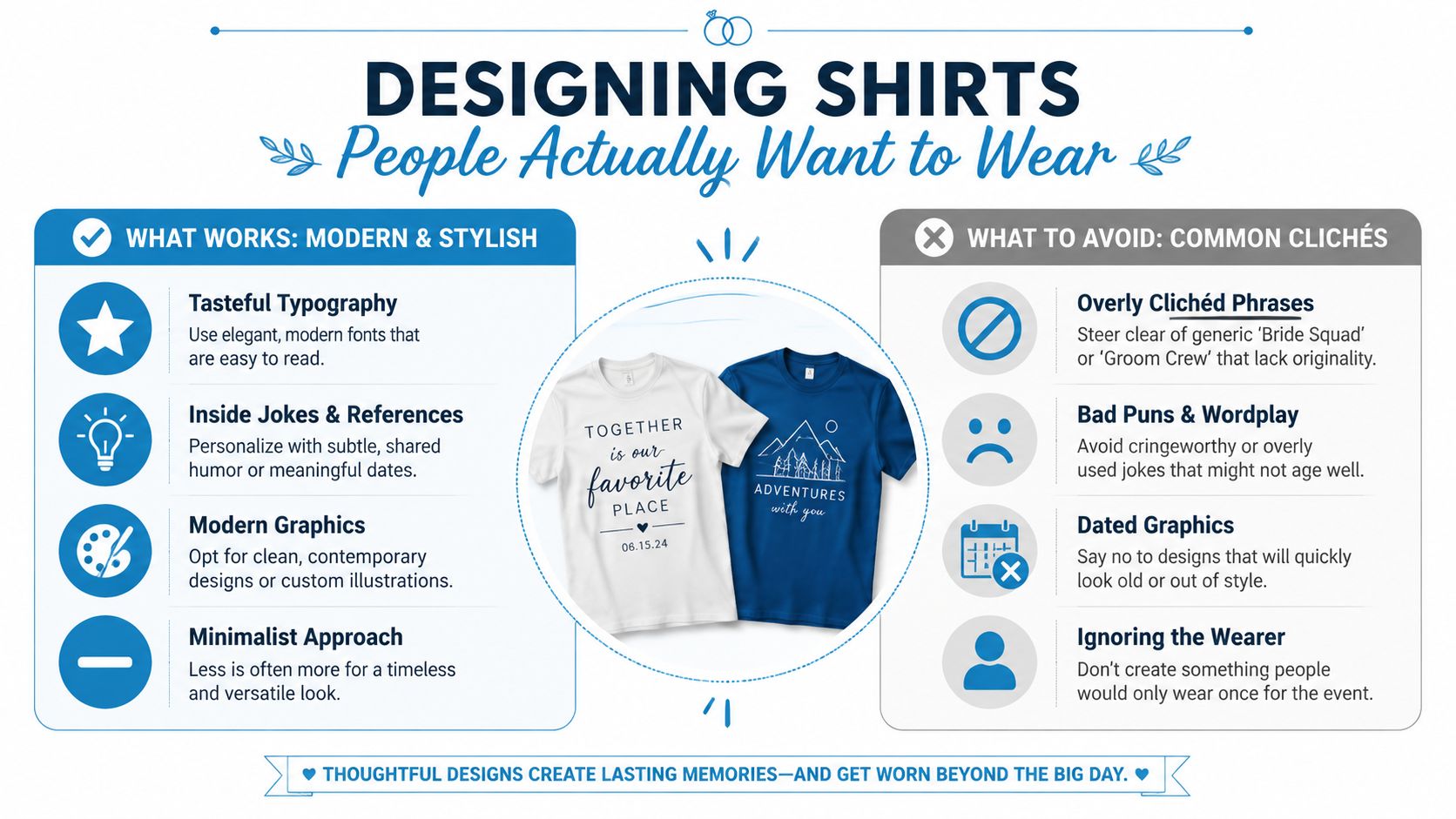
The design is where a good shirt either becomes a favorite or turns into a one-day costume. Individuals generally don't mind wearing a wedding shirt again. They mind wearing one that announces itself too loudly.
What modern wedding shirt design looks like now
Current wedding apparel design has shifted away from heavy graphic treatment and toward minimalist typography and subtle watercolor styles, which makes the finished product feel closer to boutique apparel than novelty event wear, as noted in this wedding and party wear trend overview.
That shift matters because wearability usually comes from restraint. The shirts people keep are often the ones with:
- Small front placement instead of a giant center-chest slogan
- Tone-on-tone ink or thread instead of very loud contrast
- Names, initials, or dates used sparingly instead of filling every available space
- One visual idea instead of title, date, location, hashtag, and clip art all competing together
A strong wedding shirt often looks something like this: small left-chest text for the role, subtle back detail for the city or date, and a clean neutral shirt color. That reads like apparel. A giant “Bride Squad” with decorative flourishes across the front usually reads like a one-time prop.
If you're building artwork from scratch or cleaning up a concept before production, this introduction to beginning graphic design is a practical starting point.
A simple artwork checklist before you approve anything
Print problems usually start before printing. They start with artwork that isn't ready.
Use this checklist before sending files:
- Make sure text is final. Check every name, wedding date, city, and role spelling.
- Use clean files. Vector artwork is ideal for logos and type. If you only have a raster image, it needs to be high quality.
- Decide exact placement. Left chest, full front, upper back, sleeve, or back neck. Don't leave this vague.
- Match the decoration to the design. Fine script and tiny detail may need a different method than bold block text.
- Preview it on the actual shirt color. A design that looks crisp on white can disappear on sand, sage, or heather gray.
The best wedding shirt designs don't try to say everything. They pick one message and let the garment do the rest.
One more practical point. If the shirt is meant to be worn again, avoid putting the full wedding date in the largest visual position. Put it on the sleeve, hem area, or upper back if you want it included. That keeps the sentiment while lowering the “event-only” feel.
Print or Stitch Choosing Your Decoration Method
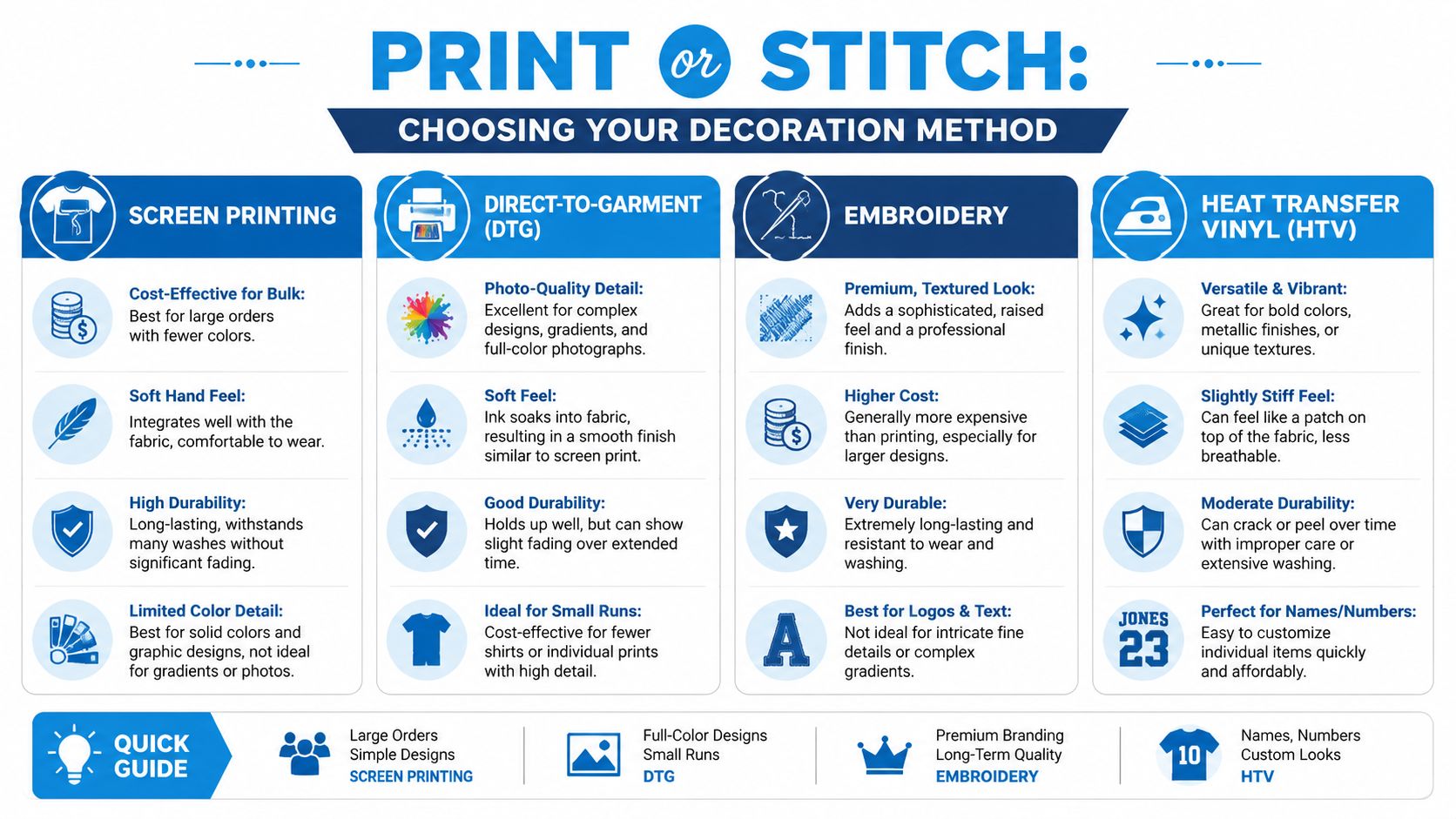
Decoration method does more than apply artwork. It decides whether the shirt feels like a keeper or a giveaway.
A common wedding order goes wrong here. The design looks good on a screen, then gets produced with a method that makes it feel heavy, shiny, or too event-specific to wear again. If your goal is a shirt people will keep in rotation, the decoration choice matters as much as the artwork.
How each method behaves on a real shirt
Screen printing is usually the safest choice for shared group designs. It works best with bold art, limited colors, and placements that do not need to change from shirt to shirt. On the right fabric and with controlled ink coverage, it can feel soft enough that the print becomes part of the shirt instead of sitting on top of it. That is a big reason screen print tends to age well for wedding party tees people might wear after the trip or reception.
DTF gives you more freedom when every shirt is a little different. If one says "Bride," another says "Maid of Honor," and a few need names added, DTF handles that kind of variable setup well. The trade-off is feel. A small left-chest transfer is usually fine. A large full-front transfer with dense coverage can feel warmer and more noticeable, which makes it less appealing for repeat wear.
Embroidery changes the shirt category completely. It reads more like branded apparel than event merch. For wedding party shirts, that usually means a small chest monogram, initials on the sleeve, or a restrained script mark. It costs more, and it does not suit detailed illustrations or large back designs, but it often gives the best rewear value because it looks intentional instead of promotional.
HTV still works for simple personalization. Names, short phrases, and single-color add-ons are where it makes sense. For larger designs, it can feel more like an applied layer, especially on lighter-weight tees. I would use it for a limited personalization detail, not for the hero graphic if long-term wear is the goal.
For a side-by-side breakdown of where each option fits, this guide to screen printing vs heat transfer helps clarify the trade-offs.
Match the method to the job
Price matters, but wearability matters more. A cheap print that feels plasticky after one wash is not a value if nobody reaches for the shirt again.
Use this framework:
- Choose screen printing for one shared design across the group, especially if the artwork is clean and not overly detailed.
- Choose DTF for mixed names, roles, or multiple one-off variations that would be inefficient to screen print.
- Choose embroidery for subtle, better-than-basic pieces that should feel closer to a gift.
- Choose HTV for limited personalization where the added text is more important than the hand feel.
Here is the practical trade-off:
| Method | Best use for wedding party shirts | Feel on garment | Design strength |
|---|---|---|---|
| Screen printing | Shared group design | Usually soft and familiar | Bold, simple art |
| DTF | Multi-name and mixed-role orders | More noticeable, depends on size and coverage | Detailed, flexible artwork |
| Embroidery | Premium chest logos, initials, monograms | Raised, textured, polished | Clean text and simple marks |
| HTV | Individual names and quick personalization | More patch-like | Bold custom details |
One rule helps avoid expensive mistakes. If the shirt is meant to be worn more than once, keep the decoration smaller, simpler, and better integrated with the garment. Large glossy graphics and oversized title treatments may win the group photo, but they usually lose on rewear.
Dirt Cheap Product, Inc. offers screen printing, embroidery, DTF, and sublimation across different garment types. That kind of range is useful when you want to compare methods against the same artwork before placing a full order.
Spend more on decoration when the design is understated. On a subtle shirt, finish and hand feel are what people notice first.
The Logistics From Sizing to Your Doorstep
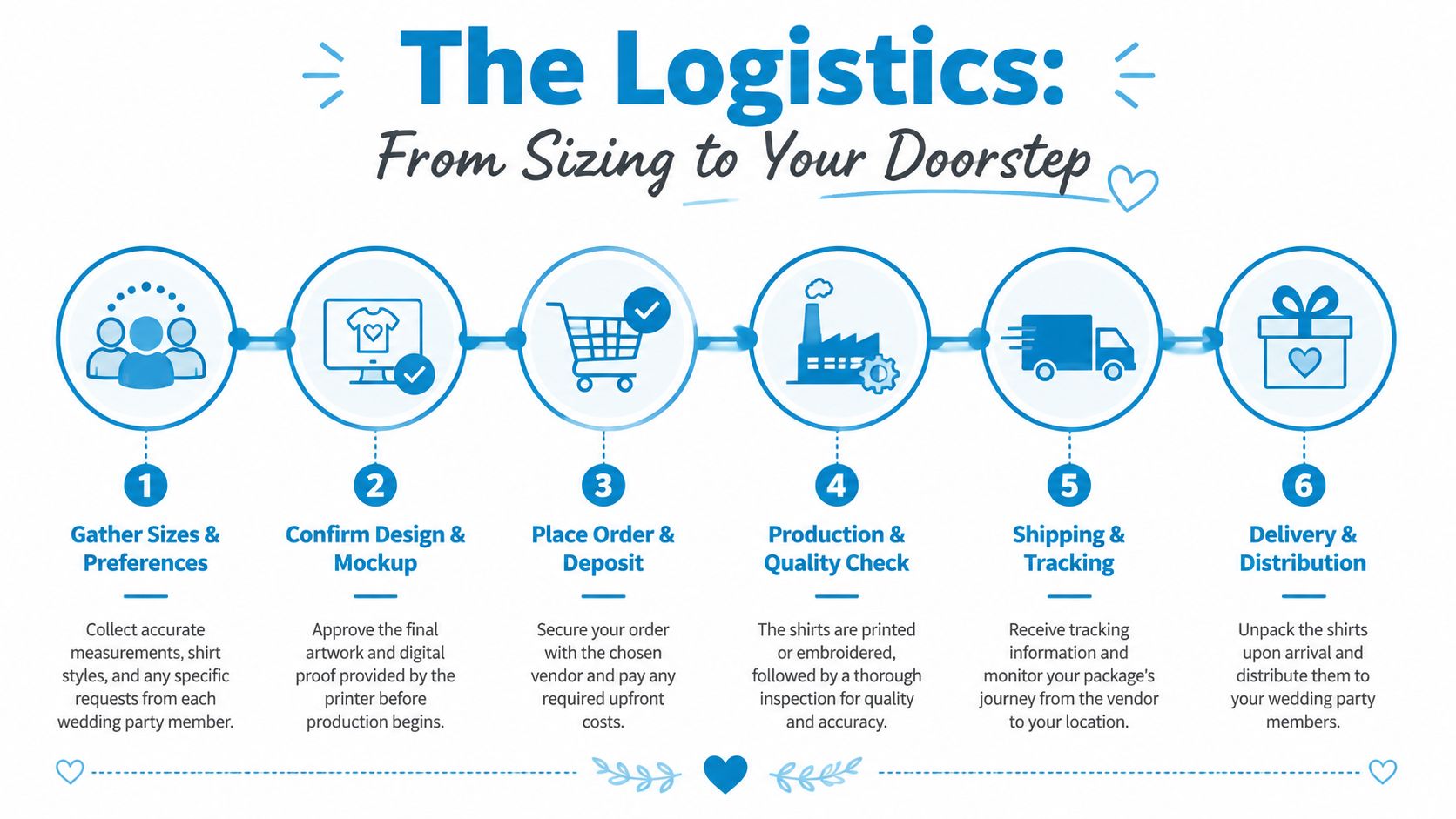
Even a smart shirt choice can unravel in the final stretch if the order process is messy. Most production headaches come from sizing confusion, missed proof errors, or a timeline that leaves no room for correction.
Build the order backward from your event date
Start with the exact day the shirts are needed. Then work backward.
If the shirts are for the wedding morning, treat the arrival date as earlier than the wedding itself. You want time to open every package, sort each size, and fix any issue before the actual event. If they're for a bachelorette trip, use the departure date, not the first photo opportunity, as your deadline.
Your reverse timeline should include:
- Final headcount deadline so no one adds themselves at the last second
- Size collection cutoff using the specific brand's chart
- Artwork approval date after everyone has checked names and titles
- Order placement date with buffer for production and shipping
- Delivery inspection day so you can verify everything while there's still time to respond
Don't collect sizes by asking “small, medium, or large?” That's where mistakes start. Ask for each person's preferred fit and have them review the actual chart for the exact shirt being ordered.
What to check before production starts
The proof deserves more attention than people give it. This is your last easy chance to catch problems.
Look for these things in the mockup:
- Spelling and role titles
- Placement size
- Ink or thread color against the garment
- Consistency across personalized versions
- Front and back balance
If the order includes multiple names, ask to see how those names are being grouped and laid out. Small differences in name length can affect visual balance fast.
A final logistics trick that saves stress is ordering a few extra blanks if the budget allows. Not because mistakes are guaranteed, but because wedding week rarely rewards perfect optimism. One extra common size can solve a surprising number of problems.
Common Wedding Shirt Mistakes and How to Avoid Them
The biggest mistake is forgetting the shirt has to function as clothing. Once you remember that, most of the other decisions get clearer.
Ordering for the joke instead of the wearer
A joke can land in the moment and still make the shirt unwearable afterward. A key question that improves the whole order is asking whether people will wear it again. A stronger fabric, subtler design, and a more refined decoration choice such as embroidery can shift the shirt from novelty item to appreciated gift, as discussed in this wedding shirt buying perspective focused on wearability.
Instead: Keep the personality, but lower the volume.
Guessing on size
Wedding groups are busy, and it's tempting to estimate. That's how you end up with shirts no one wants to put on for photos.
Instead: Use the exact size chart for the exact blank and ask each person to choose their own fit.
Buying the cheapest blank
Low price can look efficient at checkout and expensive in hindsight. Thin collars, rough hand feel, and awkward cuts make a shirt feel disposable fast.
Instead: Spend carefully on the blank first. It affects wearability more than most buyers expect.
Approving proofs too quickly
Names, dates, and role labels are the details most likely to go wrong because everyone assumes someone else checked them.
Instead: Have one person own the final proof review and read every line out loud before approval.
Waiting too long
Rush decisions lead to weaker shirt choices, fewer decoration options, and more stress if anything arrives off-spec.
Instead: Build in enough time to inspect the order before the event.
The simple filter for every final decision is this: if the wedding part disappeared, would the shirt still feel worth wearing? If yes, you're making a good order.
If you want help turning a wedding shirt idea into something people will keep, Dirt Cheap Product, Inc. offers custom apparel decoration across printing and embroidery methods, with proofs and garment options that can help you compare style, fit, and finish before you commit.