
You've approved the logo, chosen the color palette, and received a quote that looks attractive until you picture the hats in real use. A trade-show team wears them through a hot afternoon, customers handle them at a merch table, and staff use them repeatedly after the event. That's when the difference between a high quality trucker hat and a cheap giveaway becomes obvious.
The logo needs a stable decoration surface. The mesh must allow airflow without feeling fragile, the sweatband has to manage moisture, and the closure needs to fit different wearers without failing. Material selection and construction matter more than a low unit price because they determine whether the hat continues representing your brand or gets left behind after one use.
Table of Contents
- Why Most Branded Trucker Hats Disappoint
- Anatomy of a Well-Built Trucker Hat
- Choosing the Right Front Panel Material
- Matching Decoration Methods to Hat Materials
- Comfort Factors That Matter for All-Day Wear
- Evaluating Suppliers and Placing Your Order
- Care Instructions and Long-Term Value
Why Most Branded Trucker Hats Disappoint
A business owner opens a carton of custom hats before an event. The colors look right, but the front panels feel thin, the embroidery has pulled the fabric into ripples, and several bills no longer sit evenly. The hats may have been inexpensive, but they're now a visible reminder that the purchasing decision prioritized decoration cost over the blank hat's construction.
The classic trucker hat came from a practical place. In the United States during the 1960s and 1970s, feed, farming, and equipment-supply companies used the style as a promotional giveaway for truck drivers, farmers, and rural workers. The foam front provided a clear logo area, while the mesh back helped with ventilation in hot weather, which is why the cap became known as a “gimme cap” or “feed cap” (history of the trucker cap).
That original logic still applies to branded headwear. The hat has to work before it can market your company.
Where low-cost construction fails
A weak front panel creates the first problem. Embroidery pulls against the fabric, and an unstructured or poorly reinforced crown can pucker around a dense logo. Foam fronts can provide a smooth printing surface, but thin foam may yellow, crumble, or lose its shape under prolonged exposure and repeated handling. They're a better match for simple decoration than for heavy stitch coverage.
Mesh creates another common failure point. Cheap mesh can snag against hair, catch on equipment, or split where the rear panels meet the binding. A trucker hat doesn't need the heaviest fabric available, but the mesh should be sewn cleanly into the crown and finished so the seam doesn't carry all the stress.
Practical rule: Never approve a bulk hat from a logo proof alone. Inspect the blank hat, decorate a physical sample, and handle the finished sample as your customer will.
Closures also deserve attention. Plastic snapbacks offer useful adjustability, but brittle plastic can crack under rough handling or temperature changes. A closure that feels stiff, sharp, or difficult to adjust on the sample will become a nuisance during an event. The sweatband can fail more. If it doesn't handle perspiration comfortably, wearers may remove the hat even when the exterior still looks new.
The best-known commercial structure remains practical for a reason. Baseball caps, including trucker caps, accounted for 38% of global hat revenue in 2023, according to a market estimate cited by FreightWaves' trucker hat history and market overview. That scale gives buyers many options, but it also means specifications vary widely between products that look similar in a catalog.
Anatomy of a Well-Built Trucker Hat
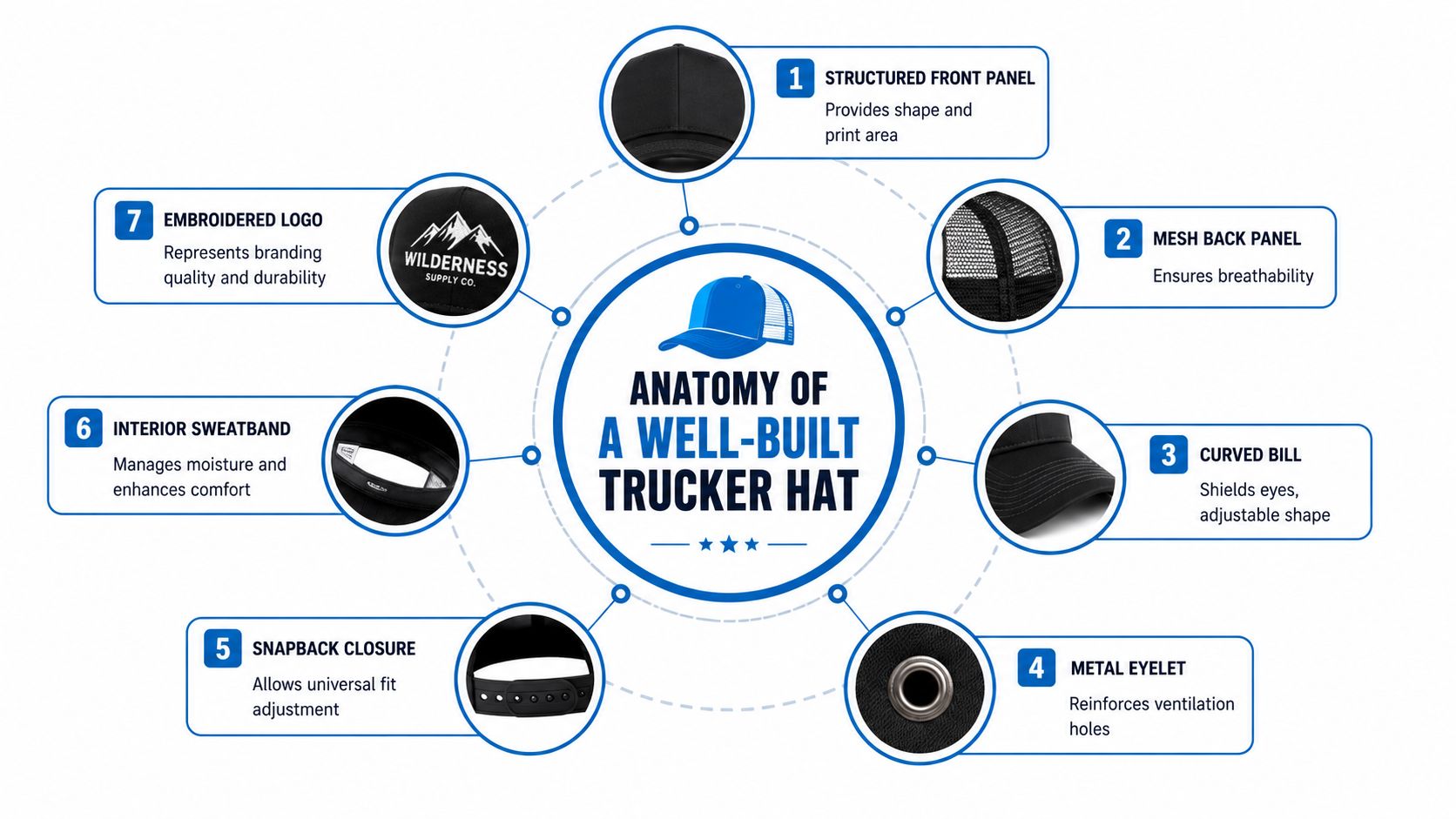
A trucker hat looks simple from the outside, but its performance depends on several connected components. The front panel controls structure and decoration, the rear panels manage airflow, and the interior determines whether someone can wear the hat comfortably for hours.
Front panels and crown structure
The front is the hat's branding canvas. A structured front panel typically uses buckram, foam, or another stabilizing layer to hold the crown upright and keep a logo from sinking into a soft surface. High-quality listings commonly use a six-panel structure, reinforced buckram, a precurved or flat bill, and an adjustable snap closure, features associated with better crown stability and consistent fit (Richardson 112 cap specifications).
Five-panel foam-front caps work differently. They create a broad, smooth face that suits screen printing, heat transfer, puff print, or simple embroidery. The five-panel layout changes the crown shape and provides a continuous decoration area, while the polyester mesh remains open behind the wearer's head (five-panel foam-front construction).
Look at the crown from the side. It should stand evenly without collapsing toward the bill, and the front seam should sit flat. A twisted crown or loose binding usually signals that the supplier hasn't controlled the structure consistently.
Mesh, bill, and finishing details
Mesh is functional, not decorative filler. It supports airflow, but its quality depends on the yarn, the panel joining, the binding, and the stitching. A seam with loose threads or inconsistent tension will wear faster than a cleanly sewn and reinforced seam.
The bill should attach through stitching rather than relying on adhesive. Check whether it returns to its intended curve after gentle handling, whether the edge binding is even, and whether the underside has rough points that could irritate the wearer. Plastic stiffeners generally resist moisture better than paper-based inserts, but the supplier should confirm the bill construction instead of leaving it as an assumption.
A comfortable interior uses a sweatband that feels smooth against the forehead and stays secured to the crown. Cotton sweatbands can feel soft and absorbent, while polyester performance bands typically prioritize durability and moisture handling. The right choice depends on the intended use, but loose threads and exposed seams are quality problems in either material.
Finally, inspect the top button, eyelets, and closure. Eyelets should be seated cleanly, the top button shouldn't wobble, and a snapback should close without excessive force. For a deeper look at how components come together, compare the custom hat manufacturing process before requesting samples.
Choosing the Right Front Panel Material
The front panel determines how the hat feels, how the logo looks, and how the product ages. There isn't one universal winner. A retail cap, outdoor uniform, event giveaway, and sustainability-focused merchandise program may need different materials even when they use the same trucker silhouette.
Cotton twill offers a familiar, premium hand feel and works particularly well for embroidery because the woven surface supports stitches cleanly. It can be more vulnerable to shrinkage, fading, and moisture-related changes unless the fabric receives suitable treatment. Polyester twill generally handles moisture and color retention more confidently, although decorators may need to adjust needles and thread settings for clean embroidery.
Foam fronts provide the traditional promotional look and a smooth surface for printing. They're useful when the design depends on a broad graphic or a vintage shape, but dense embroidery can distort the foam and reduce the clean appearance of the crown. Performance polyester, ripstop nylon, blends, corduroy, wool, leather, and faux leather can shift the product toward technical, fashion, or premium positioning. The material should follow the customer's use case rather than a generic idea of what a trucker hat “should” be.
| Front Panel Material | Embroidery Compatibility | Print Readiness | Retail Perceived Value | Wash Durability | Relative Cost |
|---|---|---|---|---|---|
| Cotton twill | Strong for detailed embroidery when stabilized | Suitable for screen print and transfers | Premium, familiar hand feel | Good with proper care, but can shrink or fade | Moderate |
| Polyester twill | Good, with decoration settings matched to the fabric | Strong for transfers and performance graphics | Technical and polished | Strong resistance to moisture and color change | Moderate |
| Polyester foam | Best for simple embroidery and broad graphics | Very strong for screen printing and heat transfer | Retro and promotional | More vulnerable to heat, UV exposure, and surface breakdown | Lower |
| Performance blends | Good for controlled, moderate embroidery | Suitable for technical prints and transfers | Active and purpose-built | Strong for outdoor and repeated use | Moderate to higher |
The standard mixed-material build remains popular because it balances structure, airflow, and comfort. Market examples commonly pair a cotton-polyester front, 100% polyester mesh, and a cotton sweatband, with one example using a 60% cotton and 40% polyester front (mixed-material trucker hat example).
For sustainability claims, ask for exact component percentages and relevant certifications rather than relying on a general “eco” label. Organic cotton and recycled polyester can support an eco-positioned product, but the complete hat still includes mesh, thread, sweatband, closure, and reinforcement materials. A credible specification identifies those parts individually and verifies certifications such as GOTS or GRS where applicable, as discussed in this material comparison for trucker hats.
Matching Decoration Methods to Hat Materials
Decoration should follow the substrate. A design that looks excellent on cotton twill may look distorted on foam, while a transfer that adheres well to smooth polyester can struggle on a textured weave.
Embroidery and patches
Cotton twill and stable cotton-polyester blends are dependable choices for embroidery. Buckram reinforcement helps the front panel resist distortion, and a suitable backing stabilizer supports clean lettering and fine shapes. Keep dense stitch work away from thin foam unless the design has been simplified and tested, because the needle tension can pull the foam out of shape.
Patches are more forgiving when the logo needs dimension or when the front fabric doesn't support direct embroidery. Sewn patches work well on structured twill, canvas, and some performance fabrics. Adhesive-backed patches may be acceptable for temporary promotional use, but sewn attachment gives a more secure result for retail or uniform programs.
Transfers and screen printing
Smooth foam and polyester fronts are well suited to screen printing and heat transfer. They provide a relatively even face for large graphics, bold type, and multiple colors. Direct-to-film transfers can work on smooth polyester surfaces, but heavily textured fabrics may reduce edge clarity or create lifting at the design perimeter.
Cotton twill can accept screen printing, though the fabric texture and garment finish affect the final surface. Test the exact blank, especially when the logo includes small text or a broad solid area. A printer should confirm curing requirements and avoid excessive heat on foam constructions.
Leather, faux leather, and suede need a different approach. Laser engraving, debossing, or a carefully selected patch can produce a more intentional finish than forcing standard embroidery onto a surface that wasn't designed for it.
| Decoration Method | Best Materials | Avoid On | Durability Rating | Avg Cost/Unit |
|---|---|---|---|---|
| Direct embroidery | Cotton twill, cotton-poly blends, reinforced structured panels | Thin foam and unstable fronts with dense designs | Strong when stabilized and matched to stitch coverage | Varies by stitch count and order details |
| Sewn patch | Twill, canvas, denim, selected performance fabrics | Very thin mesh or weak foam faces | Strong when perimeter stitching is secure | Varies by patch size and attachment |
| DTF transfer | Smooth polyester and foam fronts | Deeply textured weaves and poorly prepared surfaces | Good when applied at the correct temperature | Varies by size and color coverage |
| Screen printing | Foam, polyester, and smooth twill fronts | Highly uneven or loosely woven surfaces | Good for suitable graphics and proper curing | Varies by ink coverage and setup |
| Laser or debossed finish | Leather, faux leather, and some suede panels | Standard mesh and unstable foam | Material-dependent | Varies by artwork and finishing process |
The logo decoration method guide is useful when the artwork, fabric, and intended quantity need to be evaluated together. The supplier should show a decorated sample, not just a digital mockup, before production approval.
Decoration rule: Match stitch weight, heat, and attachment method to the front panel. Don't ask a thin foam crown to perform like reinforced cotton twill.
Avoid approving a sample solely because the logo is centered. Turn it inside out, inspect the backing, look for puckering around the design, and flex the bill and closure. The finished hat is the product your audience experiences, not the artwork file.
Comfort Factors That Matter for All-Day Wear
A hat can look excellent on a display table and still become uncomfortable during a long shift. Mesh helps with airflow, but it doesn't solve heat buildup by itself. The front-panel material, sweatband, crown height, bill balance, and closure all affect whether the wearer keeps the hat on.
Start with the interior
A cotton sweatband often feels soft against the skin and can suit casual, lifestyle-oriented merchandise. A polyester or performance blend may handle repeated perspiration and drying more effectively. The trade-off is tactile: some synthetic bands feel slick or less absorbent, so the finished sample matters more than a material name on a quote.
The mesh should feel flexible without feeling flimsy. Run a finger over the inside seams and check for scratchy thread ends. Put the hat on for an extended fitting rather than a quick mirror check. If the sweatband rolls, the crown presses at the temples, or the closure creates a hard point, those problems will become more noticeable during outdoor work or event service.
Use a repeatable sample check
Score each sample against the same questions so a low quote doesn't distract from wearability:
- Airflow: Does the rear mesh allow comfortable ventilation without snagging or rubbing?
- Moisture handling: Does the sweatband remain comfortable after perspiration, or does it feel saturated quickly?
- Fit range: Can different wearers adjust the closure without pressure points or excessive looseness?
- Balance: Does the front feel too heavy compared with the mesh rear?
- Bill behavior: Does the bill hold its curve and shield the eyes without pulling the crown forward?
- Seam finish: Are binding, eyelets, top button, and interior stitching smooth and secure?
The classic high-quality construction typically combines a structured front, breathable polyester mesh, an adjustable snap closure, and a comfortable sweatband. Those components work as a system. Changing one can alter the experience, such as pairing a heavy decorated front with a very light rear mesh or using a stiff sweatband against a soft crown.
Fit the hat to the wearer
A mid-profile crown is often easier to distribute across a broad group, while a high-profile crown creates a more pronounced streetwear or retro silhouette. A precurved bill usually feels familiar for workwear and outdoor events, while a flat bill may suit a fashion-led retail product. Neither is automatically superior.
Ask the supplier for samples in the intended closure style and profile. A snapback offers broad adjustability, but the snap material and attachment still need inspection. Fabric strap-and-buckle closures can feel softer and age gracefully, although they provide a different adjustment experience. Fitted or stretch-fit styles can look refined, but they require more deliberate size planning.
Evaluating Suppliers and Placing Your Order
The lowest quote rarely shows the complete cost. Compare what each supplier includes, how clearly the specifications are written, and what happens if the approved material becomes unavailable. A reliable quote should identify the blank hat construction, front and rear fabrics, closure, decoration method, setup charges, shipping treatment, sample terms, and approval process.
A practical procurement sequence
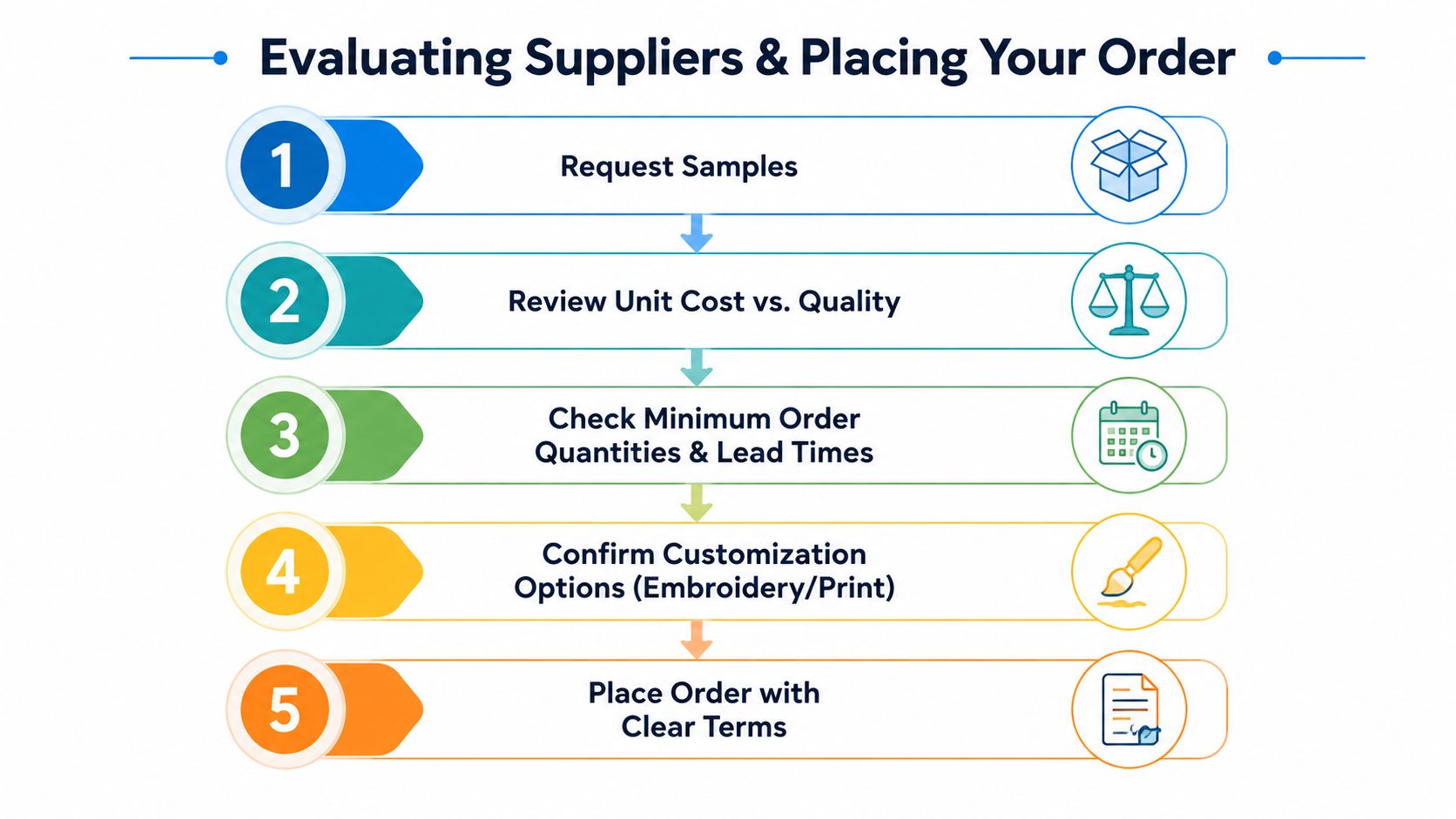
- Request physical samples. Ask for an undecorated blank and a decorated sample using your actual artwork. Inspect the crown, bill, sweatband, mesh seams, closure, and backing.
- Compare quality beside price. Record the fabric composition and construction details rather than judging only by color or catalog photography.
- Confirm minimums and timing. Ask when sampling, artwork approval, production, and shipping occur. Get each stage in writing.
- Test customization. Confirm whether the supplier recommends embroidery, screen printing, DTF, a patch, or another finish for the chosen material.
- Write protective terms. Include approved artwork, colors, component specifications, packaging, inspection rights, defect handling, and rules against substitutions.
Questions that reveal supplier quality
Ask whether digitizing, custom buckle tooling, packaging, freight, and proofing are included or billed separately. Ask how the supplier handles shade variation between sample and production, and whether the same mesh, sweatband, and closure will be used for a reorder.
A pre-production approval sample gives you a reference point. During production, inspection should focus on logo placement, stitch quality, panel alignment, bill shape, closure function, and visible stains or damage. Define what counts as an unacceptable defect before the order ships.
Communication is also evidence. Delayed answers, vague component descriptions, refusal to send a physical sample, or pressure to approve without a proof should make you cautious. Payment terms should be clear, with milestones tied to approvals rather than informal promises.
If you're comparing options for branded hats for your team, use the same checklist for every supplier so a polished presentation doesn't hide weaker construction.
A useful overview of the bulk custom hat ordering process can help organize artwork, quantities, and production questions before you request final pricing.
The procurement process is easier to follow when the responsibilities are visible:
Care Instructions and Long-Term Value
A high quality trucker hat won't retain its shape if users treat it like a disposable garment. Include care guidance with every order, especially when the hat has a structured front, foam backing, embroidery, or a shaped bill.
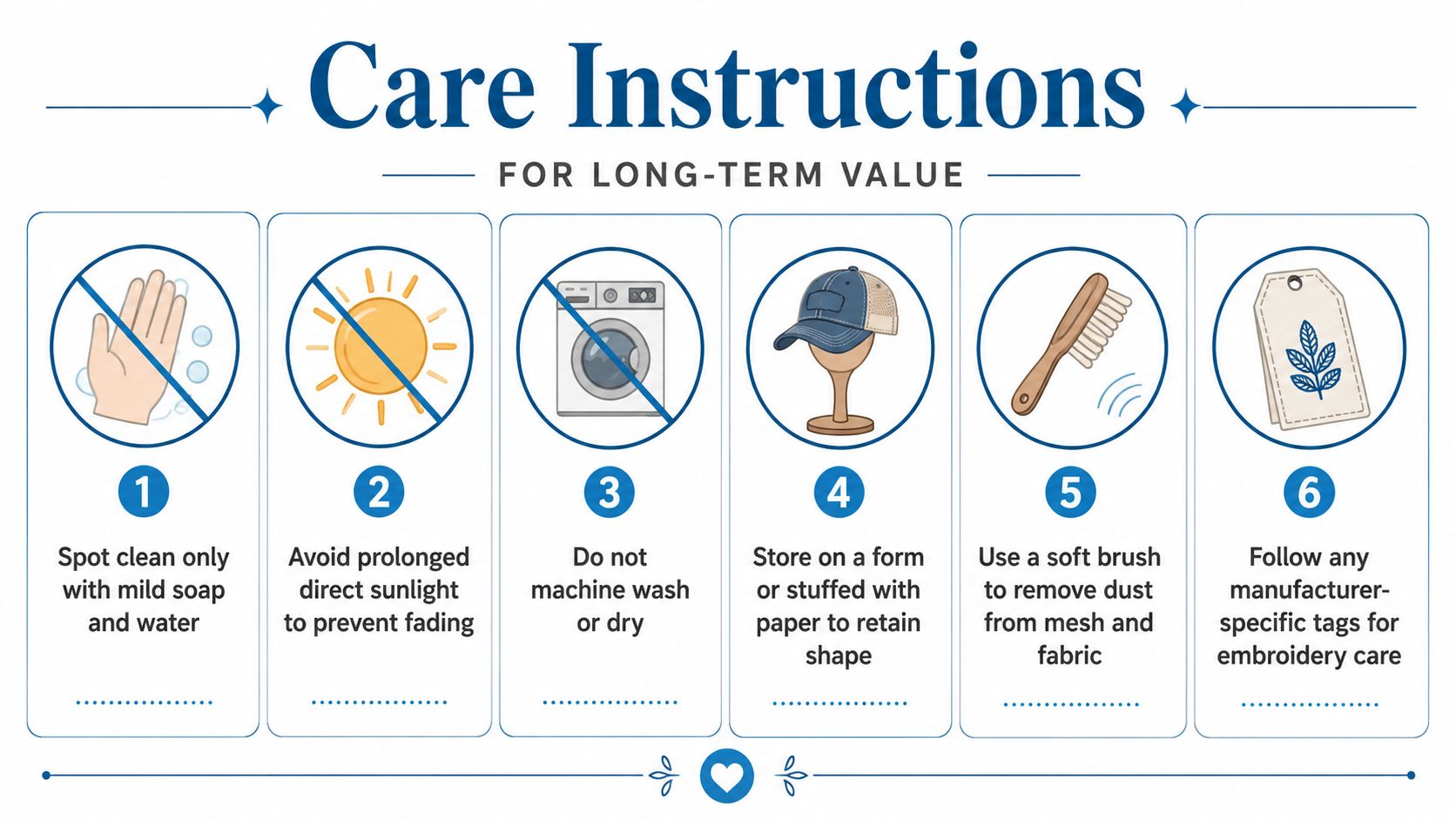
Recommend spot cleaning with mild soap and water rather than aggressive washing. Reshape the crown while it's damp, then air dry it away from direct heat. Machine washing and machine drying can damage buckram, distort the visor, shrink mesh, and cause decorated areas to pucker.
Make care part of the product
A small printed care card or QR code linking to a branded care page gives recipients a clear way to protect the item. Tell users to store the hat on a form or with clean paper inside the crown, brush dust gently from the mesh, avoid prolonged direct sunlight, and follow any manufacturer-specific instructions for embroidered areas.
Care also belongs in total-cost planning. Track reorder requests, customer comments, and visible wear patterns. If the mesh fails before the front decoration, change the rear-panel specification. If the logo puckers, revise the stabilizer or decoration method. If users report pressure around the closure, test a different closure or profile.
Avoid making promises that the material and care instructions can't support. Set expectations based on the approved sample and intended use, then explain that repeated outdoor exposure, sweat, abrasion, and improper cleaning will affect any textile product. A hat that stays wearable and recognizable through regular use creates more value than one that only looks impressive when it arrives.
Dirt Cheap Product, Inc. provides custom trucker hats and bulk headwear with embroidery, screen printing, DTF, sublimation, and patch options, supported by artwork proofs and responsive order assistance. Visit Dirt Cheap Product, Inc. to upload your logo, compare suitable hat constructions, and request a decorated sample before placing your order.