
You've approved a vibrant palm-tree design, the screen proof looks perfect, and the first production sample arrives looking flat and washed out. The artwork wasn't necessarily the problem. The blank may have lacked the polyester surface needed to accept sublimation dye.
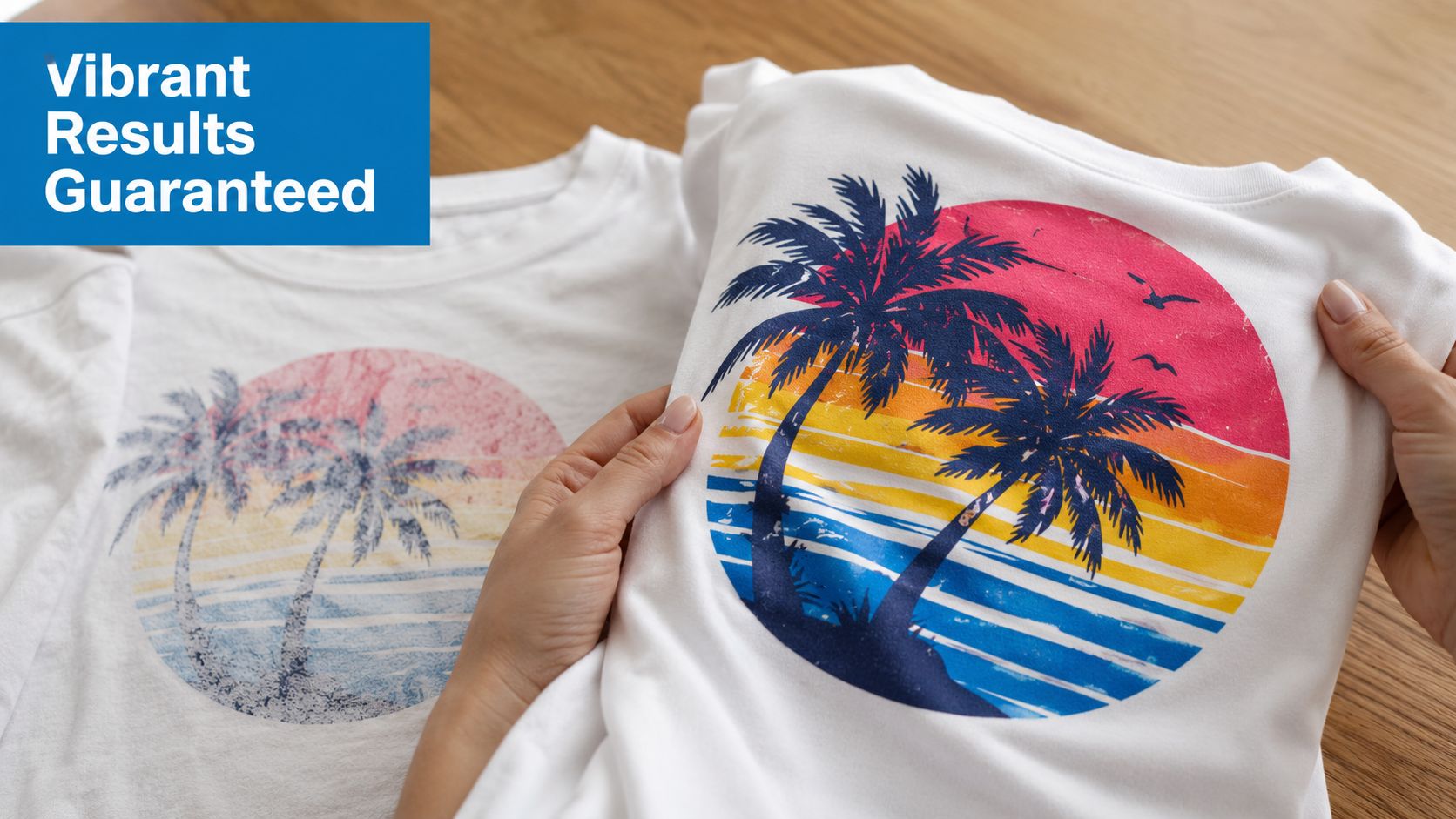
That mistake can affect an employee uniform order, an event giveaway, or a retailer's first private-label collection. A blank is not just an empty product waiting for decoration. It's part of the color system, production process, handling requirements, and customer experience.
This guide is for small and medium businesses, event organizers, nonprofits, retailers, boutiques, and marketing teams choosing sublimation printing blanks. You'll learn why polyester is the gatekeeper, how apparel differs from coated hard goods, when sublimation makes more sense than DTF, and how to reduce failed transfers and slow-moving inventory.
Color also carries meaning beyond the printed image, so teams planning branded merchandise may benefit from this practical resource on what brands should know about color. A color that feels energetic on screen still needs the right blank and production setup to look intentional in real life.
Success means more than a bright first sample. It means consistent color, durable transfers, sensible blank choices, and products matched to the way people will use them.
Table of Contents
- Introduction to Sublimation Printing Blanks That Deliver Vibrant Results
- What Sublimation Printing Blanks Are and How They Work
- Types of Sublimation Blanks From Apparel to Hard Surfaces
- Sublimation vs DTF and How to Match Blanks to the Right Process
- How to Choose the Right Sublimation Blank and Prepare Artwork
- Pressing Tips and Care Instructions for Long Lasting Color
- Building Your Sublimation Merch Strategy With Confidence
Introduction to Sublimation Printing Blanks That Deliver Vibrant Results
A buyer usually starts with the finished product in mind. They need shirts for staff, mugs for a conference, aluminum panels for a retail display, or a small run of branded gifts. The blank often gets treated as a minor purchasing detail, but it determines whether the decoration can bond, how the colors appear, and whether the item suits the customer's budget and use case.
Think of a white polyester shirt and an uncoated cotton shirt printed with the same design. The polyester shirt gives sublimation dye a receptive synthetic surface. The cotton shirt doesn't provide the same bonding environment, so the transfer may look weak, fail to hold properly, or require a different decoration method altogether. A screen proof can't warn you about that material mismatch.
The buyer's real problem
A catalog can make sublimation printing blanks look interchangeable. They aren't. Two shirts can share a similar color and silhouette while behaving differently under heat. Two mugs can look identical before production while differing in coating quality, shape, or press compatibility.
That distinction matters for several common orders:
- SMB uniforms need dependable color and repeatable decoration across reorders.
- Event merchandise needs a blank that suits the audience, quantity, and distribution setting.
- Retail products need a finished appearance that supports the selling price and survives expected handling.
- Promotional goods need practical durability, especially when recipients use them frequently.
The wrong blank creates more than a disappointing sample. It can force artwork adjustments, reprints, replacement purchases, and difficult conversations with a customer who expected the on-screen design to carry through.
What a reliable result looks like
Good production starts by treating the blank as a material system. First, confirm that the surface contains polyester or a compatible polymer coating. Then match the product family to the use case, prepare the artwork for the selected shape, press within an appropriate process window, and protect the finished item during storage and delivery.
You don't need to memorize every product in a supplier catalog. You do need to understand why the product works. Once that principle is clear, choosing between a shirt, mug, metal panel, tile, or specialty substrate becomes a production decision instead of a guess.
What Sublimation Printing Blanks Are and How They Work
Sublimation printing blanks are products designed to receive dye-sublimation decoration. The blank either contains polyester in its surface or has a polymer coating that can accept the dye. On apparel, the polyester fibers provide the receptive structure. On hard goods, the image bonds to the applied polyester layer, as explained in this sublimation blank guide from JPPlus.
The easiest analogy is a sponge. Water soaks into a sponge and becomes part of its structure. Pour water onto a sealed piece of glass, and it sits on the surface until it runs away or evaporates. Sublimation depends on a similar difference. Heat changes the solid dye into a gas, and pressure helps move it into the receptive polyester or polymer surface. Once the item cools, the color is integrated into that surface rather than behaving like a thin layer of paint.
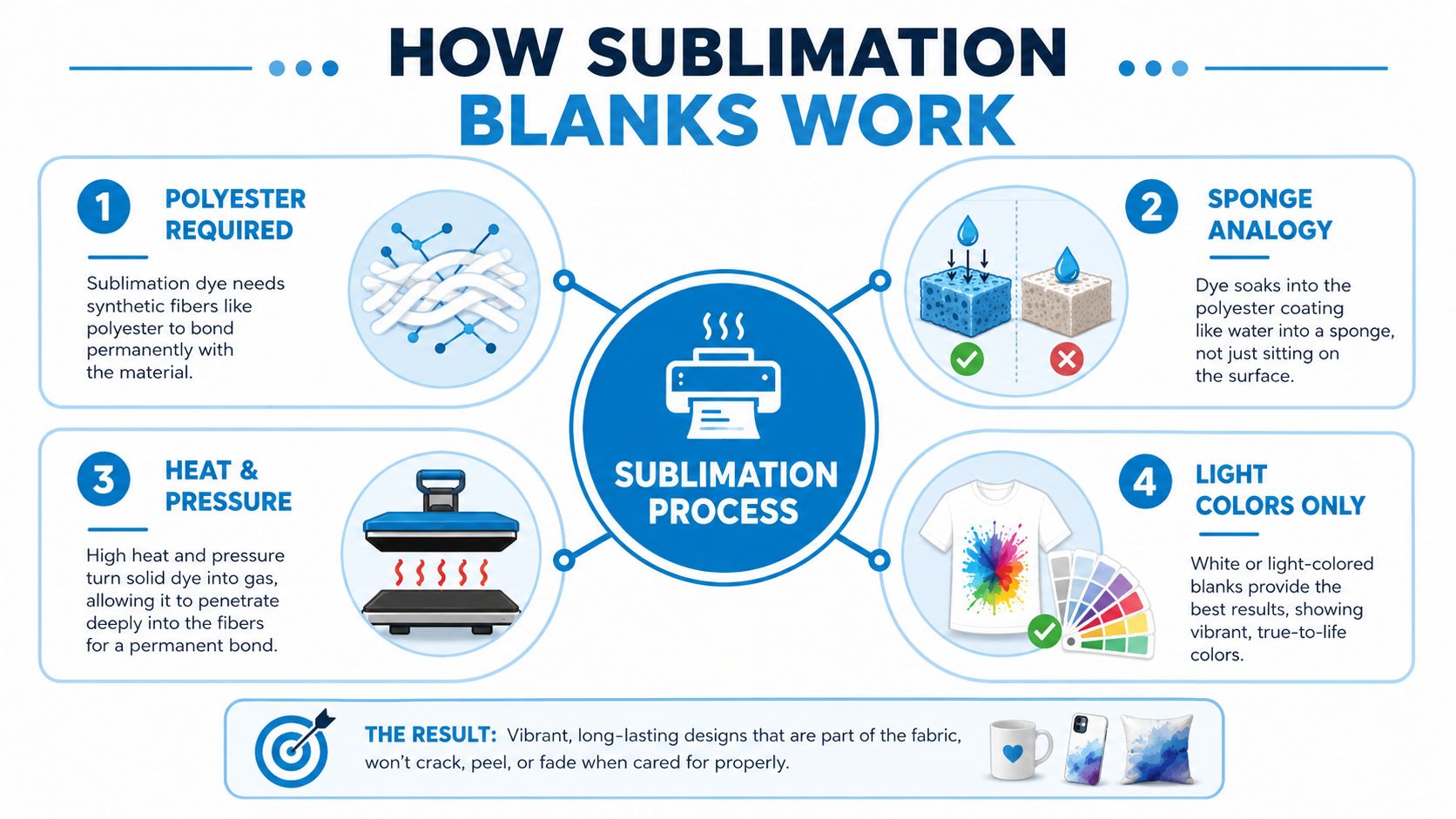
Core concept: Sublimation dye needs polyester or a compatible polymer coating to bond effectively. The blank isn't merely holding the print. Its surface makes the print possible.
Why material compatibility comes first
Standard sublimation isn't suitable for cotton or other uncoated natural materials because those fibers don't provide the bonding surface the dye requires. The same problem applies to uncoated wood and uncoated ceramics, which can fail unless they receive a suitable coating, according to this technical explanation of what you can sublimate on.
A coated ceramic mug may accept the same general decoration process as a coated metal panel, but the coating still needs to be intact and compatible. Scratches, contamination, poor application, or an unsuitable finish can affect color and adhesion.
Why polyester matters to blank availability
Polyester isn't a niche input reserved for craft products. Textile Exchange reported that polyester production rose from around 63 million tonnes in 2022 to about 71 million tonnes in 2023, representing roughly 57% of total global fiber production in 2023. In its 2025 materials reporting, the organization placed polyester at about 78 million tonnes and 59% of global fiber output, with 88% fossil-based polyester. These figures are summarized in coverage of the global polyester market.
That scale supports a broad ecosystem of compatible products, from apparel to coated promotional goods. One industry estimate placed the global polyester textile market at US$327.0 million in 2025, with a projection of US$444.8 million by 2033 at a 3.9% CAGR, while another report valued the polyester market at US$112.43 billion in 2024 and projected US$164.77 billion by 2034 at a 3.9% CAGR. Those estimates appear in this polyester market report.
The practical lesson is simple. Polyester's industrial abundance helps explain why compatible sublimation blanks are available across many product categories, but availability alone doesn't make every blank a smart purchase.
Types of Sublimation Blanks From Apparel to Hard Surfaces
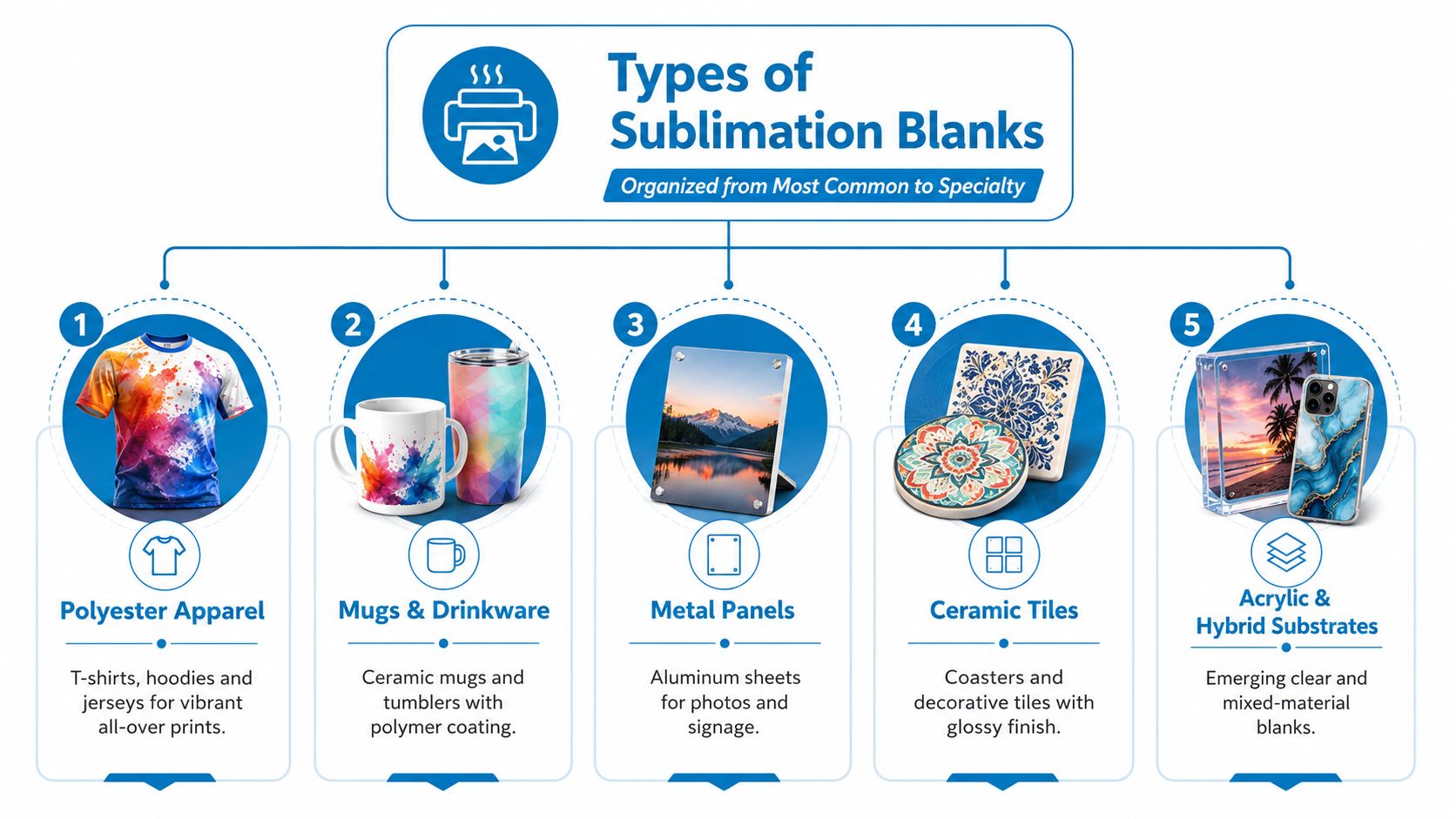
A blank family tells you what the item is made from, where its receptive surface sits, and how customers will use it. Apparel usually offers flexibility and wearability. Hard goods can provide a more structured, giftable, or display-oriented product. Specialty substrates may create differentiation, but they often demand more testing before bulk purchasing.
Apparel
Polyester T-shirts, hoodies, jerseys, and performance garments are common choices for vibrant apparel decoration. Light or white garments display the printed colors most faithfully because sublimation adds color but doesn't function like an opaque white underbase.
Apparel works well for all-over graphics, team designs, event wear, and private-label collections. The buyer should still check fabric content, garment construction, seams, stretch, and the manufacturer's pressing guidance. A shirt that looks right in a product photo may not offer the same printable area or heat behavior as another style.
Mugs and drinkware
Ceramic mugs and tumblers generally use a polymer coating over the base material. They suit office gifts, event merchandise, employee milestones, and retail collections. Their usefulness can support repeat exposure, but coating consistency and shape affect the result.
Metal panels and tiles
Coated aluminum panels can produce crisp photographic graphics, signs, plaques, and display pieces. Ceramic tiles can serve as coasters, decorative items, or architectural accents. These products feel more rigid and substantial than apparel, but their mass and surface finish can change the heat-transfer response.
Acrylic and hybrid substrates
Market coverage describes movement beyond traditional mugs and shirts into niche and hybrid items such as acrylic. A separate estimate projects the sublimation blank mug market from $1.2 billion in 2025 to $2.3 billion by 2034, alongside interest in recyclable and sustainably sourced blanks, as discussed in this coverage of trending sublimated blanks.
Treat sustainability language carefully. Ask whether the product's coating, durability, recyclability, and expected service life support the claim. A premium substrate is worthwhile when it improves the finished product for a clear reason, not because it sounds novel.
| Blank Type | Base Material | Coating Required | Best Use Case |
|---|---|---|---|
| Polyester apparel | Polyester textile | Receptive polyester fibers | Uniforms, jerseys, event wear, retail apparel |
| Mugs and drinkware | Ceramic or other hard base | Polymer coating | Gifts, office merchandise, event products |
| Metal panels | Aluminum or similar metal | Sublimation coating | Photos, plaques, signage, displays |
| Ceramic tiles | Ceramic | Compatible sublimation coating | Coasters, decor, commemorative pieces |
| Acrylic and hybrid substrates | Acrylic or mixed materials | Product-specific receptive surface | Specialty retail and differentiated promotions |
Sublimation vs DTF and How to Match Blanks to the Right Process
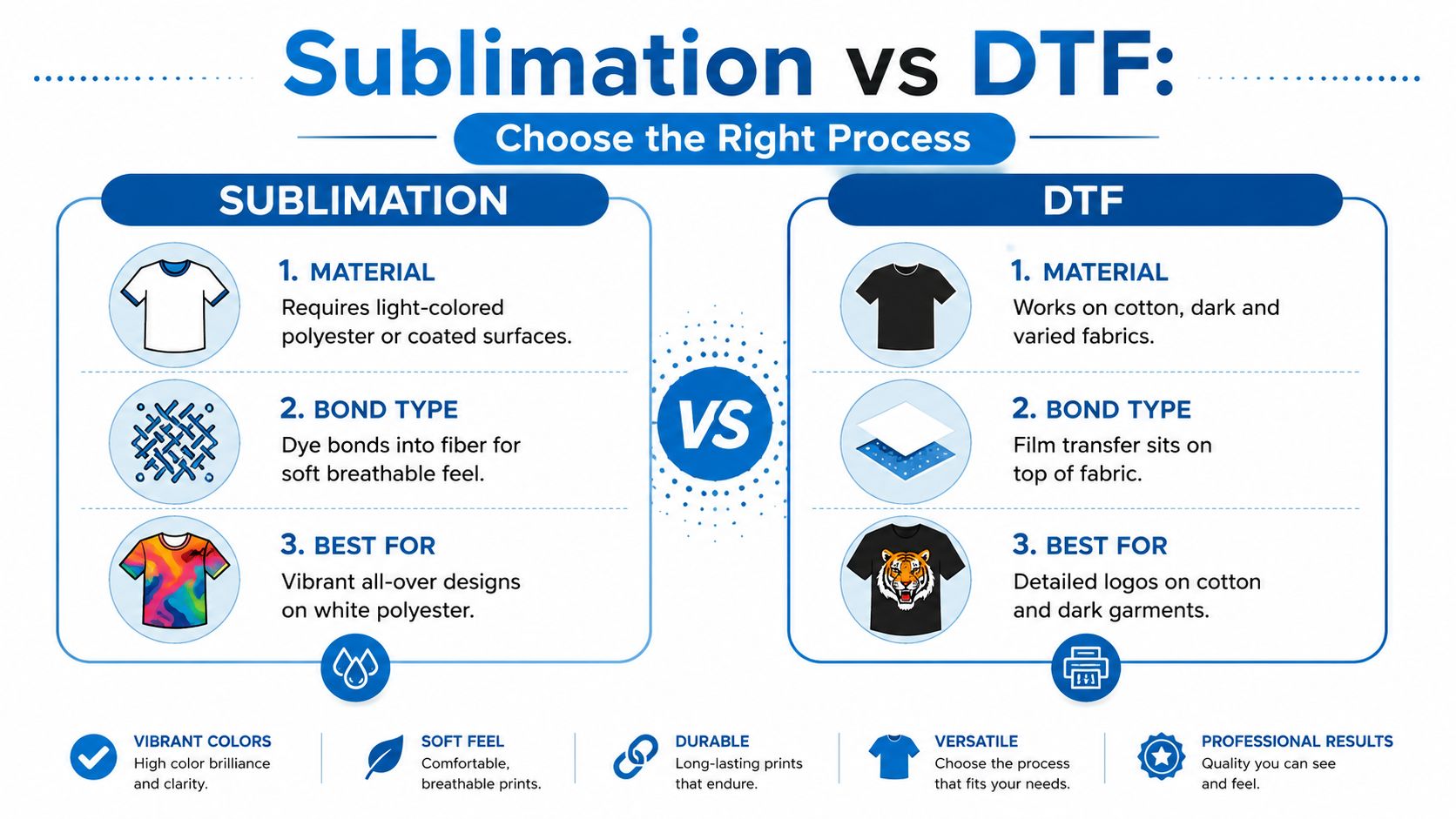
Sublimation and direct-to-film, or DTF, solve different material problems. Sublimation infuses dye into light-colored polyester or a polymer-coated surface. DTF uses a printed film and adhesive powder, allowing decoration on cotton, dark garments, and varied fabrics.
That distinction should guide the blank purchase. Don't buy a cotton shirt and hope a sublimation setting will overcome the missing receptive surface. Choose the process after checking the garment composition, garment color, artwork, and desired finish.
A practical decision matrix
| Production question | Sublimation fits when | DTF fits when |
|---|---|---|
| Fabric | The garment is light-colored polyester | The garment is cotton, blended, or otherwise varied |
| Garment color | White or light shades support the artwork | Dark colors need an opaque design layer |
| Design style | Large, vibrant, breathable graphics | Detailed logos, names, and smaller placements |
| Hand feel | You want dye integrated into the fiber | A film layer on the fabric is acceptable |
| Blank type | Polyester apparel or coated hard goods | Garments compatible with film transfer |
Sublimation can create a soft result on suitable apparel because the dye bonds into the fiber. DTF places a film-based decoration on top, which makes it more versatile across fabric colors and compositions. Neither process is automatically superior. The correct choice depends on the blank and the customer's expectations.
Match the method before preparing files
A common workflow error is preparing artwork first and checking the garment later. Reverse that order. Confirm the blank, select the process, then set up the artwork for the process's requirements.
For a deeper side-by-side explanation, review this DTF versus sublimation printing comparison.
If a campaign uses both methods, keep the customer-facing color and placement plan consistent while adjusting production files to suit each decoration type. A cotton black hoodie and a white polyester jersey may carry the same logo, but they won't use the same transfer logic.
How to Choose the Right Sublimation Blank and Prepare Artwork
Blank selection begins with the customer's use case, not the supplier's product count. A useful decision process filters each item through end use, color, quantity, budget, and sell-through risk.
Start with the finished product
For staff uniforms, prioritize fit, repeat availability, comfort, and consistent decoration. For event merchandise, consider whether the product needs to be wearable, portable, or easy to distribute. For retail, evaluate perceived value, surface durability, packaging, and whether the blank supports a distinctive product rather than another interchangeable item.
Search interest can shift sharply by season and product category. One market overview describes a sharp fall in interest over the past six months while two-year interest remained roughly flat, which points to a demand pattern that can create overstock risk. The same source identifies a narrow $15 to $29 retail pricing band that can be pressured by preprinted alternatives and discounting, as discussed in this sublimation blanks trend analysis.
Don't fill a warehouse with every color and shape. Test a focused assortment, watch actual sell-through, and expand only when buyers demonstrate repeat demand.
Use an artwork checklist
- Confirm the printable area: Match the file to the blank's actual dimensions, curves, seams, and safe zones.
- Mirror the artwork: Reverse the design before printing so text and directional graphics read correctly after transfer.
- Build in bleed: Extend background color or pattern beyond the finished edge where the product shape allows it.
- Check resolution: Use a clean, high-quality file at the intended print size, especially for small text and photographic detail.
- Manage color deliberately: Screen colors are only a preview. Use a controlled workflow and consult this guide to RGB to CMYK conversion when the project requires color-space preparation.
- Proof the blank: A paper proof won't reveal coating flaws, seam placement, distortion, or the way a curved item presents the design.
Protect the coating before production
A coated blank can be damaged before it reaches the press. One storage guide recommends 15°C to 30°C, 30% to 60% relative humidity, protection from direct sunlight, and sealed packaging. It also warns that alcohols, ketones, strong acids, and strong alkalis can degrade coatings and weaken ink adhesion, as detailed in these sublimation blank storage recommendations.
Keep a buyer's checklist with the purchase order. Record the product specification, coating type, intended use, artwork version, proof approval, and any sample result. That record makes reorders easier and helps identify whether a failure came from the blank, file, or press setup.
Pressing Tips and Care Instructions for Long Lasting Color
Pressing converts the blank and prepared artwork into a finished product. Heat, time, and pressure work as a set, yet their settings depend on the material system. A thin polyester shirt heats differently from a thick mug or metal panel because the receptive surface sits at a different depth.
For typical polyester apparel and flat sublimation blanks, use 385°F to 400°F for 45 to 60 seconds at medium pressure as a starting window, following this heat press settings guide. Coatings generally activate around 375°F to 410°F, with adjustments for thicker or higher-mass products. For settings organized by material and application, consult this heat press temperature guide.
Temperature insight: Begin with the blank manufacturer's settings. Then adjust time and heat for thickness. More material often needs more time for the dye to reach and infuse into the polymer layer.
Build a clean transfer routine
Place fresh protective paper above and below the item. Secure the transfer without covering dye-receiving areas with heat-resistant tape. Keep the paper and blank aligned so the design stays still when the press closes.
Ghosting occurs when the transfer shifts during cooling or the paper lifts unevenly. Firm positioning, stable pressure, and a controlled opening reduce that risk. Thick hard goods may need a longer dwell than thin apparel because their receptive surface heats more slowly.
The blank must also tolerate the press. Sublimation commonly uses presses in the 350°F to 400°F range, so choose products that withstand that heat without warping, melting, or discoloring, as described in this sublimation blank selection guide. That material check protects both the sample and your inventory decision.
Give customers practical care guidance
Tell end users how to preserve the finished item. Apparel generally benefits from washing according to the garment manufacturer's instructions, avoiding unnecessary high heat, and keeping harsh chemicals away from decorated areas. Drinkware and coated hard goods should follow the product's care limitations instead of assumptions based on the underlying material.
Durability varies by coating, handling, cleaning method, heat history, and intended environment. A coated panel, acrylic item, and garment face different exposure conditions, so avoid promising identical outdoor or scratch resistance across every blank. For promotional merchandise, matching care guidance to the use case helps protect the color and sets realistic expectations for repeat orders.
Building Your Sublimation Merch Strategy With Confidence
A dependable sublimation program follows a simple chain:
- Choose the surface first. Confirm polyester or a compatible polymer coating.
- Match the process to the product. Use sublimation for suitable light polyester and coated goods, and select DTF when the garment or color calls for film transfer.
- Buy for the use case. Separate staff uniforms, event merchandise, promotional giveaways, and retail products instead of giving every category the same blank.
- Test before scaling. Sample niche products such as acrylic or hybrid substrates before committing to bulk inventory.
- Protect repeatability. Save approved artwork, blank specifications, pressing settings, and care guidance for future orders.
This approach turns blanks into a controlled material system. You can evaluate not only whether an item prints, but whether it sells, survives its intended use, supports the customer's price, and remains available for reorders.
A full-service decorator can help with proofs, placement, color review, and production across different decoration methods. Dirt Cheap Product, Inc. offers sublimation alongside screen printing, embroidery, DTF, and custom patches for apparel and promotional products, giving buyers a way to coordinate related orders through one production partner.
Start with a small, clearly defined assortment. Approve a real sample, inspect the transfer under normal use conditions, and only then expand into additional blank families.
Dirt Cheap Product, Inc. can help turn approved artwork into sublimated apparel and promotional products while supporting proof review, color accuracy, and wholesale ordering. Visit Dirt Cheap Product, Inc. to upload your artwork, discuss the right blank for your project, and request production support.