
Picture this: your team is running an outdoor event, and a sudden drizzle begins. Instead of everyone making a dash for cover, they just pull their hats down a little tighter. They stay comfortable, and more importantly, your company logo stays visible. That’s the real-world value of water-resistant hats—a smart piece of apparel that keeps performing when the weather turns.
Table of Contents
- Why Your Brand Needs Water-Resistant Hats
- How Water-Resistant Hats Actually Work
- Choosing Between Water Resistant and Waterproof
- Best Ways to Add Your Logo to Water-Resistant Hats
- When to Use Branded Water Resistant Headwear
- A Simple Checklist for Ordering Your Custom Hats
- Common Questions About Custom Water-Resistant Hats
Why Your Brand Needs Water-Resistant Hats
Think of a custom water-resistant hat as an umbrella for your head. It’s a small investment that does double duty, protecting both your people and your brand's image. When a pop-up shower could otherwise derail a workday or an event, these hats keep your crew dry and focused.
It's a simple upgrade from a standard cap, but it sends a clear message: you invest in quality and care about your team's comfort. Because they're so practical, people will actually want to wear them, giving your logo more screen time on rainy and sunny days alike.
A Smart Investment for Outdoor Branding
For any business that operates outdoors, branded water-resistant hats are a no-brainer. They’re a perfect fit for:
- All-Weather Staff Uniforms: Your landscaping, construction, or event teams will stay comfortable and look professional, whether it's drizzling or sunny.
- High-Value Corporate Gifts: Let's be honest, most corporate swag ends up in a drawer. A genuinely useful, high-quality hat gets used, keeping your brand top of mind.
- Memorable Event Merchandise: For golf tournaments, 5Ks, or outdoor festivals, these are souvenirs people will be grateful for.

When you provide gear that works when it’s needed most, you show your brand is reliable and thoughtful. It’s a subtle thing, but it builds a ton of goodwill.
And it doesn't have to stop with hats. Think about your entire outdoor setup. Some of the most buttoned-up brands create a completely professional look by ordering items like bulk CoolCabanas for organizations. Integrating functional, high-quality gear across the board shows a real commitment to the brand experience.
How Water-Resistant Hats Actually Work
Ever wondered how a hat can shrug off a surprise rain shower? It’s not magic, but a smart one-two punch of a specific fabric and a special coating. Both parts have to work together to keep you dry.
It all starts with the fabric. Most water-resistant hats are built from synthetic materials like polyester and nylon that are woven incredibly tightly. Think of it as a microscopic brick wall—the threads are packed so close together that it's tough for water droplets to find a way through. This dense weave is your first line of defense.
These synthetic fibers are also naturally hydrophobic, a fancy word meaning they repel water. Unlike a cotton hat that acts like a sponge, polyester and nylon push moisture away. This causes water to bead up on the surface instead of soaking in, giving the hat an immediate advantage before any other tech is even involved.
The Science of Staying Dry
A tight weave is a great start, but the real secret weapon is a treatment called a Durable Water Repellent (DWR) coating. This invisible layer is applied to the outside of the hat, and it’s what really makes the rain roll right off.
A DWR coating creates a microscopic, spiky surface on the fabric. When a water droplet lands, it teeters on the points of these spikes, barely touching the fabric itself. This tension forces the droplet to stay in a tight bead and simply roll away instead of flattening out and soaking through.
Picture tiny water balloons rolling across a bed of nails—they just glide over the top without popping. That’s exactly how a DWR finish works, forcing rain to slide off before the fabric has a chance to get saturated. It's this technology that allows a water-resistant hat to handle light rain and drizzle so well.
This isn't just for one style of cap, either. The market has exploded with options, from waterproof bucket hats and cowboy hats to your classic baseball cap. Premium materials like GORE-TEX, nylon, and specially treated cottons mean there’s a weather-ready hat for just about any situation. You can see just how much variety is out there in today's men's waterproof hats. This evolution makes it easy to find a functional, stylish option for any brand or event.
Choosing Between Water Resistant and Waterproof
When you're looking for hats that can handle a bit of weather, you'll constantly see two terms: water resistant and waterproof. They sound almost the same, but the difference in protection is huge. Getting this right is crucial for picking the perfect hat for your brand or team.
A water-resistant hat is your everyday hero. Think of it like a light windbreaker you'd grab on a cloudy day. It's built to shrug off light rain, mist, or a quick, unexpected shower. The water beads up and rolls right off the fabric, which is exactly what you need for most situations, like keeping your team dry during a brief drizzle at an outdoor event.
On the other hand, a waterproof hat is serious business. This is your heavy-duty rain slicker, made for a downpour. It’s designed to be an impenetrable shield against moisture, keeping you bone-dry even in sustained, heavy rain. This is the kind of protection you need for people working or playing outside for hours in nasty weather.
Water Resistant vs Waterproof Headwear: A Quick Comparison
Deciding between the two really comes down to construction, how much they can breathe, and of course, the price. Water-resistant hats are all about balancing everyday comfort and protection, while waterproof gear prioritizes an absolute barrier against water, which often makes it less breathable and more expensive.
To help you see the differences clearly, here's a quick side-by-side comparison.
| Feature | Water Resistant | Waterproof |
|---|---|---|
| Protection Level | Protects against light rain, mist, and splashes. | Complete barrier against heavy, sustained rain. |
| Construction | Tightly woven fabric with a DWR coating. | Sealed membranes, taped seams, and a DWR coating. |
| Breathability | Generally high, allowing heat and moisture to escape. | Lower, can trap heat and sweat. |
| Best For | Daily wear, outdoor events, light athletic activity. | Extended outdoor work, hiking, or activities in harsh weather. |
| Cost | More affordable. | Higher price point. |
Ultimately, your choice depends on the conditions your team will face. A little drizzle or a monsoon? The right hat makes all the difference.
The Technology Behind the Protection
So what's the secret? It's all in the fabric and the finish. This diagram breaks down the simple but effective technology used in water resistant hats.
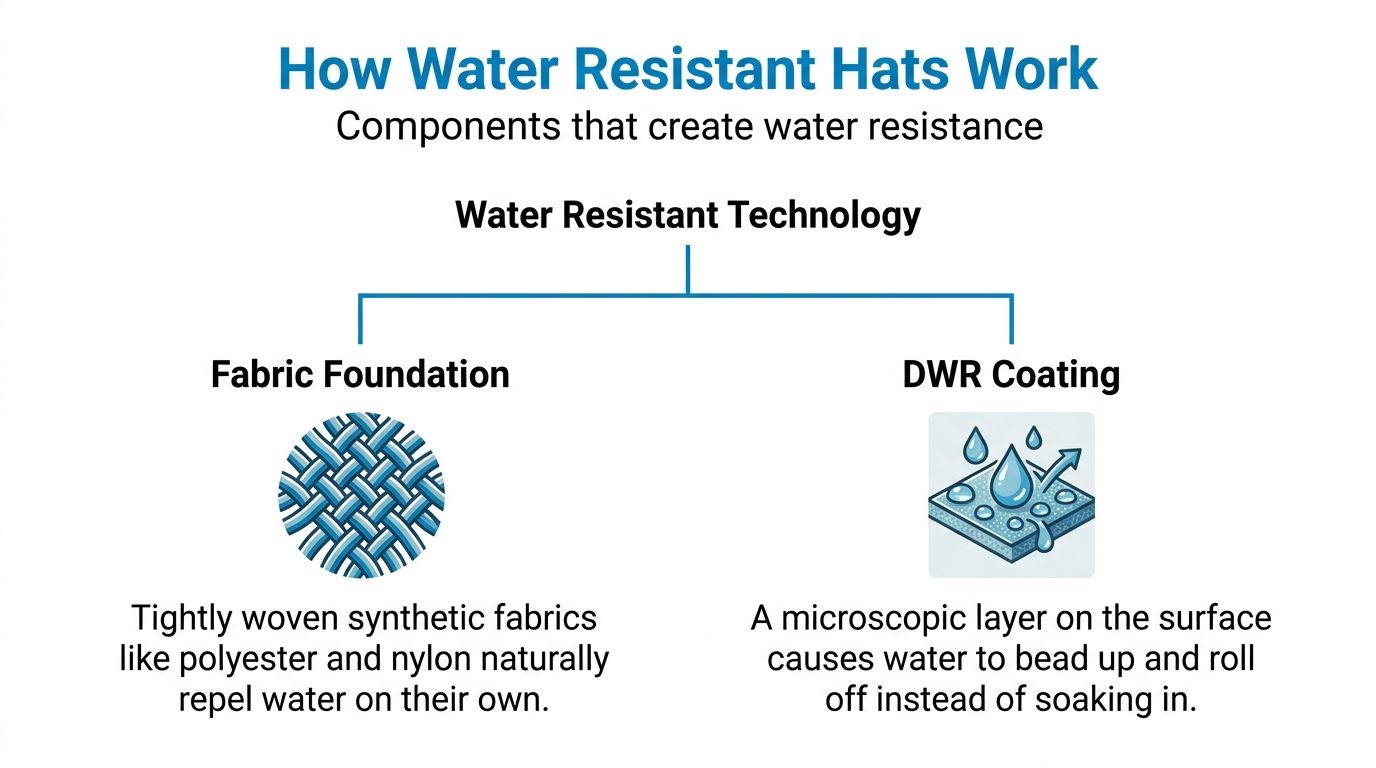
As you can see, it’s a one-two punch: a tight fabric weave provides the first line of defense, and the Durable Water Repellent (DWR) coating makes water bead up and slide away. Waterproof gear takes it to the next level, usually by adding an internal membrane and taping all the seams shut to ensure not a single drop gets through.
Making the Smart Choice for Your Gear
This distinction isn't just for hats—it's vital for all sorts of performance gear. For some activities, waterproof is the only way to go. You wouldn't want anything less for your phone, and the same logic applies to specialized gear like what's covered in this earbuds for swimming guide, where being fully waterproof is non-negotiable.
For most business needs—like staff uniforms, event merchandise, or client gifts—water resistance hits the sweet spot. It delivers practical, real-world protection from the occasional rain shower without the extra cost and stuffiness of a fully waterproof hat.
Best Ways to Add Your Logo to Water-Resistant Hats
Putting your brand on a water-resistant hat isn't quite the same as working with a standard cotton cap. These hats get their weather-fighting power from special coatings and tightly woven technical fabrics. That means you need a decoration method that works with the material, not against it, to keep it performing as it should.
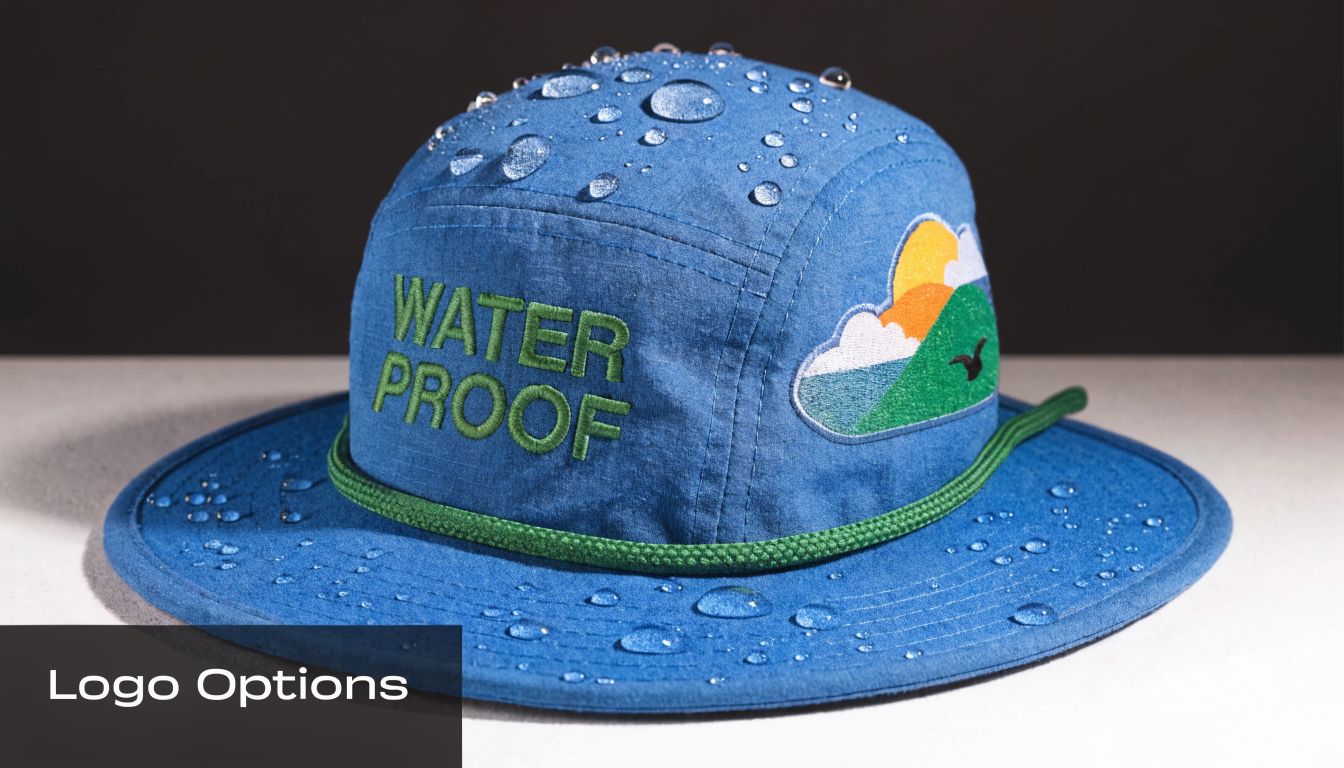
Embroidery is a classic for a reason. It gives your logo a high-end, textured look that really pops. It’s a great fit for many water-resistant fabrics, but there's a catch. Embroidery uses a needle to punch thousands of tiny holes into the hat.
To get around this, we apply a waterproof backing or sealant to the inside of the hat, right behind the logo. This little patch of material seals up all those tiny stitch holes, stopping any water from seeping through. It's a simple but vital step to make sure an embroidered hat stays functional in the rain. For more tips on getting the placement just right, you can check out our embroidery guide.
Modern Methods That Preserve the Fabric
But what if you want to avoid puncturing the fabric altogether? Smart thinking. Several modern decoration methods are perfect for technical hats because they sit right on the surface.
Direct-to-Film (DTF) Transfers: This is a fantastic option for complex, colorful logos. We print your design onto a special film, then use a heat press to transfer it onto the hat. The result is a smooth, flexible graphic that adheres to the fabric's surface without compromising the water-resistant coating.
Custom Patches: Patches are a stylish way to get a premium, rugged look. They can be made from all sorts of materials—like leather, PVC, or woven fabric—and are then applied to the hat. This method leaves the hat's material completely untouched, which is ideal for maintaining maximum performance.
Using a patch or a DTF transfer is often the safest bet. These methods guarantee the hat's DWR coating remains 100% intact, so you get the best of both worlds: a great-looking logo and a fully functional piece of headwear.
Making the Right Decoration Choice
So, which one is right for you? It really comes down to your logo and the look you're going for.
Embroidery is perfect for simpler, bolder logos where you want that classic, stitched texture. DTF is the clear winner for photorealistic images or intricate designs with lots of colors. And patches are excellent for creating a distinct, dimensional style that feels both premium and durable.
Knowing the pros and cons of each helps you pick a style that will make your brand look its best while keeping your team or customers dry.
When to Use Branded Water Resistant Headwear
So, where do branded water-resistant hats actually make a difference? It’s one thing to understand what they are, but knowing when to use them is how you get a real return on your investment. These hats are more than just a shield from a downpour; they’re practical, problem-solving items that put your brand in a positive light.
Think about any team that works outdoors. Their gear needs to hold up, rain or shine. A sudden shower shouldn't stop the work or ruin a professional appearance.
- For Outdoor Teams: Imagine your landscaping crew, construction team, or event staff staying sharp and comfortable through a light drizzle. A water-resistant hat keeps them looking like a unified, professional team, no matter what the weather throws at them.
- As All-Weather Uniforms: Supplying your staff with functional gear like this is a clear sign that you value their comfort and well-being. It’s a small touch that goes a long way in building team loyalty.

Creating High-Value Event Merchandise
When you’re creating merchandise for an event, you want people to actually use it. Anyone can give away a basic cap, but a water-resistant hat feels like a true upgrade. It’s a premium item that people will be glad to have and wear long after your event is over.
This is especially true for golf tournaments, charity 5K runs, and outdoor music festivals. When an unexpected shower starts, your branded hat suddenly becomes the most useful thing they have. That moment creates a powerful, positive memory linked directly to your brand.
A useful souvenir is a powerful marketing tool. When attendees reach for your branded hat on the next rainy day, your brand gets another impression, reinforcing its reliability and quality.
The demand for functional, protective headwear is definitely on the rise. For perspective, the global swim caps market—which also centers on water protection and fit—was valued at USD 250 million in 2024. This points to a wider consumer interest in practical gear. As more companies look for high-value merchandise, water-resistant hats offer that premium feel with real-world usefulness, making them a smart choice. Learn more about the value of functional headwear.
Ultimately, these hats position your brand as a solution. Whether you’re keeping your staff dry or giving an event guest a practical gift, you’re not just stamping a logo on a product—you’re providing protection. That’s how you build a reputation for being thoughtful, prepared, and committed to quality.
A Simple Checklist for Ordering Your Custom Hats
Ordering custom water-resistant hats should be fun, not a chore. We've seen thousands of orders come through, and the smoothest ones always have a few things in common. With a little planning, you can make sure your hats turn out perfectly and arrive right when you need them.
The single biggest thing you can do is give yourself enough time. Customizing hats isn't an overnight process—it involves fine-tuning your design, decorating the hats, and shipping. We always recommend starting the conversation a few weeks ahead of your deadline to avoid any last-minute scrambling.
To get a truly professional-looking hat, it all starts with your logo file. For the cleanest results, you'll want to provide your artwork in a high-resolution vector format, like an .AI, .EPS, or .PDF file. This ensures your logo stays sharp and clear, no matter how it's applied.
Reviewing and Finalizing Your Order
After you send us your artwork, we’ll send back a digital proof or mockup. This is your chance to see exactly how your hat will look.
Think of the proof as the final blueprint. Take a minute to check every single detail—logo placement, colors, spelling, and size. Once you approve it, production kicks off, so catching a mistake here is far better than catching it on a finished hat.
You’ll also notice a minimum order quantity (MOQ). We have these in place to make production efficient, which in turn gives you the best possible price. Ordering the minimum (or more) usually unlocks better pricing per hat, which really helps the budget when you're outfitting a whole crew or stocking up on merchandise. You can learn more about how bulk orders save you money by checking out our guide to custom logo hats for wholesale and bulk orders.
Ready to get started? Just run through this quick checklist to make sure you have everything covered:
- Confirm Your Hat Style: Double-check the hat model, color, and fabric.
- Provide Vector Artwork: Get your high-quality logo file ready to go.
- Approve Your Digital Proof: Look over every detail before giving the green light.
- Understand Lead Times: Plan ahead so your hats arrive stress-free.
- Meet the MOQ: Make sure your quantity meets the minimum to get the best value.
Common Questions About Custom Water-Resistant Hats
We get it—when you're ordering branded gear, you want to be sure you're making a smart investment. To help clear things up, here are the answers to a few questions we hear all the time from customers ordering water-resistant hats.
How Do I Care for My Water-Resistant Hats?
Want your hats to keep performing for years to come? The trick is to protect that special DWR (Durable Water Repellent) coating that makes water bead up and roll right off.
Clean Gently: The best approach is to hand wash your hats in cool water with a mild soap. Steer clear of harsh detergents or bleach, as they can easily strip away the water-resistant finish.
Always Air Dry: Never, ever put a water-resistant hat in the dryer. The high heat can wreck both the fabric and its protective coating. Just reshape the hat and let it dry naturally.
Giving the DWR a Boost: Over time, things like dirt and natural oils can make the finish less effective. A good cleaning often does the trick. But if not, you can sometimes reactivate the coating by tumbling the completely dry hat in a dryer on a low, gentle heat setting for about 15-20 minutes. Just be sure to check the hat's care tag first!
Can My Complex Logo Be Embroidered?
Absolutely. Embroidery is a fantastic choice for water-resistant hats, giving them a classic, high-end look that lasts. Even intricate logos look sharp.
People often worry that the embroidery needles will compromise the hat's water resistance. Here’s our solution: after we stitch your design, we apply a special waterproof backing behind the embroidery. This extra layer seals up all those tiny holes, so not a drop of water can sneak through. Your logo stays crisp, and the hat does its job.
How Long Does a DWR Coating Last?
The honest answer? It really depends on how often the hat is worn, how it’s cared for, and what kind of weather it faces. A factory-applied DWR finish on a quality hat should hold up well for a long time with the right maintenance.
With proper care, a good DWR coating should keep you dry through dozens of washes. If you start to see water soaking into the fabric instead of beading up, it’s a sign that the hat needs a good cleaning. If that doesn't work, it might be time to refresh the finish with a DWR spray, which you can find at most outdoor supply stores.
Ready to get your team a set of custom water-resistant hats that look great and keep them dry? The experts at Dirt Cheap Product, Inc. are here to make it happen. Start your order today!