You've got a team order ready to approve. Then you notice the sharp logo is going on a stretchy performance shirt, or the detailed back artwork will be unreadable from across the event floor. Most screen printing problems start with the garment and the order size, not the artwork.
The best screen printing ideas match a specific item, quantity, placement, and production method. A bold company mark may suit a repeat uniform program, while a small personalized batch may be better handled with DTF. This list focuses on real apparel and promotional uses, with the trade-offs that affect color, durability, setup, and cost.
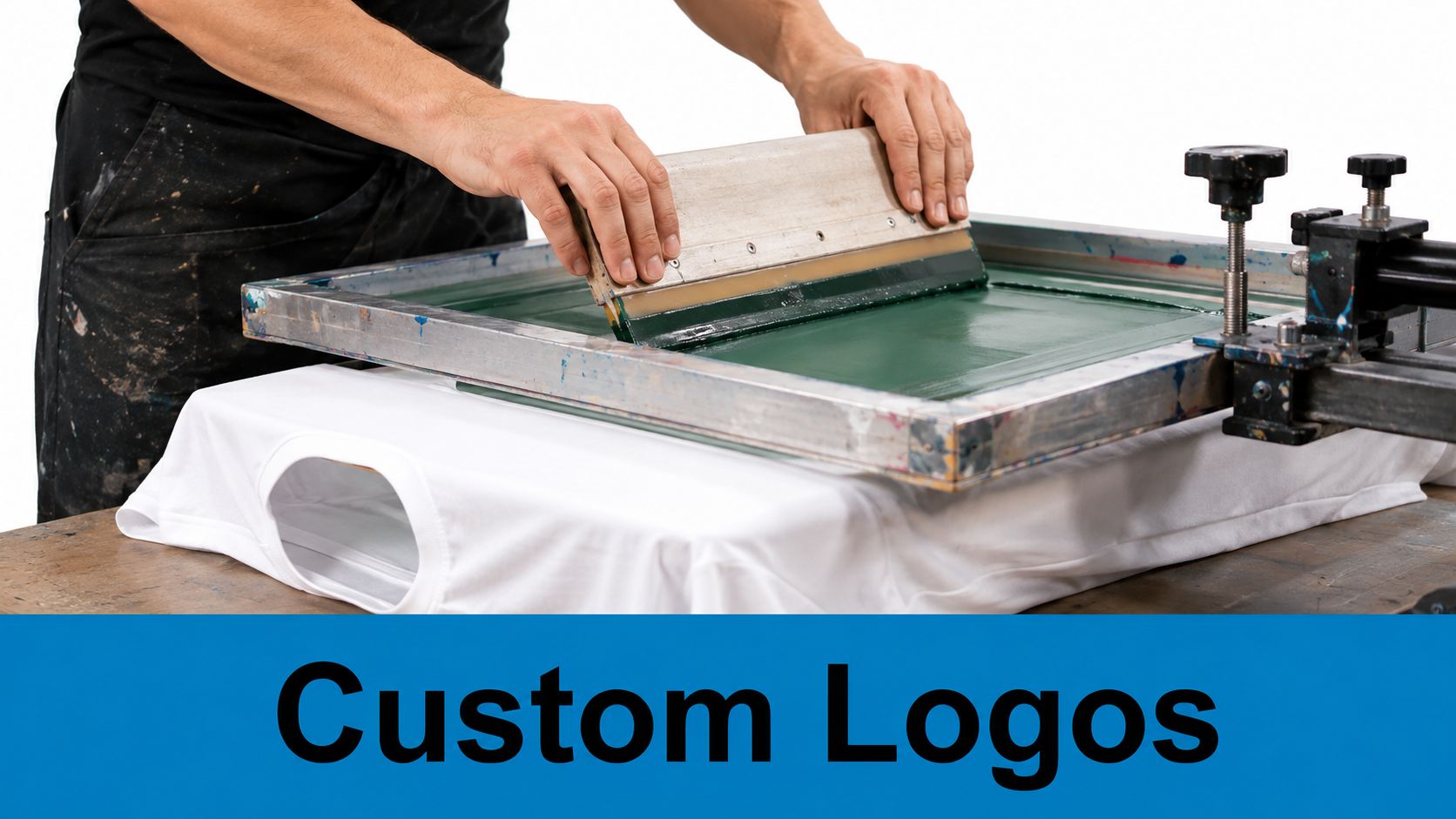
Screen printing is a direct-substrate process. Ink passes through open areas of a tensioned mesh stencil and lands directly on the item, with each color generally requiring its own screen. That mechanical setup favors solid shapes, strong contrast, and repeatable artwork, not every type of image.
Table of Contents
- 1. Custom Logo Screen Printing on Apparel
- 2. Multi-Color Design Separations
- 3. Specialty Ink Screen Printing
- 4. Large-Format Back Print Screen Printing
- 5. Pocket Logo Embroidery-Style Screen Printing
- 6. Two-Sided Screen Printing
- 7. High-Volume Corporate Uniform Branding Programs
- 8. Custom Promotional Item Screen Printing
- 9. Direct-to-Film Hybrid Printing for Complex Designs
- 10. Seasonal and Limited-Edition Screen Printing Campaigns
- Top 10 Screen Printing Ideas Comparison
- Turning These Ideas Into Your Next Order
1. Custom Logo Screen Printing on Apparel
A staff T-shirt order, conference run, or small retail uniform program needs a logo that prints the same way on every garment. Screen printing suits these repeatable designs, especially on cotton-heavy T-shirts, sweatshirts, and canvas bags. Use a left-chest mark for a restrained uniform, or pair it with a larger back logo when the brand must be visible from a distance.
Prepare vector artwork in AI, EPS, or print-ready PDF format. These files keep edges clean when the logo changes size. Confirm brand colors, print dimensions, and placement on the actual garment before production. A navy or black shirt may need an underbase so bright ink remains clear instead of looking muted.
Match the method to the order. A repeat uniform program benefits from stored artwork, garment details, ink colors, and placement notes. That record prevents each reorder from becoming a new interpretation of the brand. For production support, Dirt Cheap Product's screen printing services cover logo decoration on T-shirts, hoodies, accessories, and promotional items.
Production rule: Approve the garment and print together. A logo that looks correct on a white digital mockup may need different ink treatment on navy, black, or heather fabric.
Substrate choice affects adhesion and wash performance. One assessment found stronger ink deposition and adhesion on cotton than on polyamide, while polyamide showed weaker adhesion and faster wash degradation. It also identified relative humidity below 50% and ambient temperature of 23–26°C as favorable for stencil integrity and print consistency. Review the substrate and process findings before approving a large run. For a deeper walkthrough of the process, see this guide to screen printing t-shirts before production.
2. Multi-Color Design Separations
A detailed mascot on a polo, an illustrated festival shirt, or a boutique graphic may need several separated color layers. Each spot color gets its own screen, and the printer must align those screens accurately. That makes the artwork more demanding than a one-color logo, but it can still produce a strong result when the design uses clear color blocks.
The first decision is whether the artwork really needs every color. Removing a minor shade can simplify setup, reduce registration risk, and make the final design easier to reproduce across garment colors. Gradients and photographic effects can be represented with halftones, but they need careful preparation and testing rather than a simple file upload.
Ask for color-separated proofs before production. Review the order of the layers, the underbase on dark garments, and the areas where colors touch. A slight registration error can create visible gaps or halos, especially around fine lettering and contrasting outlines.
Make the artwork production-ready
Provide the highest-quality original file available. Communicate brand color references early, and don't approve a complex design from a digital proof alone. A sample on the actual polo, T-shirt, or sweatshirt will reveal whether light colors cover the fabric and whether small details survive the mesh.
Lighter garments often make multicolor artwork easier because the inks don't have to fight a dark base. Dark garments may need an opaque underbase, which can add ink thickness and change the hand feel.
Practical insight: More colors don't automatically make a design look more premium. Strong separations, clean registration, and restrained detail usually matter more than adding another shade.
If the artwork includes a gradient, ask whether halftones or a different decoration method is more appropriate. Screen printing is strongest when the design can be broken into controlled, printable areas.
3. Specialty Ink Screen Printing
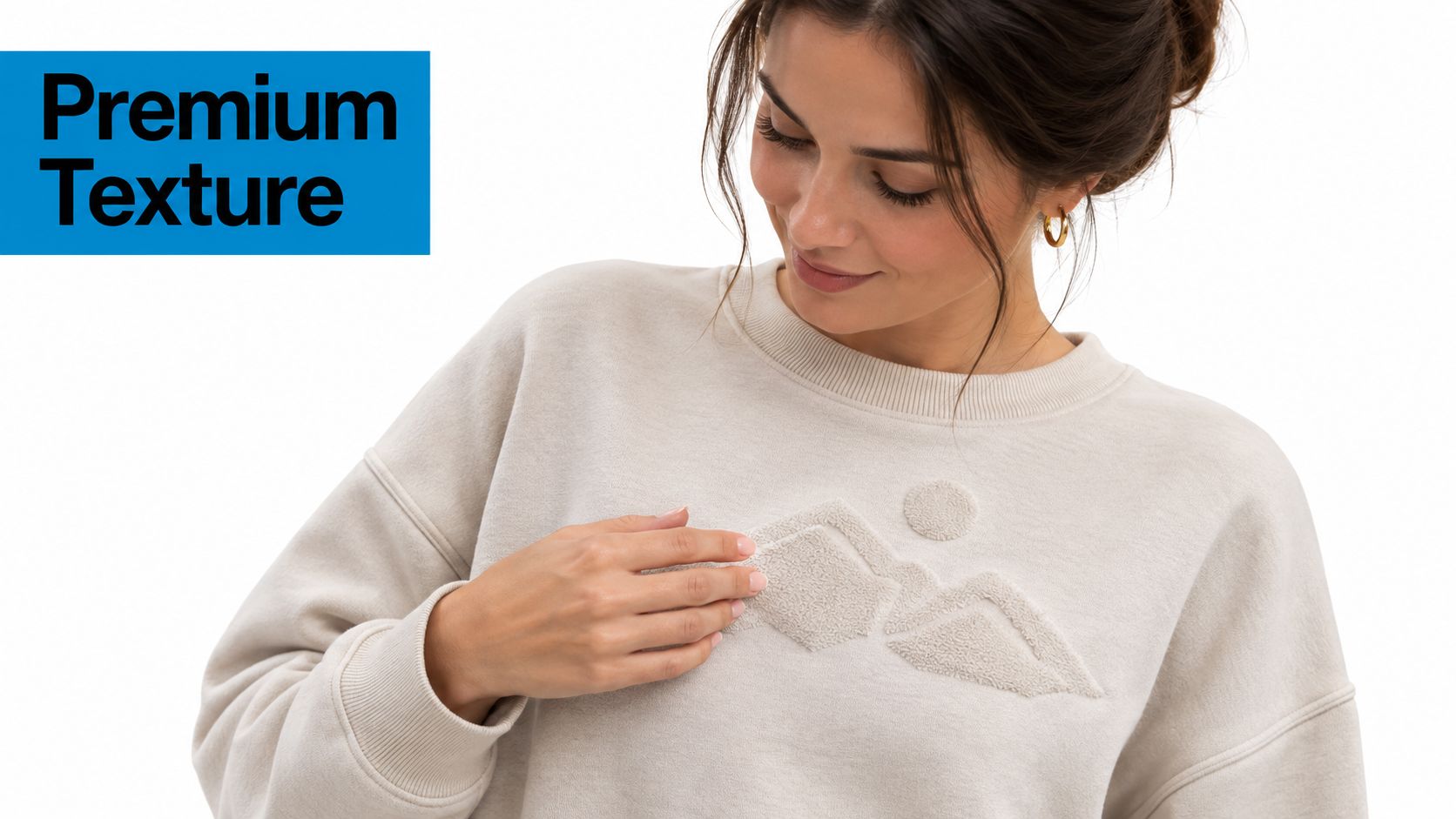
Metallic, puff, and glitter inks can turn a familiar sweatshirt or boutique T-shirt into a more distinctive product. Metallic ink suits a refined logo on black apparel. Puff ink adds raised texture to a limited-edition graphic. Glitter can work for a festival, youth event, or seasonal retail design where sparkle is part of the visual language.
The trade-off is control. Specialty inks can change the surface texture, soften small details, or require different curing and wash expectations. Puff ink works best in selected areas, such as a short word, outline, or simple icon. Filling an entire detailed illustration with puff can make the design muddy.
Request a physical sample before committing to a large order. Check the height, coverage, color, and hand feel on the actual garment. Metallic effects may look different under store lighting than they do in a digital mockup, while glitter can overwhelm a professional corporate mark.
Match the finish to the garment
Use specialty effects where the garment supports the concept. A heavyweight hoodie can carry a raised chest graphic more convincingly than a lightweight fashion tee. A smooth cotton shirt may show metallic details cleanly, while a textured fleece can soften fine edges.
Keep care instructions realistic. The decoration method, ink system, garment fiber, and curing profile all affect wash performance. Don't promise that a decorative finish will behave exactly like a standard print.
For raised decorative effects, Dirt Cheap Product's 3-D puff embroidery service may also be relevant when the design calls for dimensional branding rather than a printed surface.
A specialty effect should have a job. Use it to separate a headline, highlight a logo, or create a tactile focal point. Don't add it only because the standard ink feels too ordinary.
4. Large-Format Back Print Screen Printing
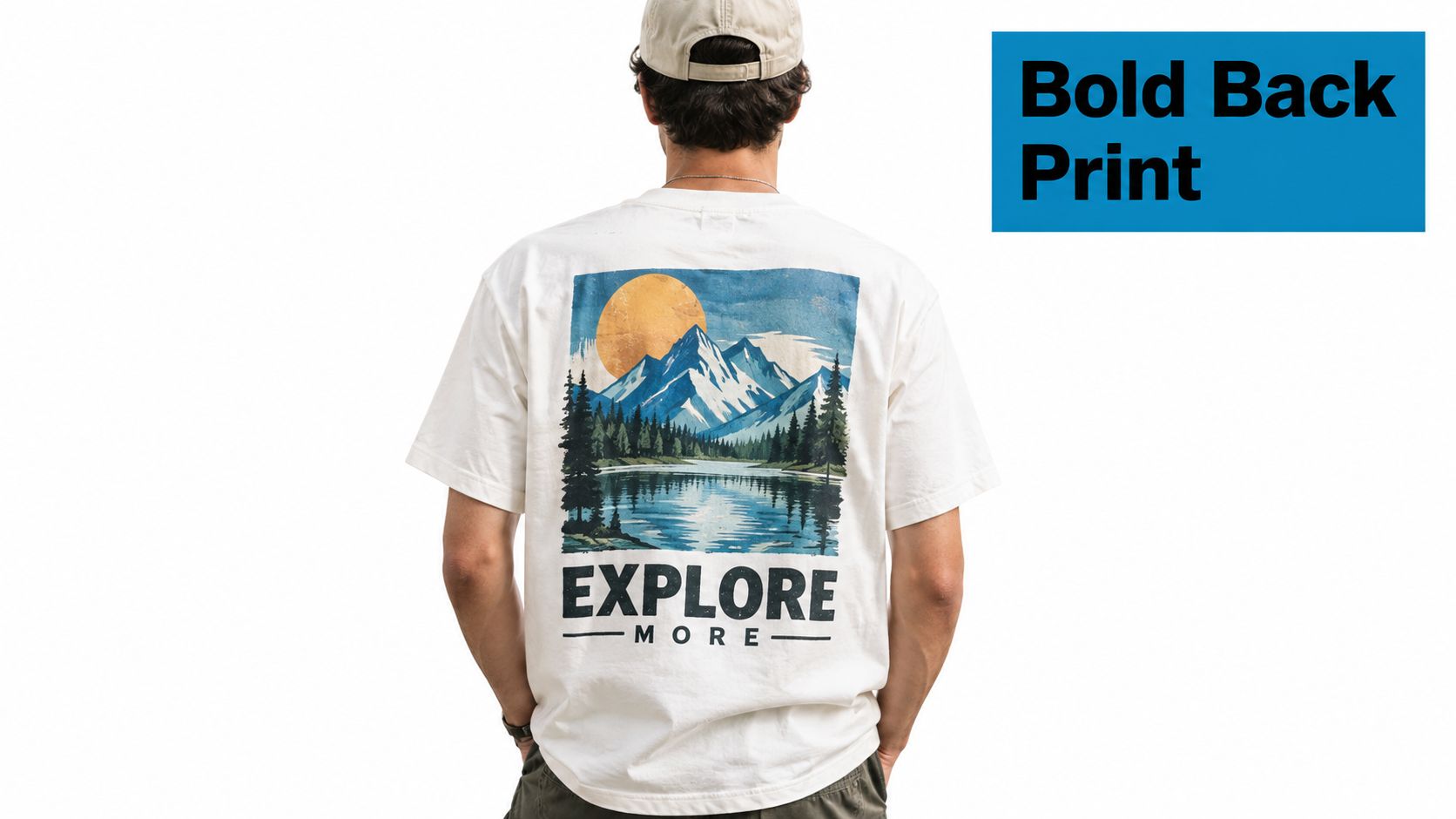
A large back print gives an event shirt, concert-style tee, or charity garment a broad visual area. It works especially well when the front carries a small pocket mark and the back carries the main illustration, event name, date, or campaign message.
Design the back artwork for the garment, not for a blank artboard. Curved shoulders, seams, fabric weight, and the wearer's movement affect how the image reads. A dense illustration may look impressive on screen but become difficult to scan when printed across a shirt.
Contrast decides whether the design works at a distance. Use a clear hierarchy, with the main name or message easy to find before supporting details. If the print includes multiple lines, test the lettering on the actual garment and view it from across a room.
Use the back for information and the front for recognition
A conference shirt might use a small front logo and a large back graphic. A charity event shirt could place the campaign mark on the chest and the message on the back. A tour-style design can use the artist name on the front and supporting information on the back, provided the text remains legible.
Photorealistic images and smooth gradients are less natural fits for traditional screen printing. Halftones can reproduce tonal effects, but the artwork needs proper separation and testing. For a short run or a highly detailed image, DTF may be a more practical alternative.
Approve the back placement in writing. “Large back” isn't precise enough. The proof should show the print's position relative to the collar, seams, and garment size.
5. Pocket Logo Embroidery-Style Screen Printing
A small left-chest or pocket-area print gives polos, chef coats, medical uniforms, and retail shirts a restrained professional appearance. It suits a company that wants brand recognition without turning every garment into a billboard. A simple emblem, wordmark, or department identifier usually performs better than a detailed illustration at this size.
Small artwork needs discipline. Remove unnecessary outlines, thin strokes, and tiny text. On dark garments, use enough contrast for the mark to remain visible without making the print feel heavy.
Pocket placement also depends on the garment itself. A real pocket, seam, placket, or button line can limit the available print area. A logo that fits a flat T-shirt may need to move or shrink on a polo.
Proof the position, not just the artwork
Ask for more than one placement option during proof review. Compare a standard left-chest position with a pocket-centered position if the garment has a pocket. Confirm the logo size relative to the pocket, and check whether the same placement works across adult and youth sizes.
This idea is useful for recurring uniform programs because the design stays stable. Staff can wear the same mark across polos, T-shirts, and sweatshirts, although each garment may need its own placement specification.
A small print should be simple enough to recognize before someone has time to study it.
Choose high-contrast ink on dark fabric and inspect a sample at normal viewing distance. If the mark loses its shape or the lettering closes up, simplify it before production. Screen printing can create a polished result at small scale, but it can't rescue an overcrowded logo.
6. Two-Sided Screen Printing
Front-and-back decoration gives event shirts, team apparel, and campaign merchandise more room to communicate. The front can carry the primary logo or player identifier. The back can provide event details, sponsor recognition, tour information, or a supporting illustration.
Treat the two sides as one visual system. Use the same type style, color palette, and spacing logic so the garment doesn't feel like two unrelated designs. A small front mark often balances a larger back print better than two equally large graphics.
Plan the order of operations
Request separate front and back proofs. Confirm the print positions, garment sizes, and orientation in writing. A back design should account for the natural curve of the garment, while a front design must avoid collars, pockets, seams, and plackets.
Sample alignment matters more than a digital mockup. Put the garment on a flat pallet, print the approved positions, and inspect the finished piece before the full run. If the order includes several styles, test the most difficult garment rather than only the easiest T-shirt.
Production teams also need to manage curing and handling between sides. Ink must reach its required cure profile, and the garment shouldn't be folded or packed before the print is ready. The exact workflow depends on the ink and equipment.
For a conference, the front might show the organizer's logo and the back might list the event identity. For a charity run, the front can carry the campaign message while the back recognizes supporters. Both examples work because each side has a clear role.
Two-sided printing adds visual impact, but it also adds setup and quality-control points. Use it when the second side carries information or value, not just because empty fabric feels wasteful.
7. High-Volume Corporate Uniform Branding Programs
A large uniform program needs a system, not a one-time design decision. Retail chains, healthcare facilities, restaurants, offices, and manufacturing teams may need the same logo, garment colors, and placement across departments or locations. Screen printing is well suited to repeatable marks and standardized apparel, especially when the design stays consistent.
Start by collecting sizes, garment preferences, locations, and delivery requirements before production begins. A spreadsheet should connect each employee or department to the correct item. Separate packing by location when possible, and label cartons clearly so the receiving team doesn't have to rebuild the order.
Build the reorder process at the start
Save the approved artwork, ink references, garment styles, and placement diagrams. A future reorder should use the same production notes rather than relying on a memory of the original job. Document acceptable substitutions too, because a discontinued garment can affect sizing, color, and print behavior.
The market includes manual, semi-automatic, and fully automatic equipment. Manual production can support prototypes and small campaigns, while repeat corporate programs may benefit from standardized automated workflows. The screen printing market overview describes this equipment segmentation alongside applications in textiles, packaging, plastics, glass, and functional electronics.
Keep replacement planning practical. Uniforms get lost, damaged, and assigned to new staff. Build an agreed replenishment process and decide whether the program will use scheduled replacement orders or reorder as needed. Don't make a small artwork change without checking how it affects existing stock.
A high-volume program succeeds when every garment looks like it came from the same approved system. Consistent color, placement, curing, packing, and documentation matter as much as the logo itself.
8. Custom Promotional Item Screen Printing
Screen printing can extend a campaign beyond T-shirts. Tote bags, hoodies, jackets, caps, windbreakers, and other accessories can form a coordinated giveaway or merchandise package. A conference might pair a simple logo tote with a staff shirt. A nonprofit might sell a shirt, bag, and beanie using the same campaign mark.
Every product needs its own compatibility check. A flat canvas bag offers a different print surface from a curved cap or a seam-heavy jacket. Small details can distort on curved or structured items, so simplify the artwork before assuming one file will work everywhere.
Design by product category
Use a larger, simpler mark for a tote bag that people will see from a distance. A cap may need a compact emblem or short wordmark. Outerwear can support a chest print, sleeve mark, or larger back design, but zippers and panels limit the usable area.
Ask for samples of the actual bag, hat, or jacket. Check ink coverage, placement, distortion, and how the material handles heat. Some promotional products may need a different decoration method, such as embroidery or a transfer, instead of direct screen printing.
Screen printing works best when the design remains recognizable across each item. It doesn't mean every product should carry the same print size. The strongest packages use consistent branding with placement adapted to the object.
Material check: Confirm the product, surface, ink system, and curing requirements before approving the full promotional assortment.
Promotional items also create a packing challenge. Mixed products need clear quantities and product-level labeling. Plan the production schedule around the slowest or most technically difficult item rather than the basic T-shirt.
9. Direct-to-Film Hybrid Printing for Complex Designs
A 12-shirt event order with unique names may need a different setup from a repeat corporate order carrying one logo. Direct-to-film (DTF) printing suits photographs, gradients, many colors, and changing names without building a separate screen for every variation. It can also fit a small run of personalized hoodies or limited-edition shirts where screen setup would add unnecessary production time.
Assign each method a defined job. Put the complex front image or individual name on DTF, then screen print a repeatable back logo across the full order. This pairing keeps changing artwork out of the screen process while retaining the speed and consistent finish of screen printing for the shared mark.
Choose the method by order behavior
Screen printing generally fits larger runs with the same solid-color design. DTF gives more flexibility for short runs, varied artwork, and personalization. Digital, DTG, and sublimation may suit other garments or image types, so compare the decoration method with the fabric, artwork, durability target, and budget rather than assuming one process always costs less or has a lower impact.
Substrate still affects the result. Cotton and cotton-blend garments are common DTF choices, but test the actual fabric, finish, and wash behavior before approving a large personalized order. The sample should include the smallest text and the most detailed area, because those elements reveal adhesion and clarity problems first.
For a direct comparison of the two workflows, compare DTF and screen printing in this guide, then review Dirt Cheap Product's DTF versus screen printing guide.

Choose the workflow by order quantity, personalization, garment type, artwork complexity, durability expectations, and budget. That decision keeps a small custom event order efficient without adding unnecessary screens, while a larger uniform order can use screen printing where repetition improves production flow.
10. Seasonal and Limited-Edition Screen Printing Campaigns
Seasonal apparel works when the artwork feels timely but still earns its place in the customer's wardrobe. A boutique might release a holiday sweatshirt. A nonprofit might run a seasonal fundraising shirt. A retailer could use a summer event graphic, while a fitness brand might connect a New Year campaign to a simple motivational mark.
Limit the artwork, not the production discipline. Seasonal designs still need a garment choice, approved color palette, placement plan, sample, and inventory decision. A limited-edition release can create urgency, but leftover stock becomes a storage and cash-flow problem if the design is too narrow.
Match the run to the selling window
Plan the campaign early enough to approve samples and correct artwork. If a last-minute order is unavoidable, ask about rush availability before promising a delivery date. Coordinate the garment launch with email, retail displays, social posts, event registration, or nonprofit fundraising communications.
Use a design system that can repeat without looking copied. A seasonal series might keep the same logo placement and typography while changing the illustration or garment color. That creates recognition across releases and simplifies future artwork preparation.
Track inventory by size and style. A design that sells well in one size may not move evenly across the full range. Reordering can be difficult once the seasonal window closes, so approve a realistic quantity rather than treating “limited” as a substitute for planning.
Screen printing is especially useful for solid-color seasonal graphics that repeat across a run. For photographic artwork, highly variable personalization, or a very short batch, a digital method may reduce setup pressure. The campaign idea should serve the order, not dictate the decoration method.
Top 10 Screen Printing Ideas Comparison
| Service / Technique | Implementation Complexity 🔄 | Resource Requirements ⚡ | Expected Outcomes ⭐ / 📊 | Ideal Use Cases 💡 | Key Advantages ⭐ |
|---|---|---|---|---|---|
| Custom Logo Screen Printing on Apparel | 🔄🔄 Medium, per-color screen setup | ⚡ Moderate, screens, inks, press; MOQ ~50+ | ⭐ Durable, vibrant prints; 📊 Low per-unit cost at scale | 💡 Corporate uniforms, event tees, retail merchandise | ⭐ Cost-effective at scale; sharp color reproduction |
| Multi-Color Design Separations | 🔄🔄🔄 High, multiple separations & precise registration | ⚡ High, many screens, experienced techs, longer run time | ⭐ High-fidelity multi-color art; 📊 Strong brand consistency | 💡 Complex logos, premium retail, festival/artist merch | ⭐ Accurate color matching; supports specialty inks |
| Specialty Ink Screen Printing (Metallic, Puff, Glitter) | 🔄🔄🔄 High, precise temp/pressure & curing | ⚡ High, specialty inks, testing, higher material cost | ⭐ Premium textured/reflective finishes; 📊 Higher perceived value | 💡 Limited editions, boutique apparel, premium gifts | ⭐ Unique tactile/visual effects; justifies premium pricing |
| Large-Format Back Print Screen Printing | 🔄🔄🔄 Medium-High, large screens and alignment risk | ⚡ High, larger screens, more ink, workspace requirements | ⭐ Bold, high-impact visuals; 📊 Strong brand visibility | 💡 Concert tees, event merch, tour apparel | ⭐ Maximum visibility; premium, statement-making designs |
| Pocket Logo Embroidery-Style Screen Printing | 🔄🔄 Low-Medium, precise small-area registration | ⚡ Low, small screens, lower ink usage; cost-effective vs embroidery | ⭐ Refined embroidered look; 📊 Affordable professional appearance | 💡 Corporate polos, hospitality, medical uniforms | ⭐ Embroidery look for less; faster turnaround |
| Two-Sided Screen Printing (Front and Back Design) | 🔄🔄🔄 Medium, doubled processes and careful handling | ⚡ Medium, additional screens/time, higher labor | ⭐ Comprehensive branding; 📊 Higher perceived product value | 💡 Event tees, team uniforms, tour merchandise | ⭐ Maximizes garment real estate; cohesive storytelling |
| High-Volume Corporate Uniform Branding Programs | 🔄🔄🔄 High, logistics, sizing, project coordination | ⚡ Very High, production capacity, PM, storage, reorders | ⭐ Consistent quality at scale; 📊 Significant per-unit savings | 💡 National retail, healthcare, multi-location uniform programs | ⭐ Scale pricing, dedicated project management, reorder ease |
| Custom Promotional Item Screen Printing (Hats, Bags, Outerwear) | 🔄🔄 Medium, varied fixtures and techniques per item | ⚡ Medium-High, specialty fixtures, fabric adjustments | ⭐ Broader brand reach across products; 📊 Versatile promotional ROI | 💡 Trade shows, corporate gifts, giveaways | ⭐ Diversifies merchandise mix; year-round visibility |
| Direct-to-Film (DTF) Hybrid Printing for Complex Designs | 🔄🔄 Low-Medium, minimal setup, transfer workflow | ⚡ Low for small runs, DTF printer, film, inks | ⭐ Photorealistic detail; 📊 Cost-effective for 1–50 units | 💡 Small batches, photographic designs, personalized items | ⭐ No screen setup; unlimited colors; fast turnaround |
| Seasonal and Limited-Edition Screen Printing Campaigns | 🔄🔄 Medium, rapid planning & demand forecasting | ⚡ Variable, short runs, rush capacity, synced marketing | ⭐ Creates urgency & exclusivity; 📊 Drives short-term revenue spikes | 💡 Holiday drops, seasonal promos, collectible releases | ⭐ FOMO-driven sales; tests designs with limited risk |
Turning These Ideas Into Your Next Order
The strongest screen printing ideas are practical before they're creative. Start with the garment you can source reliably, then decide whether the design needs a chest mark, pocket placement, large back graphic, two-sided treatment, or a coordinated set of promotional items. A design that works on a heavyweight cotton sweatshirt may need adjustment for a polo, canvas bag, nylon jacket, or curved cap.
Quantity should guide the process. Repeatable artwork across a larger run generally gives screen printing its clearest advantage. Short runs, variable names, photographs, and complex gradients may be better suited to DTF, DTG, sublimation, or another decoration method. A hybrid order can be more sensible than forcing every graphic onto every product with the same technique.
The garment also affects durability and appearance. Cotton produced stronger ink deposition and adhesion than polyamide in one reported assessment, while polyamide showed faster wash degradation. The technical assessment supports a simple production habit, test the actual fabric before approving a large order, especially for uniforms, outerwear, and performance garments.
Accessibility belongs in the approval process. A design should remain readable on a dark garment, at a distance, and under ordinary event lighting. For normal text, a neutral reference identifies WCAG's recommended minimum contrast ratio as 4.5:1. Review the color contrast guidance and check whether the lettering, logo, and background remain distinct.
Sustainability also needs specific questions. Ask about ink chemistry, fabric composition, curing, wash durability, wastewater handling, misprints, and reorderability. Screen printing can be a responsible choice when a durable design is repeated and worn, but “eco-friendly” isn't a useful conclusion without knowing how the garment and production system perform in practice.
Before requesting quotes, prepare the information a printer needs:
- Garment details: Name the product, fiber content, color, size range, and intended use.
- Artwork files: Provide vector artwork where available, separated color information, and any brand color references.
- Placement: Specify front, back, pocket, sleeve, or accessory placement, with dimensions shown on the proof.
- Order behavior: Explain whether the design repeats across the order or changes by person, location, size, or product.
- Quality approval: Request a digital proof and a physical sample when the garment, artwork, or ink system carries meaningful risk.
- Future orders: Ask whether approved files, color notes, and placement specifications can be retained for reorders.
We do not create business cards or fliers. Those products belong primarily to offset and digital paper-printing workflows. Offset uses a plate and rubber blanket before transferring the image to paper, while digital printing sends the file directly to paper without plates. This overview of paper-printing workflows explains why those products shouldn't be treated as screen-printed apparel ideas.
Run length changes the economics of paper printing too. Digital printing avoids plate setup and suits short or personalized runs, while offset can become more efficient for very large paper quantities. The offset versus digital comparison reinforces the same broader lesson, choose the production method after defining the product and order behavior.
A short approval routine prevents many expensive mistakes. Choose one or two ideas that fit your garment, quantity, and placement. Confirm the colors, sizes, print positions, and decoration method in writing. Review the sample under normal lighting, inspect fine text and registration, and complete a wash test when durability matters.
Dirt Cheap Product, Inc. can support apparel and promotional programs that combine screen printing with embroidery, DTF, sublimation, and custom patches. If your order includes a standard logo run alongside complex or personalized pieces, discuss the full assortment before splitting the work into separate decisions.
Dirt Cheap Product, Inc. offers screen printing for T-shirts, hoodies, accessories, uniforms, and promotional products, with artwork proofing and support for color and placement decisions. Visit Dirt Cheap Product, Inc. with your garment details, artwork, quantity, and deadline to start planning a production-ready order.