More Than a Name: Finding Your Club's Identity
Starting a running club is about building a community. A great name does more than identify your group. It sets the tone, attracts the right members, and creates a brand people want to wear again next week.
That matters more now because group running has expanded fast. Global participation in running clubs surged by 59% over the past two years, according to the Running Industry Association summary of the Strava Year in Sport Report. When more clubs enter the market, weak names blur together and strong names stand out on shirts, hats, and race-day photos.
Most lists of running club names stop at puns. That's fine for a one-off relay team, but it's not enough if you're building a real club with merch, repeat events, and a social presence. If you're also thinking about apparel, your name has to survive embroidery, look clean in screen printing, and still read well when it's stretched across a moisture-wicking tee.
If you're in the early stage right now, sorting between a few names scribbled in your notes app, this is the useful part. You'll find ten practical ideas, plus ways to turn each one into gear people want to wear. If you're also shaping a bigger brand around the club, this guidance for a new running shoe brand is a smart companion read.
Table of Contents
- 1. Pace Makers Running Club
- 2. Trail Blazers Running Collective
- 3. Mile High Runners
- 4. Sole Sisters & Brothers Running Club
- 5. Midnight Milers Running Crew
- 6. Stride Forward Running Collective
- 7. Local Legends Running Club
- 8. Fast & Furious Runners
- 9. Community Cadence Running Club
- 10. Endless Horizons Running Society
- Comparison of 10 Running Club Names
- Start Your Legacy on the Right Foot
1. Pace Makers Running Club
“Pace Makers” is one of the safest strong choices in running club names because it sounds active, clear, and serious without sounding elite. It tells new runners they'll get structure, and it tells experienced runners the club values progress. That balance is hard to get right.
You'll see versions of this name used by university groups, corporate wellness teams, and city clubs because it's easy to remember and easy to say out loud. The downside is obvious. It's common enough that you should add a geographic tag or brand modifier if you want cleaner social handles and less confusion on race registrations.
Why this name works
This name reads well at a distance. That matters on the back of a technical shirt, on a quarter-zip, and on a cap front where stitch area is tight. It also pairs naturally with arrow graphics, split lines, stopwatch icons, and lane-inspired marks.
Practical rule: If a name needs explanation on day one, it will struggle on apparel for years.
For an inclusive club, “Pace Makers” also avoids the trap of sounding slow, jokey, or intimidating. It suggests improvement, not just speed. That's a smart middle ground for mixed-pace groups.
Best apparel direction
For decoration, screen printing is the best starting point because the name is short enough for bold chest placement. Embroidery works well on hats and polos, especially if you simplify the logo to initials or a single arrow motif. DTF is useful if you want a detailed back print with route graphics or segmented pace groups.
A good first merch set looks like this:
- Core tee: Moisture-wicking team shirt with a left chest logo and full back print. Start with moisture-wicking fabric options for activewear.
- Premium piece: Embroidered polo or quarter-zip for coaches, captains, or event staff.
- Add-on item: Structured cap with a stitched “PMRC” monogram.
If you use this name, avoid cluttered slogans. Let the word “Pace” carry the message and keep the artwork clean.
2. Trail Blazers Running Collective
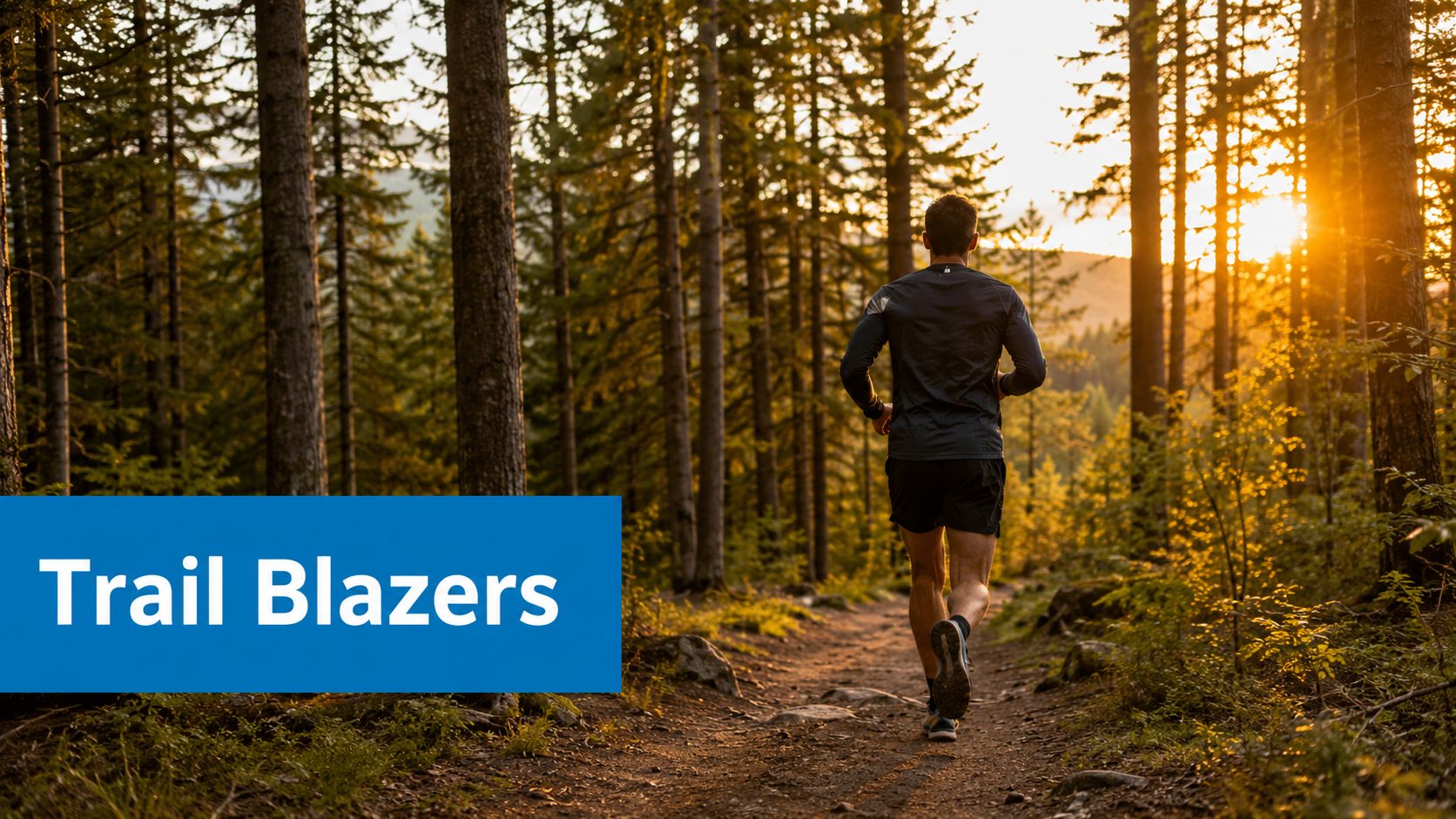
Some running club names work because they describe the route. This one works because it describes the attitude. “Trail Blazers Running Collective” sounds adventurous, social, and a little more design-forward than a standard “run club” label.
“Collective” softens the competitive edge. That's useful if your group includes hikers, run-walk members, and trail runners who care as much about community as split times. The phrase also gives the brand a modern feel that fits outdoor merch better than a purely traditional club name.
Why this name works
This is a visual name. You can build around ridgelines, tree silhouettes, topographic patterns, bootprint textures, or hand-drawn trail markers. It holds up especially well on outerwear, where a larger back graphic has room to breathe.
Europe alone has roughly 40,000 running clubs mapped across 300 cities, based on a continental investigation shared on Instagram. In a crowded field, names with a strong visual identity have a better shot at being remembered, especially when members wear branded gear repeatedly.
Trail clubs usually get apparel right when the design feels like outdoor gear first and promotional merch second.
Best apparel direction
This name is ideal for layered merchandise. Start with lightweight tees for weekly runs, then build into windbreakers, fleece-lined outerwear, and trail caps. Embroidery is excellent for a mountain crest logo on jackets, while custom patches add a premium look to bags and overshirts.
Color does a lot of work here. Forest green, stone gray, rust, and sunset orange all fit the category without looking forced. For detailed graphics on darker technical garments, DTF gives you freedom without flattening the design. For all-over topographic effects, sublimation is the better move.
Use a simple front logo and save the scenic art for the back. That keeps the club name readable and the merchandise wearable beyond the run.
3. Mile High Runners
“Mile High Runners” is a location-driven name that feels established right away. If your club is based in a high-altitude city or wants to lean into mountain culture, this one gives you instant positioning without trying too hard.
It's concise, memorable, and easy to print across almost any product. The strongest version usually ties the name to a specific city, neighborhood, or training route, especially if there are similar clubs nearby. That local layer gives the merch more meaning and makes the logo less generic.
Why this name works
Names built around place tend to recruit well because people like wearing where they run. “Mile High” also carries a built-in visual language. Peaks, elevation lines, contour shapes, and clean skyline marks all fit naturally.
This kind of club name also works for seasonal drops. Summer trail tees, winter beanies, race-day singlets, and altitude-themed training tops all feel coherent under one identity. That's much harder with novelty names.
Best apparel direction
For decoration, this is one of the easiest names on the list. Screen print handles mountain silhouettes beautifully. Embroidery gives hats and heavyweight hoodies a polished finish. Sublimation works if you want a full scenic fade or high-contrast race jersey.
A practical merch lineup might include:
- Race tee: Front chest mountain icon, large back city name.
- Cold-weather item: Cuffed beanie or water-resistant cap. These water-resistant hats for outdoor use fit the category well.
- Event gear: Branded bib belts, warm-up jackets, or volunteer shirts for local races.
Keep the local color palette intentional. If your city already has strong visual associations, borrow from the local environment before you borrow from local sports branding. That keeps the club feeling original instead of borrowed.
4. Sole Sisters & Brothers Running Club
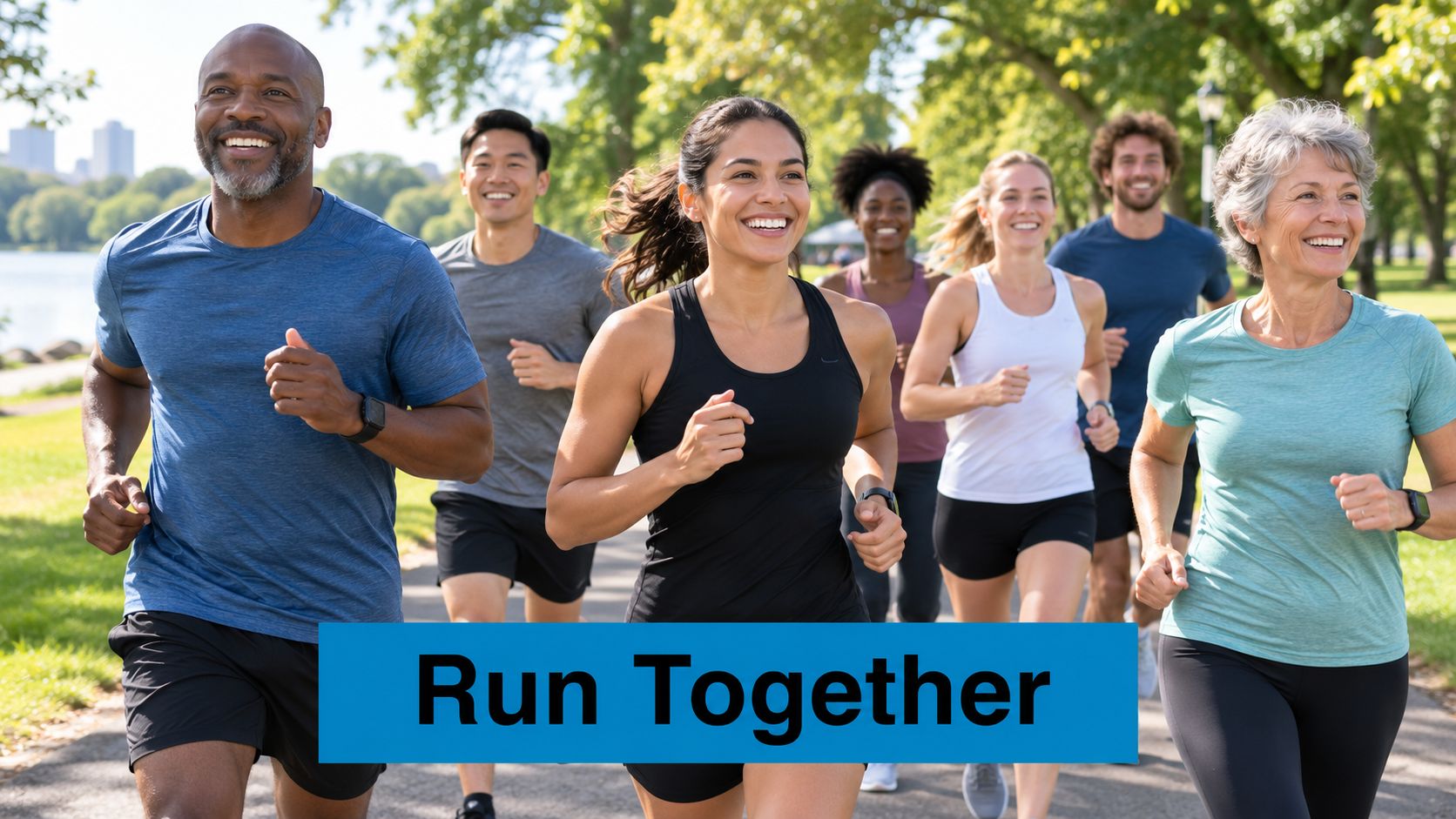
Some names win because they make people feel welcome before the first run. “Sole Sisters & Brothers Running Club” does that immediately. It's warm, memorable, and built for communities that want to signal belonging, not just performance.
The trade-off is length. Long running club names can become messy on smaller print areas, so the brand system matters more here than the full name alone. You need a short badge, a clear abbreviation, and a way to simplify the mark for caps, patches, and sleeve placement.
Why this name works
This name fits clubs that prioritize representation, friendship, and visible inclusivity. It also suits run-walk groups and mixed-ability communities better than names built around speed. That doesn't make it soft. It makes the club's promise clear.
One naming question comes up often with inclusive clubs. How do you welcome all paces without pushing away competitive runners? Existing advice often stays shallow, even though that gap is visible in discussions about inclusive pace culture in pieces like this overview of running team naming ideas.
If your club is inclusive to all paces, the name should sound open without sounding vague.
Best apparel direction
Because the name is long, create two logo versions. Use the full name on back prints and event banners. Use an abbreviated crest, such as “SSB Run Club,” on the front chest and hat embroidery.
This is a great setup for:
- Gender-neutral staples: Relaxed tees, tanks, and hoodies with consistent branding across all cuts.
- Achievement patches: Milestone badges for first 5K, comeback runs, volunteer days, or pride events.
- Sublimated pieces: Multi-color graphics that celebrate community without looking like clip art.
If you collaborate with local women-focused or LGBTQ+ organizations, keep the club logo primary and the event mark secondary. That protects brand consistency across future merch runs.
5. Midnight Milers Running Crew
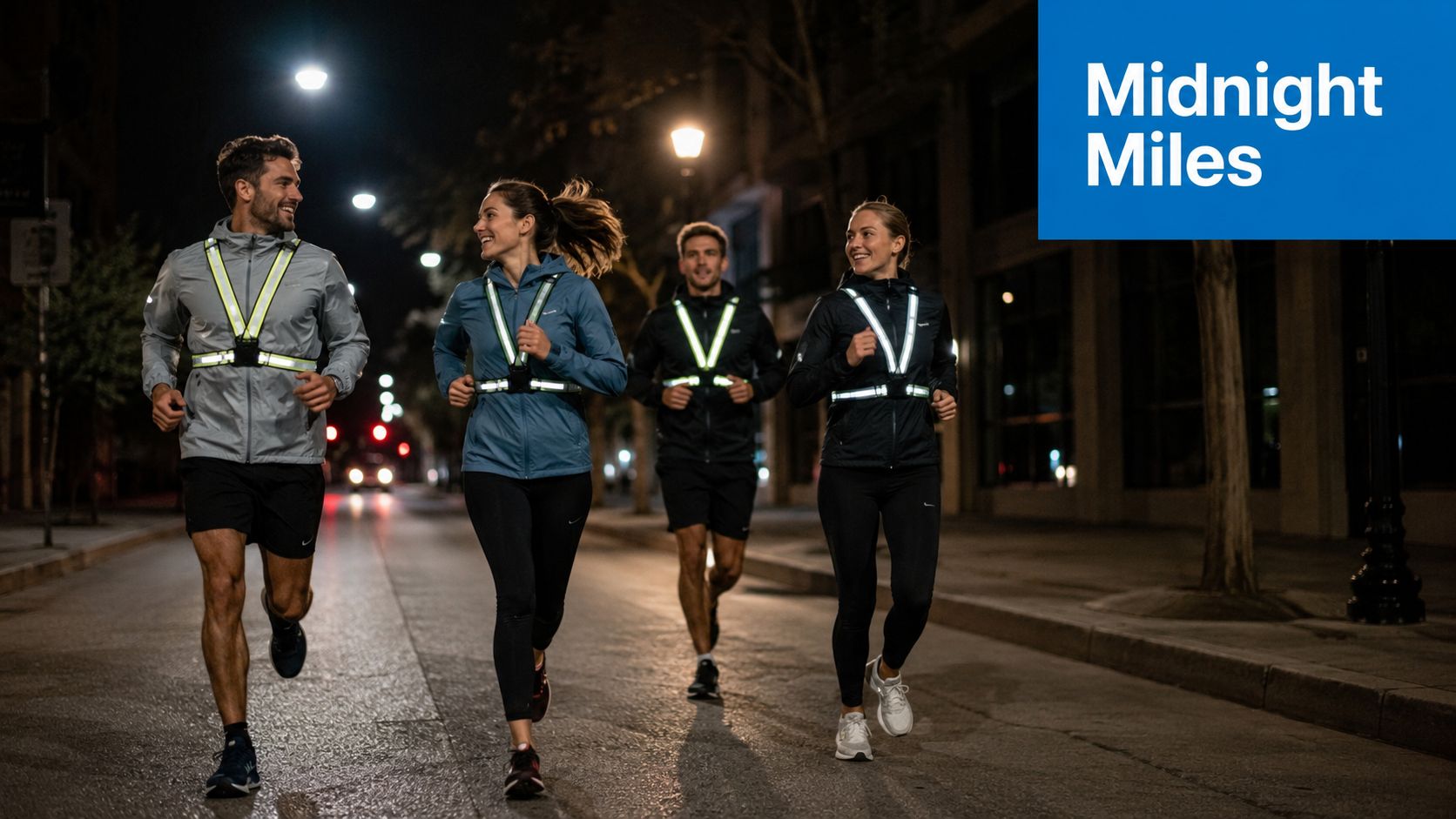
“Midnight Milers Running Crew” has built-in energy. It's urban, memorable, and naturally tied to a real use case. Night runs, early starts, and post-work community sessions all fit the name without stretching.
This kind of identity works especially well in cities where members want flexibility and a social ritual. It also creates a clear apparel angle from the start. Visibility isn't just a design choice here. It's part of the club culture.
Why this name works
Alliteration helps. “Midnight Milers” is easy to remember, easy to chant, and easy to turn into an abbreviated mark. “MMRC” can sit on a cap, while the full name takes over the back of a jacket.
This is also one of the few names where reflective design elements feel necessary instead of gimmicky. That gives you a bigger lane for technical merchandise than many clubs have.
Best apparel direction
Go dark on the garment and bright on the print. Black, charcoal, deep navy, and asphalt gray all work. Then add reflective silver, bright lime, electric blue, or white in the logo and route graphics.
A strong merchandise program for this name includes:
- Night-run tee: DTF print on dark moisture-wicking fabric with reflective details.
- Outer layer: Lightweight jacket with embroidered front logo and reflective back hit.
- Safety accessory: Cap, vest, or armband built around visibility.
Brands are also sponsoring clubs more directly now, and some events charge entry fees in the $25 to $50 range while driving in-house apparel sales, as covered in Modern Retail's report on running club sponsorships and sampling. For a night-running club, that makes limited-edition event merch a practical revenue opportunity, not just a nice extra.
6. Stride Forward Running Collective
“Stride Forward Running Collective” feels optimistic without sounding cheesy. It suits clubs that center progress, support, and consistency. If your group talks about wellness, recovery, confidence, or getting people back into movement, this name lands well.
It also avoids one common mistake in running club names. It doesn't lock the group into a single pace identity. That gives you room to grow from beginner-focused meetups into a broader club with training groups, mentors, and recurring programs.
Why this name works
This name has emotional range. It can support a beginner 5K program, a mental health fundraiser, or a corporate wellness series without needing a brand reset. “Collective” again helps by sounding collaborative rather than hierarchical.
There's another practical angle. Current search demand around curated naming identity is real. One source notes that 137 people recently searched for “Running Group Names” on Pinterest, and also argues that most content ignores trademark, SEO, and social scalability concerns for business-backed clubs in its discussion of catchy running team names. Even if that source is informal, the gap it points to is familiar: many clubs pick a nice-sounding name that won't scale.
Best apparel direction
This is a natural fit for milestone-based merchandise. Progress tees, finisher tops, mentor shirts, and challenge gear all make sense under the same identity. The graphics can stay clean and message-led.
For clubs ordering at scale, it helps to plan uniforms, participant shirts, and premium add-ons together. These custom team gear bulk orders are useful when you need one visual system across different garments.
Use motivational language sparingly on apparel. A short line under the logo works. A paragraph on the back rarely does.
Screen printing is the best foundation for this name. Add embroidery for coach gear and DTF when you need detailed artwork or mixed-color messaging on technical fabrics.
7. Local Legends Running Club
If the goal is neighborhood pride, “Local Legends Running Club” is hard to beat. It's confident, community-first, and broad enough to grow from one weekly meetup into races, volunteer events, and local collaborations.
This name performs best when the club is tied to a real place. Not just a city. A district, park loop, waterfront path, or neighborhood landmark. The more local the identity, the better the merch feels.
Why this name works
“Legends” gives members something to grow into. New runners can wear it aspirationally, and longtime members can wear it with history. That makes it better than a name that only describes speed or terrain.
It also opens up great storytelling. Local routes, murals, parks, bridges, and unofficial neighborhood symbols can all become part of the visual system. If your club partners with cafés, retailers, or community events, the name already carries the grassroots tone.
Best apparel direction
This is where heritage-inspired branding shines. Think heavyweight tees, vintage-style screen prints, pigment-dyed hoodies, classic caps, and sewn patches. You can go modern too, but the name naturally supports apparel that feels collectible.
Use local symbols carefully:
- Landmark art: Keep it graphic, not photo-realistic.
- Neighborhood language: Use a nickname only if locals use it.
- Retail partnerships: Put the partner logo on the sleeve or hem, not the center chest.
One practical rule matters here. We do not create business cards or fliers. Keep the identity focused on wearable branding, signage, and digital promotion. Also, don't post links to competitor websites. Race organizers and sponsors often protect exclusive branding rights, and club visibility carries real value in competitive events, as shown in this study on London Marathon runners and club affiliation.
8. Fast & Furious Runners
“Fast & Furious Runners” is catchy for obvious reasons. It signals speed, intensity, and a little swagger. If your club is built around track sessions, race prep, and PR-focused workouts, that directness can help attract the right crowd fast.
Still, this name comes with more risk than the others. It's recognizable, which helps recall, but it can also feel less ownable if the brand system is weak. If you choose it, the logo, colors, and apparel style need to do extra work.
Why this name works
This name is best when the club has a clear performance identity. Weekly intervals, race calendars, pace groups, and visible milestones all reinforce the brand. Without that structure, the name can feel louder than the experience.
It also works well for internal segmentation. You can create gear tied to training blocks, race squads, or challenge series without breaking the brand voice. That's useful if your membership includes both advanced runners and improving intermediates.
Best apparel direction
Go bold. Angular type, motion lines, compressed fonts, and high-contrast color pairings all fit. This isn't the place for soft, hand-drawn graphics unless you're intentionally trying to soften the edge.
Good product fits include:
- Speed-session singlets: Lightweight tops with a clean front and graphic back.
- Race-day warmups: Quarter-zips or lightweight jackets with sleeve branding.
- Achievement gear: Time-standard tees or event-specific performance shirts.
DTF is a strong option if the artwork is detailed and layered. Sublimation works well for fully integrated race kits or all-over visual effects. If you want hats, simplify the mark before moving to embroidery. Fine detail gets lost quickly in stitched formats.
9. Community Cadence Running Club
“Community Cadence Running Club” has a quieter confidence. It doesn't shout. It suggests rhythm, consistency, and togetherness, which makes it one of the strongest running club names for structured groups that still want to feel approachable.
Cadence is also a smart word because it carries two meanings at once. It speaks to running form and group harmony. That layered meaning gives the brand more depth than a generic “social run club” name.
Why this name works
This name fits clubs that care about organized training and steady attendance. It feels especially right for pace-led groups, coached community runs, and clubs that rotate members through different training cycles.
It also scales nicely. You can imagine “Community Cadence” on beginner clinics, charity runs, coaching apparel, and weekend long-run kits without changing the tone. That flexibility gives the brand a long shelf life.
The best names for community clubs aren't the funniest ones. They're the ones members still want on a hoodie six months later.
Best apparel direction
Design around repetition and rhythm. Circular graphics, wave lines, split marks, metronome-inspired icons, and repeating stripe patterns all make sense here. If you want a subtle, premium look, embroidery on caps and quarter-zips is excellent.
For broader merchandise, try a layered system:
- Training-cycle tee: One shirt color per program block.
- Pace-group detail: Small sleeve print or lower hem mark for group assignment.
- Milestone merch: Hoodies or crewnecks for members who complete a training series.
This name also works well with cleaner typography than most clubs use. You don't need gimmicks. A good sans-serif, a steady color system, and consistent placement can make the club feel organized before anyone reads the event calendar.
10. Endless Horizons Running Society
“Endless Horizons Running Society” is the most aspirational name on this list. It sounds established, a little distinguished, and built for long-term identity rather than quick novelty. If your club wants to feel like a serious community with traditions, this one has range.
“Society” changes the tone in a useful way. It suggests membership, continuity, and a stronger internal culture. That can be ideal for clubs that want premium apparel, annual events, and a more considered visual language.
Why this name works
This is a strong fit for endurance-minded communities, destination run groups, and clubs that want to attract members who stay. It feels less like a casual meetup and more like something people join.
The risk is over-styling it. If the logo gets too ornate or the language too precious, the brand starts to feel performative. Keep the naming lofty and the design disciplined.
Best apparel direction
This name wants premium merchandise. Think embroidered midweight crewnecks, heavyweight tees with refined screen prints, technical jackets, woven labels, and anniversary pieces members will treasure. It also supports heritage graphics well, especially if your club tracks years of membership or annual traditions.
A polished system might include:
- Member staple: Embroidered hoodie or crewneck with a chest crest.
- Event piece: Sublimated long-sleeve with horizon, sky, or scenery graphics.
- Commemorative item: Limited-run patch, hat, or jacket tied to a yearly signature run.
Because the name is longer, create a formal seal for premium gear and a simplified wordmark for everyday activewear. That split gives you versatility without diluting the brand.
Comparison of 10 Running Club Names
| Name | 🔄 Implementation Complexity | ⚡ Resource Requirements | 📊 Expected Outcomes | 💡 Ideal Use Cases | ⭐ Key Advantages |
|---|---|---|---|---|---|
| Pace Makers Running Club | Low, simple, performance-focused name | Low, single-color embroidery/screen print friendly | Clear performance identity; easy merch rollout | Competitive clubs, corporate teams, general pace groups | Instant clarity; highly versatile for apparel |
| Trail Blazers Running Collective | Medium, longer, outdoor-themed graphics | Medium–High, multi-color/sublimation or patches | Distinct outdoor brand; strong lifestyle appeal | Trail clubs, mountain regions, adventure events | Memorable outdoor identity; eco/outdoor appeal |
| Mile High Runners | Low, concise, location-specific | Low, easy embroidery and printing | Strong local pride and tourism/corporate fit | Elevated-city clubs (e.g., Denver), mountain communities | Immediate local identity; consistent branding |
| Sole Sisters & Brothers Running Club | Medium, longer, playful wordplay needs design care | Medium, stacked logos, multi-color options | Inclusive community branding; strong storytelling | Inclusive groups, women/LGBTQ+ focused, urban clubs | Emotional connection; strong collaboration potential |
| Midnight Milers Running Crew | Low–Medium, night themes, alliteration helps branding | Medium, reflective/glow options increase cost | High visibility; safety-focused membership growth | Urban night runs, shift workers, safety-oriented programs | Distinctive night identity; great for high-vis gear |
| Stride Forward Running Collective | Medium, motivational tone needs thoughtful messaging | Medium, cause-based merch and testimonial materials | Strong wellness/growth positioning; corporate appeal | Wellness/recovery groups, corporate wellness programs | Positive, inclusive messaging; cause-friendly |
| Local Legends Running Club | Low, straightforward community name | Low–Medium, local landmark graphics or heritage prints | Strong local loyalty and partnership opportunities | Neighborhood clubs, community events, tourist retail | Deep local engagement; legacy merchandise potential |
| Fast & Furious Runners | Low, bold, concise, action-oriented | Low–Medium, dynamic graphics, bold prints | High-performance branding; appeals to racers | Competitive training groups, track squads, race teams | Energetic and instantly memorable; high visual impact |
| Community Cadence Running Club | Medium, layered meaning may need explanation | Medium, rhythmic/music-themed merch options | Cohesive group identity; strong for structured training | Group training programs, social/community-focused clubs | Deep brand meaning; excellent for group cohesion |
| Endless Horizons Running Society | Medium–High, sophisticated aspirational language | Medium–High, premium/heritage merchandise programs | Aspirational, long-term member commitment; premium appeal | Established clubs, heritage programs, anniversary campaigns | Premium, growth-focused brand; great for commemoratives |
Start Your Legacy on the Right Foot
A good running club name does more than fill a signup form. It gives people something to identify with, something to wear, and something to remember after the run is over. The strongest names are easy to say, easy to print, and specific enough to feel like they belong to your group, not just any group.
That's why the best naming decisions usually happen alongside apparel planning. A name might sound great in conversation but fall apart when it's embroidered on a cap or stretched across a technical tee. Another might feel simple on paper and look fantastic once it's paired with the right logo, garment, and decoration method.
The practical test is straightforward. Can the name work on a shirt front, a jacket back, a hat, and a race-day social graphic without constant redesign? If the answer is yes, you're probably building on solid ground. If the answer is no, fix the system before you order gear.
Different names also push you toward different merchandise strategies. A place-based club often does best with local landmark graphics and heritage-style pieces. A night-running crew needs visibility-driven gear. An inclusive wellness club usually benefits from softer messaging, broader sizing, and milestone-based products. A speed-focused club can lean into performance tops, race kits, and event merch.
That's where decoration method matters. Screen printing is usually the best value for bold logos and larger runs. Embroidery gives caps, polos, outerwear, and premium layers a polished finish. DTF helps when you need detail, color variation, or artwork flexibility on technical fabrics. Sublimation is strongest when the entire garment design is part of the concept, especially for all-over graphics and high-energy team tops.
It also pays to think beyond the first shirt. Clubs with staying power usually build a simple merchandise ladder. Start with one core tee, one premium item, and one accessory. Then add event-specific drops, coach gear, milestone pieces, or seasonal layers as the identity settles in. That approach keeps the brand focused and avoids a random collection of products that don't feel connected.
If your club has sponsors, event partners, or retail ambitions, protect the brand early. Use a name you can consistently present across apparel, social platforms, and registrations. Keep logos readable. Keep partner placements controlled. And keep the merch aligned with the club people are joining, not the one you imagine in a mood board.
The club name is the first step. The gear is what turns it into a visible community. If you need more operational support beyond branding, this guide to manage your sports club is a useful next read.
When you're ready to build apparel around your club, choose garments and decoration methods that match how your members run, train, and show up. That's what makes a club brand feel real.
Dirt Cheap Product, Inc. helps running clubs turn strong names into wearable brands with screen printing, embroidery, DTF, sublimation, and custom patches across tees, polos, outerwear, hats, bags, and more. If you're building club merch, staff gear, event apparel, or a premium member collection, the team can help you choose the right products, refine artwork, and get proofs moving quickly. Explore custom apparel options with Dirt Cheap Product, Inc..