
You're probably making uniform decisions at the same time you're choosing menu paper, checking labor costs, and trying to make the room feel right. That's normal. Uniforms usually get pushed to the end, then handled fast, and that's where expensive mistakes start.
Most restaurant staff uniform ideas focus on looks alone. The better approach is to treat uniforms as a working system. They need to fit the brand, survive real shifts, hold up in repeated washing, and make sense for a small business budget over time. That matters because 68% of small restaurant operators struggle with budgeting for uniform turnover due to lack of transparent lifecycle data, according to a 2024 industry survey noted by Stock Mfg Co..
Table of Contents
- Your Uniform Is Your Brand's First Impression
- Uniform Concepts for Different Restaurant Styles
- Dressing for the Job Uniforms by Staff Role
- Choosing Fabrics for Comfort Durability and Care
- Creating a Policy for Hygiene and Maintenance
- Your Guide to Budgeting Ordering and Customization
Your Uniform Is Your Brand's First Impression
Guests notice your staff before they decode your concept in words. They read the room, the lighting, the pace, and what your team is wearing. A sharp uniform tells them what kind of experience to expect before the greeting even starts.
That's why the best restaurant staff uniform ideas don't start with garment catalogs. They start with brand identity. If your place is polished and quiet, a rugged canvas apron and casual tee can feel off. If your restaurant is relaxed and neighborhood-driven, a stiff formal look can feel forced.
Define the mood before the items
Write down three words that describe the experience you want guests to feel. Think in terms like upscale, modern, warm, rustic, playful, or minimal. Those words become your filter for every uniform choice after that.
A useful way to think about it is to line uniforms up with the same visual decisions you already make in interiors and menus. If you need help clarifying that bigger picture, this guide to branding for hospitality businesses is a solid reference for connecting visual identity to guest perception.
Practical rule: If a uniform would look strange standing next to your menu design and dining room finishes, it's probably the wrong direction.
Build a uniform personality
Most owners choose colors first. I'd reverse that. Start with the tone of service, then choose shape and finish.
For example:
- Refined service: Crisp polos, embroidered marks, clean aprons, restrained color.
- Casual and energetic: Branded tees, lighter structure, more relaxed fit.
- Craft or artisan concept: Textured aprons, earthy tones, visible utility details.
- Contemporary concept: Minimal branding, neat silhouettes, consistent dark palette.
Then ask harder operational questions.
- Will this still look good halfway through a busy shift?
- Does it hide stains or highlight them?
- Can staff move naturally in it?
- Will it still match the brand after repeated laundering?
A good uniform doesn't just look right in an opening-week photo. It keeps reinforcing your identity on an ordinary Tuesday lunch rush.
Don't separate image from upkeep
Brand and maintenance are tied together. If the look you pick requires constant babying, it won't survive real service. That's where many owners get stuck. They buy for launch-day appearance, then replacement costs and inconsistency creep in later.
The strongest choice is usually the one that balances appearance with repeatable execution. If staff can keep it clean, comfortable, and consistent, guests will read it as professionalism. That's what you want your uniform to communicate every shift.
Uniform Concepts for Different Restaurant Styles
Some concepts almost tell you what the uniform should be. Others need more editing. The trick is to match the guest expectation, the pace of service, and the amount of mess the job creates.

Fine dining and polished full service
In a formal room, structure matters. Think crisp shirts, well-fitted aprons, vests where appropriate, and quiet branding. Embroidery fits better here than loud print because it supports a more finished look.
Keep the palette narrow. Black, white, charcoal, deep navy, and muted accent tones usually work better than bright colors. Guests in these spaces notice details, so fit, wrinkle control, and clean footwear matter more than novelty.
Casual bistros and neighborhood restaurants
A common approach allows a lot of owners to loosen up without looking sloppy. Branded polos paired with canvas or denim-style aprons often strike the right balance. The look feels intentional but not stiff.
You also get more room to use texture. A heavier apron fabric, rolled sleeves, or a chest logo can add personality without making the team look mismatched. If you're sourcing aprons for a full staff, looking at aprons in bulk helps when you need consistency across new hires and reorders.
A casual concept should still look organized. Relaxed doesn't mean random.
Fast-casual and QSR teams
Fast service needs uniforms that read quickly from a distance. Clean branded T-shirts, caps where appropriate, and simple aprons can work well because they support movement and easy care. The key is color discipline. If every shirt is a different blank or shade, the brand starts to disappear.
This is also the category where owners often over-accessorize. Keep it simple. Staff need room to move, wipe down, carry, and reset fast.
Coffee shops and bakeries
These teams usually benefit from softer uniforms that still look deliberate. Comfortable tees with a practical apron often fit the pace and atmosphere. In bakery and coffee environments, an approachable look usually beats a formal one.
A practical standard applies to server-facing roles. A waiter's standard uniform includes a shirt, apron, and comfortable, non-slip shoes, as noted by The Restaurant HQ's restaurant uniform guidance. Hats and name tags can support the look, but they're not the core of the uniform.
Dressing for the Job Uniforms by Staff Role
A host, server, bartender, and line cook don't move the same way, spill the same things, or need access to the same tools. That's why one uniform across every role usually fails in practice. It might look consistent on paper, but it creates friction during service.
Front of house needs polish with mobility
Hosts need a clean, welcoming look. They stand at the first point of contact, so neat lines and approachable styling matter. Their uniform can be more appearance-led because they usually aren't carrying trays or working around as many spills.
Servers need more from the garment. They bend, reach, carry, and move fast through tight spaces. Polos often work well here because they hold shape better than a basic tee while staying easier to wear than a dress shirt. If you're comparing options, these best polos for work uniforms are a useful starting point for guest-facing roles.
Bartenders have a different wear pattern. They deal with splashes, repetitive arm motion, and constant contact with counters and tools. Darker tops and aprons usually make more sense here than light garments that show every drip.
Back of house needs heat tolerance and safety
Cooks and chefs need room to move, protection from heat and splatter, and garments that still look presentable after hard use. A server's shirt choice often won't hold up in a kitchen. Tight fits and delicate fabrics become a problem quickly.
Fit also matters more than many owners expect. Staff can't work well in uniforms that pull across the shoulders, ride up when lifting, or bunch at the waist. If you need a practical way to think about body types and consistent sizing, ClothME fit profiles offer a helpful framework before you place a full order.
The best role-based uniform plan is simple. Keep the brand consistent, but let the cut and fabric change with the job.
What works better than one-size-fits-all
A strong setup usually shares the same color family, logo treatment, and overall brand language across the team. Then it adjusts by role.
- Host: Cleaner silhouette, lighter utility, presentation-first.
- Server: Mobility, pockets, stain awareness, easy layering.
- Bartender: Durable fabric, spill-friendly color, unrestricted shoulders.
- Chef or cook: Heat-conscious fabric choice, safer construction, non-restrictive fit.
That gives you consistency without forcing every employee into the same uniform problem.
Choosing Fabrics for Comfort Durability and Care
Fabric choice decides whether a uniform keeps working after the novelty wears off. Owners often focus on color and logo placement, then realize later that the shirt wrinkles too easily, traps heat, or starts looking tired after repeated washing. Material is where comfort, appearance, and replacement cost meet.
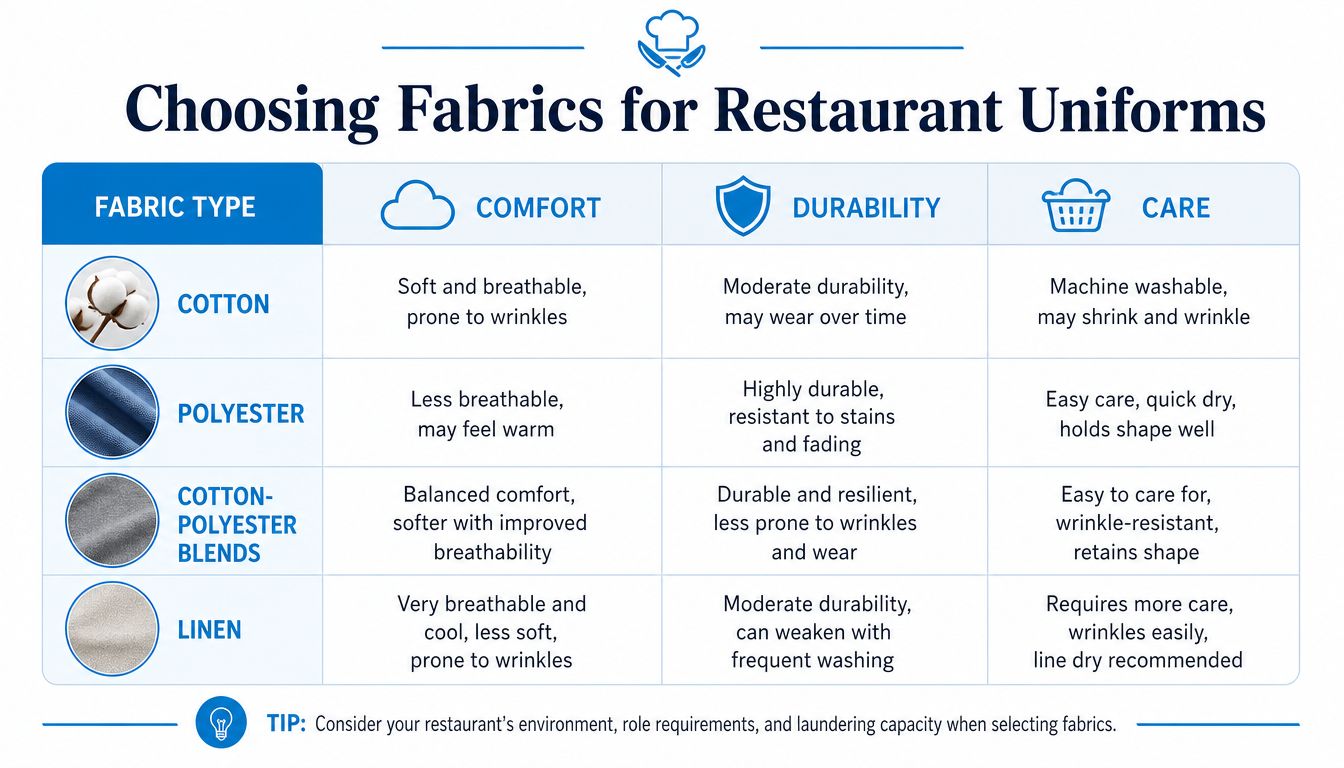
What different fabrics actually do
Pure cotton feels familiar and breathable, but it's not always the easiest uniform fabric to manage. It wrinkles more easily and can stay damp longer during hot, active shifts. That can make it less practical in high-volume service.
Polyester-heavy materials usually win on easier care, shape retention, and resistance to a rough workday. The trade-off is feel. If the fabric is too synthetic or too stiff, staff notice fast.
That's why blends are often the best middle ground. For front-of-house and busy kitchen environments, cotton-polyester blends in 65/35 or 50/50 ratios are the industry standard because the polyester delivers wrinkle resistance and rapid moisture evaporation, while the cotton ensures breathability and durability, according to this restaurant uniform fabric guide.
If you're comparing performance-focused options for active roles, it helps to review how moisture-wicking fabric behaves in uniforms that need to move through long, hot shifts.
Choose fabric for the shift it has to survive, not the photo it has to take.
Restaurant Uniform Fabric Comparison
| Fabric Type | Breathability | Durability | Stain Resistance | Wrinkle Resistance | Best For |
|---|---|---|---|---|---|
| Cotton | Good | Moderate | Lower | Lower | Bakery counters, lighter front-of-house use |
| Polyester | Lower to moderate | Strong | Better | Better | Fast-casual, support roles, spill-prone stations |
| Cotton-poly blend | Balanced | Strong | Good | Good | Servers, hosts, busy dining rooms, many kitchen-adjacent roles |
| Performance synthetic blend | Moderate | Strong | Good | Strong | High-movement roles, hotter environments, long shifts |
How to make the final call
Use the working conditions as your filter.
- High heat: Lean toward blends that dry faster and stay neater.
- Guest-facing polish: Prioritize wrinkle resistance and shape retention.
- Heavy spill exposure: Pick fabrics and colors that won't look defeated after one rush.
- Frequent washing: Favor materials that keep color and structure without constant fuss.
A fabric that's slightly less soft on day one can still be the better buy if it keeps its shape and appearance through the life of the program. That's the part many visual-only guides miss.
Creating a Policy for Hygiene and Maintenance
Even the best-looking uniform program breaks down if staff all care for it differently. One person launders correctly, another lets stains set, another keeps wearing a shirt with a loose button because no one spelled out the rule. That inconsistency shows up in service and can create a compliance problem.
A written policy fixes that. It gives managers something clear to enforce and gives staff a standard they can follow.
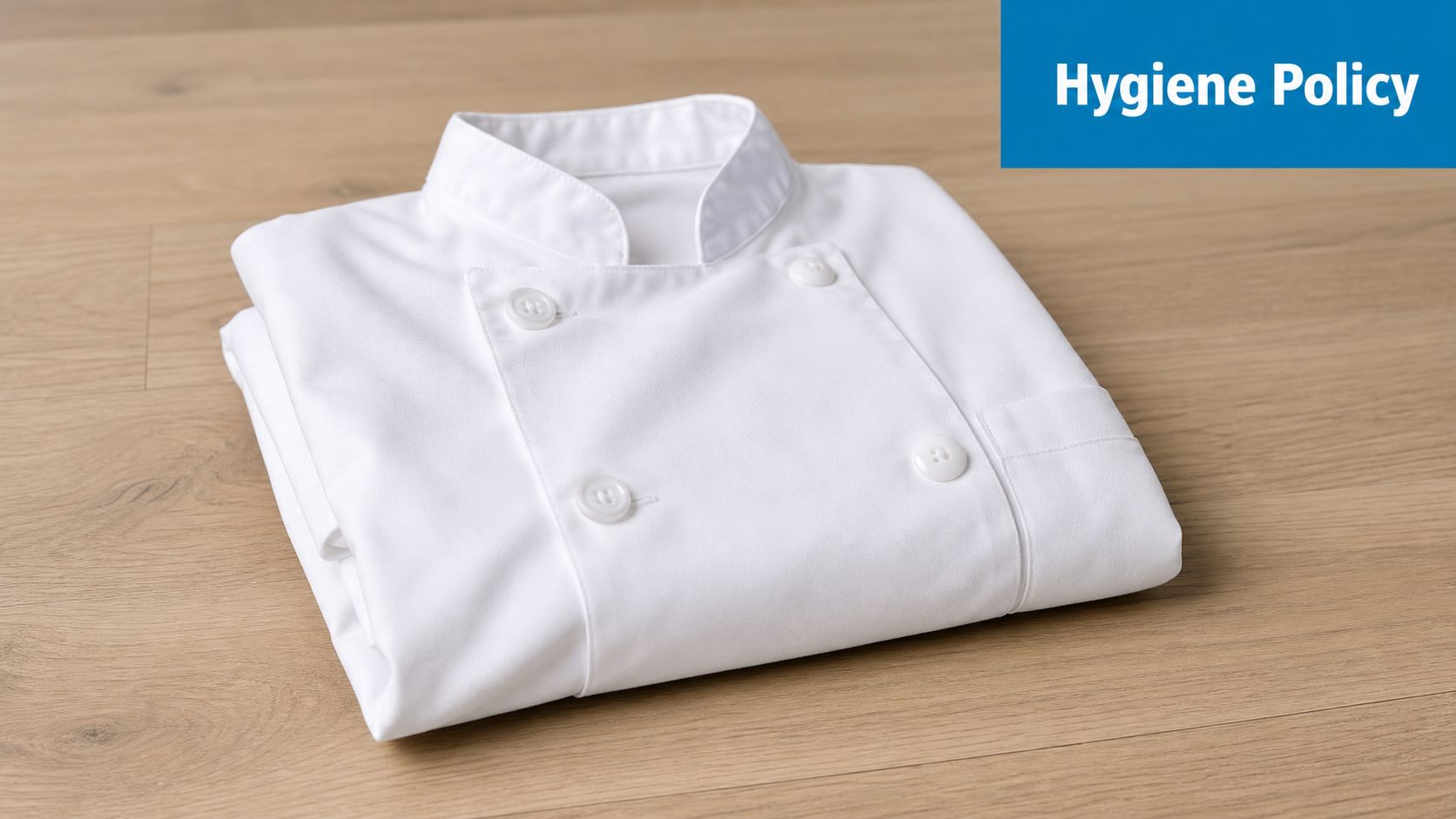
What your policy should spell out
Your policy should define required items by role, expected condition, cleaning expectations, and what isn't allowed. It should also address grooming and accessories so managers aren't making subjective calls during every shift.
A useful baseline is to state:
- Required pieces: Shirt type, apron, pants color, and footwear by role.
- Condition standard: Clean, presentable, no visible damage.
- Washing frequency: Clear expectations for when items must be cleaned.
- Unauthorized changes: No off-brand substitutions or altered garments unless approved.
That level of detail matters because restaurant uniform policies should explicitly define required items by role, grooming and accessory standards, and washing frequencies, as outlined in this restaurant uniform guidelines playbook.
How to handle replacements without chaos
Health and safety rules make this more than a style issue. Regulatory compliance in food service mandates that all uniforms worn by food handlers must be free from holes, rips, and loose buttons, as these can become physical contaminants and violate FDA health codes, according to FoodDocs on food service dress code compliance.
That means managers need a replacement trigger, not just a vague standard. Don't wait until garments are obviously unusable. Build replacement into normal operations.
Some teams review uniforms seasonally. Others track wear by time in use or by laundering cycle. The key point is consistency. Uniform replacement schedules should be established based on a set number of washes or months of wear, with review points built in, as noted in this staff uniform checklist reference.
A uniform policy protects three things at once: hygiene, brand consistency, and manager time.
For owners tightening process across the whole operation, this 2026 restaurant safety blueprint is a useful companion resource because uniform hygiene works best when it's part of a broader sanitation routine.
Your Guide to Budgeting Ordering and Customization
Most uniform programs go wrong in one of two ways. The owner under-orders and scrambles later, or overcomplicates the first order with too many garment types, colors, and decoration methods. A better system is to budget for a clean starting set, choose branding that fits the concept, and build reordering into the plan from day one.
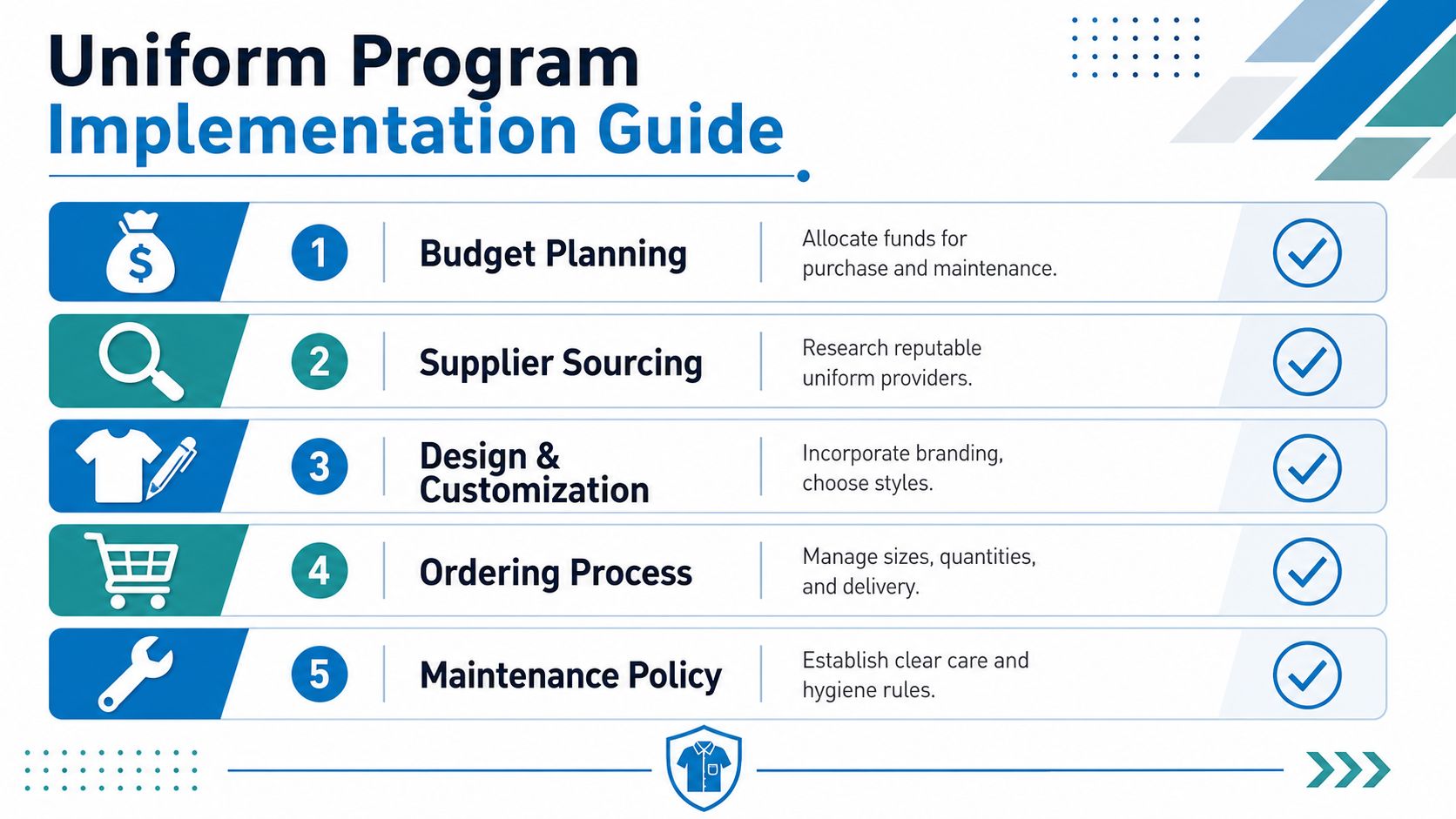
What a realistic budget looks like
For a typical small restaurant with 15 to 20 employees, the annual budget allocated specifically for staff uniforms and their replacement ranges from $500 to $1,000, which represents approximately 0.5% of the total labor budget. That benchmark helps owners plan for consistent appearance, routine damage, and turnover without treating uniforms as surprise expenses.
That same budgeting approach also supports a practical operating standard. Many restaurants provide each staff member with at least two complete uniform sets, which helps when teams work multiple shifts and need a clean option ready.
These aren't glamorous decisions, but they save money in real life. When uniform costs sit in the annual budget, owners can place cleaner bulk orders, keep artwork on file for reorders, and avoid panic buying mismatched replacements.
Where customization changes cost
Decoration method is one of the biggest cost levers. Basic screen-printed T-shirts start at approximately $8 to $12 per shirt, while embroidered polo shirts cost between $20 and $35 per piece. Chef coats with embroidery range from $30 to $50, and logo aprons cost $15 to $30. A complete front-of-house uniform, typically a polo plus an apron, requires a budget of $35 to $65 per employee.
That gives you a practical framework:
- Screen printing fits casual concepts and lower-cost programs.
- Embroidery suits upscale rooms and garments that need a more polished finish.
- Aprons often deliver the easiest branding win because they can unify different roles without changing every shirt style.
- Chef coats deserve selective use. They carry more cost, so they make the most sense where the kitchen is visible or the concept benefits from that presentation.
A simple ordering process that works
I'd keep the first order disciplined. Too many owners treat it like a branding playground. It should operate more like a supply decision with brand standards built in.
Use this sequence:
Define the look clearly
Decide the brand mood, color palette, and how formal the uniform should feel. If that's fuzzy, every later choice gets harder.Assign garments by role
Servers don't need the same pieces as cooks. Separate front-of-house and back-of-house needs before pricing anything.Choose the decoration method
Match the logo treatment to the concept. Embroidery looks more refined. Screen printing usually lowers cost.Collect real sizes carefully
Don't guess from T-shirt sizes alone. Get measurements or use a fit guide so you don't waste money on replacements.Order starter inventory with extras
Include a few backup pieces in your core sizes. New hires and damaged garments are guaranteed. The question is whether you plan for them.Set the replacement routine
Decide how you'll review wear and trigger reorders. If you skip this, the program becomes reactive almost immediately.
Keep your first uniform program narrow. Fewer garment types usually means better consistency, easier training, and cleaner reorders.
Your Restaurant Uniform Ordering Checklist
| Step | Action Item | Status |
|---|---|---|
| 1 | Confirm brand style, colors, and overall level of formality | ☐ |
| 2 | Separate uniform needs by role | ☐ |
| 3 | Choose shirt, apron, and outer layer options | ☐ |
| 4 | Decide between screen printing and embroidery | ☐ |
| 5 | Collect accurate staff sizes | ☐ |
| 6 | Build quantities for current staff and near-term hires | ☐ |
| 7 | Review proofs for logo placement, thread, or print detail | ☐ |
| 8 | Approve final order and delivery timing | ☐ |
| 9 | Publish care and hygiene rules for staff | ☐ |
| 10 | Schedule replacement reviews | ☐ |
The smartest restaurant staff uniform ideas aren't always the most dramatic ones. They're the ones that still make sense after months of wear, frequent washing, staff changes, and busy shifts. If the system is easy to maintain, your team will look more consistent and your costs will stay more predictable.
If you're ready to turn a rough uniform idea into a practical program, Dirt Cheap Product, Inc. can help you source, decorate, and reorder branded apparel with fast proofs, responsive support, and decoration options that fit different restaurant concepts and budgets.