You've got the banner out of the box. The print looks sharp, the colors are right, and the message does exactly what you wanted. Then the main question hits. How do you hang it so it looks straight, stays secure, and doesn't damage the wall, fence, tent, or display you're attaching it to?
That last part matters more than often realized. A banner can be well designed and still look sloppy if it sags, pulls crooked, or starts tearing around the corners. At events, that shows up fast. In retail, it cheapens the display. Outdoors, it can become a safety problem if the wind gets hold of it.
Good banner installation isn't about finding whatever rope or zip ties are nearby. It's about matching the banner type, hardware, and surface so the install fits the actual conditions. A mesh banner on a fence needs a different approach than a vinyl banner on drywall. A pop-up display table needs a different method than a storefront wall. If you're also planning the rest of your event presentation, these best giveaways at trade shows can help round out the setup so the banner doesn't have to do all the work alone.
A clean install is achievable without overcomplicating it. You just need the right prep, the right fastening method, and a few finishing habits that professionals use every time.
Table of Contents
- Your Guide to Hanging Banners Like a Pro
- Gather Your Tools and Plan Your Placement
- Match the Fastener to Your Banner Type
- Hanging Banners on Any Surface
- Ensure Safety and a Professional Finish
- Fixing Common Banner Hanging Issues
Your Guide to Hanging Banners Like a Pro
Most banner problems start before the first fastener goes in. People rush the install because the banner already looks finished. It isn't. Hanging is part of the presentation.
The difference between a quick DIY result and a professional one usually comes down to tension, alignment, and surface choice. A banner hung too tight starts stressing the grommets. Too loose, and it ripples. Hung on the wrong surface with the wrong hardware, it may hold for an hour and fail by the end of the day.
Practical rule: The right install method depends on two things first. What the banner is made to do, and what you're attaching it to.
That's why “just use zip ties” is incomplete advice. Zip ties can work on a chain-link fence. They're often a poor choice on draped fabric, acrylic event panels, or interior walls where appearance matters. The same banner may need one method indoors and another outdoors.
Professionals also think about removal before installation. If the banner is temporary, the method should come off cleanly. If it's going up for repeated use, the hardware should support that without wearing out the banner edge.
A strong install has a few visible signs:
- It hangs level and reads cleanly from normal viewing distance.
- The load is distributed across multiple points, not forced onto one corner.
- The surface stays protected when the display is temporary or delicate.
- The hardware suits the setting, so the install looks intentional instead of improvised.
That's the main goal when you're learning how to hang banners. Not just getting it up, but getting it up in a way that holds, reads well, and still looks good close up.
Gather Your Tools and Plan Your Placement
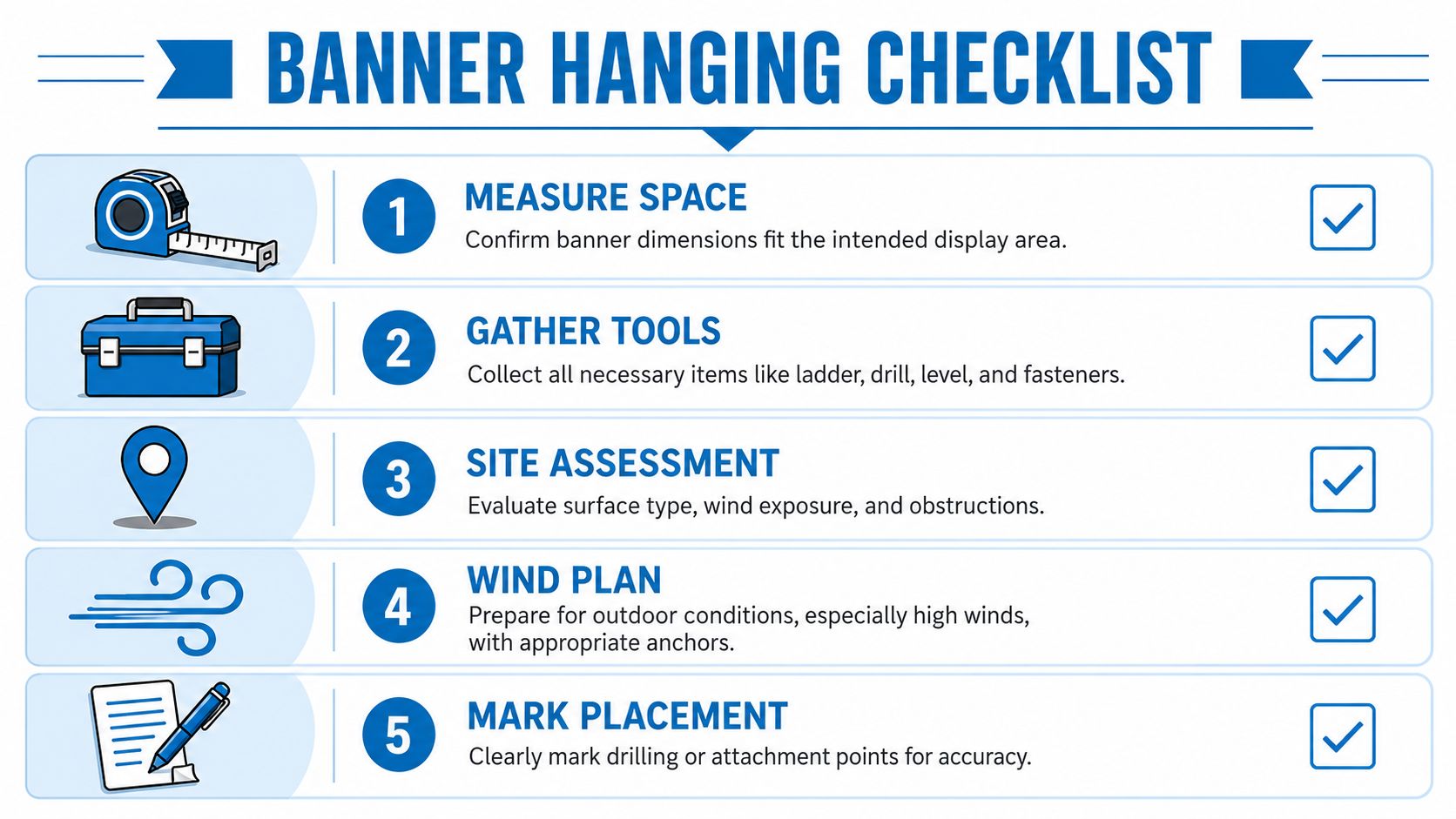
A banner install goes smoother when you treat it like a setup, not an afterthought. Gather everything first, inspect the site, and decide on the attachment method before you start drilling or tying anything.
Start with the banner itself
Banner size's impact on placement is often underestimated. The most common standard banner size is 3 ft × 6 ft (36 × 72 inches) because it balances portability with visibility. Larger displays often move up to 6 ft × 8 ft or 10 ft × 12 ft, which makes sight lines and mounting space more important, as noted in this signage size overview.
Before you choose hardware, check the banner for:
- Grommets: Make sure they're placed where the load can be spread evenly.
- Pole pockets: These change the install completely and often produce a cleaner hanging result.
- Material stiffness: Stiffer vinyl behaves differently than softer fabric when tension is applied.
- Printed margins: Don't let hardware cover text, logos, or QR codes.
If the banner is part of a larger event display, it helps to think about the surrounding visuals too. This guide on how to make unforgettable photo booth backdrops is useful for understanding how placement, spacing, and viewing angles affect what guests notice in photos.
Build a site checklist before install day
Bring more tools than you think you'll need. Banner installs rarely fail because someone brought a level. They fail because someone didn't.
A solid kit usually includes:
- Tape measure and marker: For exact placement and fastener spacing.
- Level: A small torpedo level is fine for many jobs.
- Ladder: Stable and tall enough to work without overreaching.
- Drill and bits: Match the bit to the wall anchor or surface.
- Fasteners: Screws, washers, anchors, rope, ball bungees, zip ties, or hooks based on the job.
- Scissors or snips: For trimming ties or line.
- Gloves: Helpful with wire, rough walls, or metal hardware.
A banner rarely looks wrong because of the print. It looks wrong because the installer guessed instead of measuring.
Check the space before the banner ever comes out. Look for wind exposure, sprinkler spray, rough edges, traffic flow, lighting glare, and obstructions like door swings or ceiling fixtures. If you're sourcing supporting event materials at the same time, a practical promotional product sourcing guide for bulk buyers can help keep the rest of the branded setup consistent with the banner itself.
One more planning point matters. Know whether the install is temporary, semi-permanent, or repeat-use. That single decision changes what “good hardware” means.
Match the Fastener to Your Banner Type
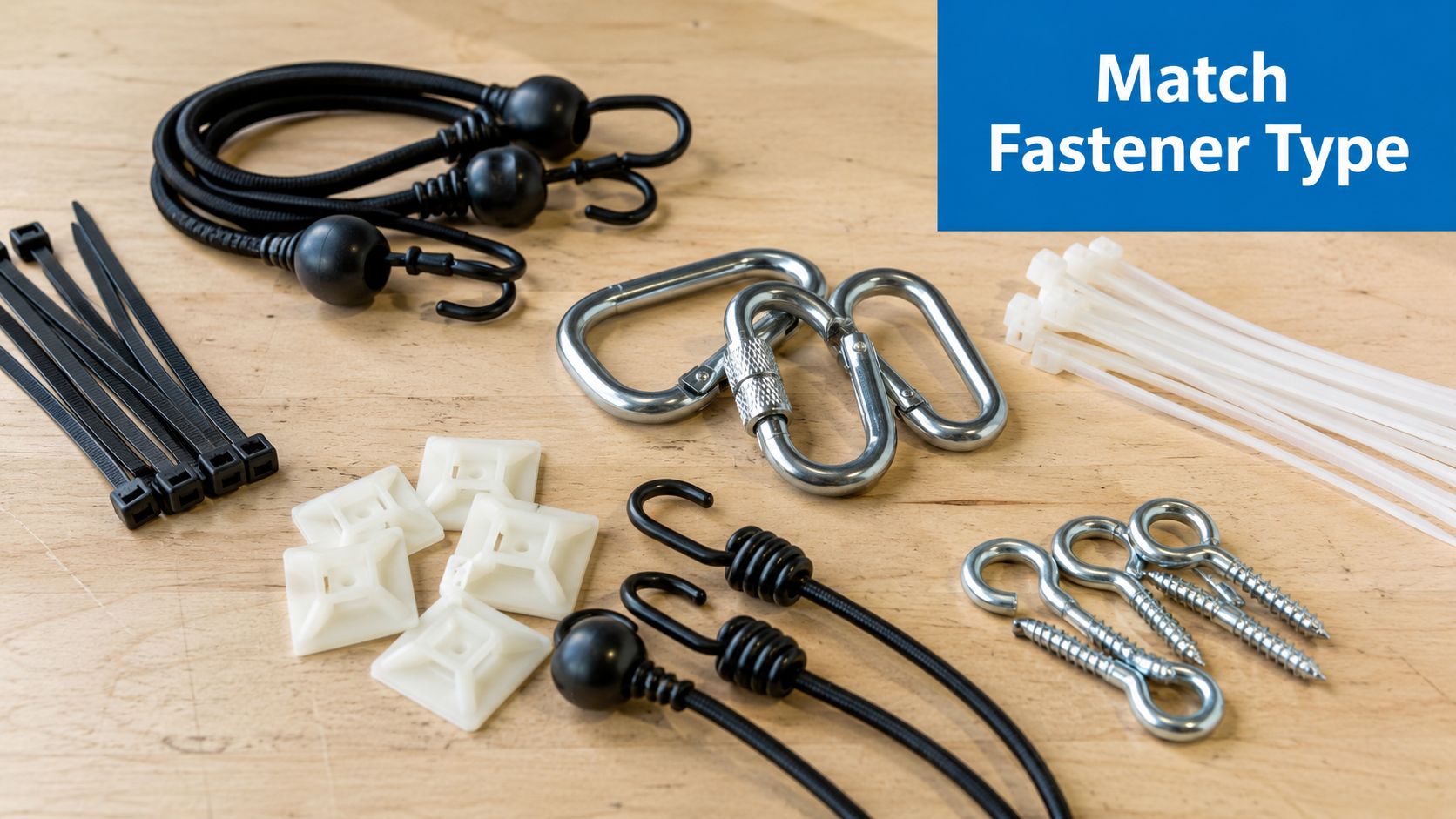
Fasteners aren't interchangeable. They may all hold a banner for a moment, but they don't all hold it well, cleanly, or safely. The best choice depends on the banner's finishing details and the look you want at the end.
What each fastener does well
Here's the short version.
| Fastener | Best use | What to watch for |
|---|---|---|
| Rope | Spanning between posts or fixed anchor points | Can look bulky and is easy to over-tighten |
| Zip ties | Fences and quick temporary installs | Less forgiving, can pinch hard at grommets |
| Screws with washers | Walls and wood surfaces | Needs correct anchor choice and even tightening |
| Ball bungees | Outdoor installs and fence mounting | Better movement control, but still needs proper spacing |
Modern banner guidance favors ball bungee cords because they flex a bit and can look cleaner than rope or zip ties while allowing slight movement. That flexibility helps the banner absorb stress instead of fighting it at every grommet, according to Smartpress guidance on custom banners.
Rope still has a place. It's useful when you need to span a gap or tie off to fixed posts, but it tends to create uneven tension if the installer pulls one corner too hard. Zip ties are quick, but they're not graceful. On polished event displays, they can make an otherwise clean setup look temporary.
If you're comparing specialty attachment hardware beyond basic banner supplies, this guide to deck and fence hardware is a helpful reference for understanding how different connectors behave on outdoor structures.
When pole pockets are the cleaner choice
If the banner has pole pockets, use them. They're often the most polished option for indoor displays, trade show signs, and overhead hangs.
A banner hung on a pole benefits from a dowel or pole inserted into the bottom pocket, which helps keep it straight and taut. That creates a flatter face and reduces the curling or rolling you see on unsupported hanging banners. This is one of the simplest upgrades from “it's hanging” to “it looks finished.”
Some repeat-use display systems also use lightweight aluminum tubing with push-button or snap-lock assembly. That matters when the banner goes up often and needs to come down fast without fighting a pile of loose parts.
Don't choose hardware based on what's in the toolbox. Choose it based on where the load will sit once the banner is fully hanging.
For custom printed display pieces, banners included, custom printing options can be useful when you need the banner finish and the mounting plan to match from the start rather than trying to adapt the banner after it arrives.
Hanging Banners on Any Surface
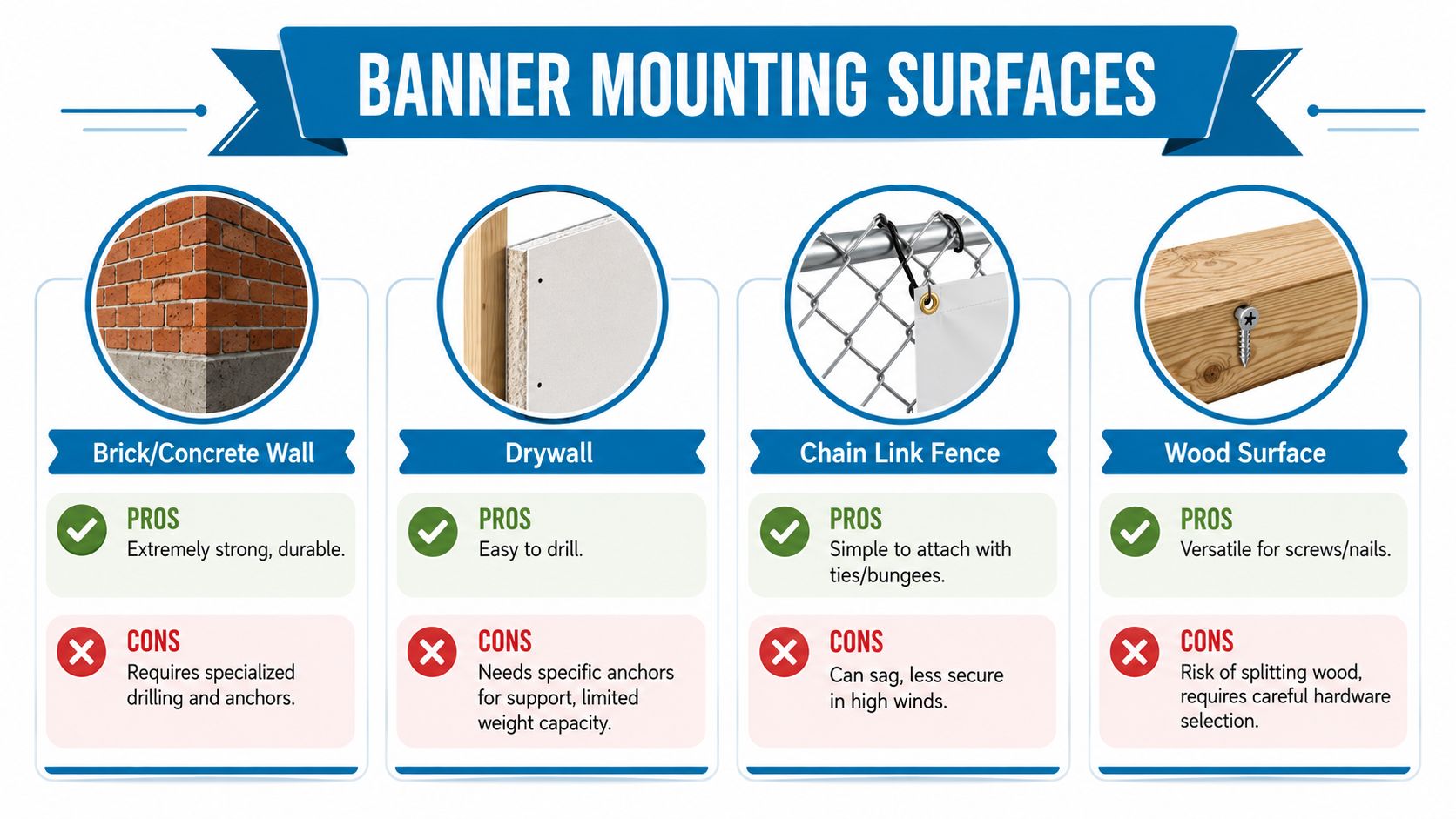
Most bad installs happen because the method fits the banner but not the surface. A wall, fence, wood frame, table skirt, and tent leg all need different handling. Properly addressing these varying requirements, people either protect the surface and get a clean result, or create stress points, residue, tears, and crooked lines.
Walls need a center-first install
For wall-mounted banners, the cleanest method is a center-first approach. The sequence is to drill the first hole at the center grommet location, insert an anchor, then drive the screw part-way, repeat on the ends, and finish by tightening all fasteners evenly. That process helps prevent skewing, based on this wall-mount banner installation demonstration.
That rule matters on drywall, wood walls, and many rigid interior surfaces. If you fully tighten one corner first, the banner usually tracks off line and puts stress where you don't want it.
For common wall surfaces:
- Drywall: Use the right hollow-wall anchor for the fastener. Don't rely on the drywall alone for a larger banner.
- Wood: Screws and washers usually work well, but avoid driving too close to fragile trim or splitting thin material.
- Brick or concrete: Use the proper masonry bit and anchor. If the install is temporary, think carefully before drilling because removal leaves a permanent trace.
This short video shows a practical mounting workflow in action:
If you're building a more styled event area rather than a simple wall sign, this guide on choosing the perfect event backdrop gives useful context on balancing structure, visibility, and finish.
Fences, posts, and open spans
Chain-link fence installs are straightforward if you distribute the load. Start at the top corners, then attach across the top edge, and continue through the remaining grommets so the banner stays taut without being overstretched. Outdoor guidance from PrintPlace's vinyl banner installation article also stresses keeping tension even to avoid tearing, sagging, and wind-related failure.
For banners stretched between two posts, measure the span first and confirm the anchor points are solid. Tie or fasten the top corners first. Then work across the rest of the attachment points instead of pulling one side tight and chasing wrinkles afterward.
What works well here:
- Ball bungees on fences: Good for slight movement and cleaner tension.
- Rope between fixed posts: Useful when the span is wider or the mounting points are irregular.
- Carabiners or hooks: Helpful if the banner needs to come down and go back up repeatedly.
What doesn't work well is forcing a banner into a gap it barely fits. If the span is too wide or the anchor points are misaligned, the banner starts the job under stress.
Temporary and delicate event surfaces
This is the area most generic guides skip. Event organizers often need to hang banners on draped tables, acrylic dividers, tent frames, glass, or other temporary surfaces where drilling isn't allowed and rough fasteners leave marks.
The best approach is to reduce point stress and avoid anything that cuts, pinches, or leaves residue. On draped fabric, don't hang a banner by a few sharp clips and assume the textile will carry the load cleanly. Use support across a wider area. On acrylic or glass, avoid methods that can scratch the panel or shift under heat.
A practical surface guide looks like this:
| Surface | Better option | Avoid |
|---|---|---|
| Draped event table | Shared support across the top edge or frame behind it | Tight zip ties through fabric |
| Acrylic panel | Non-marring attachment that won't scratch | Hard metal clips scraping the face |
| Tent frame | Flexible ties or bungees on the structure | Adhesives on textured tent fabric |
| Glass partition | Temporary non-damaging hardware suited to smooth surfaces | Permanent adhesive residue |
For repeat event use, some suppliers also build banners with metal grommets placed at regular intervals to simplify mounting on fences, walls, or poles. That kind of finishing gives you more options than a banner that arrives with no clear attachment plan.
Ensure Safety and a Professional Finish
A banner that looks fine at installation can still fail if the hardware isn't suited to the conditions. That matters most outdoors, but it matters indoors too when people are walking below the display or brushing past it in a crowded venue.
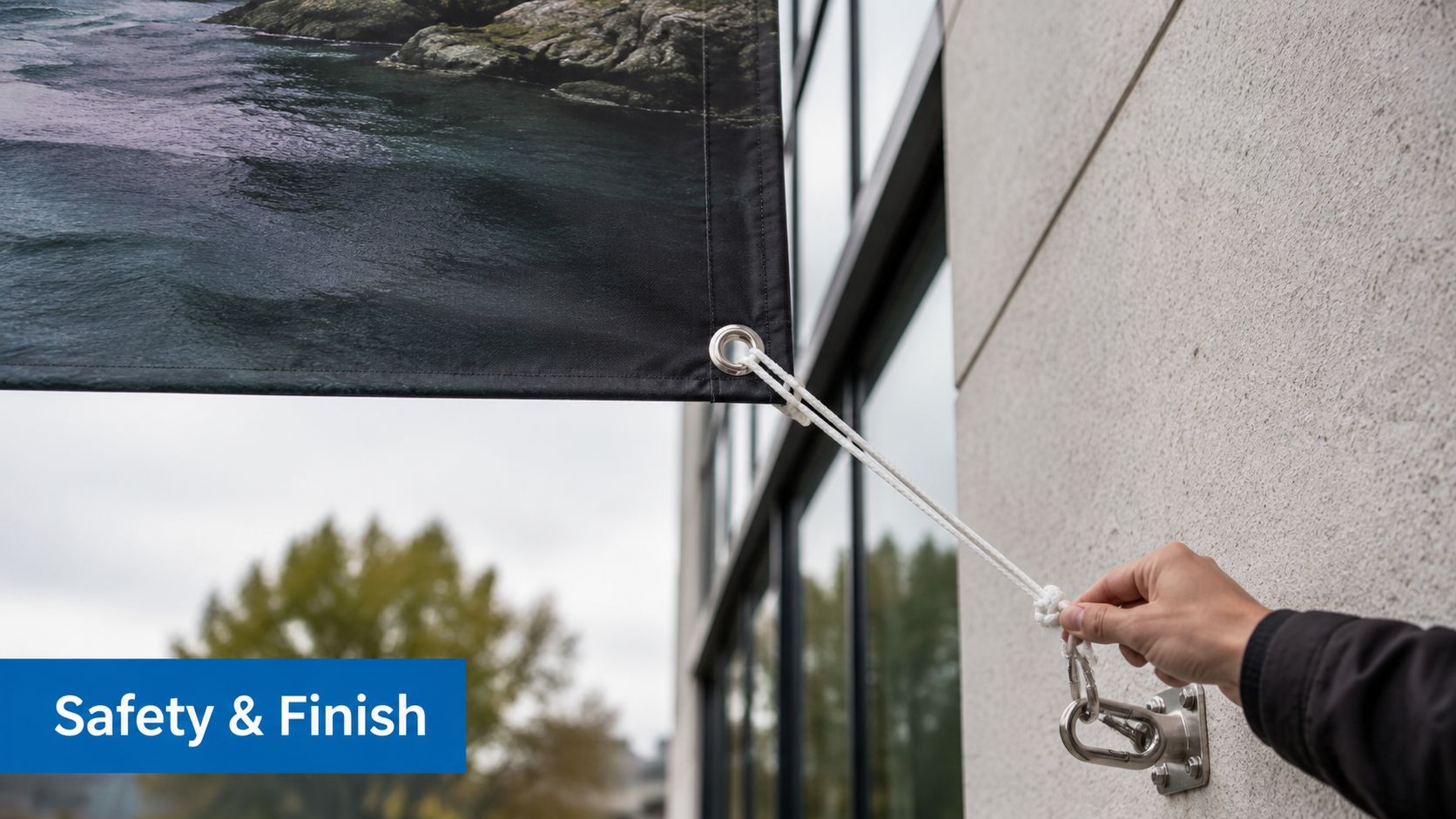
Why anchoring matters more outdoors
In coastal regions, 74% of outdoor banner failures occur due to inadequate anchoring, based on the verified 2024 study cited in the brief. That number tells you where the dominant risk sits. Not in the print. Not in the color. In the install.
If the site is open-air, wind is part of the job whether the forecast looks calm or not. A banner acts like a sail. Weak corners, poor spacing, or uneven tension become obvious fast once gusts start moving the material.
For safer outdoor installs:
- Use strong anchor points: Don't trust decorative rails, loose fence panels, or unstable temporary structures.
- Distribute tension evenly: Start at the top corners, then work across the remaining points.
- Keep it taut, not over-pulled: Overstretching increases the chance of tears and distorted edges.
- Inspect after installation: Outdoor installs need periodic checks, especially after weather shifts.
A banner that survives calm weather may still be a bad install. Wind exposes every shortcut.
The finishing details people notice
People notice the finish before they notice the hardware. They see whether the banner is straight, whether the bottom edge waves, and whether the corners sit flat.
A professional finish usually comes from a few habits:
- Trim excess ties or rope tails so nothing dangles.
- Use matching hardware where visible instead of a mix of random clips and cord.
- Step back and check sight lines from the direction people approach.
- Do a final even-tightening pass after every point is in place.
This is also where restraint matters. More tension isn't better. More hardware isn't automatically better either. The cleanest installs spread the load, maintain shape, and avoid making the banner fight against the structure holding it.
If there's any question about ladder safety, permits, or public exposure, slow down and handle that first. A straight banner isn't worth a rushed install.
Fixing Common Banner Hanging Issues
Even careful installs can need adjustment. Most banner problems are fixable if you catch the cause early.
Your banner is sagging
Sagging usually means the load isn't distributed evenly. Check whether the top edge is carrying most of the weight while the middle attachment points are loose. Re-tension across the full width instead of pulling only the corners tighter.
The grommets are starting to tear
This often comes from over-tightening or concentrating stress on too few points. Stop pulling harder. Reduce the strain, support more attachment points, and replace sharp or rigid connectors if they're cutting into the edge.
The banner looks crooked on a wall
Loosen the fasteners slightly and reset it using the center-first alignment approach described earlier. If one side was fully tightened first, that's usually the source of the skew.
Wrinkles won't disappear
Wrinkles usually mean uneven tension, not just a material problem. Attach the top edge first, then work outward and downward in sequence. Random tightening creates ripples.
The banner is damaging the surface
The method is wrong for the surface. Move away from pinch-heavy fasteners, residue-prone attachment, or drilling where the install is meant to be temporary. On event surfaces, damage control matters as much as hold strength.
The banner keeps pulling in wind
Treat that as a safety issue, not a cosmetic one. Recheck the anchor points, reduce stress concentrations, and don't leave a questionable outdoor install in place.
Dirt Cheap Product, Inc. supports businesses, event teams, and organizations that need branded materials to look consistent in tangible settings, not just in a proof. If you're planning banners alongside apparel, merch, or event branding, Dirt Cheap Product, Inc. can be part of that broader setup.