You’re probably here because you need a branded giveaway that won’t feel cheap, won’t wreck your budget, and won’t end up in the trash after one event. That’s a common buying situation. A school is ordering welcome bags. A company is planning a trade show. A nonprofit needs something practical for volunteers. A gym wants a simple member giveaway that people will carry.
That’s where drawstring bags with logo make sense. They’re light, easy to hand out, easy to store, and useful in a way pens and flyers usually aren’t. The primary buying mistake isn’t choosing the category. It’s choosing a bag and decoration method that look fine on day one but wear out fast, fade early, or make your logo look less professional than it should.
A smart purchase comes down to one question: how long will this bag keep working for your brand? Material, print method, artwork setup, and order planning all affect that answer.
Table of Contents
- Why Custom Drawstring Bags Are a Smart Branding Tool
- Choosing Your Bag Foundation Materials and Styles
- Bringing Your Brand to Life with Decoration Methods
- Preparing Your Artwork for a Perfect Print
- Understanding Pricing Minimums and Timelines
- Smart Use Cases and Sustainable Options
- Your Ordering Process and Pro Tips for Success
- Frequently Asked Questions About Custom Bags
Why Custom Drawstring Bags Are a Smart Branding Tool
A first-time buyer usually wants three things at once. Keep the unit cost under control, give people something useful, and make the logo visible without looking pushy. Drawstring bags hit that balance better than most event swag because they combine function and visibility in one item.
They also aren’t a niche promo product anymore. The global market for drawstring bags was valued at $3.2 billion in 2024 and is projected to reach $6.1 billion by 2033, with sales surging 46% in recent years, according to drawstring bag market data. That matters for a buyer because it shows sustained demand, not a short-lived trend.
Why buyers keep coming back to them
People use these bags in places where logos get seen. Gyms, campuses, staff events, volunteer programs, youth sports, conferences, and community runs all put the bag in motion. A reusable bag also feels more substantial than a throwaway handout.
If you’re comparing options for a live event, it helps to look at other effective event promotional items alongside bags so you can decide whether you need a hero giveaway or a practical carry piece that supports the rest of your kit.
Practical rule: If the item has to carry something else, registration materials, apparel, welcome packets, water bottles, or sponsor handouts, a drawstring bag usually does double duty better than smaller giveaways.
What makes them a strong value buy
The advantage isn’t just low cost. It’s that one product can serve several jobs at once:
- Brand display: Large front panels give your logo room to read from a distance.
- Distribution ease: They pack flat, ship efficiently, and are simple to hand out.
- Wide audience fit: Adults, students, staff, athletes, and volunteers all understand how to use them.
- Repeat exposure: A bag that gets reused keeps showing your logo long after the event ends.
What doesn’t work is treating every drawstring bag as interchangeable. A thin bag with the wrong print method can save money on the quote and still cost more in lost brand value. That’s why the primary decision starts with the bag itself.
Choosing Your Bag Foundation Materials and Styles
The bag is the product. The logo comes second. If the foundation feels flimsy, carries poorly, or wrinkles into a shapeless giveaway, people notice that before they notice your brand.
Start with the use case, not the color
Buyers often start by asking for black, navy, or whatever matches their brand guide. That’s understandable, but it’s backward. Start with where the bag will be used and what it needs to carry.
A lightweight event giveaway has different needs than a gym bag, school welcome bag, or employee onboarding kit. If recipients will carry shoes, bottles, chargers, or papers regularly, the material and seam quality matter more than the exact shade of blue.
How common materials actually perform
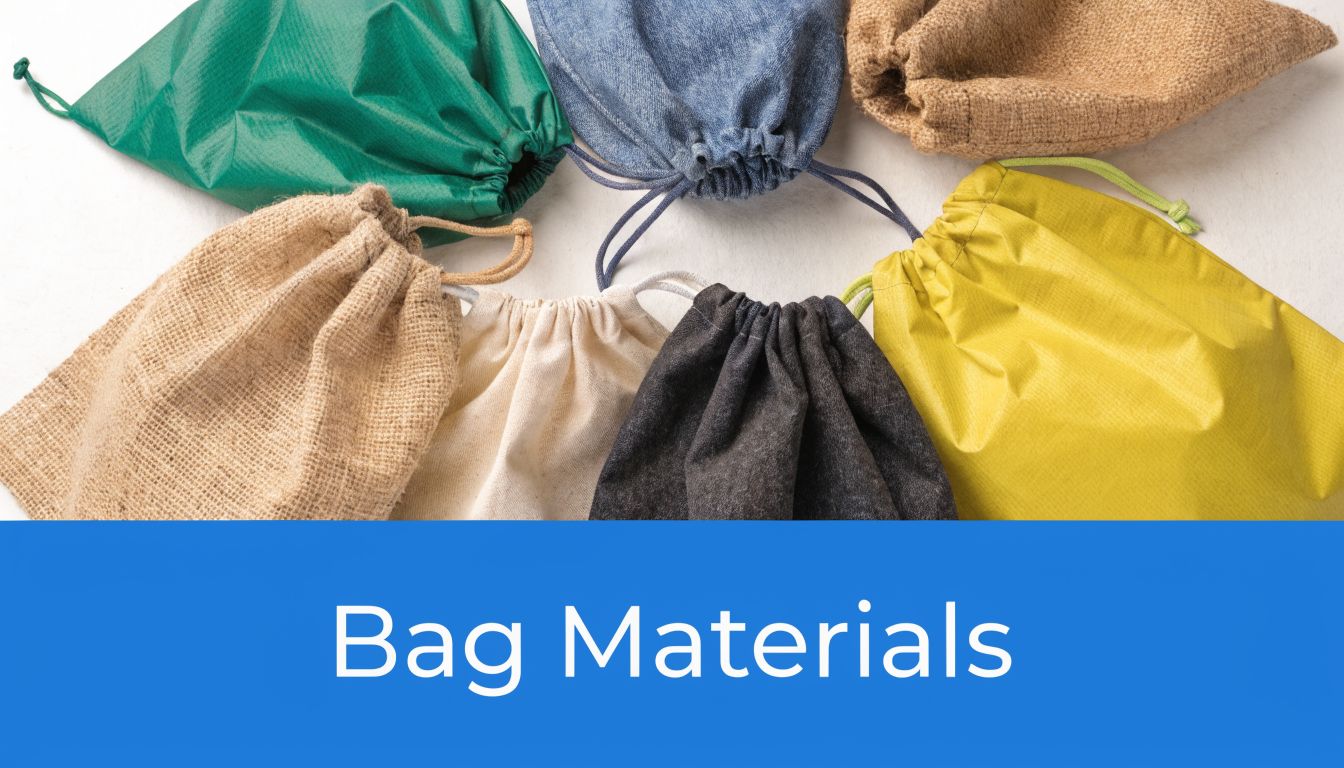
210D polyester is usually the practical default. It prints cleanly, resists moisture better than natural fibers, and holds up well for repeated casual use. According to material performance guidance for drawstring bags, 210D polyester bags typically maintain logo clarity and structural integrity through 50-100+ uses, offering 40-60% longer effective brand visibility compared to untreated standard cotton.
That’s why polyester is so common in promotional orders. It gives budget-conscious buyers a better chance of getting both clean decoration and longer usable life.
Cotton has a different feel. It’s softer, more natural-looking, and often a better fit for brands that want a retail-style or eco-minded presentation. The trade-off is that untreated cotton won’t usually handle moisture or repeated rough use as well as polyester.
Nylon works well when you want a smoother, slightly more premium technical feel. It’s a good candidate for athletic or outdoor use, especially when you care about water resistance and a lighter hand.
Polypropylene is often chosen when price matters most. It can be useful for short-term distributions, but the overall feel tends to be less premium. For some campaigns that’s fine. For employee-facing or client-facing programs, it can feel too utilitarian.
The fastest way to make a logo look cheap is to print it on a bag that doesn’t match the job.
Style details that change the user experience
Once you’ve picked the material family, look at the build. Small upgrades can make a bag far more usable without turning it into a premium-priced item.
Consider these features carefully:
- Front zipper pocket: Good for keys, badges, earbuds, or a phone. It adds convenience people notice quickly.
- Reinforced corners: Useful when the bag will carry heavier items or get frequent use.
- Mesh panels: Helpful for sports, swim, or warm-weather uses where airflow matters.
- Thicker cords: Better comfort on the shoulders and a sturdier feel in hand.
- Larger imprint panel: Gives simpler logos more visual impact without forcing a complicated design.
A plain bag still works for many orders. But if the bag is meant to stay in use after the event, a front pocket or reinforced construction often does more for perceived value than adding a second logo location.
Bringing Your Brand to Life with Decoration Methods
The same logo can look sharp, soft, premium, sporty, or disappointing depending on how it’s applied. Regarding application, many first-time buyers oversimplify the order. They ask what’s cheapest. A better question is what will still look good after people use the bag.
What each decoration method is really good at
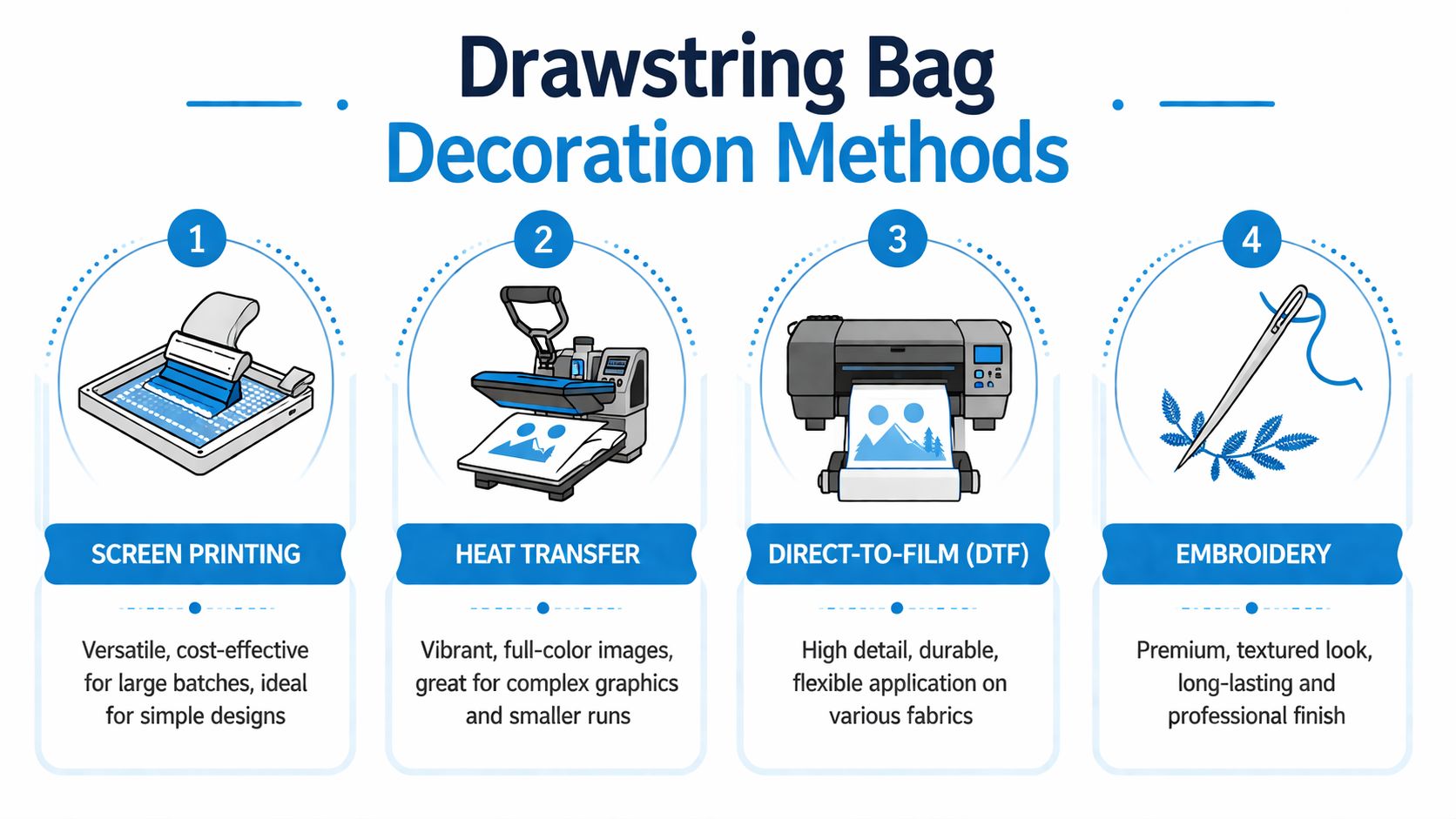
Screen printing is the workhorse method. Think of it as the straightforward fleet option. It’s efficient for simple artwork, bold shapes, and higher quantities. If your logo is one color or two colors and you’re ordering for a large event, screen printing often makes financial sense.
Its weakness is detail and longevity under tougher wear. Fine gradients, photo-style artwork, and very small text aren’t where it shines.
Heat transfer works more like applying a finished graphic to the bag surface. It handles complex art and color better than basic screen printing. Recent testing cited by decoration durability findings for logo bags found that heat-transfer logos on nylon blends retain 90% of their look after 50 washes, while screen printing can show fading earlier. For bags that may be washed or used hard, that difference matters.
Direct-to-Film (DTF) is a strong option when you want crisp detail, flexible application, and full-color artwork without the setup limitations of traditional screen work. It’s useful for logos with gradients, multiple colors, or finer edges. If you’re comparing providers that offer several decoration methods, a shop with custom printing services for different bag and apparel applications can usually tell you quickly whether DTF or another method fits your artwork better.
Embroidery gives the most textured and refined look. It feels durable and professional, especially for monograms, simple icons, and corporate marks. It’s less suited to large filled areas or highly detailed art. On thin bags, dense embroidery can also affect how the fabric drapes.
For buyers who care about longevity in branded surfaces more broadly, it can help to compare how different materials hold graphics over time. That same thinking is why teams often look at products like durable custom car vinyl when they need branding that stays sharp under repeated exposure.
Comparing Logo Decoration Methods
| Method | Best For | Durability | Cost (per item) |
|---|---|---|---|
| Screen Printing | Large runs, simple logos, bold spot colors | Good for general promo use, but may fade earlier under repeated washing or heavy wear | Usually lower on larger quantities |
| Heat Transfer | Full-color logos, complex graphics, smaller to mid-size runs | Strong visual retention on suitable fabrics, especially for detailed graphics | Usually moderate |
| Direct-to-Film (DTF) | Detailed artwork, gradients, multi-color designs | Good option when flexibility and detail matter | Usually moderate to higher |
| Embroidery | Premium branding, uniforms, simple corporate marks | Long-lasting look and texture when used on suitable bag styles | Usually higher |
How to choose without overpaying
Here’s the practical buying filter.
If your logo is simple and the event quantity is high, screen printing is usually the first method to price. If your artwork has gradients, many colors, or a more modern illustrated look, ask about heat transfer or DTF. If the bag is part of a staff kit, membership package, or retail-style item, embroidery may justify the extra cost because it changes the whole feel of the product.
Ask three questions before approving any method:
- What does this method look like on this exact bag fabric?
- Will the decoration crack, fade, or distort with normal use?
- Is the decoration value matched to the bag quality?
A premium print on a weak bag is wasted money. So is a bargain print on a bag meant for long-term use.
Don’t separate the bag decision from the print decision. They have to work as one product.
Preparing Your Artwork for a Perfect Print
A lot of custom bag problems start before production ever begins. The bag is fine. The print method is fine. The artwork file is the weak link.
Use the right file from the start
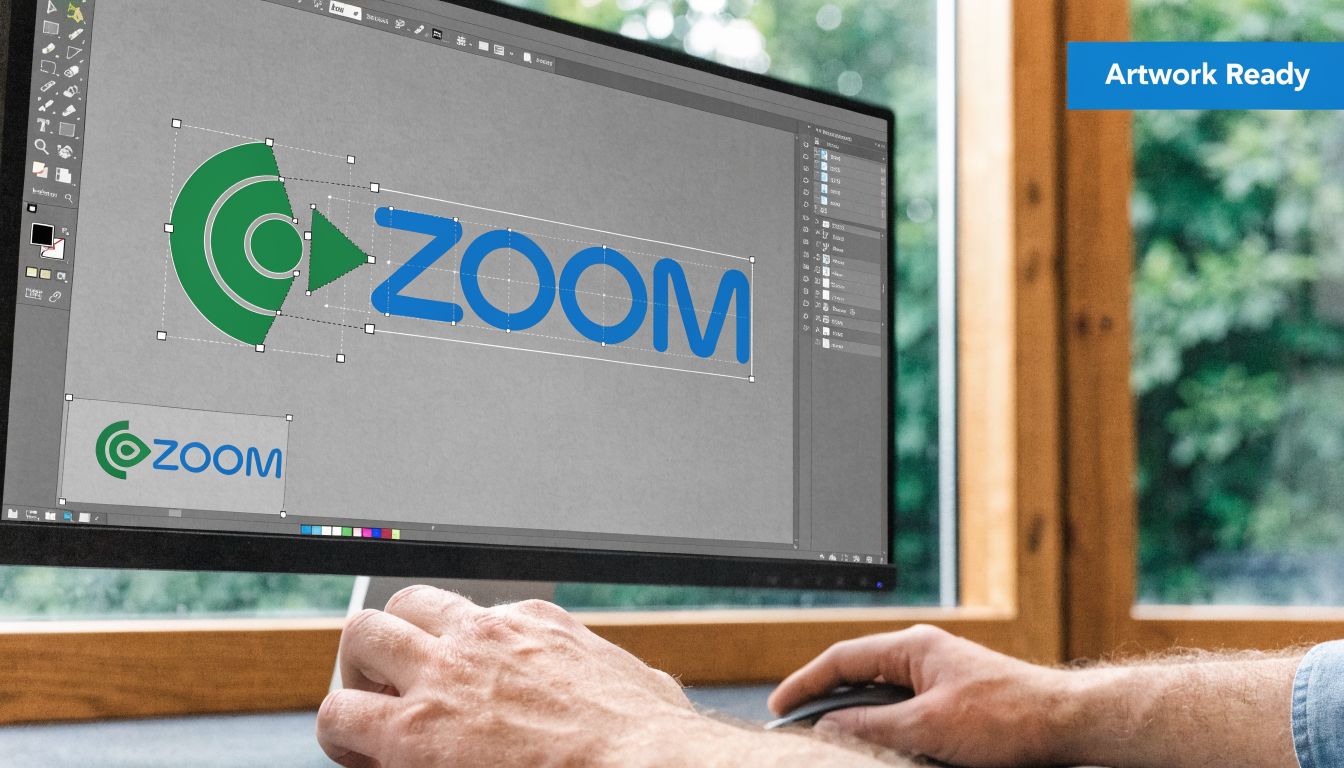
For logos, vector files are the standard you want whenever possible. Typical formats include AI, EPS, and sometimes properly built PDF files. A vector file can scale up or down without turning fuzzy, which matters on a bag because the imprint area is often larger than people expect.
JPEGs and standard PNGs are common, but they’re usually export formats, not production-ready master files. A small logo pulled from a website may look acceptable on a screen and still print with soft edges, broken outlines, or rough text.
If your logo has a white box around it or a background you don’t want printed, it helps to clean that up before submission. Many buyers use tools that help create transparent logos when they only have a basic raster file to start from.
Think about color and imprint area early
Brand color issues often come from assumptions. A digital blue on your monitor isn’t automatically the same blue that will print well on polyester, cotton, or nylon. If color accuracy matters, provide your Pantone Matching System (PMS) values when you submit artwork.
Also pay attention to the bag’s imprint area. A logo that works perfectly on a polo chest may look too small on the front of a drawstring bag. The reverse is also true. Oversized art can crowd the seams, cords, or pocket area and end up looking awkward.
Use this checklist before you send files:
- Send the master logo: AI or EPS is preferred.
- Outline fonts: That prevents missing typeface issues.
- Specify colors clearly: Include PMS values if brand consistency matters.
- Remove unnecessary backgrounds: Transparent art avoids accidental boxes or halos.
- Ask for size guidance: A vendor proof should show the logo at actual placement scale.
A proof isn’t just for spelling. It’s for proportion. A logo can be technically correct and still feel too small once it’s on a full bag panel.
One more point buyers often miss. Thin lines, tiny taglines, and low-contrast color combinations don’t improve because the bag is bigger. They often get worse. Simplify the art if needed. A clean logo that reads from a few steps away will usually outperform a detailed layout designed for paper.
Understanding Pricing Minimums and Timelines
Quotes for drawstring bags with logo usually make more sense once you break them into parts. Buyers who understand the moving pieces ask better questions and avoid surprise costs.
What your quote is actually made of
Most pricing has three core components.
First is the blank bag cost. That changes based on material, style, size, color, and features like zipper pockets or reinforced corners. Second is the decoration cost, which depends on the method, print size, stitch count, color count, or artwork complexity. Third is any setup charge, especially for methods that require screens, digitizing, or prep work before production begins.
The per-item cost usually drops as quantity rises because setup and labor get spread across more units. That’s one reason buyers planning multiple events sometimes combine quantities when the bag and artwork will stay the same.
Why minimums exist
Minimum order quantities aren’t arbitrary. Shops still have to receive, prep, stage, decorate, inspect, and pack the job whether you order a small batch or a larger one. Very small orders can be inefficient, especially for screen printing or embroidery.
If you’re buying for a team, fundraiser, school, or recurring event, it helps to understand bulk logic before you request pricing. This guide on buying custom promotional products in bulk gives a useful framework for thinking through quantity and budget together.
How to avoid timeline problems
Production timing usually depends on proof approval, stock availability, decoration method, and shipping speed. Buyers often focus on the event date but forget the approval date is what drives the actual schedule.
Use this sequence to stay on track:
- Request quotes early: Especially if you need a specific bag color or style.
- Submit final artwork, not a draft: Revisions add time quickly.
- Approve proofs fast, but carefully: Every delay here pushes the ship date.
- Build in buffer time: Freight delays and stock changes can happen.
- Ask about rush service only if necessary: It can solve problems, but it can also limit options.
A common mistake is assuming production starts when you first email a logo. It usually starts after the proof is approved. That’s the date that matters most.
Smart Use Cases and Sustainable Options
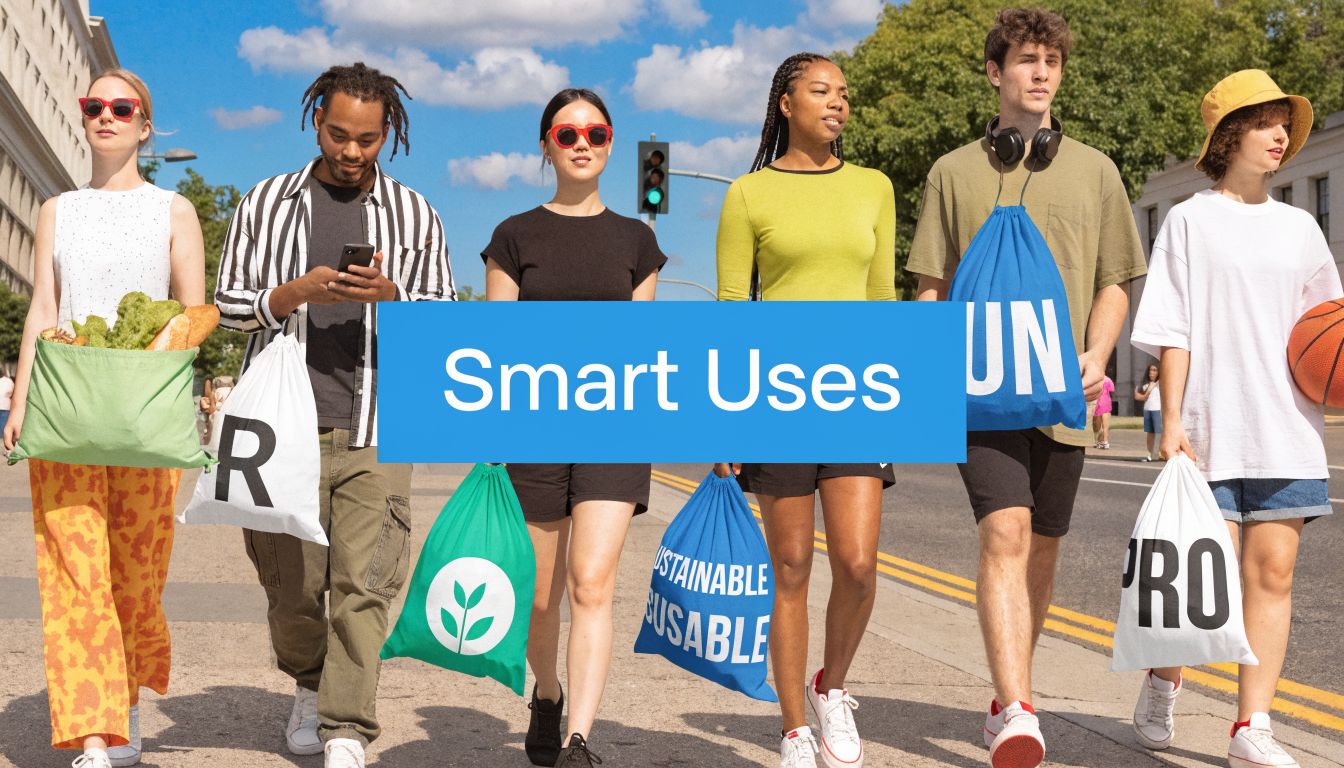
The most successful bag orders usually have a clear job to do. Not just “give people swag,” but carry a registration packet, package an employee welcome kit, support a merch table, or serve as a useful member item people keep.
Where these bags work especially well
For trade shows, a drawstring bag can hold brochures, samples, and giveaway items without forcing attendees to juggle everything by hand. For employee onboarding, it creates a cleaner presentation than handing out separate items one by one. For schools, camps, and youth programs, it gives participants something easy to identify and reuse.
They also work well in settings where the bag becomes part of the experience:
- Fitness businesses: New member kits, challenge programs, or event registrations
- Nonprofits: Volunteer packs, donor gifts, or charity walk check-in bags
- Retailers and boutiques: Low-cost branded carry bags or limited merch bundles
- Corporate teams: Internal events, recognition kits, and field staff essentials
The best use case is one where the bag still has value after the first day. That’s what turns it from a distribution tool into a branding asset.
Why sustainable options matter more now
Sustainability isn’t just a nice add-on anymore. Buyers increasingly have to consider it because their audience does. A 2025 NielsenIQ report found that 78% of global consumers prefer sustainable packaging, and recent data also shows that branded eco-friendly bags can boost brand recall by 22% compared to standard promotional items, according to eco-friendly drawstring bag research.
That doesn’t mean every order needs to be framed as a green campaign. It means material choice can support your brand story instead of working against it.
If sustainability matters for your organization, look into recycled or lower-impact options through eco-friendly promotional products. Then ask practical questions, not just marketing ones. Does the fabric still print well? Does it feel sturdy enough for the intended use? Does the eco claim align with the overall quality of the bag?
Choose sustainable options the same way you choose any good promo product. By checking whether people will keep using it.
A weak eco bag that gets discarded quickly doesn’t help your brand much. A reusable one that looks good and performs well usually does.
Your Ordering Process and Pro Tips for Success
Ordering custom bags is usually straightforward when both sides have complete information. Problems come from missing details, rushed approvals, or assumptions about how the final piece will look.
The typical order flow
Most orders follow a simple path.
You request a quote based on quantity, bag style, color, and decoration method. Then you submit artwork. After that, the vendor sends a digital proof showing placement, size, and often the print treatment. Once you approve the proof, production begins. Finished goods are packed and shipped to your deadline.
That sequence sounds basic, but buyers often underestimate how important the proof stage is. It’s the last clean checkpoint before materials and labor are committed.
Mistakes that cause expensive rework
A few habits make a big difference:
- Check actual dimensions: Don’t approve based only on “looks good.” Confirm the imprint size in inches.
- Review colors in context: A logo color can read differently on black, red, heather, or natural fabric.
- Ask about seams and pockets: Placement should avoid awkward interruptions.
- Request a sample when stakes are high: For a large order or a critical brand launch, a pre-production sample can be worth the extra time.
- Confirm the ship-to details early: Multi-location deliveries and event venues create avoidable mistakes.
For first-time buyers, the best approach is to act like a careful reviewer, not just a fast approver. If something looks slightly off on a proof, it usually looks more off in person.
A good order isn’t only about getting the bags on time. It’s about getting a result you won’t need to apologize for after distribution.
Frequently Asked Questions About Custom Bags
What file type should I send for my logo
Send a vector file if you have one. AI and EPS are the most common formats. A clean PDF can also work in some cases. If you only have a PNG or JPEG, send the highest-resolution version available, but expect the vendor to review whether it’s usable for your selected decoration method.
Can you print full color artwork or photos
Yes, often you can, but the method matters. Full-color logos, gradients, and photo-style art are usually better candidates for DTF or heat transfer than basic screen printing. The bag fabric also affects how crisp and vibrant the final result looks.
How should people care for printed drawstring bags
Care depends on the fabric and decoration method. In general, lighter washing, air drying when possible, and avoiding harsh treatment help preserve the bag and the logo longer. If the bags are part of a staff or membership program, it’s smart to include simple care guidance with distribution.
Can brand colors be matched exactly
Sometimes closely, sometimes not perfectly. PMS values help a lot, especially when brand consistency is important. Even then, fabric type, texture, and decoration method can influence how a color reads. That’s why proofing and material selection matter as much as the color code itself.
If you’re sourcing drawstring bags with logo and want practical guidance on bag selection, decoration method, artwork setup, or timing, Dirt Cheap Product, Inc. offers custom branding services across bags, apparel, and promotional items. A clear quote, a proof you review, and the right material-print pairing will do more for your budget than choosing the lowest unit price.