You're probably here because you need branded outerwear that solves more than one problem at once. Your team needs something useful in light weather, presentable enough for client-facing work, and simple enough to order without turning into a weeks-long back-and-forth over fabrics, logo files, and missed deadlines.
That's where custom windbreaker jackets make sense. A good windbreaker sits in the sweet spot between a promo giveaway and a real uniform piece. People actually wear it. Your logo stays visible outside the office. And if you choose the right jacket and decoration method, it can hold up to repeated use instead of ending up in a storage closet.
Table of Contents
- Why Custom Windbreakers Are a Smart Investment for Your Brand
- Choosing Your Jacket Foundation Fabrics and Features
- Bringing Your Brand to Life Decoration Methods
- Perfecting Your Design Artwork Prep and Placement
- Real-World Examples and Use Cases
- Navigating the Ordering Process From Quote to Delivery
- Your Pre-Order Checklist and Final Care Tips
Why Custom Windbreakers Are a Smart Investment for Your Brand
A windbreaker works because it doesn't ask the wearer to compromise. It's lighter than a heavy jacket, more polished than a basic tee, and more useful than a giveaway item that lives in a desk drawer. For businesses, that means better odds your staff, customers, or event crew will keep wearing it.
That everyday usefulness is a big reason the category matters right now. The global windbreaker market is projected to reach $7.8 billion by 2032, with a 6.2% CAGR, and North America represents over 27% of global share, according to windbreaker market projections from Dataintelo. For a buyer, that doesn't just mean the market is growing. It means more styles, more decoration options, and stronger long-term relevance for branded outerwear.
Why businesses keep coming back to windbreakers
Some branded apparel looks good in a mockup but fails in real use. Windbreakers usually avoid that problem when the order is built correctly.
- They fit multiple roles: employee uniform, event layer, client gift, and retail-style merch.
- They carry a logo cleanly: especially on the chest, sleeve, or upper back.
- They feel current: modern windbreakers don't read like old-school promotional wear.
A windbreaker earns its value after the handoff. If the recipient wears it next week, next month, and next season, the order worked.
The strongest orders usually come from buyers who stop thinking about the jacket as a blank canvas and start thinking about it as a tool. A sales team needs a polished look. A volunteer crew needs fast visibility. A field team needs light weather protection. The same product category can handle all three, but not with the same exact build.
Choosing Your Jacket Foundation Fabrics and Features
The jacket itself matters more than the logo method. If the base garment is wrong, no print or embroidery choice can save the order.
Start with the job the jacket needs to do
Think of the jacket as the chassis of a vehicle. You don't pick the paint color first. You decide what the vehicle needs to handle, then build from there.
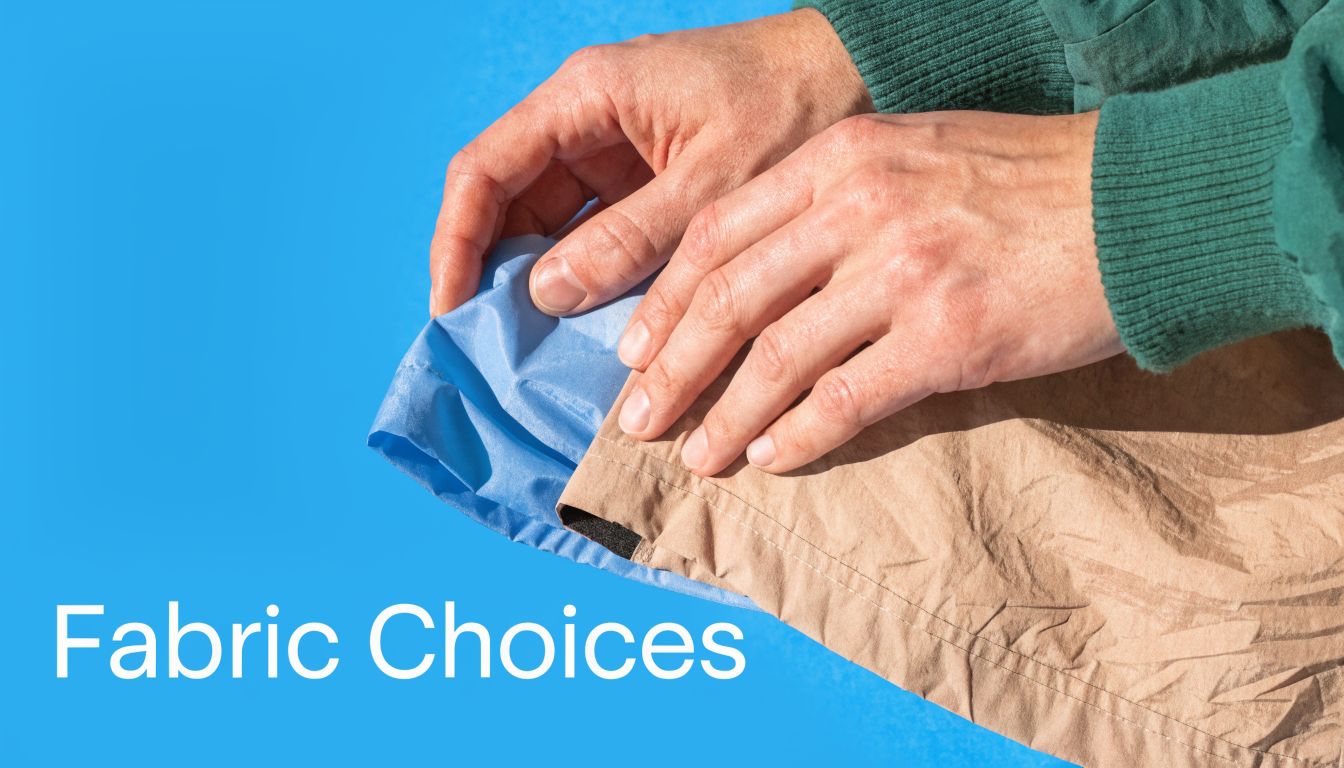
For many business orders, 100% polyester is the practical starting point. Professional-grade windbreakers often use 100% polyester with interior water-resistant coatings rated at 600mm or higher, and that construction is often unlined, lightweight at around 2.5 oz./yd², and breathable enough for regular wear, as described in these windbreaker construction details from Good Ink. In plain terms, that means a jacket that handles light rain without feeling heavy or bulky.
If your team works outdoors, that matters. If you're ordering for a giveaway, it matters too. People are much more likely to wear something that feels easy to carry and easy to throw on.
What the key specs actually mean
A lot of buyers get stuck on product descriptions because the terms sound technical but aren't explained well. Here's the practical read on the specs that matter most:
- Polyester shell: usually a safe choice for branded orders because it stays light, accepts several decoration methods well, and works across many use cases.
- Water-resistant coating: useful for drizzle and light exposure, but it's not the same as a heavy rain shell.
- Unlined build: packs more easily, feels less bulky, and often keeps the cost in a manageable range.
- Light fabric weight: better for transitional weather, travel, events, and year-round use in warmer climates.
Practical rule: If you're buying for mixed environments, choose the jacket that solves the most common condition, not the most extreme one.
That's where many first-time orders go wrong. A buyer imagines the worst weather day of the year and chooses a jacket that's too heavy, too stiff, or too specialized for everyday wear. Then staff members stop using it.
Features that change how the jacket performs
The little features often decide whether the jacket becomes a favorite or an afterthought.
A few worth checking carefully:
- Hood style: A stowaway or simple attached hood works well for field teams and event crews. For office staff, a cleaner silhouette may matter more.
- Zipper quality: Cheap zippers create more complaints than most buyers expect. If the jacket will be used repeatedly, this is worth reviewing early.
- Packability: Great for conferences, travel programs, nonprofit distributions, and seasonal campaigns.
- Elastic cuffs or adjustable hems: Helpful when teams need a better fit without moving into more expensive outerwear.
- Pocket layout: Side pockets are standard, but some projects need zip pockets for staff who carry phones, badges, or small tools.
If sustainability is part of the conversation, include it at the fabric stage instead of treating it like an afterthought. Buyers comparing recycled or lower-impact options may find it useful to review broader eco-friendly promotional product ideas alongside outerwear choices so the jacket fits the full program, not just this single order.
A good spec sheet for custom windbreaker jackets should answer five questions before you ever talk decoration: who will wear it, where they'll wear it, what weather it needs to handle, how polished it should look, and whether the order is meant for daily use or occasional distribution.
Bringing Your Brand to Life Decoration Methods
Once the jacket is right, the next decision is how the logo should live on it. This isn't just about appearance. It affects cost, minimums, speed, and how the finished piece feels in the hand.
How the three main methods compare
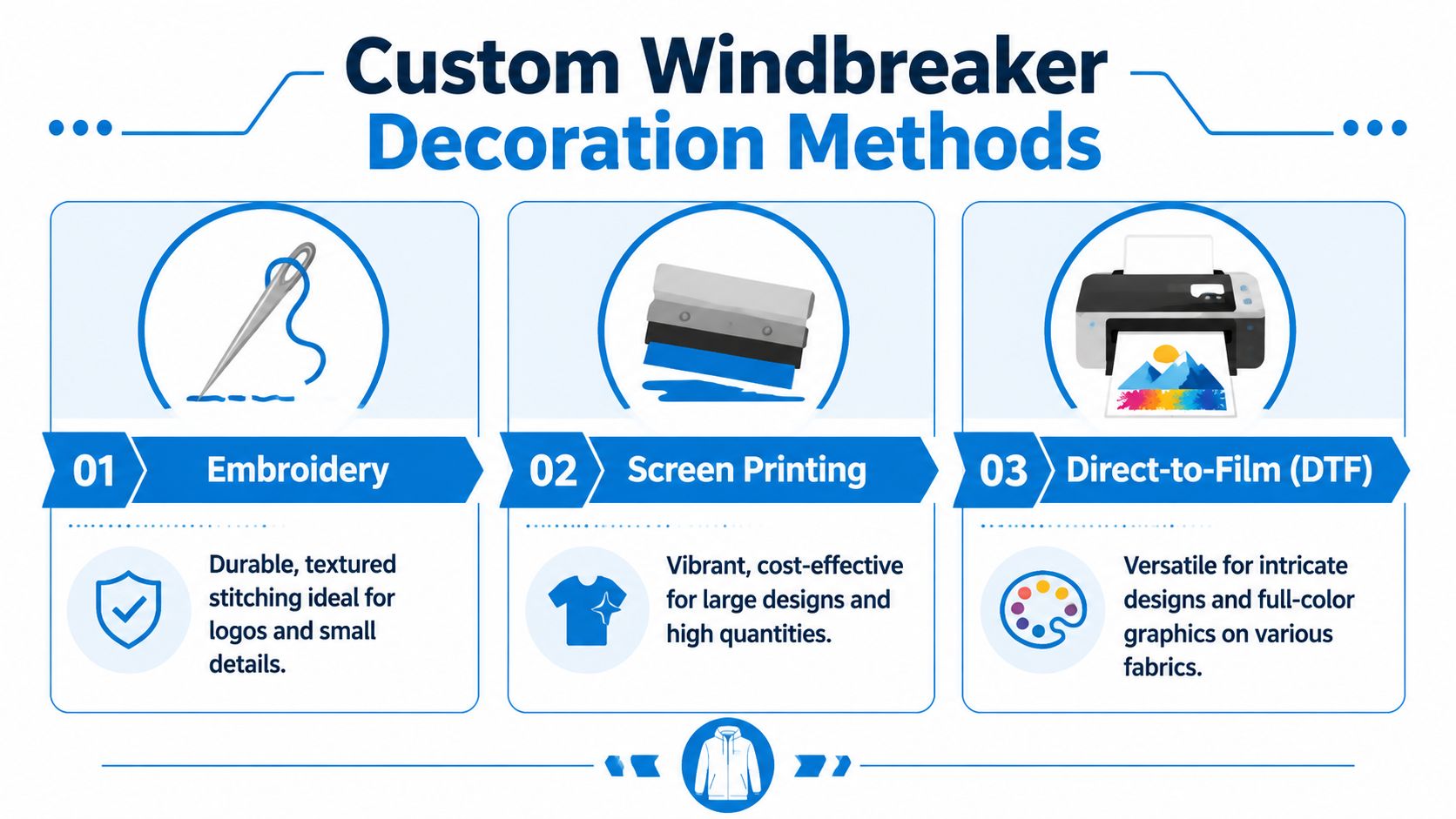
Each decoration method does a different job well. Problems usually start when buyers choose based on habit instead of fit.
| Method | Best For | Appearance | Durability | Cost Profile |
|---|---|---|---|---|
| Embroidery | Corporate uniforms, small logos, polished chest branding | Textured, dimensional, premium | Strong for repeated wear and laundering | Better suited when the logo is simple and the order can support stitch-based decoration |
| Screen Printing | Larger runs, bold graphics, event apparel | Flat, clean, high-visibility | Good when matched to the right artwork and placement | Works well when quantity is higher and artwork is not overly complex |
| DTF | Small batches, full-color logos, detailed artwork | Smooth, vibrant, flexible for complex designs | Practical for many branded uses | Helpful when small runs need strong color without the setup burden of other methods |
If you need a deeper side-by-side on stitched versus printed branding, this comparison of screen printing vs embroidery is useful for narrowing the choice before you approve artwork.
Embroidery looks expensive in a good way. DTF looks precise. Screen printing looks bold. Choose the visual language that matches the job.
When DTF makes the most sense
DTF has become much more relevant for windbreaker orders that don't fit the old volume model. According to custom windbreaker DTF trend data from UPrinting, searches for “custom windbreaker DTF” increased 145% from 2025 to 2026. The same source notes that DTF can be 50% faster than embroidery and can reduce setup fees by up to 70% for batches under 50 units.
That's especially useful when a buyer has one of these situations:
- A smaller order: startup teams, pilot programs, boutique merch drops.
- A detailed logo: gradients, multiple colors, or fine visual elements.
- A short deadline: where stitch lead time becomes the problem.
- No appetite for high setup costs: common in test runs or nonprofit campaigns.
For artwork with more color complexity, it also helps to understand the broader principles behind achieving vibrant designs in print-on-demand. The article focuses on print behavior and color output, which is useful context when you're deciding how a digital design will translate onto outerwear.
What usually doesn't work is forcing embroidery onto a logo that was designed like a poster graphic. Tiny gradients, thin outlines, and stacked text often lose clarity in thread. In those cases, DTF or screen printing tends to preserve the design better.
Dirt Cheap Product, Inc. offers embroidery, screen printing, DTF, sublimation, and patches, which is useful for buyers who want to compare methods against the same artwork instead of guessing from a single-option quote.
Perfecting Your Design Artwork Prep and Placement
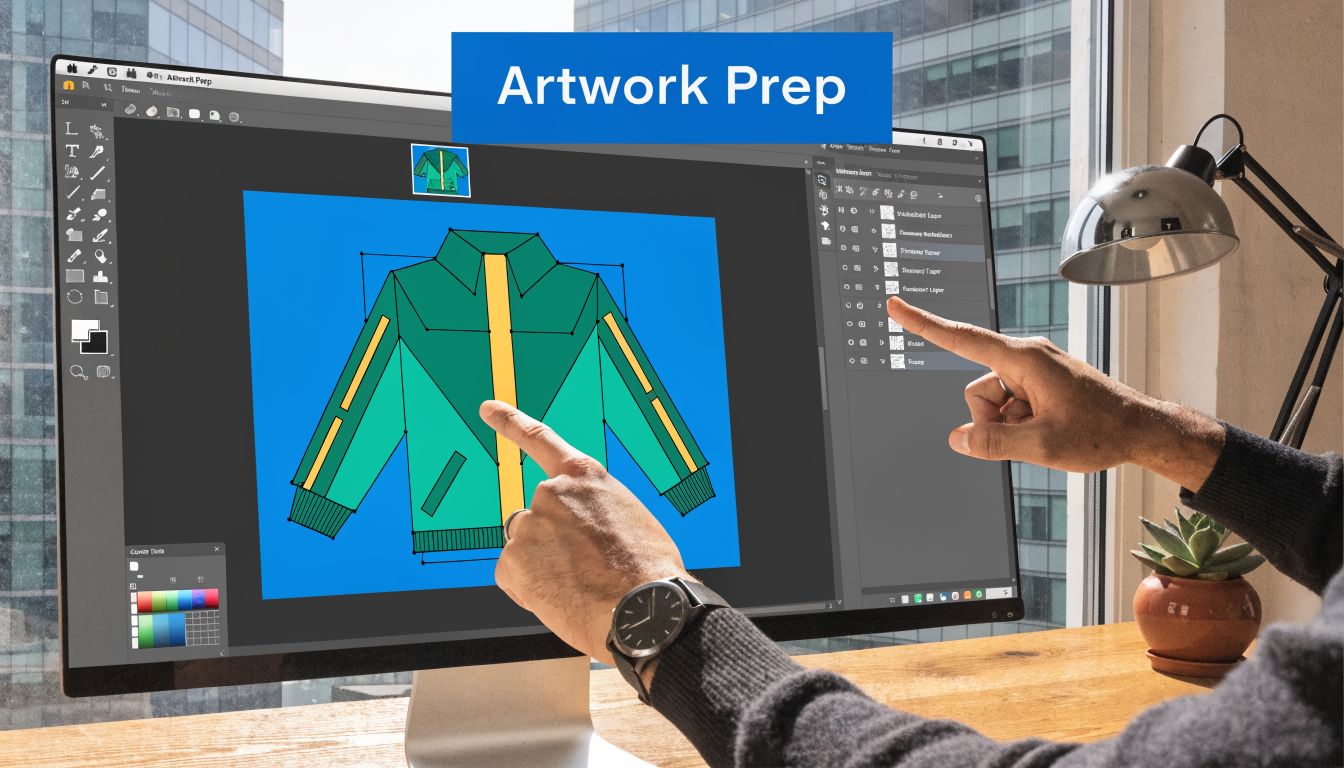
A custom jacket can look expensive or sloppy before production even starts. The difference is usually the artwork file and the placement decision, not the jacket style.
Give production a file that can actually be used
The cleanest orders usually start with a vector file, such as AI, EPS, or SVG. Those file types scale cleanly and let production teams separate colors, simplify details, and prepare the design correctly for print or embroidery.
If all you have is a JPG or PNG, don't panic. But expect an extra review step. Raster images can work for some print methods if the file is high quality, though they often need cleanup before proofing.
A few prep habits save time:
- Send the original logo file: not a screenshot from your website or social profile.
- Specify brand colors clearly: if your company uses exact brand standards, provide them up front.
- Remove unnecessary effects: shadows, glow effects, and tiny outlines often create problems on jackets.
- Simplify small text: if people can't read it at normal distance, it probably shouldn't be stitched on outerwear.
Typography matters more than many buyers expect. If your logo includes a wordmark or you're building a retail-style graphic, this guide to essential fonts for clothing brands can help you judge whether your current type choices will hold up on apparel.
Placement choices that work in the real world
Most businesses default to left chest because it's safe, professional, and easy to approve. That's a good starting point, not a rule.
Other placements can work better depending on the goal:
- Right chest: useful when the left side is blocked by another detail or when the jacket already has a design feature on that side.
- Upper back or yoke: strong for team visibility without going full event-shirt style.
- Full back: best when you want distance visibility and larger branding.
- Sleeve placement: works for subtle branding, secondary logos, or retail-inspired looks.
Small logos create polish. Large back prints create visibility. Most teams need to decide which one matters more before they start requesting revisions.
A common mistake is trying to use every possible placement on one jacket. Chest logo, sleeve mark, full back graphic, and hood print can turn a clean uniform into clutter. Better to choose one primary placement and one optional secondary placement with a clear reason behind each.
Real-World Examples and Use Cases
Windbreakers became much more versatile once they moved from basic nylon shells into the more fashion-aware, performance-oriented outerwear people know now. As explained in this history of the windbreaker from Members Only, the category evolved from simple athletic gear in the 1970s into the high-tech athleisure staples of the 1990s, with polyester and water-resistant coatings helping drive that shift. That's why they fit so many branding situations today.
A corporate sales team usually does best with restraint. A lightweight jacket in a neutral color, decorated with a small embroidered chest logo, gives the team something polished enough for travel, trade shows, and client visits. It doesn't scream promotional apparel. It looks like part of a considered uniform.
An event organizer has a different problem. Staff and volunteers need to be easy to spot, easy to brief, and comfortable through a long day of setup and movement. In that case, brighter jacket colors with a larger printed back logo make more sense than subtle branding. Visibility matters more than texture.
A boutique or creator-led merch line often wants the opposite feel. The goal isn't staff identification. The goal is something people would buy and wear casually. A windbreaker with a small DTF front mark or a more design-driven back graphic can feel closer to retail apparel than traditional promo wear.
The best custom windbreaker jackets match the user's day, not just the buyer's brand guide.
Trade businesses sit in another lane entirely. Landscaping crews, warehouse teams, setup crews, and similar groups need practical shells that go on fast, move easily, and handle changing conditions. That usually points toward lightweight, water-resistant jackets with branding that stays clear without adding bulk. In these projects, the right jacket earns trust because the team keeps reaching for it.
Navigating the Ordering Process From Quote to Delivery
The ordering process is usually straightforward. What makes it feel difficult is when buyers don't know where decisions slow things down.
What the timeline usually looks like
For custom windbreaker jackets, the total project timeline is often 10 to 15 business days, and the design approval workflow can take 2 to 3 days, based on custom windbreaker turnaround guidance from DTLA Print. That means production isn't always the main delay. Client approvals often take a bigger share of the schedule than expected.
A typical order moves through these stages:
Quote request
You provide quantity, jacket style, logo placement, sizes, and deadline.Artwork review
The production team checks whether your files are usable and whether the design fits the chosen method.Digital proof approval
You review placement, size, colors, and any production notes.Decoration and finishing
Printing or embroidery happens after approval, not before.Shipping or delivery
Final timing depends on where the order is going and how it's packed.
If your team orders branded apparel regularly, this guide to bulk buying custom promotional products is useful for understanding how broader purchasing decisions affect timing and budget.
Where orders slow down
Most avoidable delays come from the buyer side, not the production floor.
Here's what typically causes trouble:
- Incomplete size breakdowns: especially when one person is collecting sizes from a large group.
- Late artwork revisions: changing logos after proofing restarts part of the process.
- Unclear placement requests: “make it look balanced” is harder to execute than a direct instruction.
- Approval bottlenecks: when too many stakeholders need to sign off on a simple proof.
Approve quickly only after checking carefully. Fast approvals help. Careless approvals create rework.
One practical fix is to gather everything before requesting the quote. Final logo. Approximate size curve. Decoration method preference. Wear date. Shipping destination. Buyers who do that usually spend less time in email and get cleaner results.
Your Pre-Order Checklist and Final Care Tips
Before placing the order, pause and check the basics. Most expensive mistakes are simple ones caught too late.
Use this checklist:
- Define the use case: Is this for uniforms, event staff, retail merch, client gifts, or a mixed program?
- Choose the jacket foundation: Focus on weather needs, weight, and whether the jacket should feel more polished or more rugged.
- Pick the decoration method: Match the logo complexity and order size to the right approach.
- Prepare usable artwork: Send original files and clarify brand colors early.
- Confirm sizing strategy: Don't wait until the last minute to collect size info.
Sizing deserves more attention than it usually gets. For large groups, ask whether the jacket will be worn over a polo, over a hoodie, or as a standalone layer. That changes fit expectations quickly. If your team includes a wide range of body types, it's smart to review a size breakdown carefully before locking the order.
Care also affects the return on the order. A good jacket can keep looking sharp if users treat it like decorated apparel instead of basic laundry.
A simple care note for recipients helps:
- Wash cold: gentler on decorated areas.
- Turn inside out when possible: especially for printed pieces.
- Skip aggressive heat: high heat can shorten the life of decoration.
- Hang dry when practical: safer for both fabric and logo.
That's the part many buyers overlook. The order isn't finished when the boxes arrive. It's finished when the jackets still look good after real use.
If you're planning an order for custom windbreaker jackets and want help narrowing down the right garment, decoration method, or timeline, Dirt Cheap Product, Inc. can review your logo, intended use, and quantity and help map the project before production starts.