
Most advice about wholesale clothing for resellers starts in the wrong place. Finding a supplier is not the hard part, not anymore. The hard part is keeping a SKU profitable after freight, defects, platform fees, returns, and slow-moving stock eat into the spread, which is why a cheap unit price can turn into the most expensive mistake in the warehouse.
The market itself shows why supplier access alone doesn't create an edge. The U.S. clothing and clothing accessories wholesaling industry was valued at $130.1 billion in 2026 and included 35,047 businesses (IBISWorld), while the global apparel wholesale sector is described as exceeding $1.5 trillion annually (Wholesale News). In a market that large, resellers don't win by discovering a secret vendor. They win by controlling the math and choosing suppliers who ship what they promised.
Table of Contents
- Why Finding Suppliers Is the Easy Part
- Legal and Administrative Prerequisites for Wholesale Orders
- Evaluating Wholesale Suppliers Beyond the Price Tag
- Customization and Decoration Options for Branded Apparel
- Calculating Real Margins on Wholesale Clothing
- Order Logistics and Quality Inspection Workflow
- Streamlining Your Workflow with a Custom Branding Partner
Why Finding Suppliers Is the Easy Part
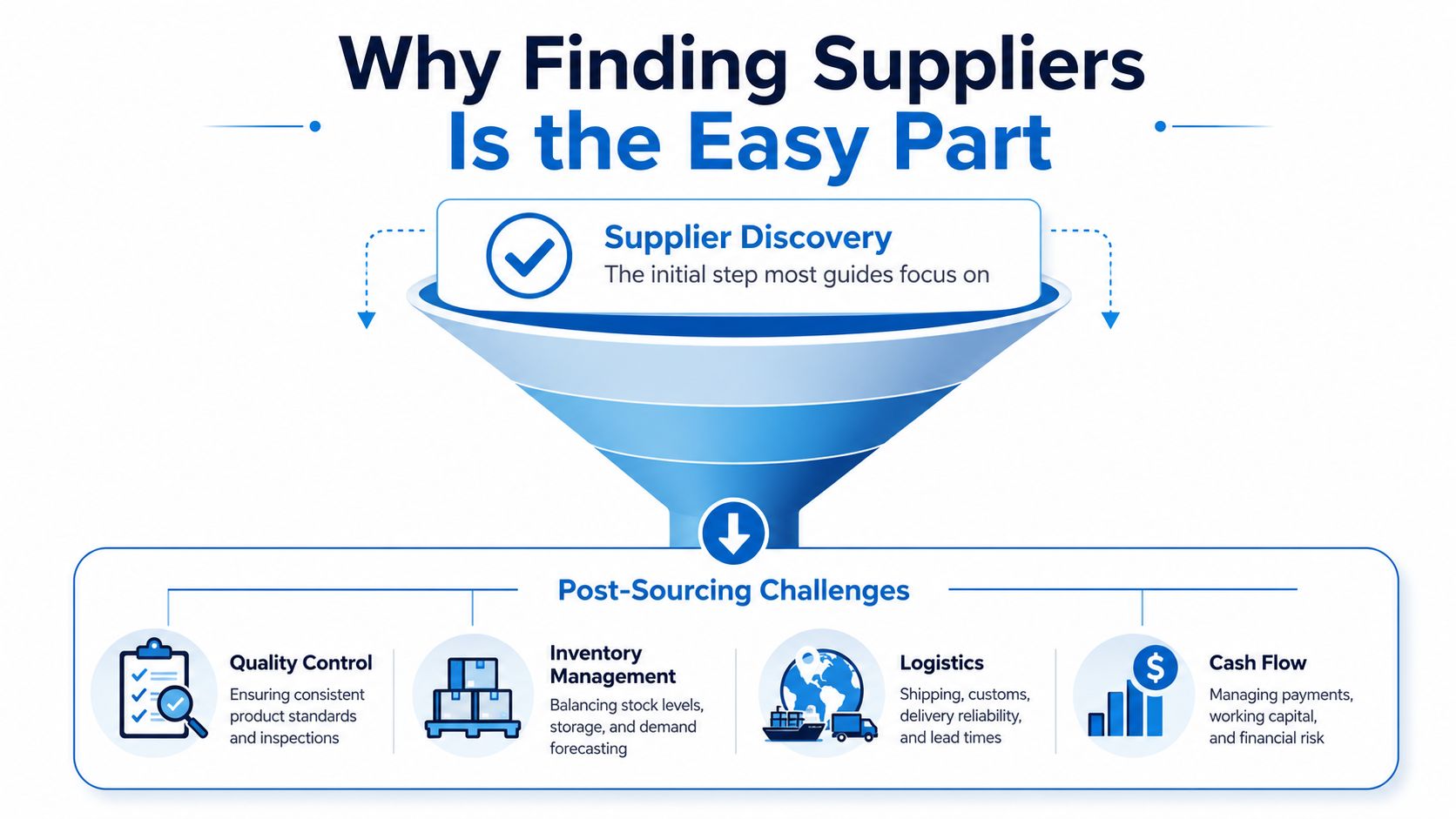
The beginner mistake is treating wholesale sourcing like a treasure hunt. Get the vendor, place the order, list the product, and profit. In practice, the supplier list is only the front door, and the work starts when the cartons hit your floor and the numbers stop looking clean.
The market is crowded, so access isn't the edge
The U.S. wholesaling base includes 35,047 businesses in clothing and clothing accessories (IBISWorld), which tells you something important, there's no shortage of vendors competing for your order. That kind of density means the strongest advantage rarely comes from finding someone who can sell you product. It comes from deciding what to buy, how to brand it, and how tightly you manage every step after the purchase order.
A reseller who only chases the lowest quote usually pays for it later through reorders, replacements, or dead stock. A supplier with clearer communication and tighter fulfillment can beat a cheaper source once you account for the friction that shows up after checkout. That's the reason experienced sellers obsess over landed cost instead of unit cost.
Practical rule: the supplier with the lowest invoice often becomes the costliest option once delays, claims, and markdowns show up.
The same dynamic shows up in sourcing guidance for circular commerce, where the core challenge is not just finding inventory but making sure it turns into sellable stock. If you want a broader operational lens on that mindset, the resource on circular commerce solutions is a useful reference for thinking beyond simple vendor discovery.
What actually protects margin after the order
The issue isn't access to product, it's protection of cash. Inventory ties up money, and every defect or delay stretches the time before you recover it. That's why the strongest operators keep their buying tight, start small, and only scale after they've seen how a supplier behaves in the world.
Many resellers drift into guesswork. They find a good-looking catalog, skip the operational review, and hope the product sells fast enough to cover the mistakes. Hope is not a margin strategy. A better approach is to buy with the assumption that something will go wrong, then choose suppliers and SKUs that can survive that friction.
For a practical sourcing walkthrough, the guide on how to source bulk branded apparel fits well with this mindset because it focuses on getting inventory that can move, not just inventory that looks cheap on paper.
Legal and Administrative Prerequisites for Wholesale Orders
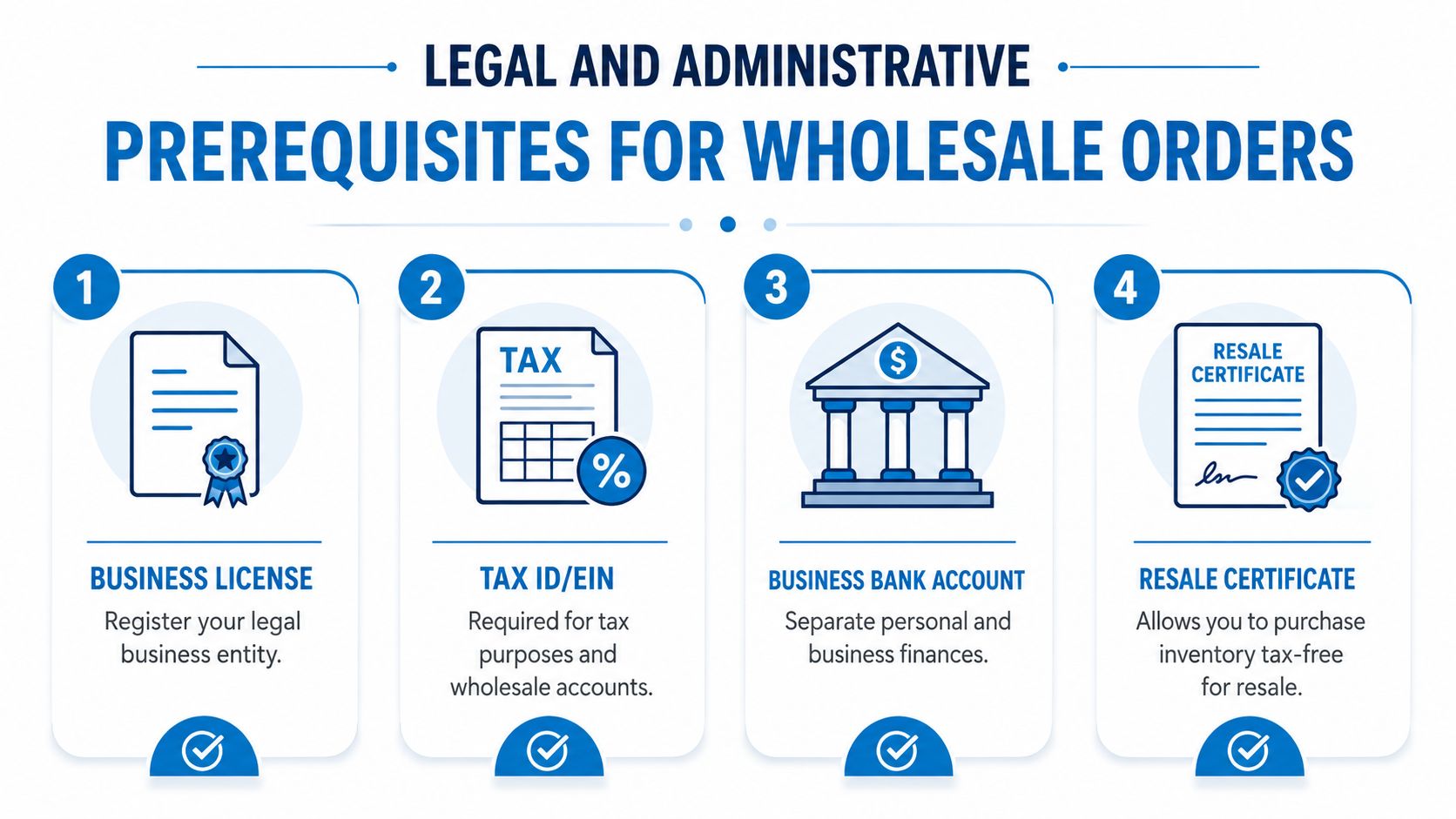
A reseller I know tried to place a U.S. wholesale order with an expired resale certificate, and the account was rejected before anyone even discussed pricing. That kind of failure is avoidable, but only if your paperwork is current before you start requesting terms or tax-exempt treatment.
Get the business basics in place first
Start with a registered business entity, then obtain an Employer Identification Number (EIN), and keep a business bank account separate from personal spending. Many wholesalers also require a valid resale certificate or seller's permit before they will process a tax-exempt wholesale order (Maggie Frames). If those documents are missing, the order can stall before you ever reach a quote.
The timing matters more than many new resellers expect. Sales tax permit processing can take 2 to 4 weeks (Maggie Frames), so waiting until the day you want to buy inventory usually leaves you stuck. A reseller who prepares the entity filings, tax registration, and bank setup early can move when a supplier offers the right mix of styles, sizes, and reorder potential.
Why suppliers care about documentation
Clean paperwork tells a wholesaler that you know how resale works, that you are set up for repeat orders, and that you are less likely to create tax problems later. In a crowded market, that signal still matters because suppliers prefer accounts that look organized and ready to transact.
A complete file does not guarantee approval, but incomplete paperwork can stop a promising account before the first quote.
View documentation as a signal of operational readiness rather than just compliance. Suppliers who ask for a resale certificate usually also pay attention to how you communicate, how quickly you reply, and whether your business looks organized enough to handle replenishment without drama. That matters even more when you plan to buy from several vendors at once, because weak admin habits usually show up later in missed follow-ups, delayed payments, or preventable order problems.
Evaluating Wholesale Suppliers Beyond the Price Tag
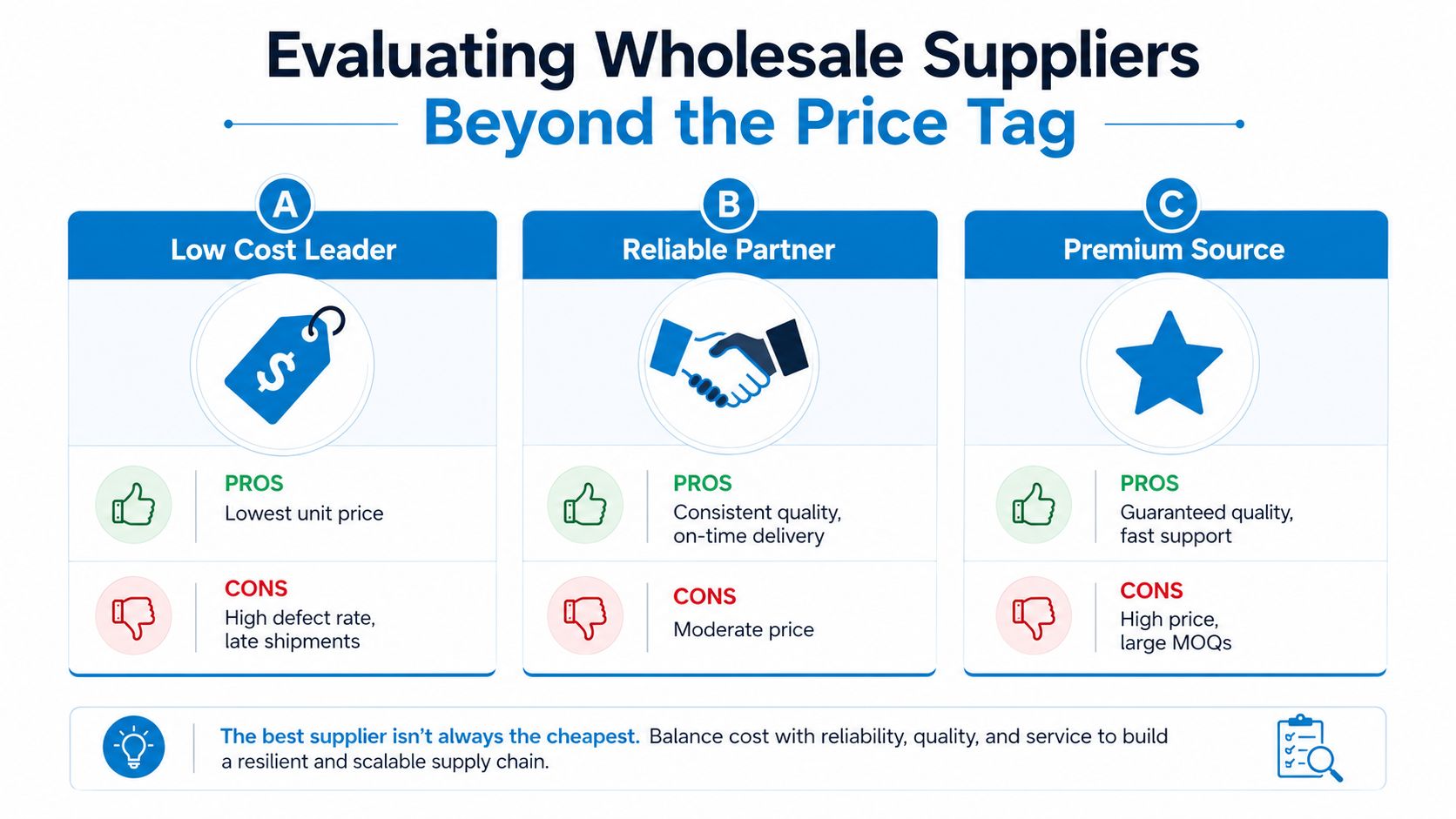
A low quote looks great until the shipment is late or the sample quality doesn't match the bulk order. By then, the unit price no longer matters, because the actual cost now includes lost time, customer complaints, and rework. That's why supplier evaluation has to start with operations, not pricing.
The variables that change landed cost
Wholesale procurement works best when you verify minimum order quantity (MOQ), payment terms, sample quality, lead times, shipping mode, and written order confirmation before you commit capital (Alibaba product insights). Each one changes your cash flow or your exposure to defect risk. A low MOQ can make testing easier, but long lead times can tie up seasonal money. Favorable payment terms can reduce pressure on cash, while poor terms can force you to front too much inventory too early.
Shipping mode matters too. Air moves fast but can crush margin, while slower freight may be cheaper but leave you missing selling windows. The smartest buyers compare these trade-offs before they place the order, not after they've already paid the invoice.
Red flags that should slow you down
Supplier reliability is usually obvious if you know what to look for. Missing physical addresses, generic email contacts, weak communication, and a lack of relevant certifications are all signs to pause and verify before you buy (Shopify). A vendor can have a nice catalog and still be the wrong partner if they can't answer basic order questions clearly.
Practical rule: a slightly higher price is often worth it if the supplier responds quickly, documents the order clearly, and delivers on time.
That logic matters more now that sourcing is fragmented across smaller vendors and marketplaces. The cheapest source can turn into the most expensive one once chargebacks, replacements, and delays get layered in. If you need a quick way to organize supplier comparisons, the decision usually comes down to whether the vendor is a bargain hunter's temptation or a repeatable operating partner.
Before scaling a new account, request sample pieces, document the communication trail, and place a test order. A supplier that handles those small steps well usually handles bigger ones better too.
Customization and Decoration Options for Branded Apparel
Blank apparel becomes a brand when the decoration method matches the garment, the design, and the order size. A method that looks cheap on paper can still produce the wrong feel, while a premium method can overprice a product that should have stayed simple. The right answer depends on what the customer will wear, wash, and pay for.
Match the method to the product
Screen printing works well for larger runs and durable graphics, but it has setup overhead, so small runs can feel expensive. Embroidery creates a premium look and holds up well, yet it usually costs more per unit and works best on garments that can handle stitching. Heat transfer can be a smart option when you need lower minimums or detailed artwork, though it usually won't match the durability of other methods. Direct-to-garment is useful for photographic detail and no-minimum jobs, but production can be slower.
That's why the garment matters. A soft cotton tee for event merch doesn't need the same finish as a structured hat or a heavyweight fleece layer. The decoration method should support the resale price, not fight it.
Proofs reduce expensive mistakes
Color mismatch, placement drift, and sloppy stitch detail are the kinds of mistakes that ruin a batch after the invoice is already paid. Ask for proofs before production so you can confirm layout, stitching, and color expectations. That small checkpoint protects both brand consistency and your margin.
For a practical comparison of decoration choices, the guide on how to choose logo decoration method is a useful companion because it helps you align method choice with the product you're selling.
| Decoration Method | Best Use | Main Trade-Off |
|---|---|---|
| Screen Printing | Larger apparel runs with bold graphics | Higher setup cost |
| Embroidery | Hats, polos, and premium branding | Higher per-unit cost |
| Heat Transfer | Small runs, fine detail, fast testing | Lower durability |
| Direct-to-Garment | Full-color art, small custom runs | Slower production |
The point is simple. Decoration should support resale velocity and brand fit, not just fill space on the garment.
Calculating Real Margins on Wholesale Clothing
Margin errors usually come from treating invoice price as profit. It is only the starting point. If freight, duties, payment fees, packaging, returns, and dead stock are missing from the model, the resale number is fiction.
Use the pricing mechanics that wholesalers already expect
Wholesale clothing often moves on a pricing rule of 2 to 2.5 times cost, and that range is commonly associated with 50% to 60% gross margin for the wholesaler. Standard keystone pricing is 2x wholesale price, boutiques often expect 2.2x to 2.5x, and department stores may require 2.5x to 3x with markdown contributions of 5% to 15% (Apex Fashion Lab).
Those numbers describe how the market prices goods. They do not tell you whether your own margin survives once overhead, freight, and returns hit the file. A reseller still has to check whether the item can clear at the channel price the customer will pay.
| Retail Channel | Pricing Multiplier | Expected Gross Margin | Markdown Contribution |
|---|---|---|---|
| Retailers | 2 to 2.5 times cost | 50% to 60% | Varies by channel |
| Keystone pricing | 2x wholesale price | Not stated in the source | Varies |
| Boutiques | 2.2x to 2.5x | Not stated in the source | Varies |
| Department stores | 2.5x to 3x | Not stated in the source | 5% to 15% |
Landed cost is the number that matters
Use the full landed-cost figure. That means purchase price, freight, duties, platform fees, payment processing, packaging, and returns processing. It is the only number that tells you whether an item deserves a reorder. If the final landed cost leaves no room for markdowns or a few problem units, the deal is too tight.
A reseller who tested a 50-unit lot discovered a 12% defect rate that wiped out projected margins. That kind of result is why the lot size matters before you scale. The right question is not whether the sample looked fine, it is whether a small run can survive the failure rate, freight bill, and return handling without killing contribution margin.
That discipline also helps when you are building repeat demand. If your assortment depends on customer retention or frequent reorders, loyalty programs for retail fit into the margin picture because repeat buyers notice consistency as much as first-time buyers notice price. For a broader planning framework, the bulk order custom apparel guide is useful because it connects order size, product choice, and resale risk before money is tied up in inventory.
Don't buy for the shelf. Buy for the full path from landed cost to sold-out, including the returns you will have to process.
Canada's wholesaling numbers point to the same pressure from another angle. The textile, clothing, and footwear merchant wholesaler industry reported $19.8 billion in operating revenues in 2023, up from $19.7 billion in 2022, while profits were $1.7 billion, down from $1.8 billion the year before, a 7.1% decline (Government of Canada). Revenue can hold while profit slips. That is why resellers have to watch the costs that never appear in the product listing, especially freight, returns, and the units that arrive unsellable.
Order Logistics and Quality Inspection Workflow
Once the order is placed, the job shifts from buying to control. A reseller who treats receiving like an afterthought usually ends up with stock problems, quality disputes, or avoidable customer complaints. The warehouse is where margin either gets protected or lost.
Build the receiving process around proof, not memory
Start with a sample, then compare the bulk shipment against it as soon as the cartons arrive. Check sizing consistency, stitching, print placement, color match, label accuracy, and obvious defects. If something is off, document it immediately with photos and notes so your supplier claim has a factual record.
Freight tracking should be part of that same workflow. Digital Proof of Delivery records help clarify who received what and when, which is useful when freight disputes or delivery gaps show up. For a practical view of that workflow, the explanation of digital Proof of Delivery benefits is worth reviewing because it shows how delivery records support accountability.
Don't let logistics drift into season loss
Lead times become more important when demand is tied to holidays, events, or promotional windows. A supplier with decent pricing but weak coordination can still cost you a sale if the goods arrive after the selling window closes. That's why the best operators keep receiving organized, maintain clear notes on each vendor, and separate clean inventory from questionable stock before anything gets listed.
A test order also tells you how a supplier handles mistakes. Some vendors respond quickly when you send proof of a defect. Others slow-walk the conversation and make the claim process painful. That difference matters as much as the invoice.
For a more detailed sourcing and fulfillment workflow, the bulk buying guide at bulk order custom apparel guide fits naturally with this stage because it ties order flow to actual production and delivery realities.
Streamlining Your Workflow with a Custom Branding Partner
Working with separate vendors for blanks, decoration, and fulfillment creates unnecessary handoffs. Every handoff adds room for error, especially when you're juggling proofs, shipping windows, and reorders. A single custom branding partner can simplify that chain by keeping sourcing and decoration under one roof.
Why consolidation helps resellers
Dirt Cheap Product, Inc. is one example of an end-to-end partner that combines wholesale apparel access with screen printing, embroidery, DTF, sublimation, and custom patches. That model fits resellers who want fewer moving parts, clearer proof review, and one point of contact for decorated apparel. It can also help when you need to move from blank product selection to finished goods without coordinating multiple outside shops.
The practical advantage is operational, not flashy. One catalog, one sales team, one production flow, fewer chances for artwork drift or shipping confusion. That matters most when you're selling to businesses, events, or repeat buyers who expect the same result every time.
When a partner beats piecing the workflow together
A consolidated partner makes the most sense when your orders repeat, your branding is stable, and your turnaround window is tight. It also helps when you need closeouts or promotional product options for campaigns, giveaways, or recurring reorders. If your business model depends on consistency more than one-off bargain hunting, that structure can be easier to run than managing a patchwork of vendors.
The value isn't that every reseller should use one partner for everything. The value is that an integrated setup removes friction where friction usually kills margin.
If you're ready to source wholesale apparel with less guesswork, visit Dirt Cheap Product, Inc. to review wholesale blanks, decorated apparel, and custom branding options in one place. If your goal is cleaner sourcing, faster proofing, and a simpler order flow, that's a practical place to start.