You’ve probably been handed the same assignment a lot of teams get. Order hats for staff, a trade show, a fundraiser, or a retail drop. Make them look sharp, keep the budget under control, and avoid ending up with boxes of hats nobody wears.
That’s where most mesh hat orders go wrong. Buyers spend too much time comparing logos on the label and not enough time looking at the blank itself. The front panel shape, the mesh type, the seam placement, and the closure all affect how your artwork looks, how long the hat lasts, and whether the finished piece feels like merch or a real product.
Mesh hats are worth taking seriously. The global hats market was valued at USD 11.04 billion in 2025 and is projected to reach USD 18.97 billion by 2034, with mesh hats helping drive that demand in sports and fashion according to Fortune Business Insights hat market data. For a business buyer, that matters because you’re not choosing a niche giveaway. You’re choosing a product people already wear.
Table of Contents
- Why Your Next Merch Run Needs the Right Mesh Hat
- Understanding Mesh Hat Construction and Quality
- Popular Mesh Hat Styles and What They Say About Your Brand
- Choosing the Best Decoration Method for Your Hats
- Finding Mesh Hat Brands That Fit Your Budget and Vision
- Navigating the Wholesale Ordering Process
- Partnering for Perfect Custom Hats
Why Your Next Merch Run Needs the Right Mesh Hat
A mesh hat works when you need something useful, visible, and easy to wear in real life. T-shirts compete with sizing problems. Jackets raise the budget fast. Hats sit in a sweet spot where one good style can work for staff uniforms, customer giveaways, event merch, and resale.
The catch is simple. Buyers often treat mesh hat brands as if the logo on the inside label is the whole decision. It isn’t. The right blank can make average artwork look polished. The wrong blank can make a strong logo look warped, cramped, or cheap.
What makes mesh hats such a practical buy
Mesh hats solve a few business problems at once:
- They fit broad audiences: Adjustable closures reduce sizing headaches.
- They stay visible: A hat keeps your branding at eye level.
- They get worn outdoors: That matters for crews, events, hospitality, sports, and casual retail.
- They feel current: Mesh still sits comfortably between utility and style.
A good hat also stays in rotation longer than a throwaway promo item. People don’t keep wearing it because it was free. They wear it because the shape fits well, the decoration looks clean, and the crown doesn’t collapse after a few uses.
Practical rule: If you want repeat wear, buy the hat as if it were a retail product first and a promotional product second.
The strongest orders usually start with three questions. Who’s going to wear it. Where are they going to wear it. What does the logo need to do on the front panel. Those answers narrow the field quickly and keep you from chasing trendy options that don’t suit your use case.
Understanding Mesh Hat Construction and Quality
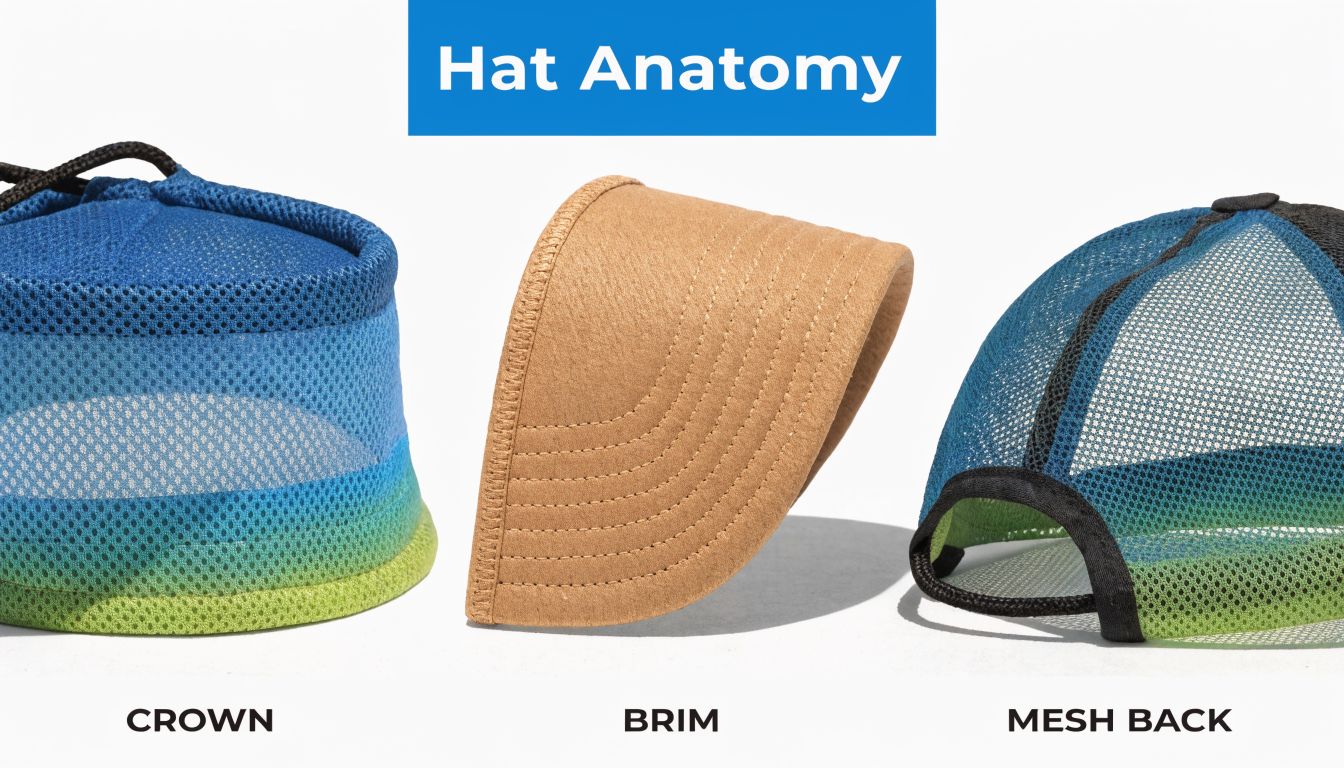
A mesh hat looks simple until you start decorating one. Then every part matters. The crown shape controls how the logo sits. The seam layout affects detail. The mesh changes comfort. The closure changes fit complaints after delivery.
Front panels decide your logo quality
Start at the front of the hat. That’s the canvas.
A structured front holds its shape because it has backing behind the fabric. This is usually the safest choice for standard embroidery. It gives the machine a firmer surface and helps the logo stay centered and readable. If your design has bold text, a simple icon, or a classic left-to-right layout, structured is usually the easy answer.
An unstructured front feels softer and more relaxed. It can look great for lifestyle brands, but it’s less forgiving. Fine embroidery can pucker. Tall logos can look uneven. Unstructured hats often work better with smaller marks, lighter stitching, or a patch that controls the shape of the design.
A five-panel front gives you one large uninterrupted decoration area. That’s useful for wide logos and patch applications. A six-panel front introduces the center seam, which can interfere with detailed artwork but can still look excellent with the right logo.
High-performance styles add another layer. New Era’s Tech Mesh Cap uses 100% polyester mesh in a structured design and is described as providing 30 to 50% greater airflow than solid cotton caps, which is why this kind of construction works well for active use and helps keep logos from looking distorted by sweat, according to SanMar’s New Era Tech Mesh product details.
Mesh, visor, and closure change the wear experience
The back half of the hat affects whether people keep wearing it.
Not all mesh feels the same. Some mesh is stiff and coarse. Some has a smoother, more performance-driven feel. For team use, outdoor crews, and warm-weather events, breathable mesh can make the hat easier to wear for longer periods. For retail-style merch, texture matters just as much as airflow because buyers notice hand feel immediately.
The visor also changes the personality of the hat:
| Part | Common options | What it changes |
|---|---|---|
| Front profile | High, mid, low | How bold or relaxed the hat looks |
| Visor | Flat or curved | Streetwear feel versus classic everyday wear |
| Sweatband | Standard or performance | Comfort during longer wear |
| Closure | Snapback, hook-and-loop, stretch-fit | Sizing range and fit consistency |
Closures deserve more attention than they usually get. Snapbacks are flexible and familiar. Stretch-fit options feel cleaner and more premium to some buyers, but they’re less forgiving if the fit range is narrow. For broad distribution, adjustable almost always creates fewer problems.
If the hat feels stiff in the wrong places or flimsy in the right ones, people notice before they ever notice your logo.
When you inspect samples, don’t just look at the front. Hold the hat by the brim. Press the crown. Check the seam under the front panel. Open and close the back. A strong mesh hat brand isn’t just about style. It’s about how that blank behaves once decoration is added.
Popular Mesh Hat Styles and What They Say About Your Brand
Style is the part most buyers jump to first, and that’s understandable. The silhouette sends a message before anyone reads the logo.
The main styles buyers compare
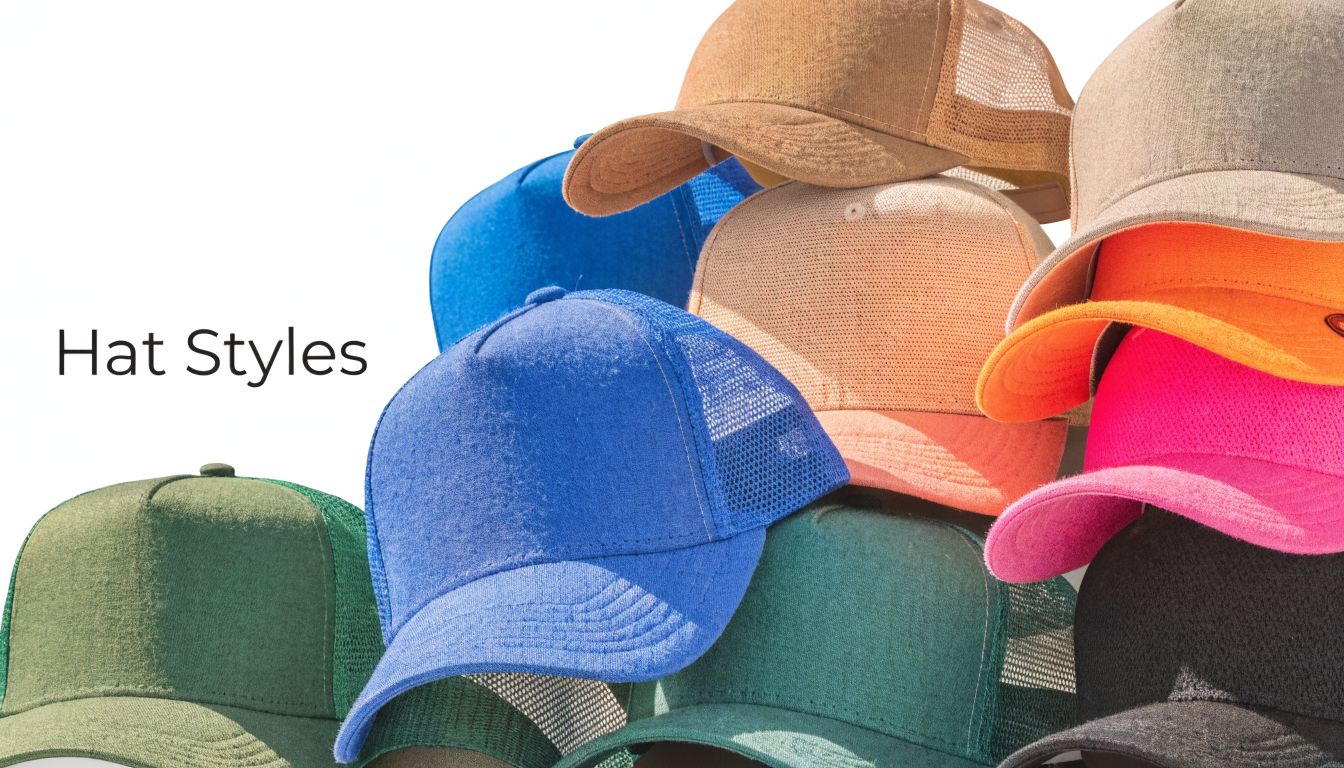
The classic trucker hat is still the standard reference point for mesh hat brands. It usually has a structured front, mesh back, curved or slightly shaped visor, and snapback closure. It feels casual, approachable, and easy to brand. If you want broad giveaway appeal or a familiar merch style, this is often the safest place to start.
The five-panel camper looks more modern and design-forward. It has a flatter front face and often a lower, cleaner profile than a traditional trucker. Outdoor brands, creative teams, and shops with a more curated aesthetic often lean this way. It can look excellent with a woven patch or a simple centered logo.
The performance snapback pushes toward activewear. These styles often use technical fabrics, lighter builds, and cleaner lines. They fit best when your audience is outside, moving, or likely to care about heat and comfort. Gyms, runs, sports programs, and event teams usually understand this style immediately.
Then there’s the mesh-back dad hat. This one reads softer and more broken-in. It doesn’t shout for attention. That’s good if your brand tone is understated, local, or lifestyle-based.
A distressed look can also shift the same trucker silhouette into something more vintage and casual. If that’s the direction you’re weighing, a distressed trucker hat style reference helps clarify the look before you commit to a cleaner blank.
How style affects decoration
Style choice changes your decorating options more than most first-time buyers expect.
- Classic trucker: Best for bold front logos, standard embroidery, and many patch styles.
- Five-panel camper: Strong for centered graphics and labels that need a flat visual field.
- Performance snapback: Better for simpler marks and cleaner technical finishes.
- Mesh-back dad hat: Better for smaller logos, lighter embroidery, and softer branding.
The safest mistake is choosing a style that’s slightly too simple. The expensive mistake is choosing a style that fights your artwork.
Here’s a quick visual reference for the range of styles buyers often compare before placing a hat order:
A brewery can make a trucker hat feel right. A property management firm may need something more restrained. A school event might want the most universally wearable option possible. There isn’t one best mesh hat brand or one best silhouette. There’s only a better fit for the message you want the hat to send.
Choosing the Best Decoration Method for Your Hats
This is where the project is usually won or lost. Buyers spend days choosing a hat blank and a logo color, then rush the decoration decision. That’s backward.
Industry forum data shows many small businesses struggle with proofing accuracy and decoration durability on custom hats, especially when the method doesn’t match the material, as noted in S&S Activewear’s mesh headwear category context. The point isn’t that one method is always best. The point is that the wrong method creates predictable problems.
When embroidery makes sense
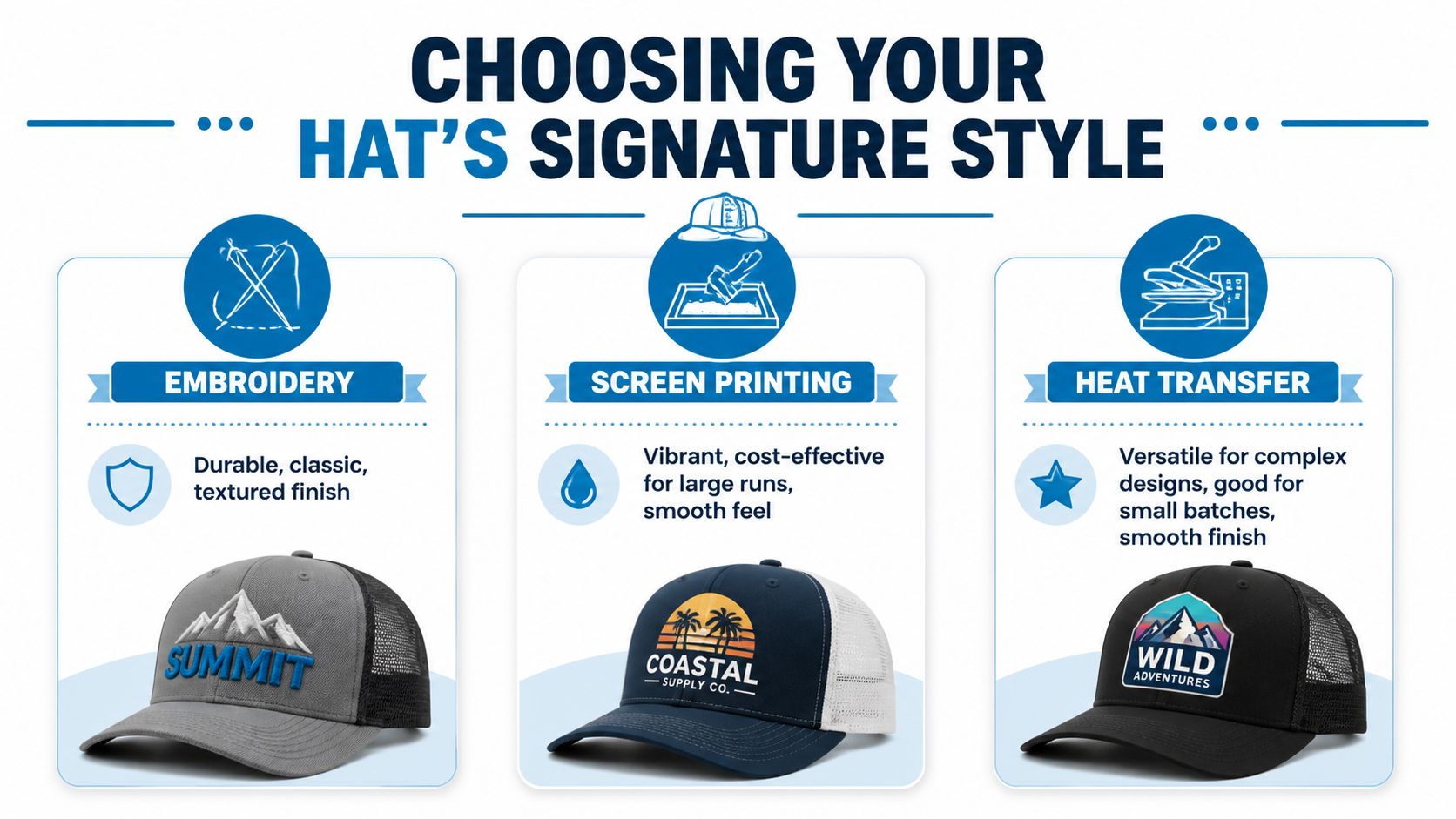
Embroidery is still the default for a reason. It looks finished. It holds up well. It gives a hat texture and presence.
It works best on structured fronts, mid-profile crowns, and logos that don’t rely on tiny detail. Clean type, bold icons, initials, and simplified marks usually stitch well. It’s especially dependable on trucker fronts that have enough body to support the thread.
Where buyers get into trouble is trying to force embroidery onto designs that are too fine or onto hats that are too soft. Dense stitching on a thin front panel can cause pulling. Small text can fill in. Gradients don’t translate.
If your brand uses embroidery often across uniforms and hats, it helps to look at how custom embroidery services typically handle thread count, backing, and proofing before choosing the blank.
Best use: Embroidery is strongest when your logo can be simplified without losing identity.
Where patches, DTF, and screen printing fit
Patches solve a lot of problems. If the logo is detailed, if you want a retail feel, or if you’re decorating a softer front, a patch often gives you cleaner control than direct stitching. Woven patches handle fine detail better than standard embroidery. Embroidered patches feel more classic. Faux leather or specialty patches can work, but they need to match the brand tone. They can look premium or gimmicky depending on the job.
DTF transfers are useful when artwork has color variation, small detail, or a print-like look that thread can’t reproduce. They’re often a smart option for foam-front hats or designs that need crisp edges. They’re less tactile than embroidery, but they can solve artwork problems fast.
Screen printing can work on certain hat fronts, especially flatter, stable panels. It’s usually most appealing when the design is simple and the run is large enough to justify setup. It’s less forgiving on seams, curved surfaces, and heavily textured materials.
A quick comparison helps:
| Method | Best for | Watch out for |
|---|---|---|
| Embroidery | Bold logos, structured fronts, classic merch | Tiny detail, dense stitching on soft fronts |
| Woven or embroidered patch | Retail feel, controlled shape, detailed marks | Patch size can overpower small crowns |
| DTF | Full-color or fine-detail artwork | Needs good placement and heat-compatible surface |
| Screen printing | Simple graphics on suitable fronts | Seams, curvature, and inconsistent print area |
A simple decision filter
Use this filter before you approve artwork:
- Look at the logo first. If it has tiny text or layered detail, don’t default to embroidery.
- Check the front panel. If it’s soft, consider a patch or lighter decoration method.
- Match the finish to the brand. Thread feels classic. A patch feels merch-driven. A transfer feels graphic.
- Think about reorder consistency. The more complicated the setup, the more carefully you need to manage future repeats.
A lot of custom hat problems aren’t production failures. They’re selection failures. The hat and the decoration were never a good match in the first place.
Finding Mesh Hat Brands That Fit Your Budget and Vision
The brand question gets easier once you stop asking which label is “best” and start asking which blank fits the job. In the wider headwear market, major players like New Era, Nike, and Adidas collectively control over 50% of market share, largely through sports-fashion crossover influence, according to Future Data Stats on the sports hats market. That influence matters because wholesale blank brands tend to follow the fit, profile, and material directions that larger brands make familiar.
Start with the blank, not the brand name
For most custom orders, buyers should evaluate mesh hat brands in this order:
- Fit and profile
- Front panel suitability for decoration
- Color availability
- Closure preference
- Budget
- Brand recognition
That order saves money because it prevents you from paying extra for a name while accepting a poor canvas for your logo.
A premium blank makes sense when the hat is part of retail merch, a client-facing uniform, or an internal program where people will compare it to what they already buy for themselves. A value-focused blank makes sense when coverage matters most, such as volunteer groups, broad event distribution, or multi-location staff orders.
Don’t buy a premium mesh hat brand for a logo that still looks cheap at decoration size. Fix the art first.
How common wholesale brands tend to fit different jobs
Some wholesale names come up repeatedly because they cover different parts of the market well.
Richardson usually enters the conversation when buyers want a polished trucker profile with dependable structure. It often fits sports programs, branded merch counters, and businesses that want a familiar trucker shape without looking flimsy.
Yupoong and Flexfit often make sense when fit consistency matters. Their styles can feel a bit more modern or athletic depending on the model, and they tend to appeal to buyers who want a cleaner silhouette.
Otto Cap is often where budget-sensitive projects land. That doesn’t make it the wrong choice. It makes it a practical one when quantity matters more than premium hand feel.
Adams tends to fit softer, more relaxed programs where the goal is casual wear rather than a bold structured front.
If you’re sourcing for a team that compares vendors or tracks wholesale options across categories, it can help to join Buyers Connect AI and organize sourcing conversations more efficiently before narrowing your hat shortlist.
The right choice usually becomes obvious once you decide whether your order is trying to do one of three things. Reach as many people as possible. Create a uniform people enjoy wearing. Build merch that feels retail-ready.
Navigating the Wholesale Ordering Process
The ordering process is where preventable mistakes become expensive. The best blank and the best logo still won’t save a project if the proof is wrong, the timeline is unrealistic, or the sample never gets checked.
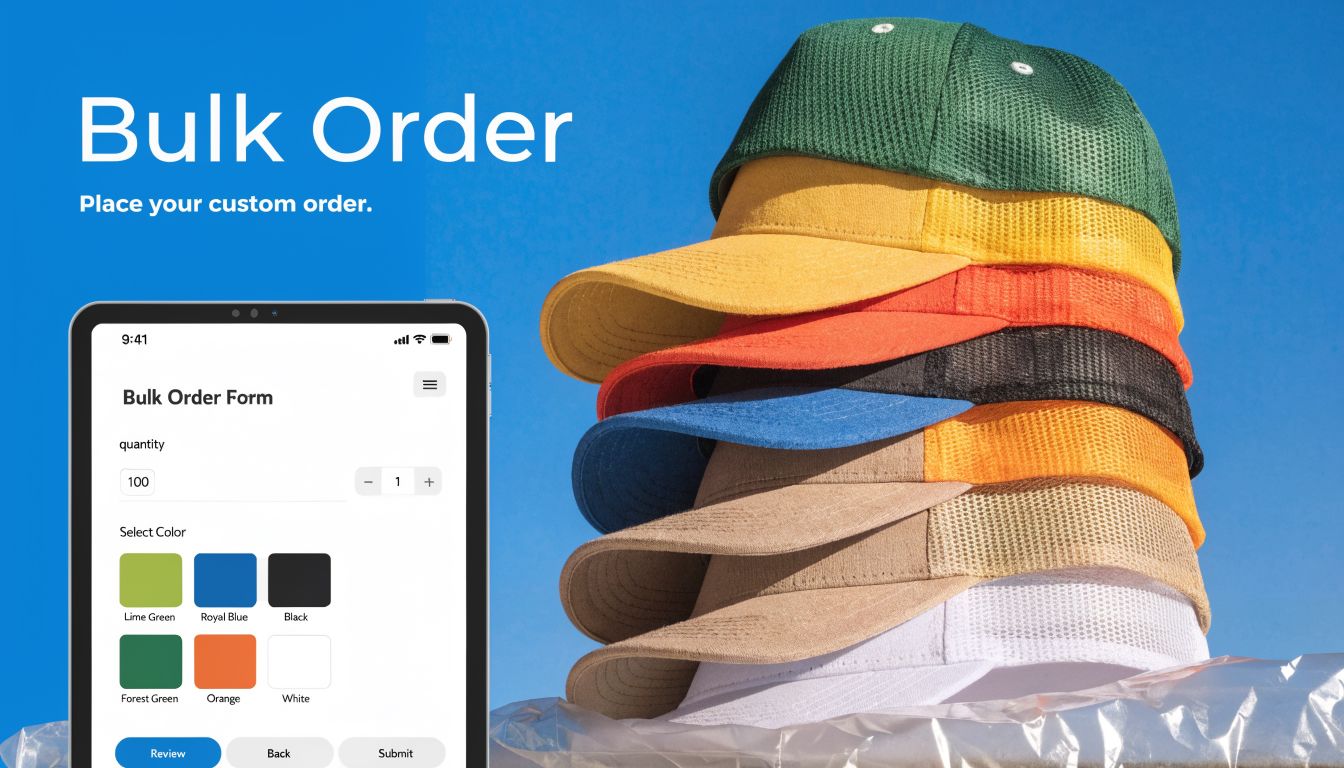
The checkpoints that prevent expensive mistakes
Start with the product choice, then confirm decoration, then confirm artwork, then approve timing. In that order.
Buyers also need to think about material goals early. Trends show a 15% rise in demand for eco-promotional items and a 25% spike in searches for “sustainable mesh trucker hats,” with recycled mesh lines becoming more relevant for wholesale sourcing, according to Flexfit’s trucker cap guide. If sustainability is part of the brief, don’t leave that question until after the proof is approved.
For teams that run recurring B2B orders through ecommerce, reviewing Top Shopify wholesale apps can help structure reorders, customer groups, and account-based ordering more cleanly.
These checkpoints matter most:
- Artwork file quality: Vector art is safest. If that’s not available, use the cleanest high-resolution file you have.
- Logo size: What looks balanced on a screen can look too small on a hat.
- Placement: Center front is common, but not always best for every crown shape.
- Color confirmation: Thread, fabric, and print color don’t behave exactly the same.
- Timeline review: Shipping and production need room for revisions.
If you’re comparing vendors or preparing a larger branded cap run, a reference page for custom logo hats in wholesale bulk orders is useful for checking the standard decision points before approval.
What to confirm before production starts
A digital proof is not a formality. It is the order.
Review it slowly. Check the logo width. Check whether the art crosses a seam. Check whether a patch looks too large for the crown. Check thread color against the hat color. If your team has multiple reviewers, make one person responsible for final signoff. Group approvals create sloppy approvals.
A hat order rarely fails because the factory used the wrong file by accident. It fails because someone approved a proof too fast.
If the project matters, ask for a sample when timing allows. Photos can’t always show crown stiffness, stitch density, or how a patch sits on a curved surface. A sample can.
First-time buyers also underestimate reorder discipline. Save the exact hat style, color code, decoration notes, and approved proof. If the first run goes well, you’ll want the second run to match it.
Partnering for Perfect Custom Hats
The best mesh hat brands aren’t automatically the most expensive ones or the most recognizable ones. The best choice is the one that gives your logo the right surface, fits the audience, and holds up after real use.
That usually comes down to a few decisions. Pick a silhouette that matches your brand. Choose a front panel that supports your artwork. Use a decoration method that suits the material instead of fighting it. Slow down at proofing so you don’t rush into a bad run.
Good custom hats don’t happen by luck. They come from matching the blank, the art, and the order process with discipline. When buyers do that, the finished hat stops feeling like a promo extra and starts feeling like something people chose to wear.
If you’re ready to turn that planning into a clean, wearable hat order, Dirt Cheap Product, Inc. can help you sort through styles, decoration methods, proofs, and bulk options without the usual guesswork. Reach out for guidance on a first run or a repeat program, and get a custom hat project moving with clearer decisions from the start.