
December sneaks up fast in business. One week you're closing out projects, the next you're trying to decide whether to send the same branded mug to everyone, rush order something expensive for key clients, or skip gifting entirely and hope nobody notices.
That's usually where holiday gifting goes wrong. The stress pushes people into product-first decisions when the better move is to make a few smart choices in the right order. Good business christmas gift ideas aren't really about finding a clever object. They're about matching the gift to the relationship, the budget, the branding method, and the logistics.
A holiday gift can absolutely feel generous without becoming wasteful, awkward, or hard to manage. It can also support retention and brand recall when it's chosen with intent. Promotional-product research shows 90% of recipients remember the brand name on a promotional item and 73% are more likely to do business with the brand that gave it according to promotional products statistics from SellersCommerce. That's why the strongest gifting plans treat the order as part marketing, part operations, and part relationship management.
Table of Contents
- Start with Strategy Not Products
- Choose the Right Gift Category for Your Goal
- Match Gifts to Your Audience and Budget
- Select the Best Decoration Method and Plan for Lead Times
- Elevate Your Gift with Personalization Beyond a Logo
- Your Quick Checklist for Placing a Flawless Order
- Frequently Asked Questions About Business Gifting
Start with Strategy Not Products
The most useful shift is to stop asking, “What should we give?” and start asking, “What should this gift accomplish?” A client thank-you gift, an employee appreciation gift, and a year-end event giveaway shouldn't be the same item with the same decoration.
A gift is a business tool before it becomes a product order. If your goal is retention, choose something that reinforces the relationship. If your goal is employee morale, choose something people will use outside work. If your goal is visibility, choose an item with repeat exposure and decent decoration space.
Ask four questions before you shop
Use these questions early. They save time later.
Who is receiving this
Is the list made up of top clients, all staff, referral partners, board members, or event attendees? Mixed audiences usually need tiers, not a single item.What result matters most
Are you trying to say thank you, stay visible, celebrate a milestone, or create goodwill before a renewal conversation? Pick one primary outcome.Where will the gift be used
Desk items work differently from travel gear, outerwear, and home products. Daily use creates more natural brand exposure than novelty items.What operational limits exist
Do you need individual shipping, address collection, size collection, international delivery, or payroll review? Those details can eliminate a lot of gift ideas quickly.
Practical rule: If your team can't explain why a specific gift fits a specific audience, the order is probably too generic.
A useful way to define success
For most companies, holiday gifting should do at least one of these jobs well:
- Strengthen loyalty: Better for clients, partners, and referral relationships.
- Support culture: Better for employees, new hires, and internal recognition.
- Increase visibility: Better for event gifting, branded kits, and broad outreach.
- Reduce waste: Better for brands that care about practical use and long-term retention.
That last point matters more than many buyers expect. If a product feels cheap, random, or disconnected from the recipient, it often gets ignored. If you want a broader perspective on how brands are thinking about gifting with relationship-building in mind, this guide to corporate gifting strategies by ROCKS is a helpful companion read.
A strong gifting plan doesn't start with a catalog page. It starts with a short brief. Audience. Goal. Budget level. Delivery method. Deadline. Once those five pieces are clear, the product choices get much easier.
Choose the Right Gift Category for Your Goal
Some gift categories do a better job than others. The right choice depends less on what looks festive and more on how the recipient will interact with it after the holidays.
Think in use cases not trends
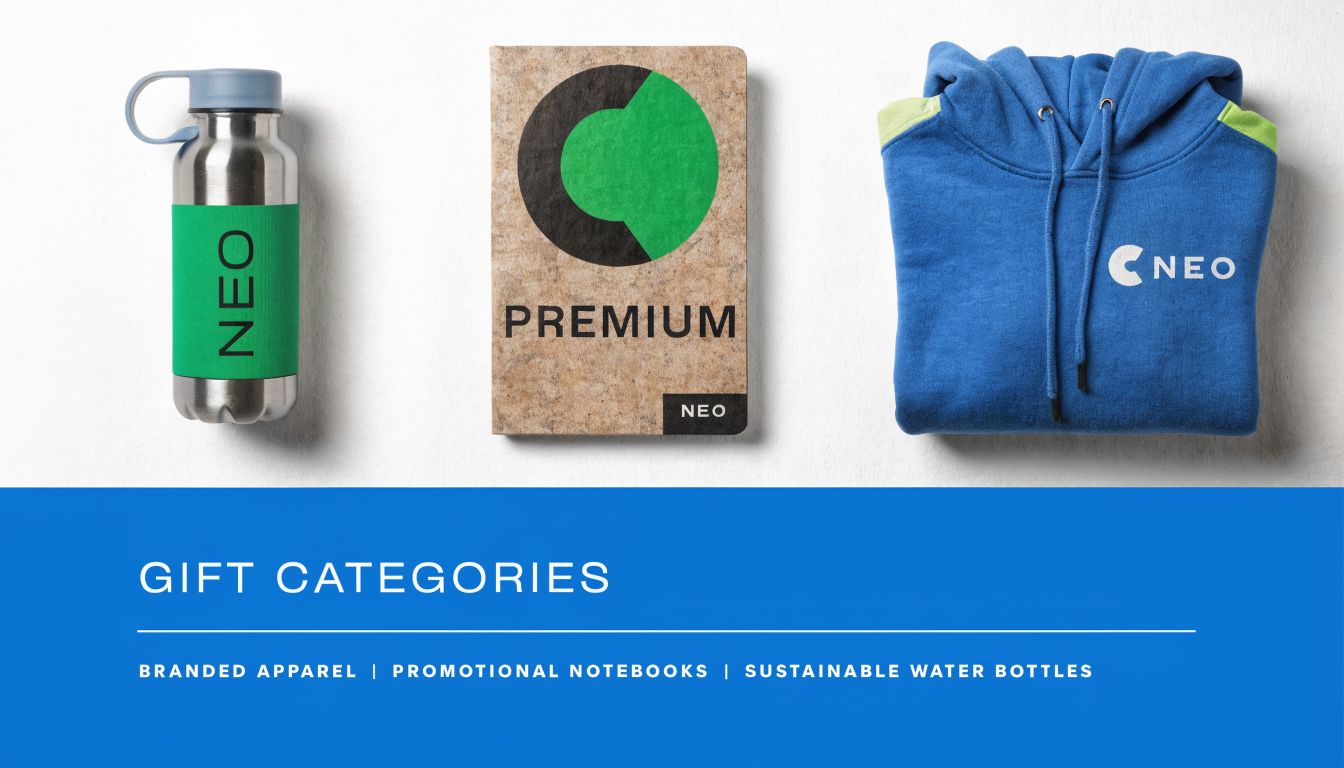
Apparel works when you want visibility and perceived value. A well-made hoodie, quarter-zip, or jacket can feel substantial in a way that small desk items rarely do. It also gives your brand repeated exposure when the fit, color, and decoration are handled well.
Drinkware is strong when you want daily use in an office, home office, or commute. Tumblers, insulated bottles, and ceramic mugs stay visible on desks and in meetings. That makes them reliable for broad gifting lists where you want usefulness without managing apparel sizes.
Bags are practical when the audience travels, attends events, or carries equipment between workspaces. Totes, backpacks, and laptop bags can carry a logo naturally if the base product looks professional enough.
Gift kits work when the audience is mixed or remote. A kit can combine a core branded item with a few non-branded extras so the package feels thoughtful instead of overly promotional. For another perspective on category selection tied to outcomes, this article on selecting thoughtful gifts that drive business growth gives useful examples.
If sustainability is part of your criteria, look at eco-friendly promotional products that are built around repeat use rather than disposable novelty.
A simple comparison by gift category
| Category | Best for | Watch out for |
|---|---|---|
| Outerwear and hoodies | VIP clients, leadership gifts, employee appreciation | Size collection, color choice, decoration placement |
| T-shirts and casual apparel | Team events, all-staff gifts, culture building | Can feel low-value if fabric or print quality is weak |
| Drinkware | Broad client lists, desk visibility, hybrid teams | Cheap bottles and thin mugs don't hold up well |
| Bags | Travel-heavy audiences, conferences, onboarding kits | Shape and material matter more than logo size |
| Gift kits | Remote teams, segmented audiences, premium presentation | Packing and fulfillment complexity |
This quick video is useful if you're comparing merchandise types and thinking about what feels gift-worthy versus purely promotional.
A gift category should match the moment. A hoodie can feel generous at employee year-end. The same hoodie can feel awkward for a client list if the sizing process is messy.
The weak categories are usually the ones buyers choose out of habit. Tiny gadgets, low-grade plastic items, and novelty products can still work for trade shows, but they rarely carry the emotional weight most companies want from Christmas gifting.
Match Gifts to Your Audience and Budget
Once the category is clear, split the recipient list into groups. At this stage, many holiday orders either become disciplined or drift into overspending.
Segment first and shop second
The cleanest approach is to group people by relationship value, not by department alone. A long-term client with renewal potential should not receive the same gift as a wide internal distribution list unless there's a deliberate reason.
Industry guidance for 2025 says companies are already budgeting this way. The 2025 corporate holiday gift guide from 4AllPromos lists these common ranges by relationship value: VIP clients ($75 to $150), core clients ($30 to $100), general staff ($25 to $50), and internal VIPs ($50 to $150).
Those ranges are useful because they force hard decisions early. You don't need to match them exactly, but they give structure to the conversation.
Use ranges as guardrails not rules
Consider a practical approach to selecting these items:
- VIP clients and top partners usually justify premium items, upgraded packaging, or a more personal kit.
- Core clients often fit well with polished, functional gifts that are practical and easy to ship.
- General staff usually benefit more from fairness and usability than from trying to create dramatic variation.
- Internal VIPs often need a different standard than broad staff recognition because their gift may represent executive appreciation or milestone acknowledgment.
A simple matrix helps keep spending aligned.
| Audience tier | Typical fit | Budget mindset |
|---|---|---|
| VIP clients | Premium outerwear, elevated kits, higher-end drinkware sets | Spend for relationship depth |
| Core clients | Reliable daily-use products with polished branding | Balance quality and scale |
| General staff | Practical apparel, mugs, tumblers, recognition kits | Keep it useful and consistent |
| Internal VIPs | Upgraded apparel, executive accessories, curated sets | Match role and occasion |
The mistake I see most often is buying one premium item for everyone, then cutting corners on product quality to make the math work. That usually creates the worst of both worlds. The gift looks more ambitious on paper than it feels in hand.
Budget filter: protect product quality first. A smaller, better-made gift usually lands better than a larger item that feels disposable.
Another common mistake is setting the item cost without pricing the actual program. Packaging, decoration, drop shipping, address collection, and replacements for wrong sizes can change the economics quickly. Budget by tier, then stress-test the plan with the operational costs attached.
Select the Best Decoration Method and Plan for Lead Times
A good product can still underperform if the decoration method is wrong. The logo application affects how premium the gift looks, how long it lasts, and whether people actually want to use it.
Pick the decoration based on the product
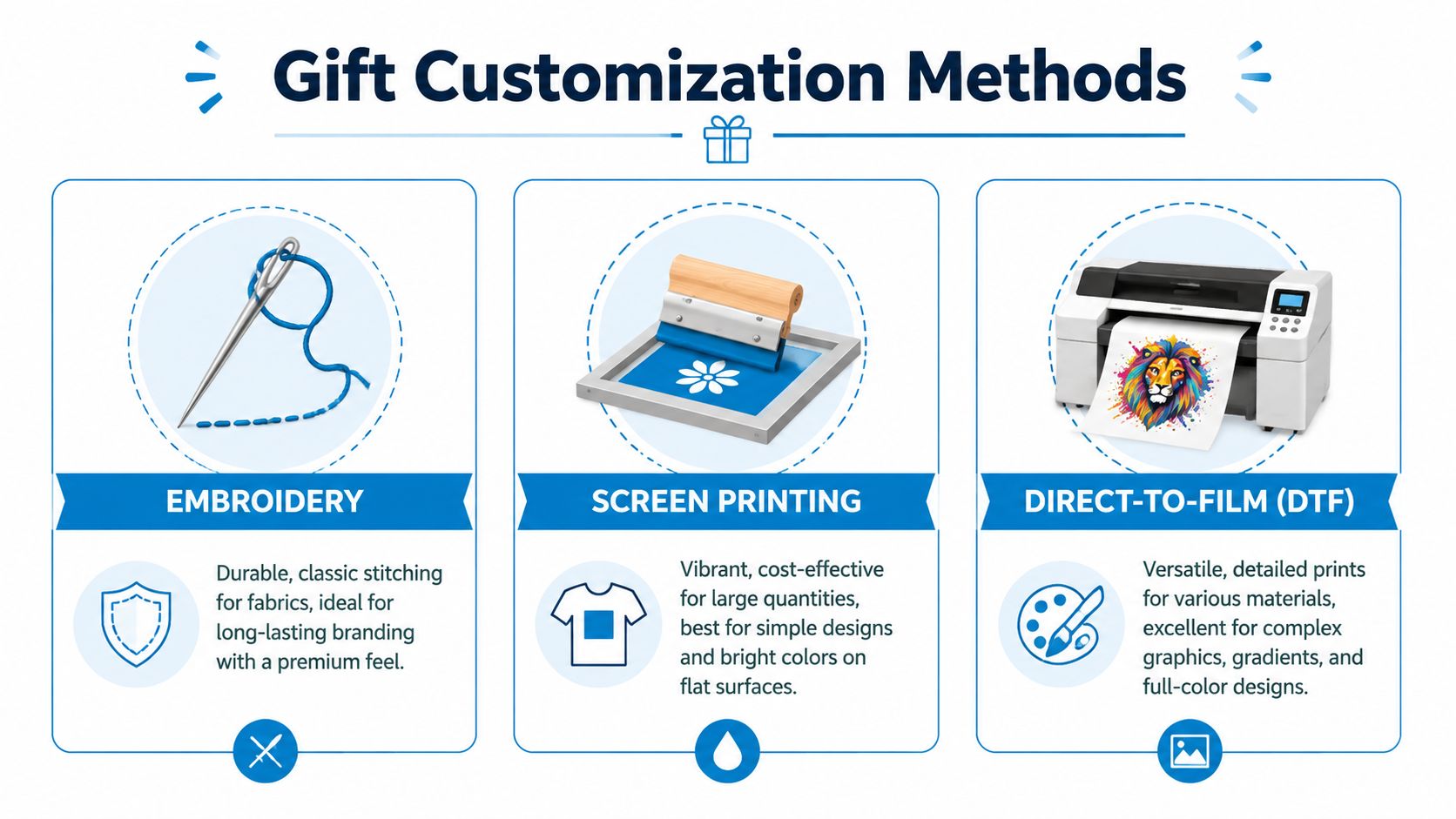
Embroidery is the safe choice for hats, polos, quarter-zips, fleece, backpacks, and many jackets. It gives texture and a more classic branded look. It works especially well when the logo is simple enough to stitch cleanly and the product already has a premium feel.
Screen printing is usually the better fit for larger artwork on T-shirts, hoodies, and some tote bags. It gives a bold graphic result and tends to look strongest when the design is clean and the imprint area is broad.
DTF, or direct-to-film, is useful when the artwork has multiple colors, gradients, or finer detail that would be awkward to simplify. It's a practical option for smaller runs or designs that need more graphic flexibility.
Here's the short version:
- Choose embroidery when you want texture, durability, and a more premium finish.
- Choose screen printing when you want strong graphic impact on apparel at scale.
- Choose DTF when the artwork is complex and the product calls for print rather than stitching.
For drinkware, decoration choices depend on the exact item and surface. If mugs or tumblers are part of the mix, it helps to review examples of branding on mugs so your logo size and placement match the shape of the product instead of fighting it.
One practical option for apparel and promotional orders is Dirt Cheap Product, Inc., which handles screen printing, embroidery, DTF, sublimation, and custom patches across garments and accessories. That kind of full-service vendor setup can simplify holiday projects when the gift list includes more than one product type.
Lead times decide more orders than design does
Holiday production gets crowded. The bottleneck usually isn't the idea. It's approvals, stock changes, art cleanup, size collection, and shipping windows.
Use this sequence to avoid preventable delays:
Approve the product first
Don't send art revisions for three products if the team hasn't committed to the base item.Lock the recipient list early
Client counts, employee counts, and apparel sizes shift late if nobody owns the spreadsheet.Submit clean art files
Logos in vector format save time. Tiny screenshots of logos create avoidable back-and-forth.Approve proofs quickly
Most holiday orders don't fall apart in production. They stall in approval inboxes.Leave room for replacements
Someone will need a size swap, an address fix, or a missing shipment resolved.
If your deadline is firm, ask the vendor what can ship on time before you fall in love with a specific item.
The best-looking order is the one that arrives when it still feels like a holiday gift, not a January apology.
Elevate Your Gift with Personalization Beyond a Logo
The fastest way to make a gift feel generic is to rely on the logo alone. Branding matters, but people respond more strongly when the package feels chosen rather than issued.
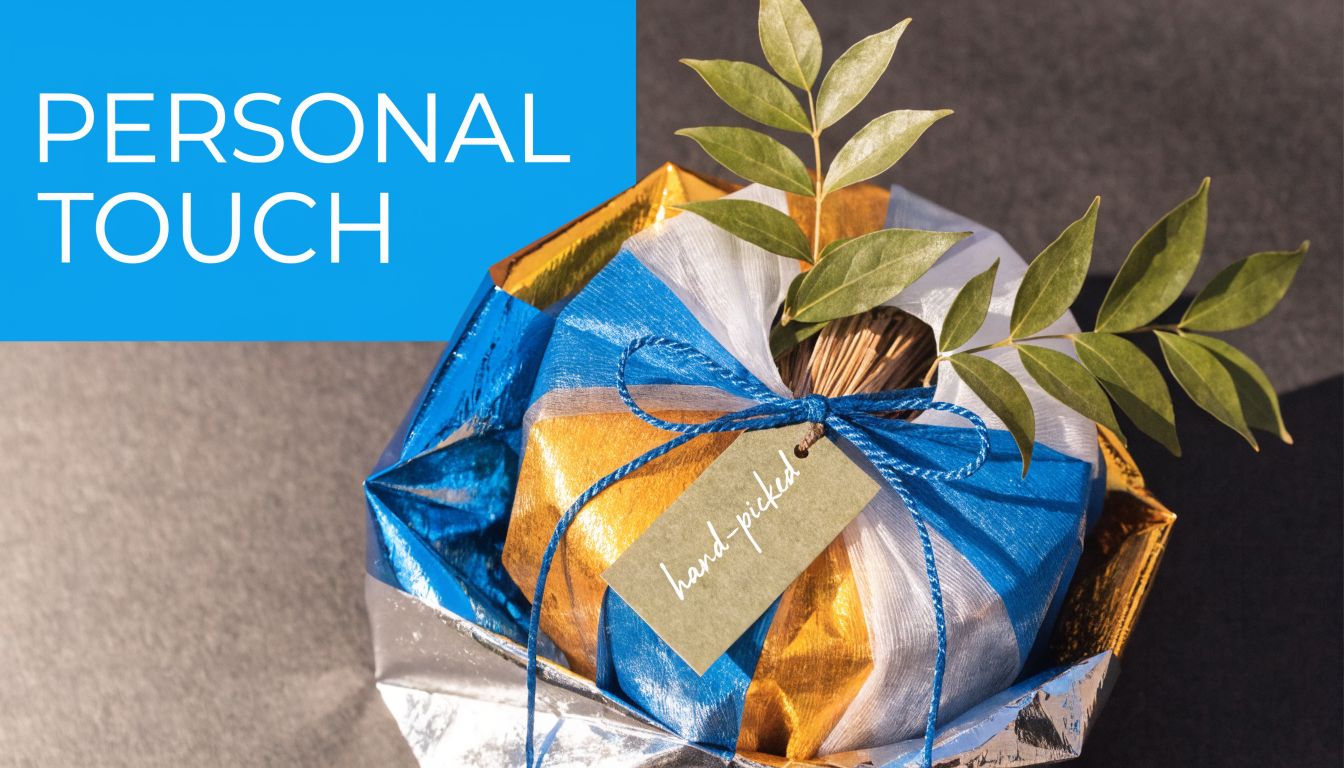
A 2025 gifting report notes a strong move away from one-size-fits-all swag and says 40% of generic corporate gifts are estimated to end up in landfills, with growing interest in gifts customized to recipients' interests and lifestyles according to Clove & Twine's 2025 corporate gifting trends. That matches what buyers feel in practice. The more generic the item, the less likely it is to earn real attention.
What makes a gift feel personal
Personalization doesn't have to mean expensive customization on every single unit. Often it's a packaging and selection decision.
Examples that work:
- Name-based touches such as a printed gift note, name tag, or monogram where appropriate
- Role-based selection such as choosing outerwear for field teams and desk accessories for office staff
- Region-aware choices so you're not sending heavy cold-weather gear to warm climates
- Interest-led kits that group a branded core item with practical extras suited to the audience
Small upgrades that change the whole impression
These are usually worth the effort:
- Custom packaging: A clean box, tissue, insert card, or belly band makes even a simple product feel more considered.
- A real message: Skip the stiff holiday boilerplate. A short note that thanks the recipient for a specific kind of partnership or contribution lands better.
- Subtle branding: On premium gifts, smaller logos often look more intentional than oversized decoration.
- Better color choices: Brand consistency matters, but not every logo belongs at maximum contrast on every product.
The best corporate gift doesn't announce itself as swag. It feels like something the recipient would've chosen anyway.
If you're evaluating business christmas gift ideas, this is often the deciding factor between “nice gesture” and “memorable gift.” The object matters. The presentation and relevance matter just as much.
Your Quick Checklist for Placing a Flawless Order
Most holiday gifting headaches show up before production starts. Missing sizes, unclear logo instructions, and half-complete shipping details can turn a simple order into a long email thread.
What your vendor needs from you
Gather this before you request final pricing or a proof:
- Product details: style number, brand, color, and any approved substitute options
- Quantity breakdown: totals by size, color, and recipient tier
- Artwork files: vector logo files when possible, plus any alternate lockups
- Brand instructions: exact colors, preferred logo version, and any placement rules
- Decoration notes: embroidery, screen print, DTF, patch, or another finish
- Imprint location: left chest, center front, sleeve, mug side, hang tag, box insert, and so on
- Packaging needs: individual bagging, gift boxing, insert cards, or kit assembly
- Shipping plan: one bulk delivery, multiple office locations, or individual drop shipping
- Deadline details: desired in-hand date, not just ship date
- Approval contacts: who signs off on product, art proof, and shipping list
If you're placing a larger seasonal order, this bulk buying guide for custom promotional products is useful for pressure-testing quantities, decoration choices, and ordering workflow.
Copy and paste order email
Use a simple structure. Vendors move faster when the request is organized.
Order request template
Hi [Vendor Name],
We're planning a holiday gift order and would like a quote and production timeline.Product: [brand/style/item name]
Colors: [approved colors]
Quantities: [breakdown by size/color]
Decoration method: [embroidery/screen print/DTF/etc.]
Logo placement: [left chest/front/side/etc.]
Artwork: [attached files]
Packaging: [individual bagging, gift box, insert card, none]
Shipping: [bulk ship or individual addresses]
In-hand date: [date]
Notes: [special instructions, recipient tiers, substitute approvals]Please confirm stock availability, proof timing, and any issues you see with the artwork or deadline.
Thank you.
A clean brief reduces mistakes because it answers the questions production teams ask anyway. It also makes price comparisons more accurate when you're talking to more than one vendor.
Frequently Asked Questions About Business Gifting
Holiday gifting decisions usually come down to three final questions. Taxes. Sustainability. Timing.
Are business christmas gifts taxable
Sometimes, yes. The treatment depends on the type of gift and who receives it. According to VistaPrint's company Christmas gift ideas guide summarizing IRS rules, cash and cash-equivalent gifts are generally taxable to the recipient, while non-cash gifts may only be tax-deductible for the business up to a certain limit and may be tax-free to the employee if they qualify as a de minimis fringe benefit.
That means gift cards can create very different payroll and reporting issues than a non-cash holiday item. If you're sending gifts to employees, clients, and contractors in the same season, get finance or payroll involved before you finalize the format.
How do I choose sustainable gifts without guessing
Start with proof, not marketing language. Look for products built for repeated use, materials that are described clearly, and vendors that can explain why an item is a lower-waste option.
A practical sustainability check looks like this:
- Ask what makes the product durable
- Check whether the packaging is excessive
- Choose items with obvious repeat use
- Avoid novelty goods with no real purpose
- Request clarity on materials and sourcing when that matters to your brand
If your team is building a larger program and wants more automation in recipient matching or distribution, it can also help to review how AI-driven corporate gifting solutions are approaching personalization and logistics.
When should I place my christmas gift order
Earlier than you think. The exact date depends on inventory, decoration method, and whether you're collecting apparel sizes or shipping to home addresses.
Use a simple rule of thumb. If the gift requires customization, approvals, and distribution to multiple recipients, treat it like a project, not a purchase. The longer your recipient list and the more personalized the program, the less room you have for late changes.
Thoughtful business christmas gift ideas work because they respect both sides of the process. The recipient gets something useful and well-presented. Your team gets a plan that can be executed without chaos.
If you're planning a holiday order and want help narrowing products, decoration methods, or fulfillment details, Dirt Cheap Product, Inc. can support branded apparel and promotional gift projects with custom decoration options and vendor-ready quoting.